
A Defined Wear Surface
The selected system can give busy concrete a more consistent surface for feet, carts, equipment, and routine work. Its suitability depends on the intensity and type of contact the facility sees.
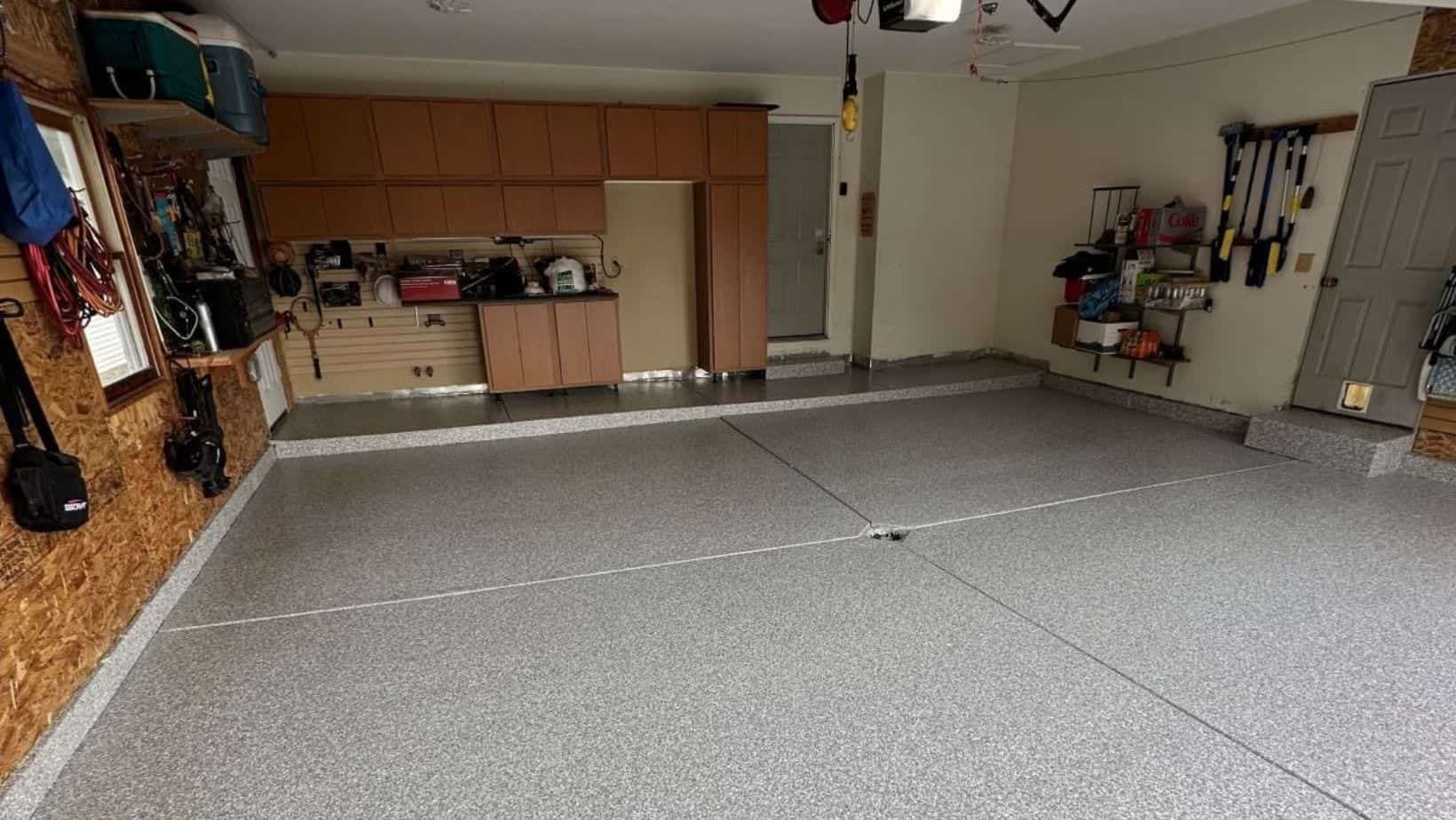
A Hamilton business may need one slab to welcome customers, carry carts, support tools, and withstand tracked grit or spills. We examine how the space operates, prepare the concrete for its selected system, and explain the access and care questions that belong in a practical commercial coating plan before work begins.
Service Overview
A smaller Hamilton retail, restaurant, church, school, or municipal space still has a real work pattern. People enter with wet footwear, carts cross thresholds, staff clean around fixed equipment, and occasional spills need attention. Agricultural and service properties can add dirt, tools, vehicles, and materials that change what the concrete must tolerate. Those details belong in the first conversation.
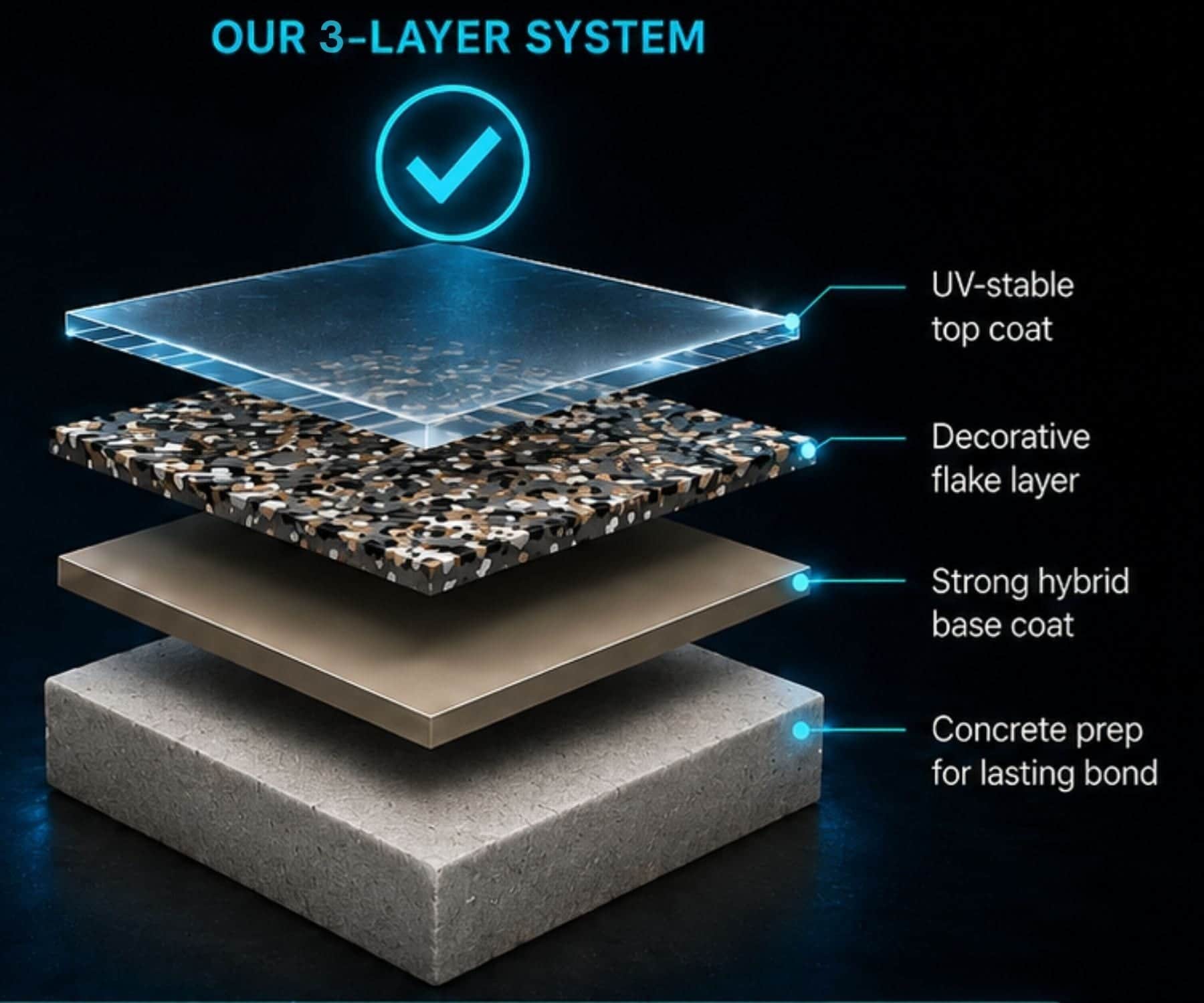
Our hybrid system uses epoxy where adhesion and build are useful, with polyurea and compatible topcoat layers chosen for their roles. The recommendation follows the slab, exposure, moisture conditions, appearance goals, and available access. Preparation and repairs are not decorative extras. They establish the conditions the finish has to live with.
Benefits
A commercial coating is worth discussing when its finish, maintenance, and installation plan answer the way the property is actually used.
The selected system can give busy concrete a more consistent surface for feet, carts, equipment, and routine work. Its suitability depends on the intensity and type of contact the facility sees.
A finished surface may make dust, road grit, and ordinary spills easier to spot during cleanup. The business still needs a care routine suited to its traffic and contaminants.
Epoxy can provide adhesion and build near the slab, while polyurea and a compatible topcoat serve other performance roles. We explain the stack instead of treating chemistry as a label.
Spring moisture, humidity, and slab conditions deserve attention before installation. Reviewing them early helps identify preparation questions before a finish is selected for the space.
Allegan County snow and road salt can arrive on shoes, tires, and carts. A planned finish and cleaning conversation gives entrances and service areas a more useful maintenance starting point.
Solid color and decorative flake can support visibility and atmosphere in a public room. The visual choice should also suit lighting, traffic, cleaning, and the work happening there.
Installation Process
We build the work plan around what the facility can reveal and what the operation needs to resume. Each stage answers a different practical question before the next layer is added.
Step 1
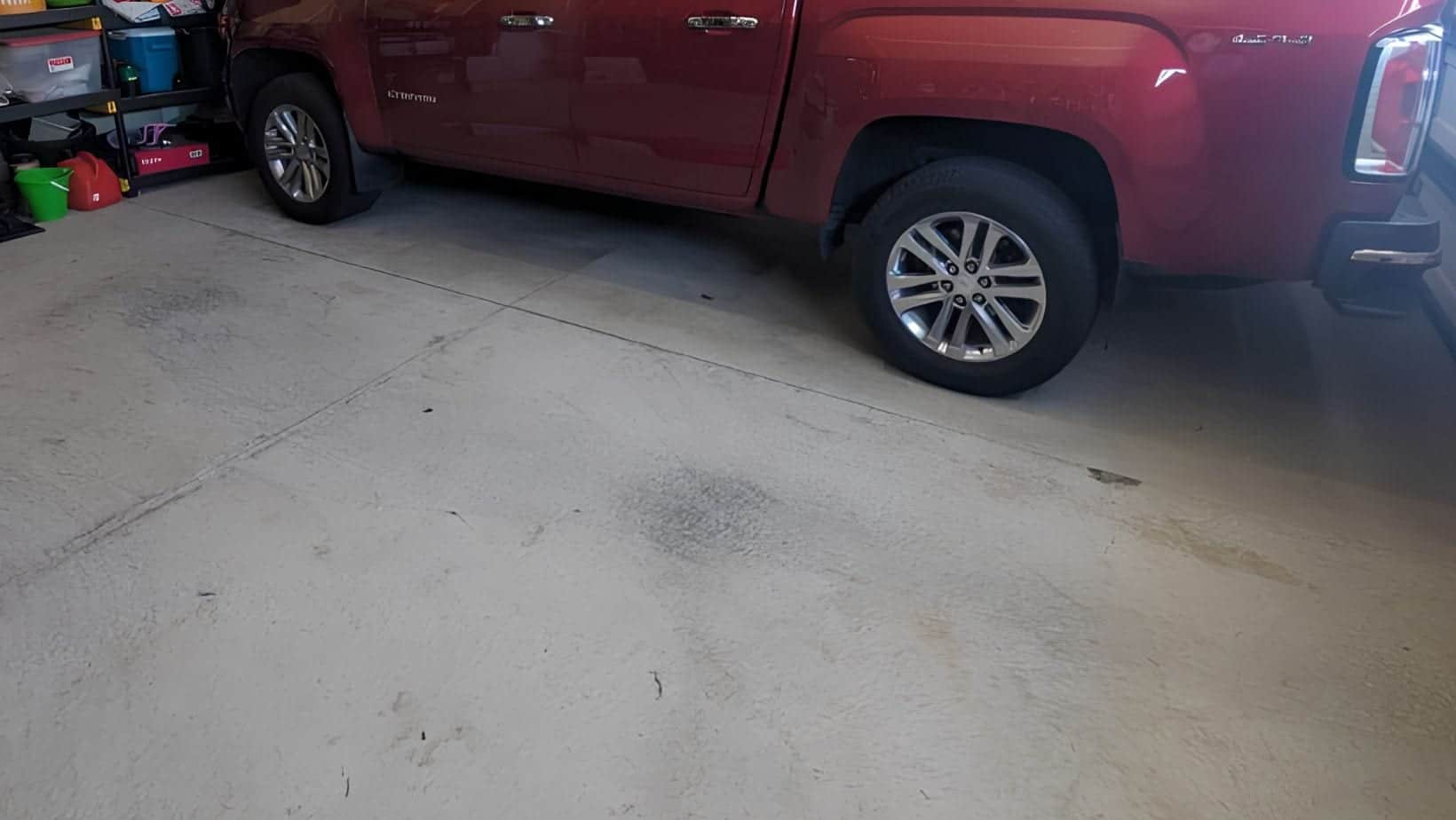
We look at the concrete, existing materials, cracks, surface damage, moisture concerns, traffic routes, equipment, and cleaning demands. For a Hamilton property, the walk-through should include customer areas as well as rooms where carts, tools, dirt, or spills are part of the day.
Step 2
Access doors, stored materials, movable equipment, neighboring rooms, and the order of work all affect the installation brief. We discuss which areas can be cleared, how people and equipment move nearby, and what the return-to-service conversation must cover.
Step 3
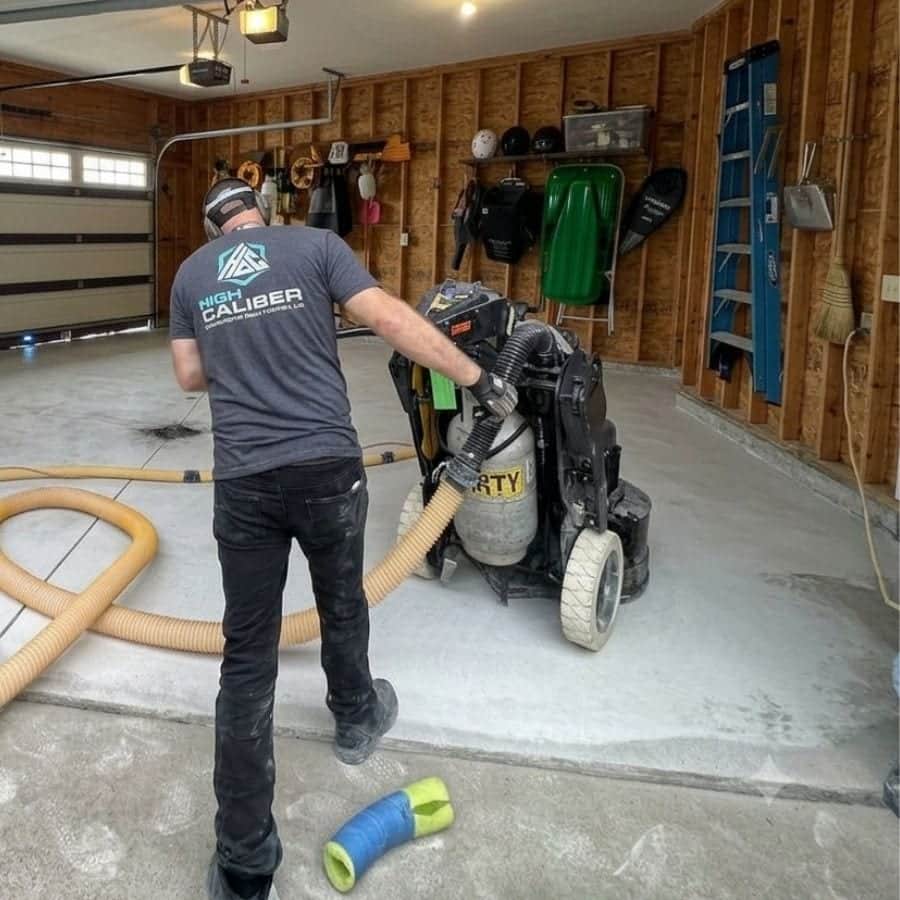
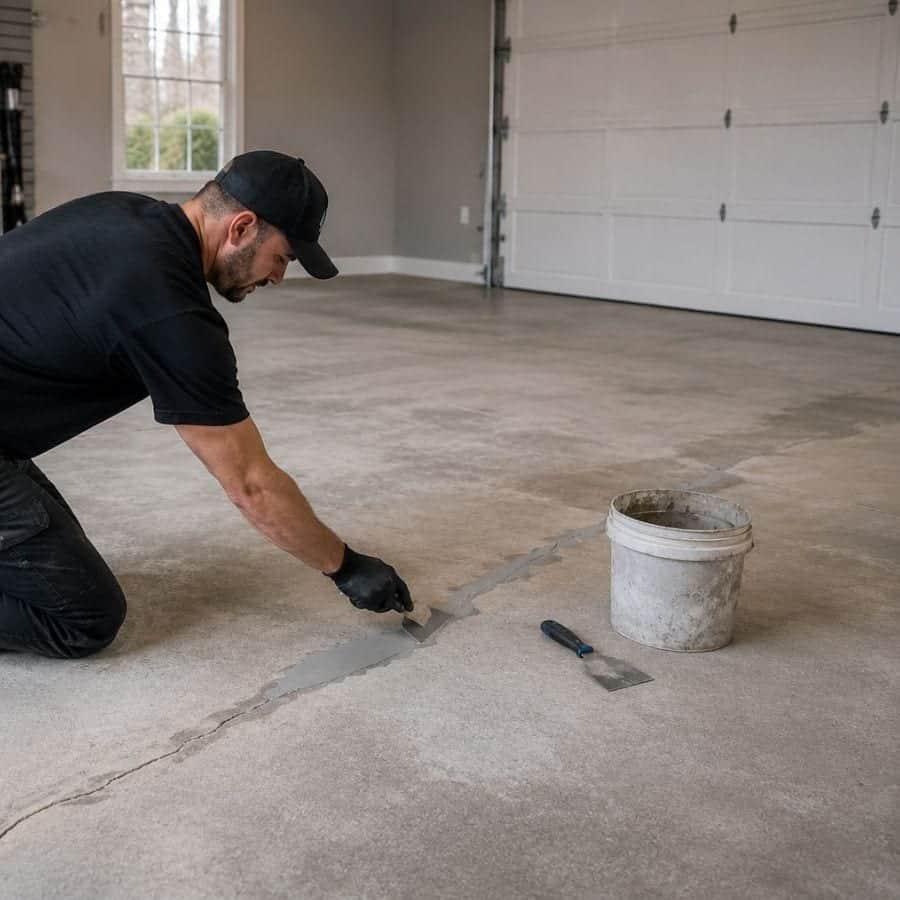
Grinding opens the concrete to a texture the planned basecoat can use. It is preparation, not a promise to level every irregularity or repair structural problems. Edges, dust control, joints, and old coating removal are considered with the slab.
Step 4
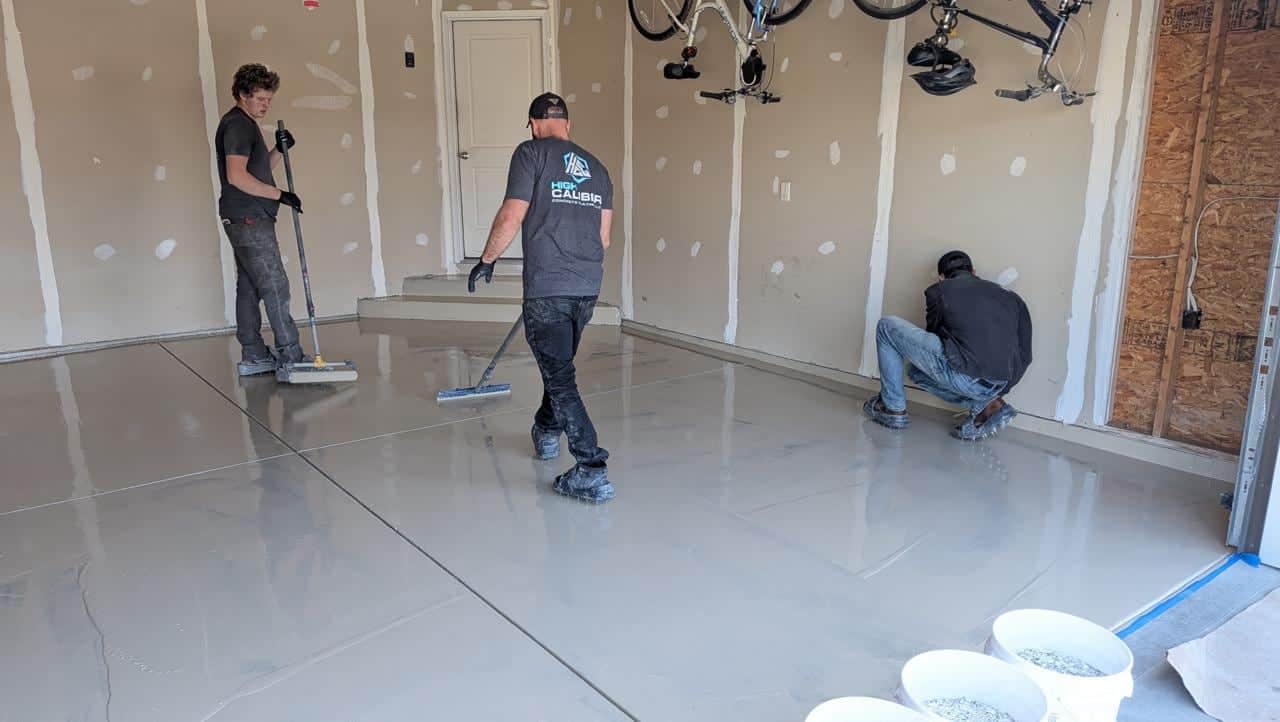
Once the surface is opened, appropriate cracks, pits, spalls, and damaged areas can be addressed within the agreed scope. Repairs create a better starting surface, while the owner should understand that concrete can continue to move and future maintenance remains possible.
Step 5
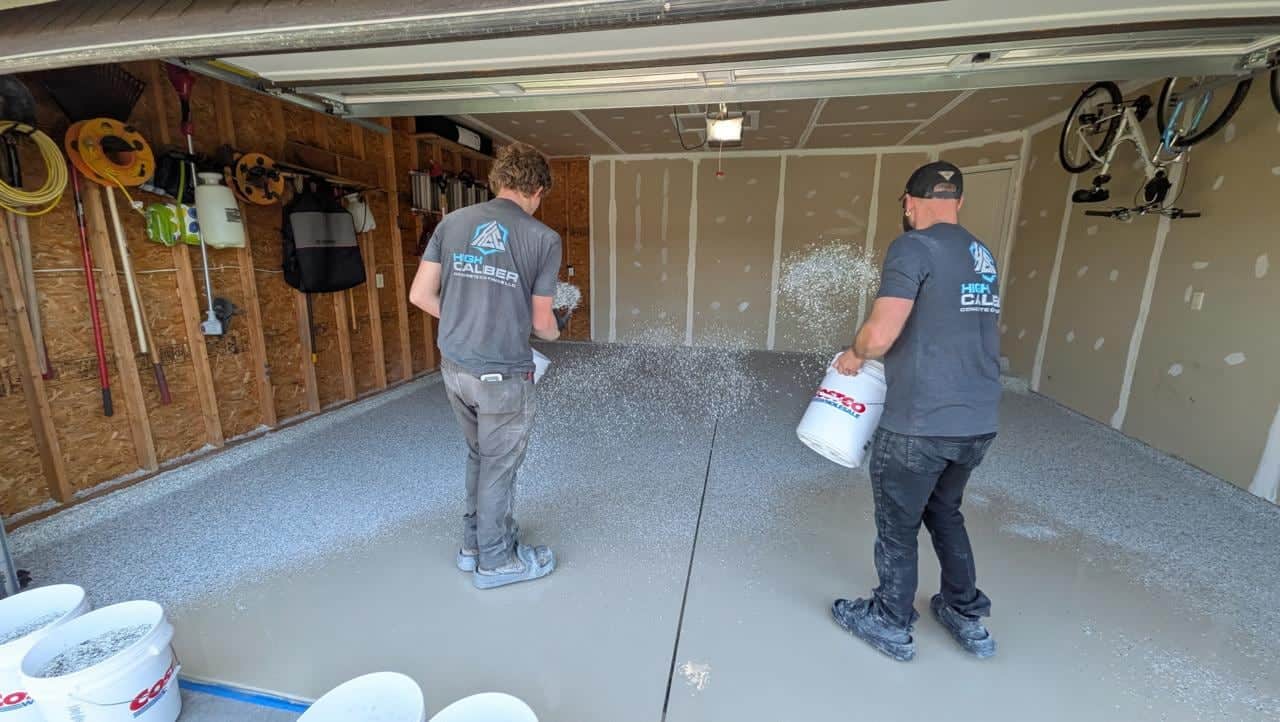
The prepared slab receives the planned basecoat, optional decorative flake when requested, and compatible upper layer in sequence. Epoxy contributes adhesion and build in its role; polyurea and polyaspartic choices are made according to the exposure, finish, and project conditions.
Step 6
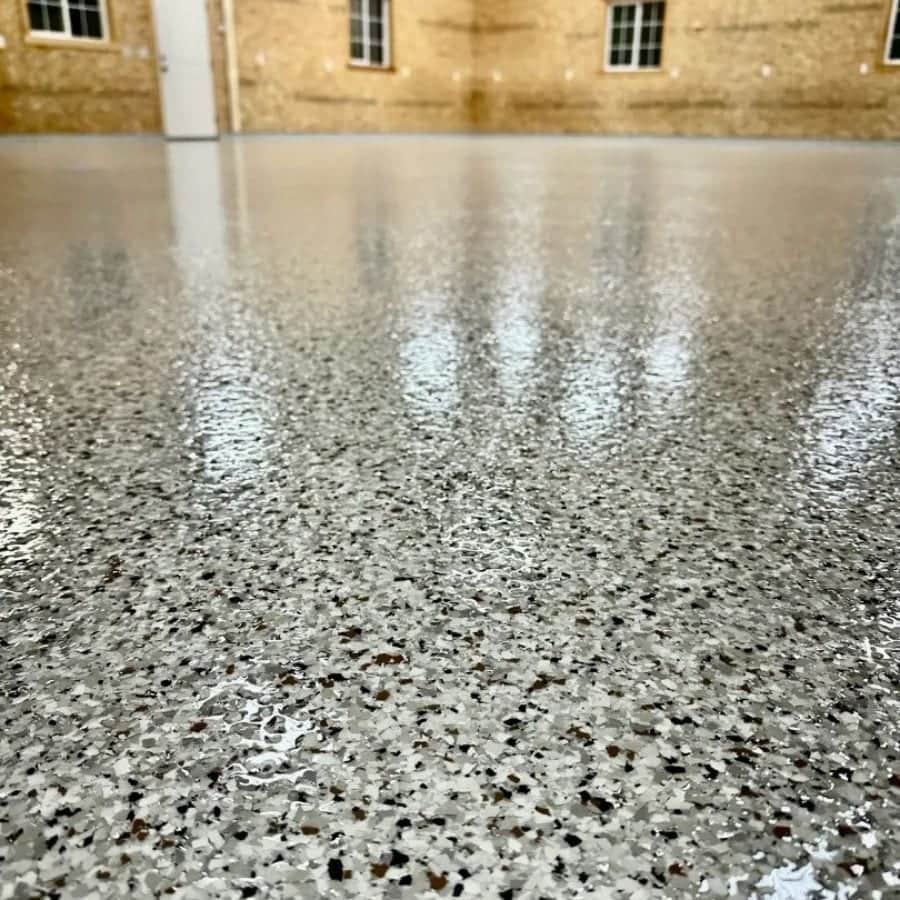
The handoff includes a review of the finished surface, edges, transitions, care expectations, and access conditions. We explain when normal use can resume based on the system and conditions rather than offering a fixed downtime promise that the site has not earned.
Why High Caliber
Our Zeeland-based team brings the estimate, preparation, installation, and handoff into one conversation. For a Hamilton owner, that means the floor plan can include the working details that are easy to overlook: where carts turn, where salt arrives, which areas stay occupied, how cleanup happens, and what the slab shows after preparation.
High Caliber is a family-owned West Michigan company serving commercial properties with a preparation-first approach. We can discuss coating alongside grinding, polishing, or sealing when the existing concrete or the operating environment points elsewhere. The useful answer is the one that fits the building, not the one that uses the most material.
Customer Reviews
“Would highly recommend. No pressure sales, quality product, great communication and quality installation. I met Jeff at the home show. I was drawn into his booth by his very enthusiast kids. I got the immediate impression this was a family oriented business and that was reinforced by the conversation with both Jeff and his young son. These values drew me to this business. I signed up for a quote. Shortly after the show Jeff came to my home to present options and provide a quote. No pressure to buy, Jeff understood I needed to get thru tax season before I could be sure about my budget. Over the course of next few months Jeff was responsive to any questions I had and we got the job scheduled. Jeff provided a trailer in the quote to store contents of garage while job was being done, which was very helpful. When talking with others about the quote I learned my price was equal to or less than what neighbors had paid up to six years ago, so I felt this was good pricing. I had thought there would be a ton of dust and a big mess when grinding surface, but the machines had a vacuum attached, clean and efficient work. I was impressed that they coated steps and side walls as well as floor. No mess on drywall or driveway. Crew doing installation were great guys. They took time to fill me in on the process of installation, what to expect, how long for surface to cure and when I could empty trailer. Post install Jeff stopped out to grab trailer, filled me in on what to use and how to clean the floor. VERY happy with the whole process from sales to install to follow up. LOVE my new garage.”
“Jeff and his team did the most amazing job epoxy floor coating my 38 year old garage floor. Outstanding, professional, skilled, great communication. Highly recommended.”
“High Caliber's quality and communication was excellent. From the person that visited onsite for an estimate to their crew that performed the service was above normal customer service standards, as they explained the process and timing. My garage floor looks great!”
Hamilton, Michigan
Hamilton's Allegan County setting brings together smaller public-facing spaces and properties influenced by agricultural or service work. A church, school, restaurant, or local retail room may care most about an orderly appearance and manageable cleaning. A service or agricultural area may see soil, carts, tools, equipment, and spills. The floor conversation changes when the route across the slab changes.
Winter and spring add their own maintenance questions. Snow, freeze-thaw cycles, road salt, humidity, and spring moisture can reach entrances and working areas. We can discuss how wet footwear, tracked grit, wash water, and under-slab moisture affect the plan. A coating does not erase weather or make a slab structurally new, and it still needs care after installation.
Nearby Fennville, Allegan, and Holland are part of the surrounding service area, but this estimate should begin with the Hamilton facility in front of us. Mark the busy routes, note any wet zones, describe equipment and spills, and tell us how the space must be used during the project. Those observations give the site review somewhere useful to start.
Entrances, customer areas, churches, schools, and restaurants may benefit from a surface that presents consistently while supporting frequent cleaning.
Agricultural and service spaces can bring dirt, carts, tools, equipment, and spills, so the traffic pattern matters as much as the chosen color.
Texture, exposure, cleaning, and underfoot feel deserve a specific discussion wherever snow, wash water, humidity, or spills reach the floor.
Frequently Asked Questions
The conversation can include rural retail, restaurants, churches, schools, municipal spaces, agricultural properties, and service areas. We look at the actual concrete and the work it supports, including foot traffic, carts, tools, vehicles, spills, cleaning, and appearance. A smaller facility still deserves a site-specific recommendation rather than a residential package with a commercial label.
Useful details include the rooms involved, the busiest routes, equipment that must move, areas that get wet, likely spills, existing coatings, visible damage, cleaning practices, and access limitations. If the operation must remain partly active, explain which doors and zones need to stay available. That information helps us discuss preparation, sequencing, and handoff with fewer assumptions.
Epoxy has a purposeful place as an adhesion and build layer near the prepared concrete. Polyurea and a compatible polyaspartic or other topcoat can provide different properties higher in the system, depending on the application. We use the right chemistry in the right layer, then match the complete assembly to traffic, moisture, cleaning, appearance, and access conditions.
Yes, it can be evaluated. Existing material must be checked for bond and removal needs, while grinding exposes conditions that may not be visible at first glance. Appropriate cracks, pits, spalls, and damaged areas can be addressed within the scope. Preparation improves the starting point, but it cannot guarantee that an aging slab will stop moving or needing care.
They add conditions to examine, especially at entrances and in spaces that receive wet footwear, tires, or wash water. Road salt and grit affect cleaning, while humidity and spring moisture make slab conditions relevant to installation planning. We discuss exposure, moisture review, surface preparation, finish selection, and ongoing care without claiming that a coating removes seasonal maintenance.
The sequence may be shaped around available work zones, doors, equipment movement, neighboring occupants, and the selected system. We need to understand what can be cleared and when normal traffic must resume before describing the plan. Return-to-service expectations depend on preparation, materials, curing conditions, and the site, so we do not promise one universal downtime number.
Identify the source and route of the water, whether it comes from entrances, cleaning, wash areas, weather, or occasional spills. We can then discuss surface texture, exposure, lighting, cleaning, and the selected finish in combination. Traction is not a blanket rating we can assign without seeing the use. The right care plan matters alongside the coating decision.
Related Services
A coating is one possible answer. These services help frame preparation, material roles, and alternatives when the Hamilton slab or facility use calls for a broader comparison.
See how preparation opens the concrete and brings hidden surface conditions into the planning conversation.
Learn moreExplore a more industrial conversation for facilities with heavier equipment, abrasion, traffic, or spill exposure.
Learn moreCompare mechanically refined concrete when the existing slab should remain visible rather than receive a film.
Learn moreConsider a penetrating sealer when the goal is to protect the concrete without treating it as a film-coated floor.
Learn moreGallery And Visual Proof
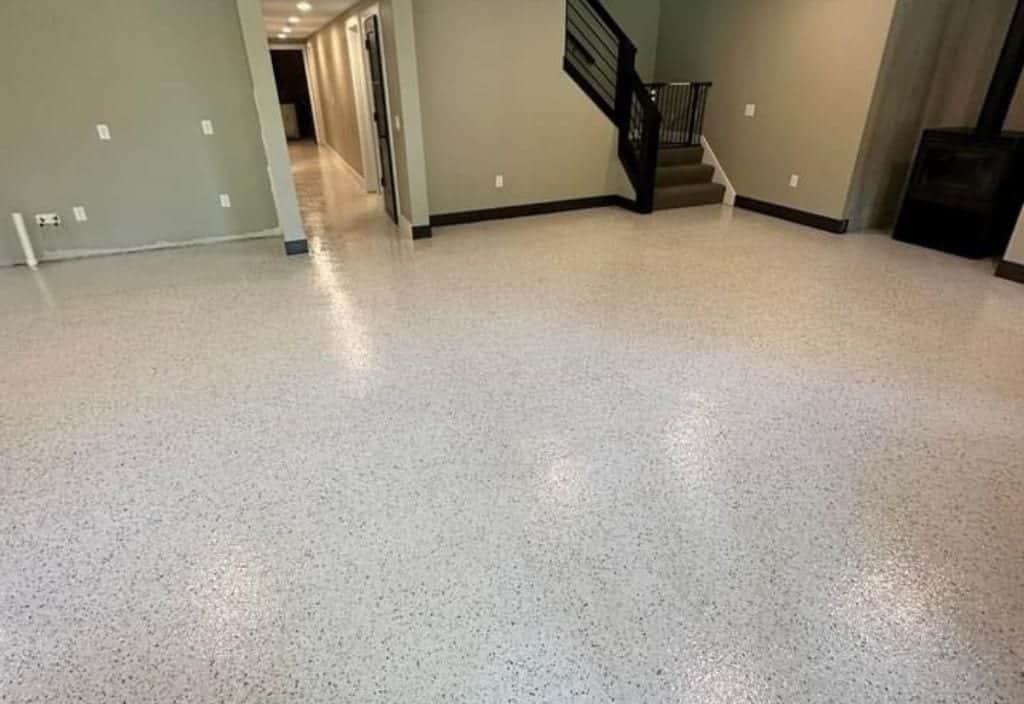
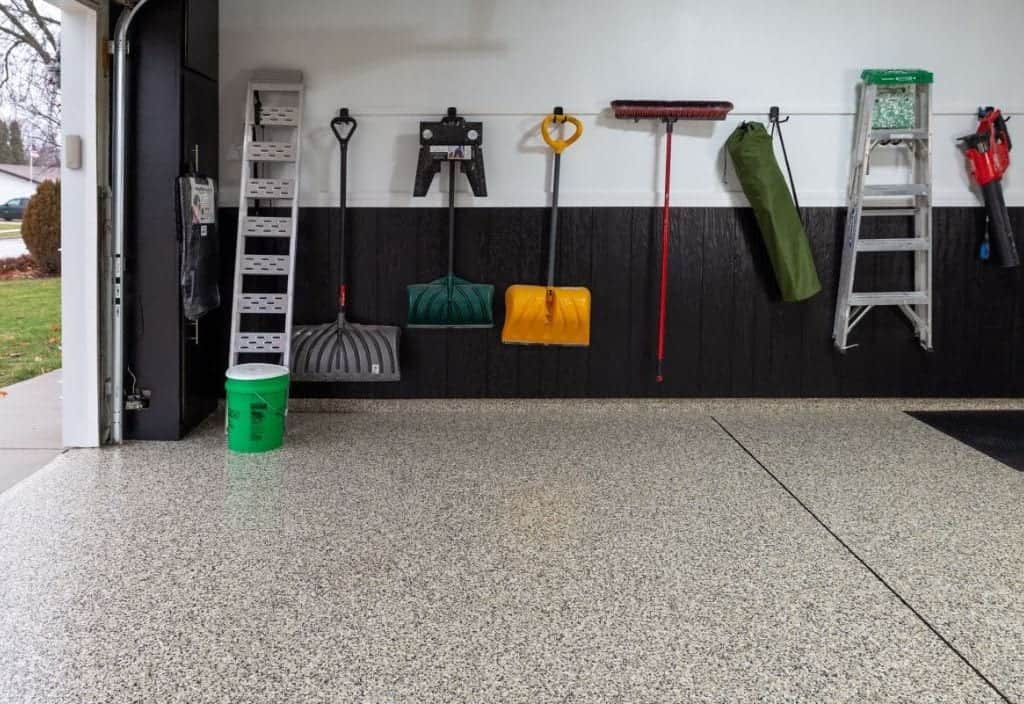
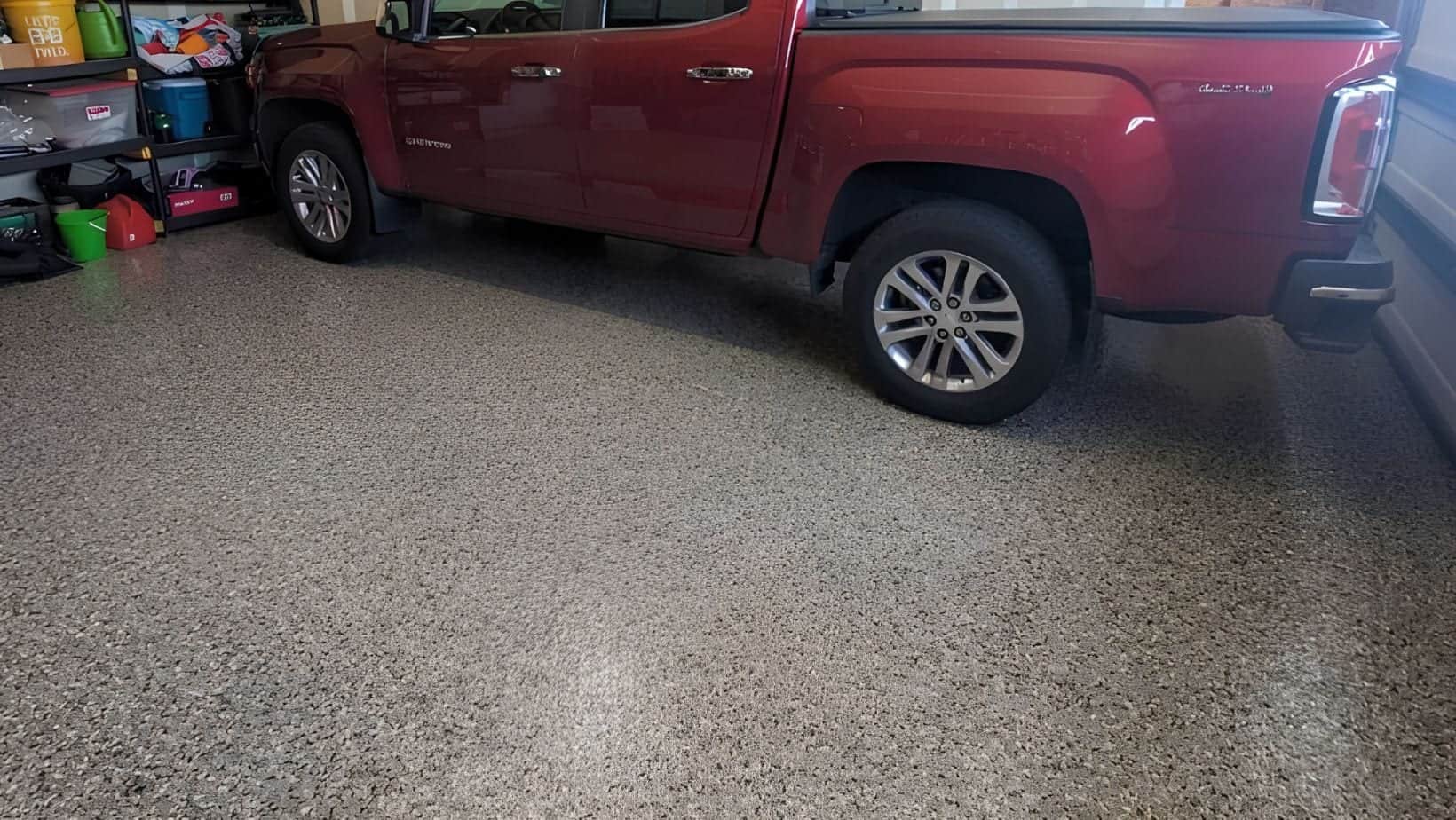
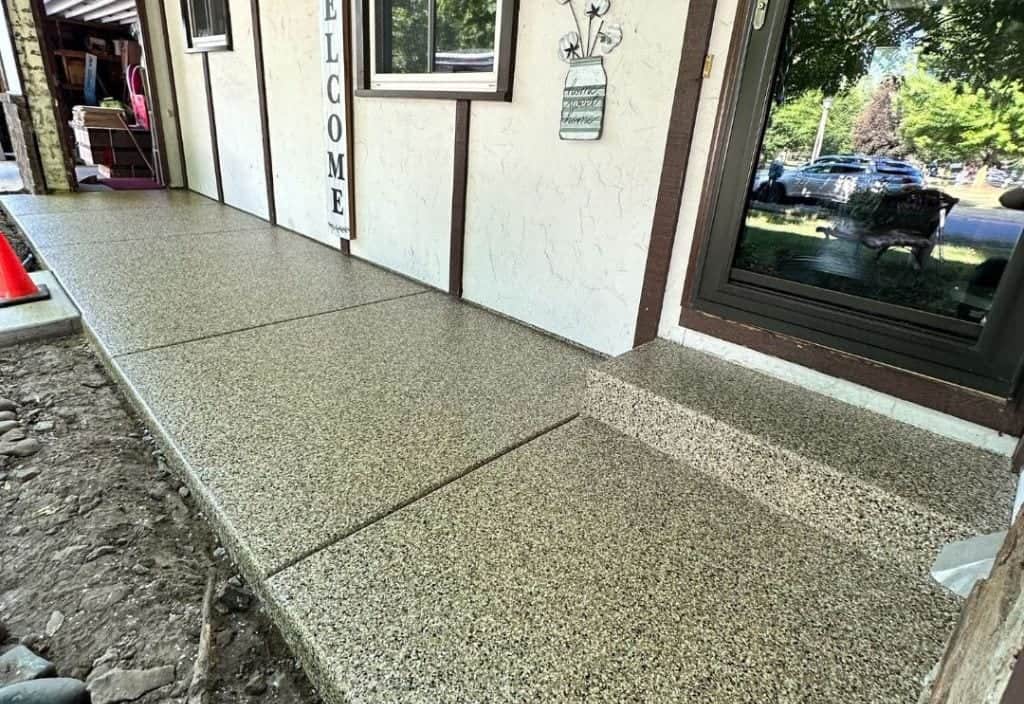
The gallery pairs preparation examples with completed surfaces from our image library. It illustrates methods and materials without claiming a Hamilton project or customer location.
Free Project Quote
Tell us about the space and we will follow up with a clear recommendation and quote conversation.
Phone
Business Hours
Free Estimate
Tell us which rooms need work, what crosses the slab, where moisture or spills appear, and how access affects the operation. We will use those details to discuss preparation, material roles, finish choices, care, and a realistic return-to-service plan for your Hamilton facility. That first brief can also identify priority zones and questions for employees or occupants early. Request a free estimate online or call (616) 777-7348.