
A Better Profile For Bond
Mechanical grinding opens the surface and creates the texture a selected coating can use for adhesion. Profile requirements vary by material and project.
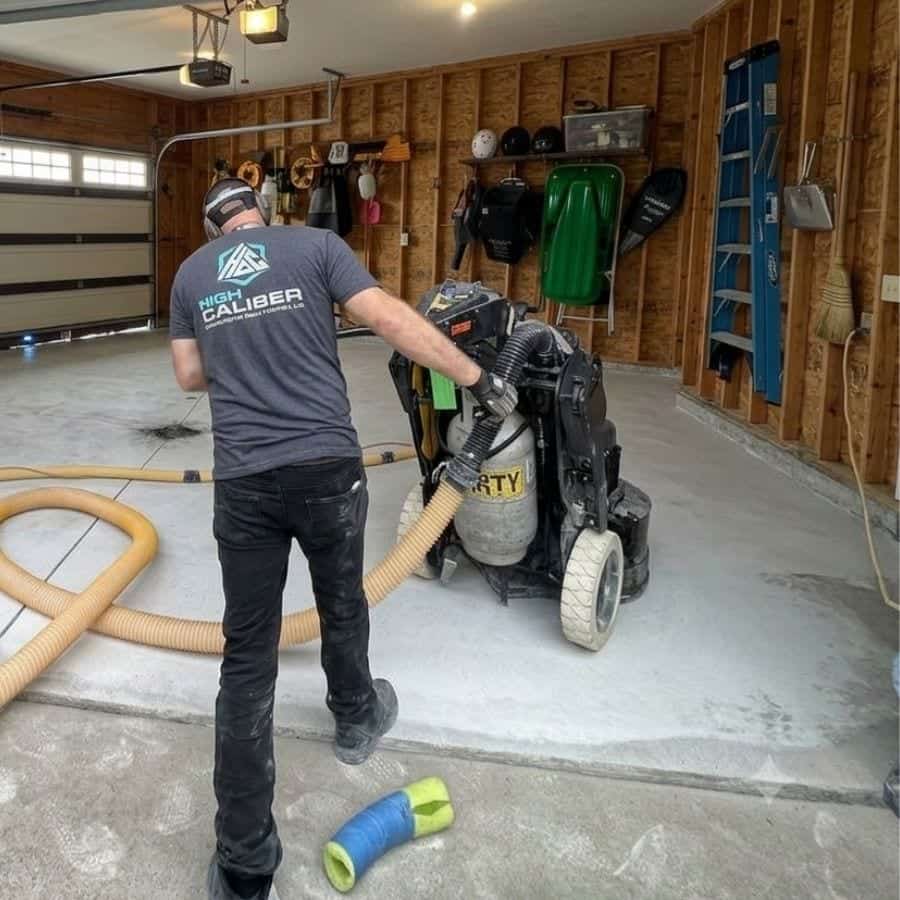
Concrete grinding removes weak surface material and creates a more suitable profile for coatings, sealers, and selected floor finishes. High Caliber plans the grinding scope around what is on the slab, what is underneath, and what the finished floor needs to do.
A coating or sealer can only work with the surface it is installed on. Concrete may carry laitance, old adhesive, paint, a previous coating, rough areas, contamination, or an inconsistent profile. Grinding uses diamond tooling to mechanically prepare the slab instead of relying on a quick wash or a cosmetic pass. The right depth and tooling depend on the material and the next finish.
Grinding is often part of a larger project, not a standalone promise that every floor becomes perfectly flat or new. High Caliber evaluates the condition, discusses the intended finish, handles repairs that belong in the scope, and explains what the equipment can reasonably accomplish.
Grinding is valuable because it gives the next step a cleaner, more consistent starting point. It does not replace every repair or solve every condition on its own.
Mechanical grinding opens the surface and creates the texture a selected coating can use for adhesion. Profile requirements vary by material and project.
The process can remove surface material that is loose, weak, or unsuitable for the planned finish. The needed extent is determined by what the inspection finds.
Grinding can help address old coatings, paint, adhesive, and surface contamination when the scope and tooling are appropriate. Some materials need additional removal methods.
High spots, rough transitions, and uneven surface texture can be improved within the limits of the slab. Grinding is not an automatic leveling solution for major structural variation.
Opening the slab gives the team a better view of cracks, pits, joints, and moisture clues before a coating, sealer, or other finish is selected.
Tell us where the floor is, how it is used, and what you want the finished surface to do. We will help you compare a practical system.
Grinding is equipment work, but good results begin with the surface and the finish that follows. The sequence keeps those decisions connected.
Step 1
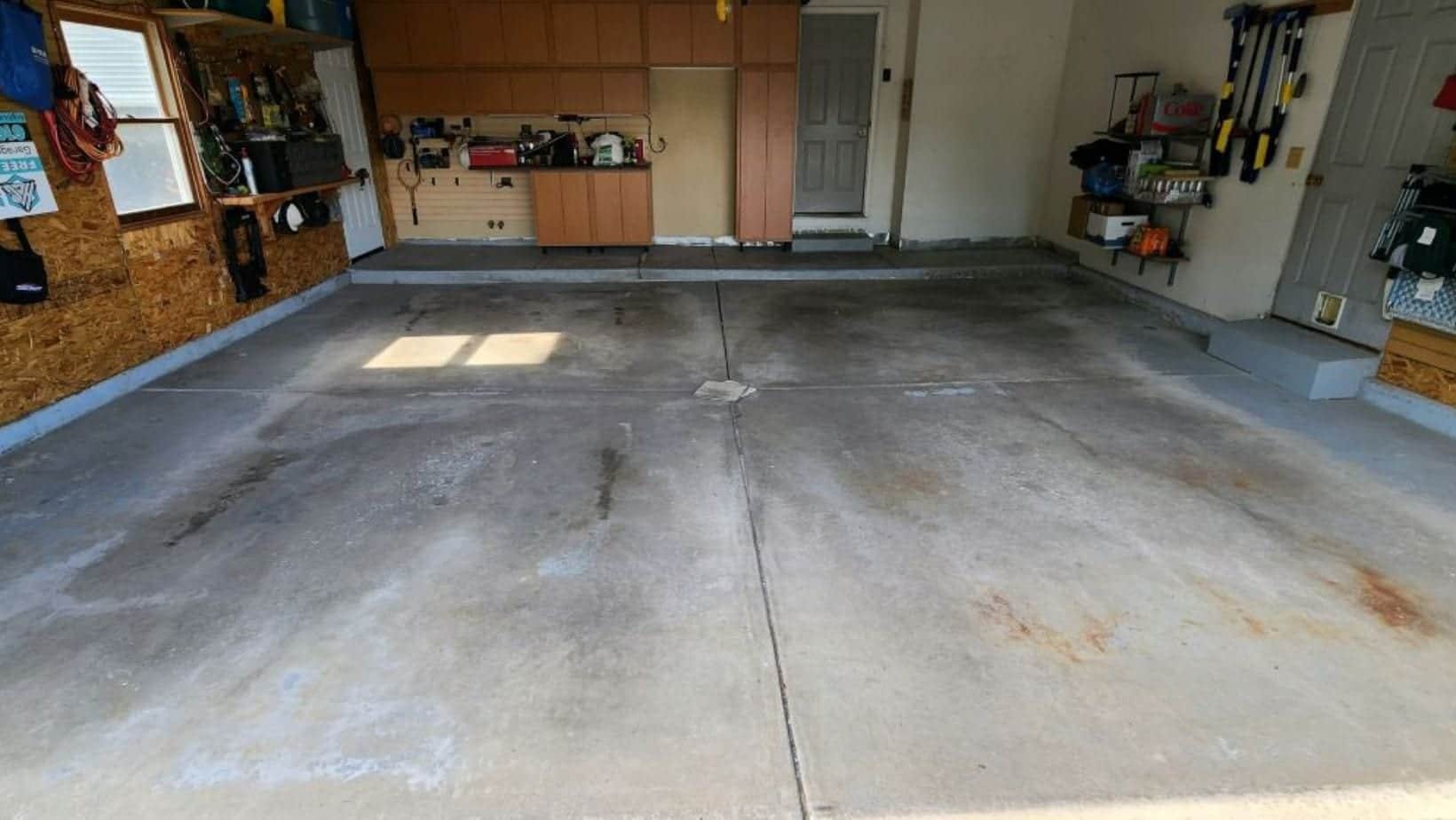
The team discusses whether the floor will receive a coating, sealer, polished finish, or another use. The desired result helps determine the preparation profile and removal approach.
Step 2
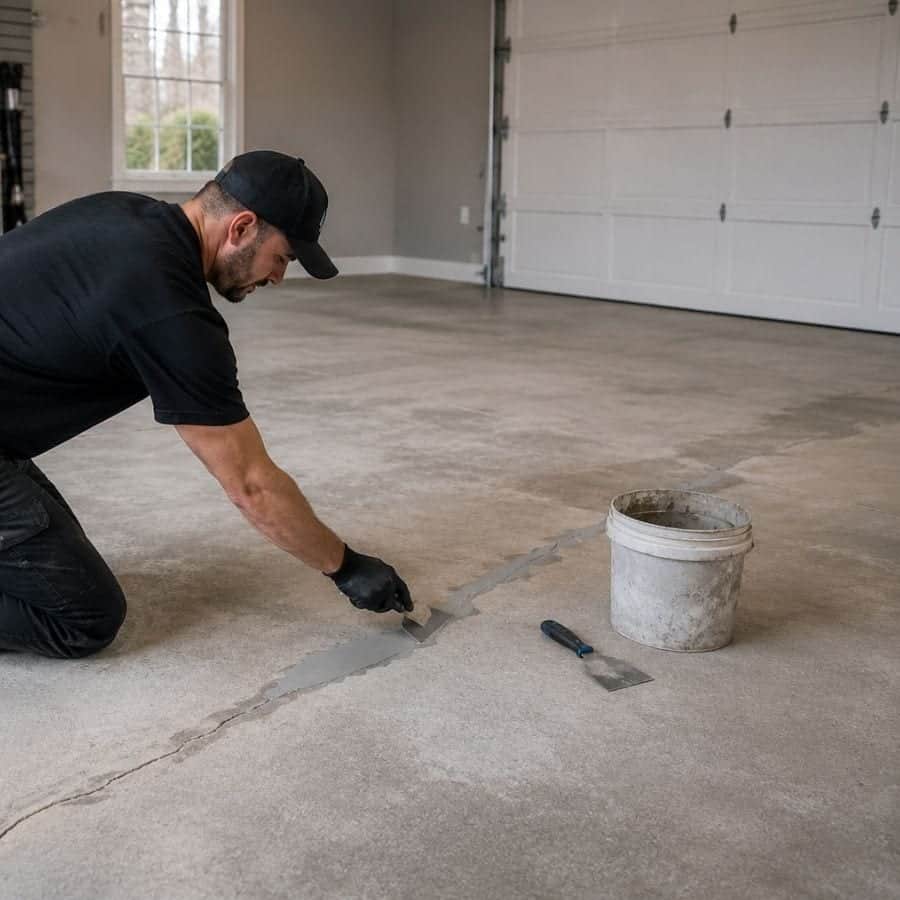
Existing coatings, glue, tile residue, cracks, spalls, joints, edges, and access are considered before equipment is selected. Unverified conditions are discussed rather than guessed at.
Step 3
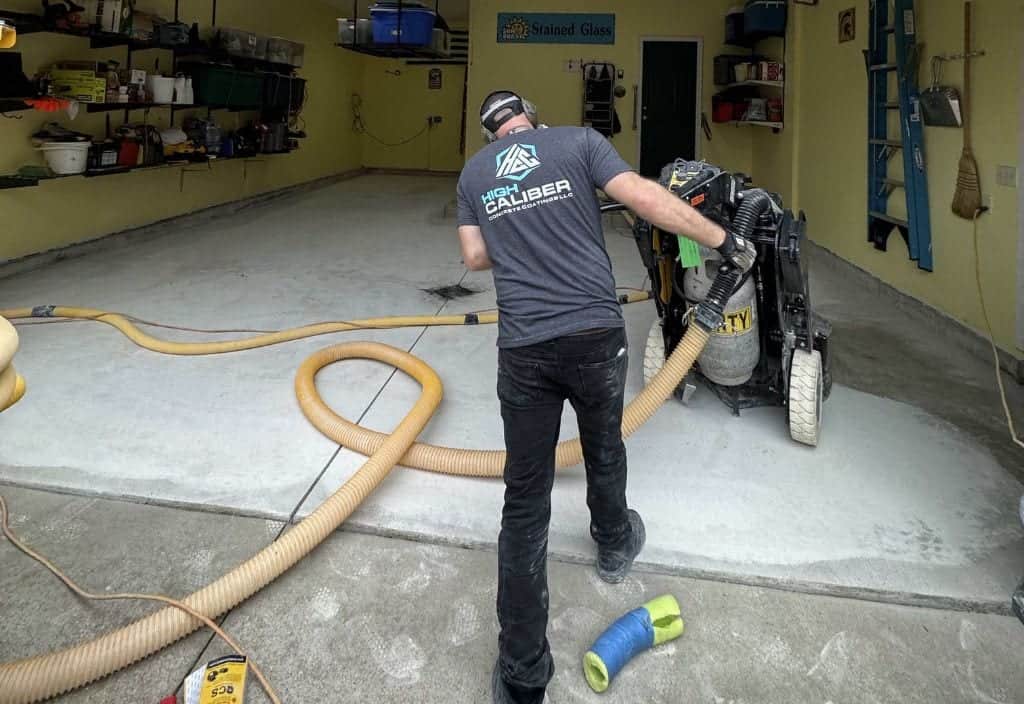
Diamond tooling mechanically prepares the surface. Dust control, passes, edges, and the intended profile all matter to the quality of the work and the next layer.
Step 4
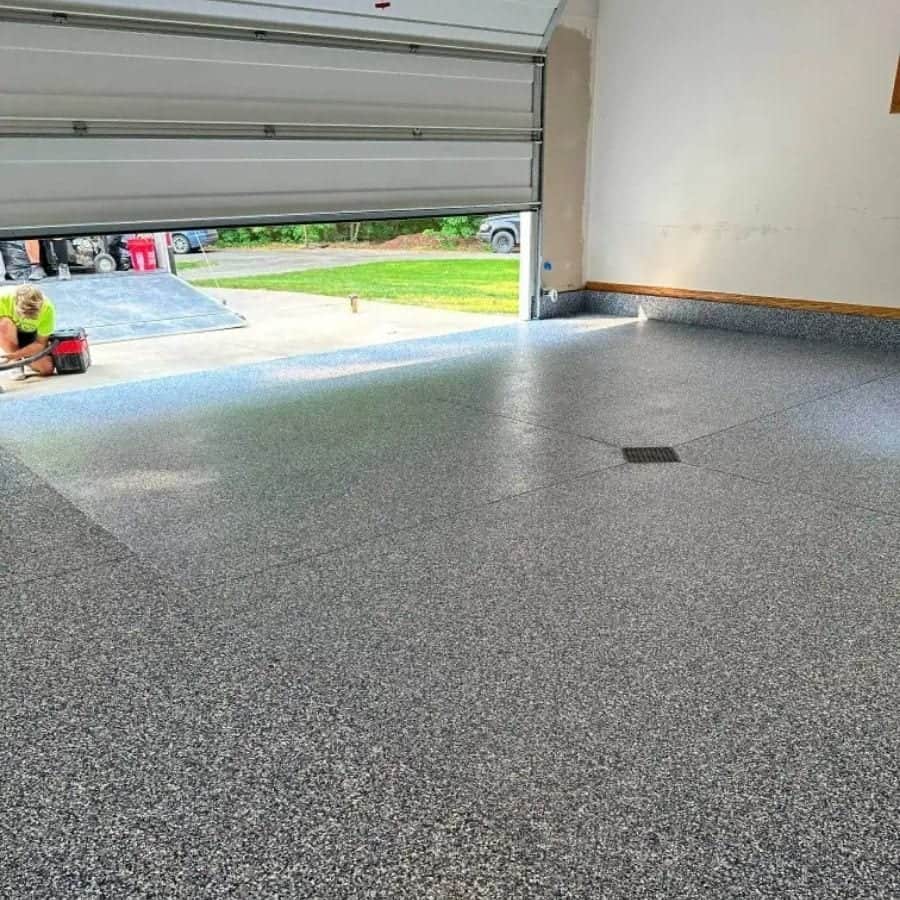
Once the floor is opened up, the team can address repairs that belong in the scope and remove remaining debris so the next finish has a prepared surface.
Step 5
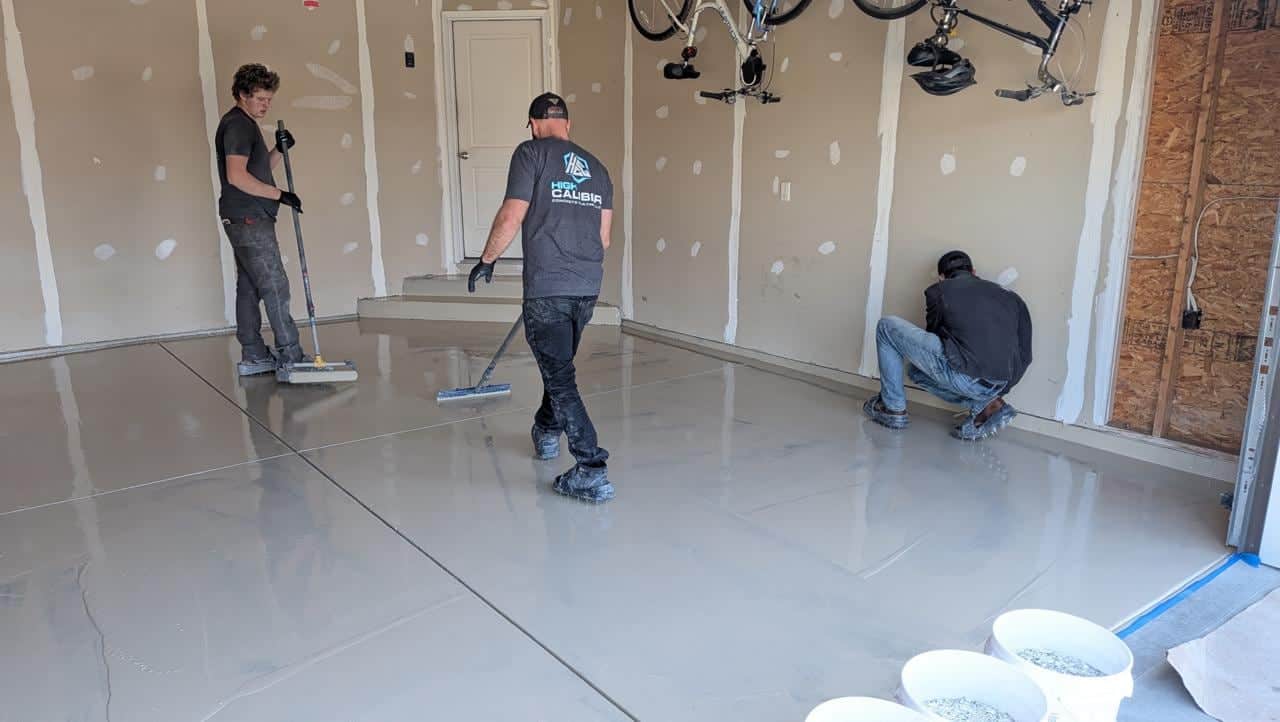
Grinding may lead into a coating, sealing, polishing, or another planned floor treatment. The handoff is based on the actual slab, not on a generic promise about what grinding can hide.
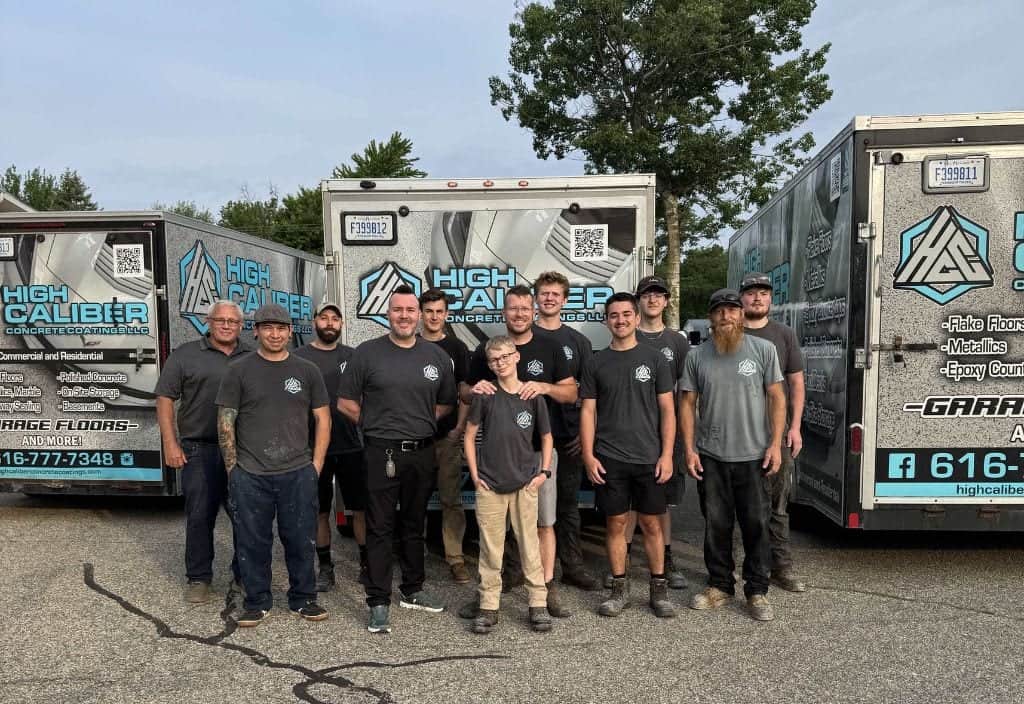
High Caliber Concrete Coatings is a local, family-owned West Michigan company based in Zeeland. Grinding is part of the team's broader concrete preparation and finishing work, so the conversation can account for the coating, sealer, or polished surface that follows. That connection helps prevent a preparation scope from being chosen without knowing what the next layer requires.
The team also explains the limits of grinding. It can prepare and improve a surface, but it cannot change the structure of a slab, remove every deep defect without changing the scope, or guarantee that future concrete movement will not occur.
Grinding may be used before garage floor coatings, epoxy and hybrid systems, sealers, grind and seal work, polished concrete, or selected repairs. It may also help remove old adhesive or prepare a floor after tile removal, depending on what remains on the slab. Commercial spaces often add access, dust control, traffic, and scheduling questions to the preparation plan.
If the goal is a completed floor rather than preparation alone, review Concrete Coatings, Concrete Polishing, and Grind And Seal. Each finish asks different questions of the concrete.
Preparation is also where hidden conditions become easier to discuss. A floor may reveal additional adhesive, a soft area, a crack pattern, or moisture clues after the weak surface is removed. That does not mean the project failed. It means the final recommendation can be based on the concrete that is actually there, with changes explained before the next material is installed. This is especially useful when a floor has had several layers of flooring over time. Understanding the base helps prevent a new finish from being installed over a condition that was never addressed.
Read the words customers have shared about High Caliber. These are real reviews from the site review library, shown without invented project details or location claims.
“Would highly recommend. No pressure sales, quality product, great communication and quality installation. I met Jeff at the home show. I was drawn into his booth by his very enthusiast kids. I got the immediate impression this was a family oriented business and that was reinforced by the conversation with both Jeff and his young son. These values drew me to this business. I signed up for a quote. Shortly after the show Jeff came to my home to present options and provide a quote. No pressure to buy, Jeff understood I needed to get thru tax season before I could be sure about my budget. Over the course of next few months Jeff was responsive to any questions I had and we got the job scheduled. Jeff provided a trailer in the quote to store contents of garage while job was being done, which was very helpful. When talking with others about the quote I learned my price was equal to or less than what neighbors had paid up to six years ago, so I felt this was good pricing. I had thought there would be a ton of dust and a big mess when grinding surface, but the machines had a vacuum attached, clean and efficient work. I was impressed that they coated steps and side walls as well as floor. No mess on drywall or driveway. Crew doing installation were great guys. They took time to fill me in on the process of installation, what to expect, how long for surface to cure and when I could empty trailer. Post install Jeff stopped out to grab trailer, filled me in on what to use and how to clean the floor. VERY happy with the whole process from sales to install to follow up. LOVE my new garage.”
“I can not express how awesome my garage floor looks. Your crew did a phenomenal job, we'll probably be the envy of the neighborhood now. Very polite, cleaned up the area, fast amazing job! My only complaint was the floor was going to look great so my wife said we had to clean out and paint all the walls and shelving, but it was worth it. Thank you again.”
“Wow! Jeff and Mike were amazing to partner with for my garage floor renovation! They did an amazing job but more importantly, they communicated directly with me thru texts, reminders, and in person! Jeff and his team left my garage and exterior area cleaner than when they arrived and gave clear instructions on follow up care needed for my new floor! I would highly recommend High Caliber Concrete Coatings anytime!”
Explore service-specific information for each published community. This list is connected to the local page data, so new communities appear here as they are published.
A phone conversation can clarify the slab, the use case, the finish, and the next step before you commit to an estimate.
Grinding removes weak surface material and creates a mechanical profile that can support adhesion. It also helps expose the actual slab condition so repairs and other preparation decisions are made before coating.
It can help remove or prepare many surface materials, but the right method depends on the material, thickness, bond, and condition underneath. Some floors need additional removal work or a different scope after inspection.
Grinding can improve surface texture and address some high areas, but it is not a promise to correct structural slope or every major variation. The estimate should explain what the slab allows and what the planned finish needs.
Grinding creates dust, which is why professional preparation uses appropriate equipment and dust-control practices. The project conversation should cover access, nearby items, ventilation, and the expected cleanup sequence.
The next step may be crack repair, a coating basecoat, sealer, polished finish, or another planned treatment. The surface is reviewed and cleaned before that next layer is installed.
Yes, when the floor and access support the work. Commercial planning may include equipment movement, dust control, work zones, adjacent occupants, and the schedule for the finish that follows. The estimate should make those details part of the preparation scope.
See how grinding fits into a complete protective or decorative coating system.
Learn moreExplore a finish that refines the concrete and protects it with a sealer.
Learn moreCompare grinding and polishing when the concrete itself remains the finished surface.
Learn moreReview removal work when adhesive remains after flooring is taken up.
Learn moreThese photos show real materials, preparation, and finished surfaces from the company library. They are not presented as a promise that every slab or project will look identical.
Free Project Quote
Tell us where the work is, how the space is used, and what you want from the finished surface.
Phone
Business Hours
Tell us what is on the floor, what you want next, and what condition you can see. High Caliber will help you understand the grinding scope and the finish that follows.