
A More Unified Working Surface
A properly prepared coating can give worn concrete a more consistent surface across the room, helping the floor feel intentional beneath vehicles, stored gear, or everyday foot traffic.
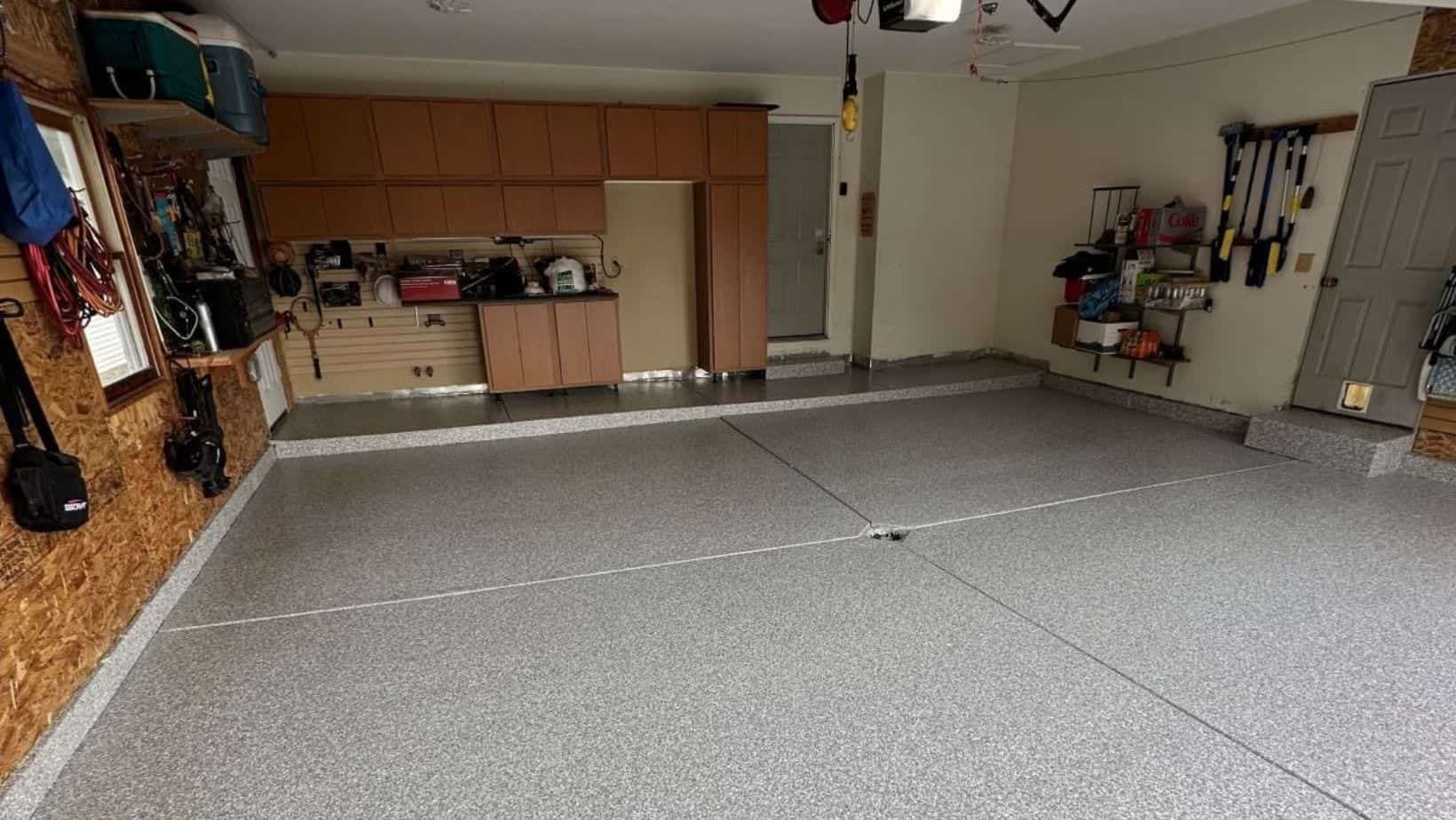
An East Grand Rapids floor can sit close to the routines it serves: vehicles, storage, wet footwear, household access, or daily work. We study the concrete, then explain where epoxy can provide adhesion and build within a compatible hybrid system. Tell us what the room needs and request a free estimate.
Service Overview
East Grand Rapids properties can put a finished floor in a busy transition between outside conditions and interior life. An attached garage may collect winter salt and grit; a basement may bring moisture questions; a workshop or small commercial room may need a surface that is easier to read and maintain. Those are different conversations, even when the requested service has the same name.
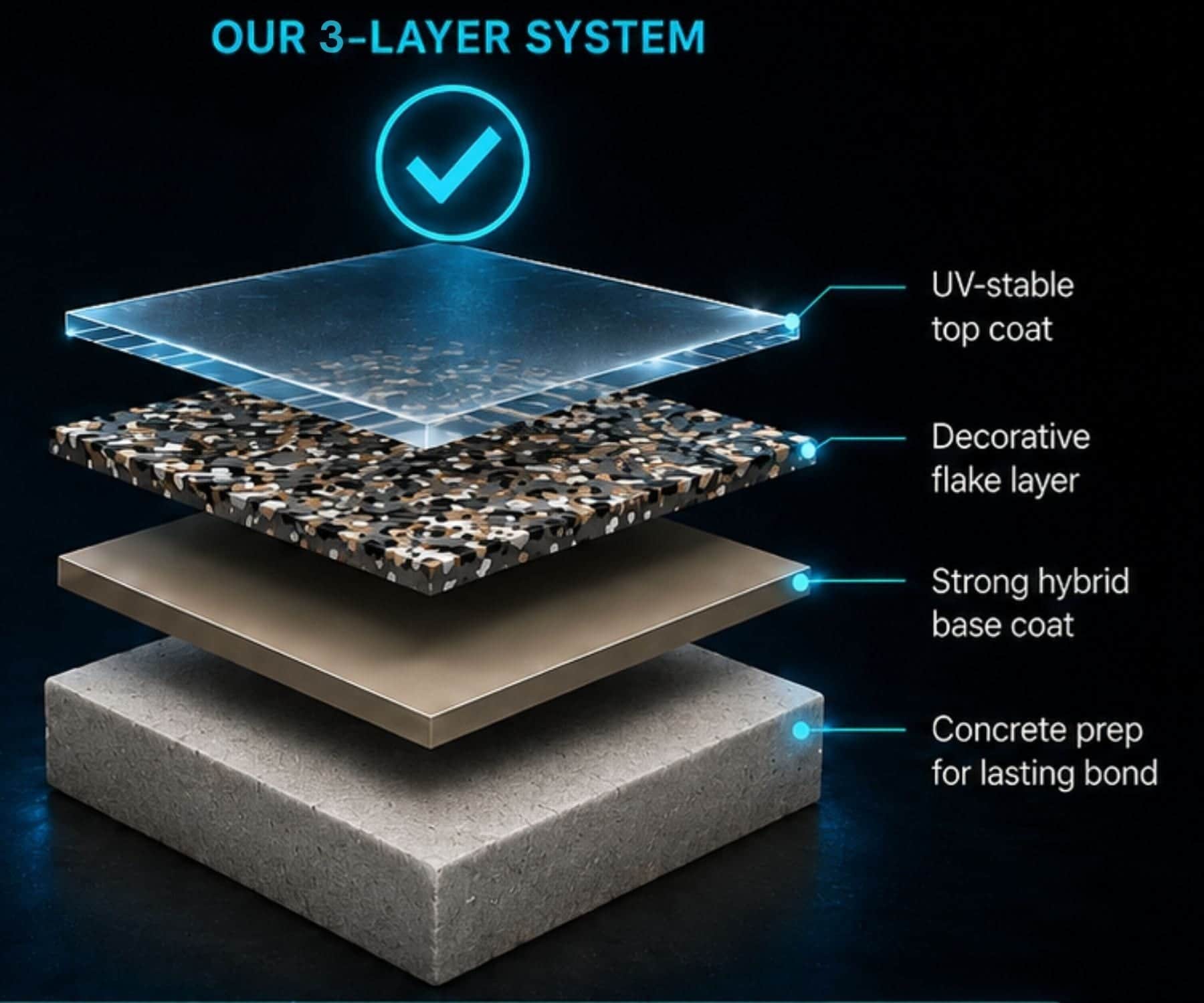
Epoxy earns its place when the concrete and room support it. In our hybrid approach, epoxy can form an adhesive, build-bearing base layer, while compatible polyurea or polyaspartic materials serve other roles when appropriate. We explain the sequence in plain language and keep the recommendation tied to actual conditions.
Benefits
A coating should make a particular room easier to use, inspect, or care for. These possible benefits depend on the slab, selected materials, installation details, and the routine the floor will carry.
A properly prepared coating can give worn concrete a more consistent surface across the room, helping the floor feel intentional beneath vehicles, stored gear, or everyday foot traffic.
Salt, meltwater, and grit are easier to notice on a finished surface than in irregular bare concrete. That visibility can support a more direct cleanup routine near a garage or interior door.
Discussing dampness before color or texture helps separate a coating choice from an unresolved water condition. The estimate can identify when additional evaluation or a moisture barrier deserves attention.
A finished floor can make dust, tracked-in soil, and common spills easier to see and remove. Cleaning still follows the selected system's care guidance, but the surface is simpler to read.
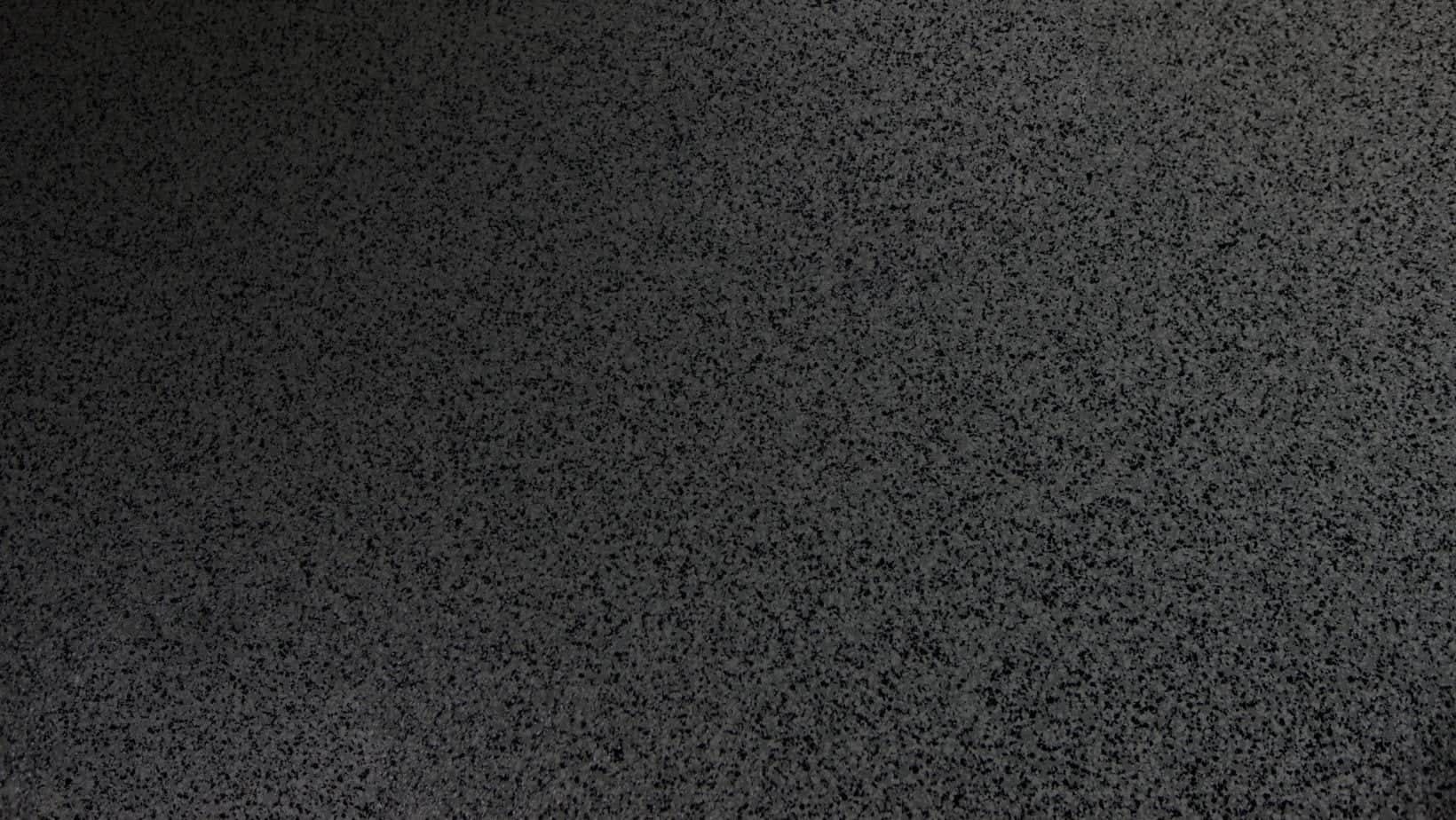
Color, flake density, and sheen can be discussed alongside lighting, stored equipment, and nearby living areas. Decorative decisions have a practical context instead of standing apart from the room.
Epoxy can supply adhesion and build at the base, while polyurea or polyaspartic may suit other parts of a compatible stack. The result is planned by function rather than label.
Installation Process
The installation sequence begins with what the slab reveals. We move from inspection through preparation, repair, coating, and final review so the finished system has a clear reason at every stage.
Step 1
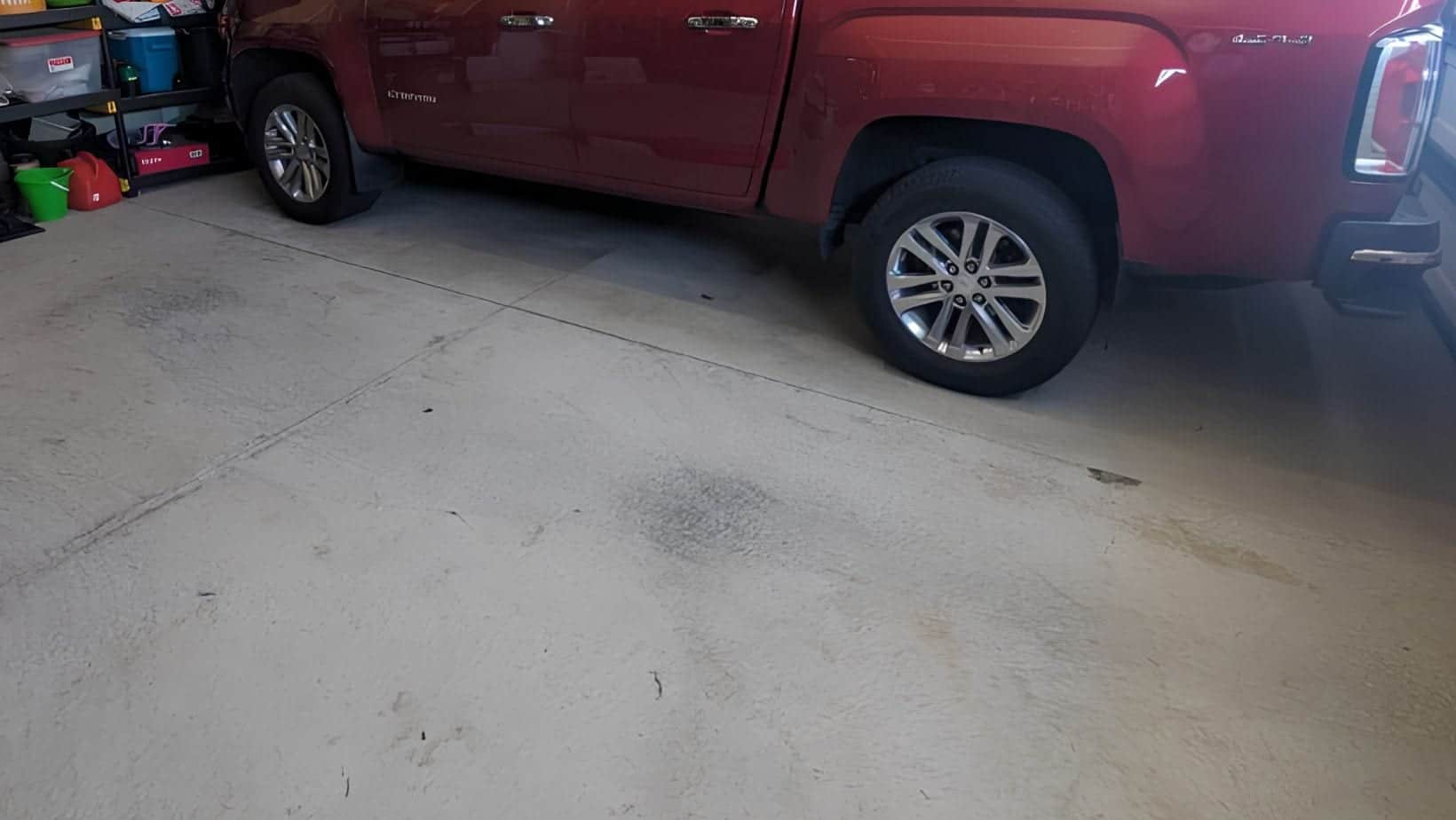
We start by discussing the room's role, access, previous flooring, visible wear, and the conditions the concrete encounters. Cracks, pits, stains, old coatings, joints, and signs of moisture help define what needs attention before materials are selected. Photos and a conversation can make the first estimate more useful, while the slab itself remains the final reference for scope.
Step 2
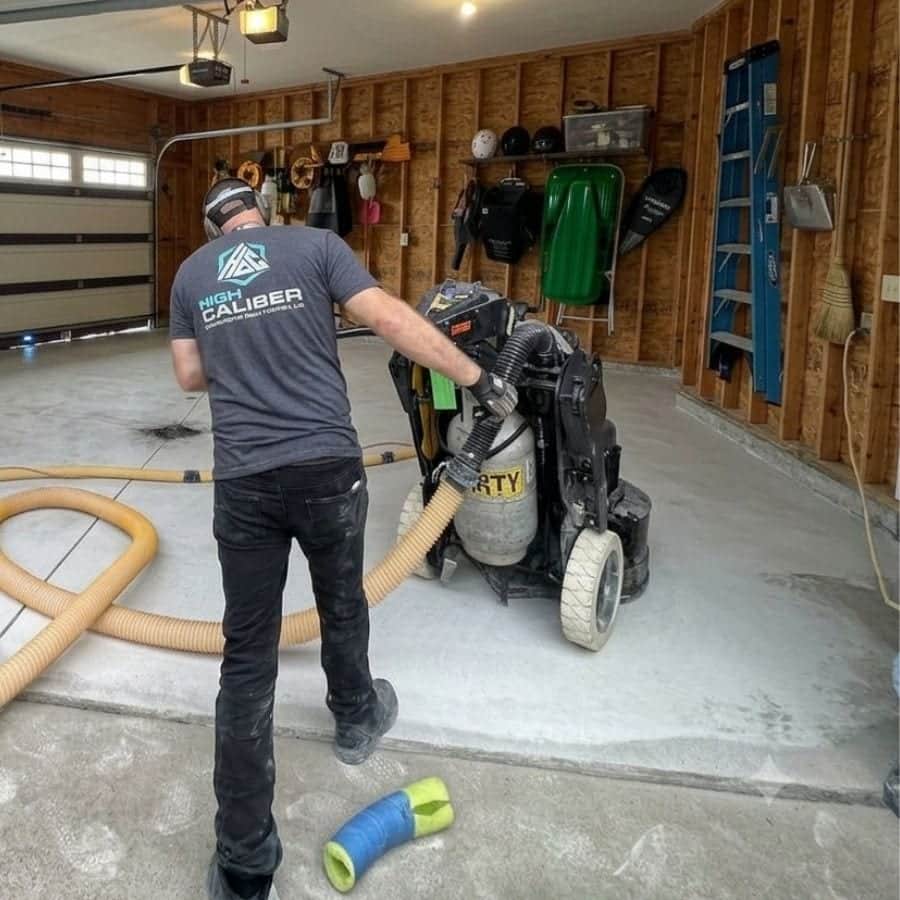
Diamond grinding removes weak surface material and creates the texture an adhered coating needs. It also exposes areas that deserve a closer look and gives the team a cleaner starting point around edges, joints, and repairs. Grinding is preparation, not a promise to level every variation or correct structural movement in the slab.
Step 3
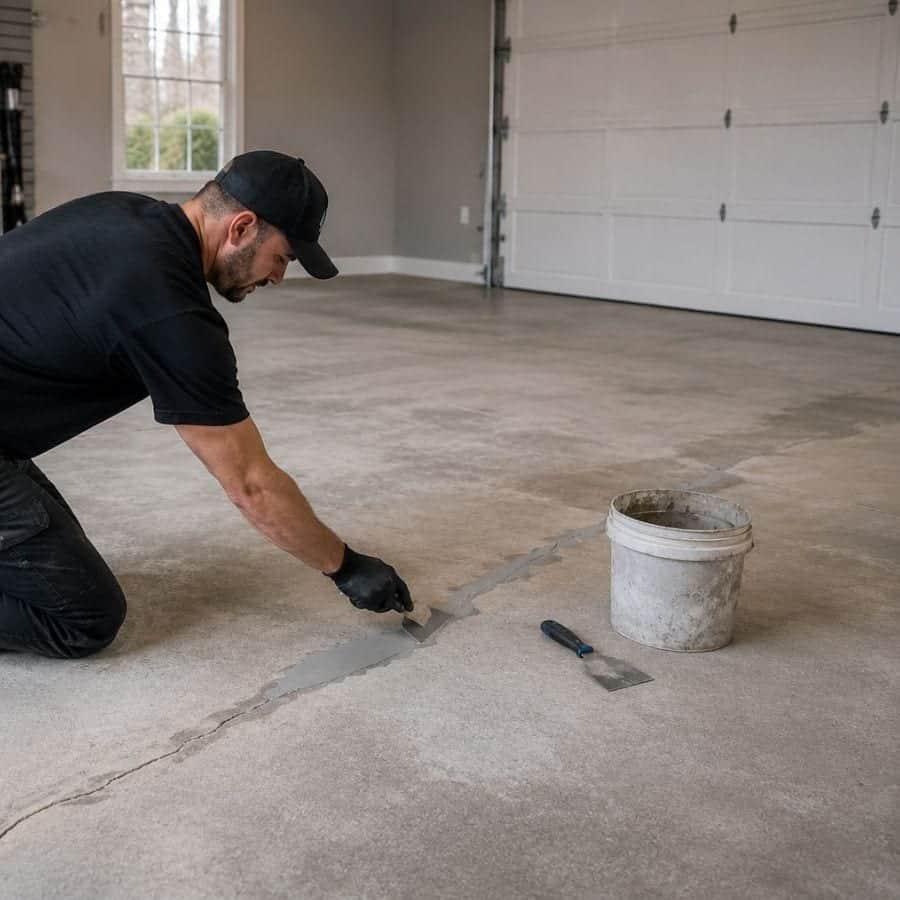
After preparation opens the surface, we can address appropriate cracks, pits, spalls, and damaged areas within the agreed scope. Repairs help create a better base for the coating, but they do not erase every condition that may continue to move. Moisture questions also stay visible here, including whether a moisture barrier epoxy should be considered.
Step 4
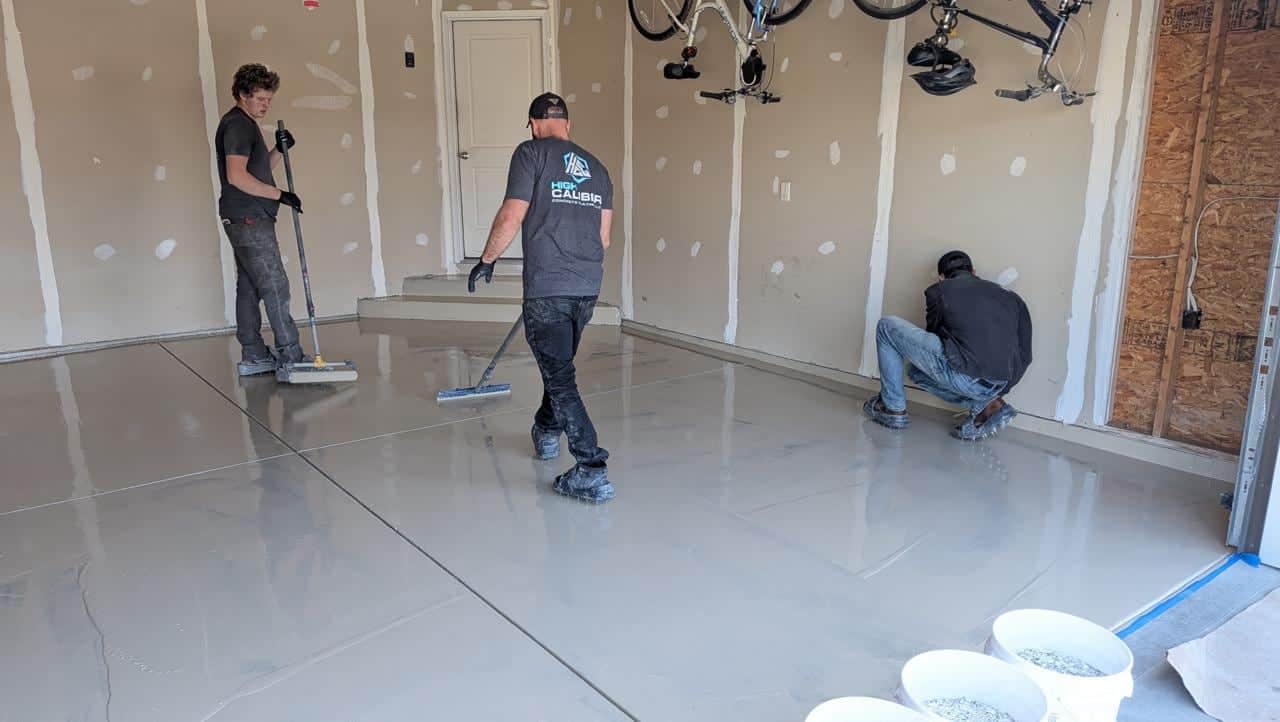
Epoxy is used where its adhesion and build properties serve the floor. The basecoat is applied to the prepared concrete with attention to coverage, edges, repairs, and the planned decorative finish. Calling it a base layer is not a dismissal of epoxy; it explains the material's deliberate job inside the complete system.
Step 5
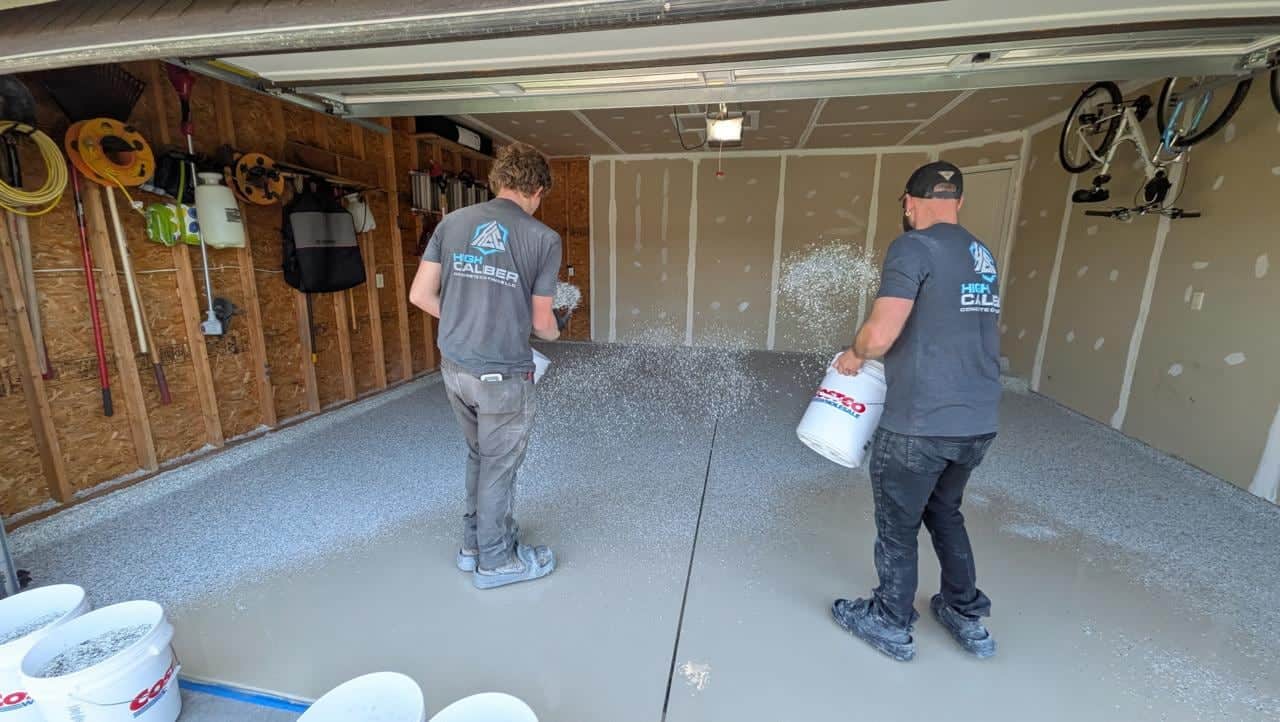
When the design includes decorative flake, the selected blend is broadcast into the appropriate wet layer for the intended coverage and appearance. Compatible polyurea or polyaspartic materials may then contribute properties suited to the next stage. The exact stack follows the floor, exposure, finish preference, and use rather than a one-size-fits-all recipe.
Step 6
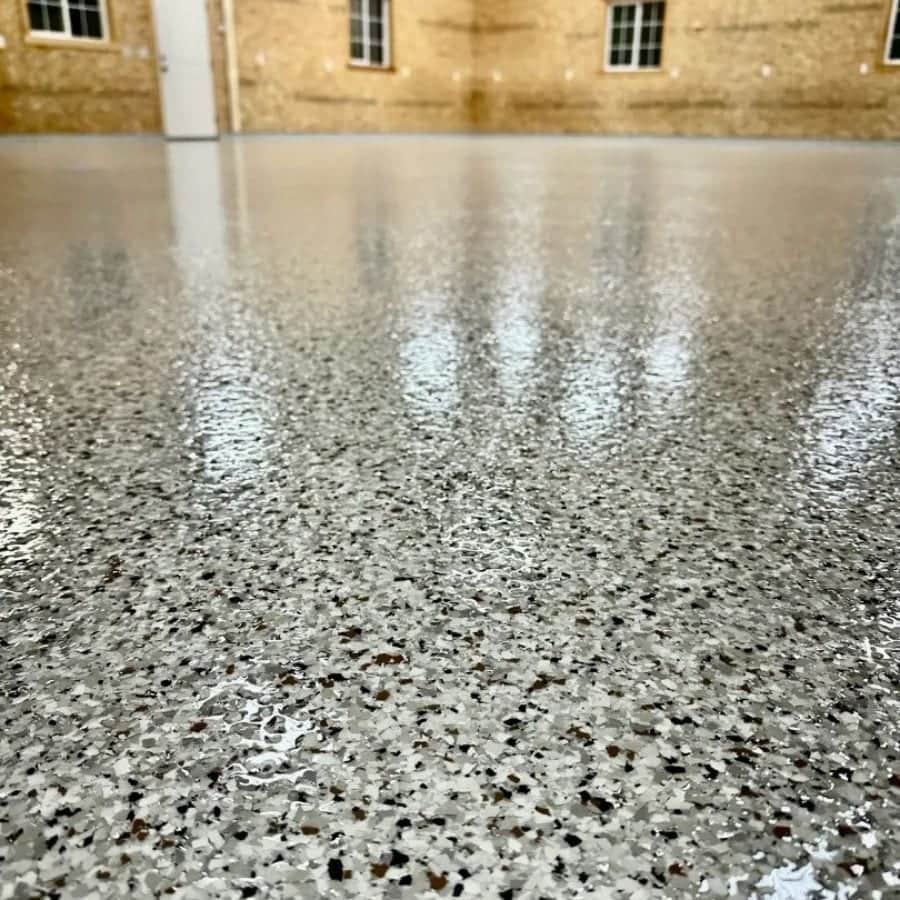
Once the finish is ready for review, we look across the surface and talk through access, cleaning, care, and realistic use expectations. That closing conversation matters in a garage, basement, workshop, school, church, retail area, or other commercial interior because the floor has to make sense after installation as well as during it.
Why High Caliber
Our family-owned company works from the Holland and Zeeland area and serves residential and commercial spaces across West Michigan. We keep the conversation practical: what preparation exposes, what each material contributes, what the room will ask of the finish, and which expectations need to stay realistic.
That means we can explain epoxy without turning the estimate into a material contest. We can also say when a moisture condition, moving crack, or weak area needs more attention before coating. The goal is a scope that lets you understand the work, the selected finish, and the care conversation before you decide.
Customer Reviews
“Jeff and his team did the most amazing job epoxy floor coating my 38 year old garage floor. Outstanding, professional, skilled, great communication. Highly recommended.”
“Would highly recommend. No pressure sales, quality product, great communication and quality installation. I met Jeff at the home show. I was drawn into his booth by his very enthusiast kids. I got the immediate impression this was a family oriented business and that was reinforced by the conversation with both Jeff and his young son. These values drew me to this business. I signed up for a quote. Shortly after the show Jeff came to my home to present options and provide a quote. No pressure to buy, Jeff understood I needed to get thru tax season before I could be sure about my budget. Over the course of next few months Jeff was responsive to any questions I had and we got the job scheduled. Jeff provided a trailer in the quote to store contents of garage while job was being done, which was very helpful. When talking with others about the quote I learned my price was equal to or less than what neighbors had paid up to six years ago, so I felt this was good pricing. I had thought there would be a ton of dust and a big mess when grinding surface, but the machines had a vacuum attached, clean and efficient work. I was impressed that they coated steps and side walls as well as floor. No mess on drywall or driveway. Crew doing installation were great guys. They took time to fill me in on the process of installation, what to expect, how long for surface to cure and when I could empty trailer. Post install Jeff stopped out to grab trailer, filled me in on what to use and how to clean the floor. VERY happy with the whole process from sales to install to follow up. LOVE my new garage.”
“We recently had our garage floors resurfaced with the Epoxy Floor coating with flakes. High Caliber Concrete did such an awesome job we cannot say enough good about them! So timely, well organized and a beautiful job!! Owner, Jeff, responded to any call ASAP. Shawn and Ethan, fantastic employees for the company, did a tremendous job which was labor intensive…They left no questions unanswered! Such a professional, beautiful job. We would highly recommend them! Lillian & Joseph Bakara Jr.”
East Grand Rapids, Michigan
East Grand Rapids sits in Kent County, where concrete has to live through snow, freeze-thaw cycles, winter salt, spring moisture, humidity, and traffic moving between outdoors and indoors. Those conditions do not determine a coating by themselves. They do explain why a property owner may care about residue, moisture, cleanability, and how a finished floor looks beside the home's living spaces.
The city's established garages, attached homes, basements, workshops, schools, churches, retail spaces, and small commercial interiors can place different demands on the same service. A basement may call for a careful moisture discussion. A garage may need a plan for salt and wet tires. A school, church, shop, or retail room may need the finish considered around access, foot traffic, and regular cleaning.
Nearby Grand Rapids, Kentwood, Ada, Caledonia, and Walker share parts of the same regional weather picture, yet one property's concrete is not a substitute for another's. We use the East Grand Rapids setting to frame useful questions, then return to the room in front of us. That keeps local context relevant while leaving the recommendation grounded in the actual slab.
Road salt, snowmelt, and grit can arrive with vehicles and shoes. A finish plan should consider how that residue will be seen, cleaned, and managed.
An attached garage, basement, workshop, school, church, or retail interior may need its own discussion of traffic, access, moisture, and appearance.
Regional conditions shape the questions, while surface condition, previous materials, intended use, and moisture guide the actual recommendation.
Frequently Asked Questions
It may, but the two rooms raise different questions. A garage often brings vehicles, salt, grit, and wet tires. A basement may bring moisture, access, and proximity to living areas. We review the concrete and the room's conditions before deciding whether epoxy belongs in the selected system.
Epoxy can provide adhesion and build in a basecoat over properly prepared concrete. A compatible polyurea or polyaspartic layer may be selected for another role in the stack. Using more than one chemistry is about assigning useful properties to the right layer, not rejecting epoxy.
Diamond grinding removes weak material and opens a textured surface for bonding. It can also reveal stains, old coating remnants, repairs, joints, or areas that deserve more attention. It is an important preparation step, but it does not promise a perfectly level slab or solve structural movement.
Winter residue is one reason owners may want a more finished, readable surface near the garage door. A coating does not stop salt or water from arriving, and it does not remove the need for care. The discussion should include cleanup habits, access, drainage, and the condition of the concrete.
Older concrete is not automatically excluded. We need to understand the bond and condition of any existing coating, prepare the surface appropriately, and identify cracks, pits, spalls, or other repairs. The estimate should make clear what preparation is included and which conditions may remain outside the coating scope.
Moisture is discussed before the finish is selected. We look for the condition that needs explanation rather than using a coating to hide an unresolved source. A moisture barrier epoxy may be relevant in some circumstances, but the right recommendation depends on what the concrete and room are showing.
Not necessarily. Each space has its own traffic, access, cleaning, appearance, and downtime considerations. A garage may emphasize salt and wet tires, while a commercial or community interior may emphasize foot traffic and scheduling. We can compare those needs before settling on layers and finish details.
Tell us which room you want to finish, how it is used, what is currently on the concrete, and whether you have noticed cracks, damage, dampness, or standing water. Approximate size, access limitations, desired color or flake, and timing questions are also helpful. Photos can add context, but they do not replace evaluating the slab.
Related Services
Epoxy flooring is one part of a broader concrete decision. These related pages explain preparation, moisture response, compatible materials, and decorative options that may connect to the scope.
See how mechanical surface preparation creates a better starting profile for coating systems.
Learn moreReview the moisture conversation before choosing an interior concrete coating system.
Learn moreLearn where polyurea may contribute to a compatible hybrid coating sequence.
Learn moreExplore a supporting coating option when the finish needs specific system properties.
Learn moreSee how decorative flake can shape the appearance of a finished garage floor.
Learn moreGallery And Visual Proof
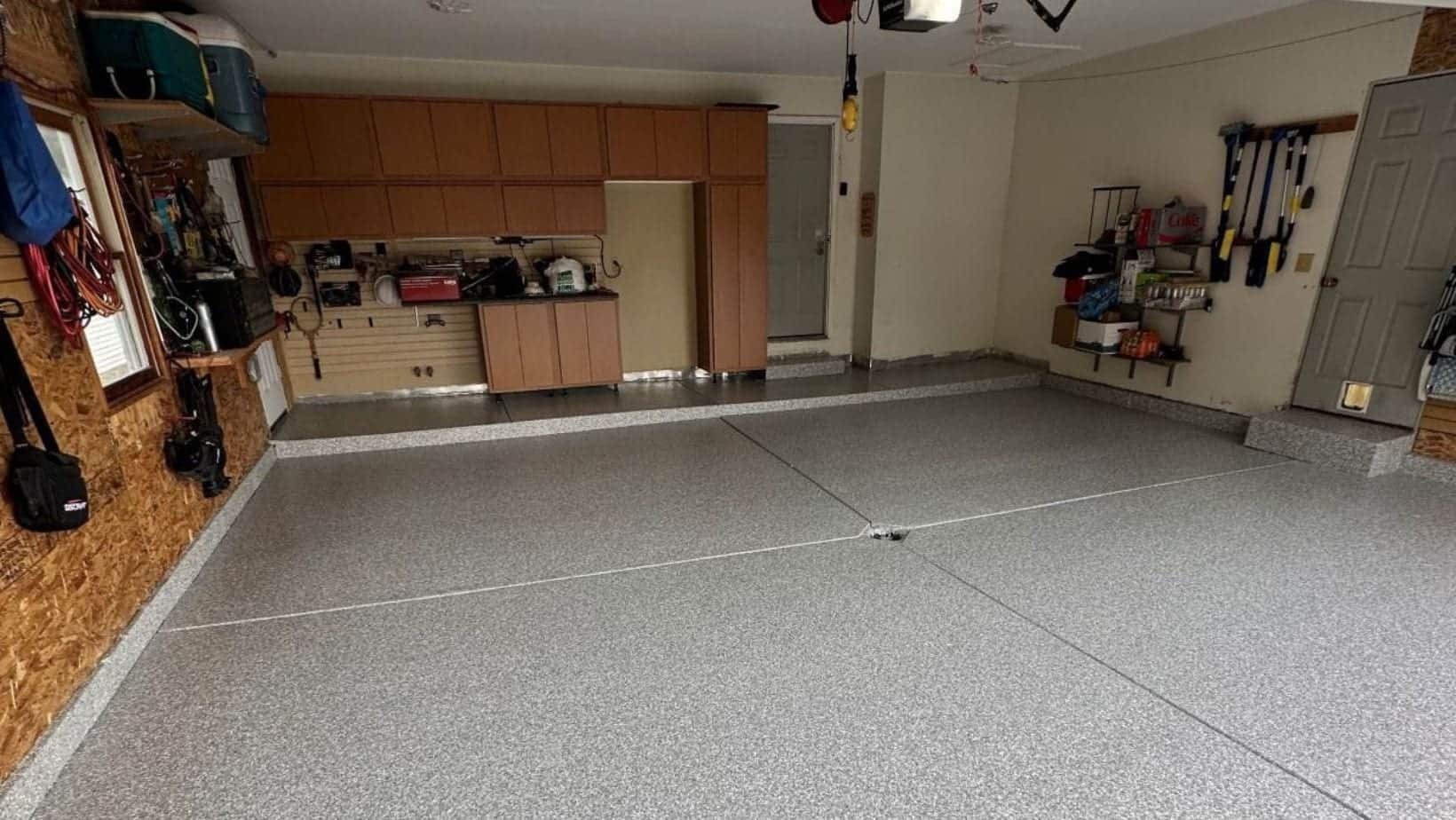
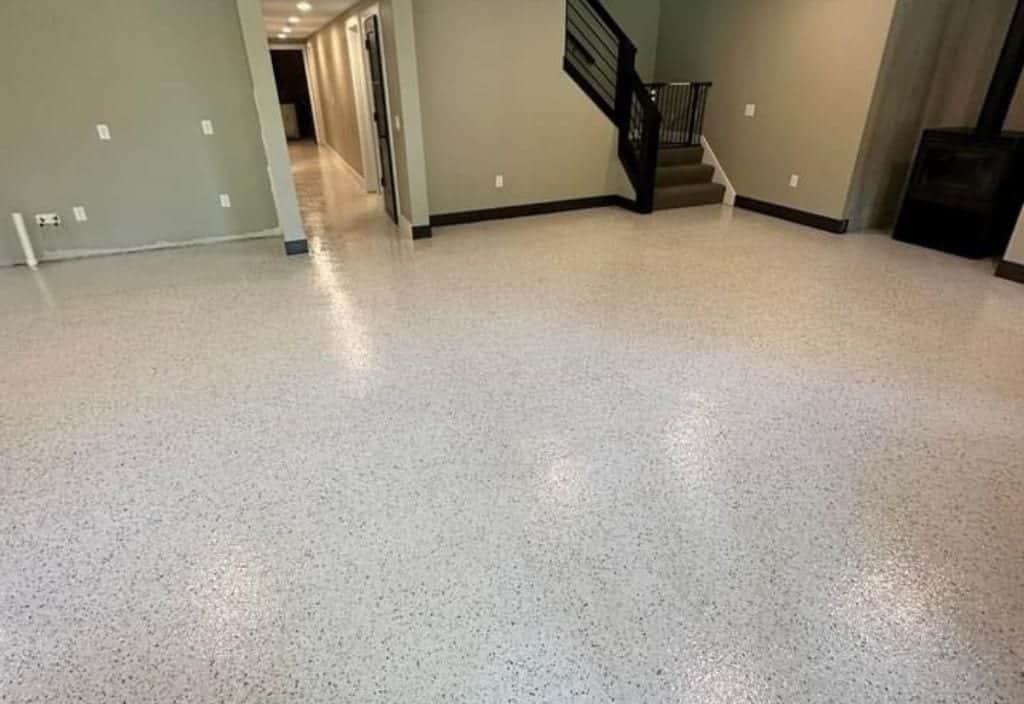
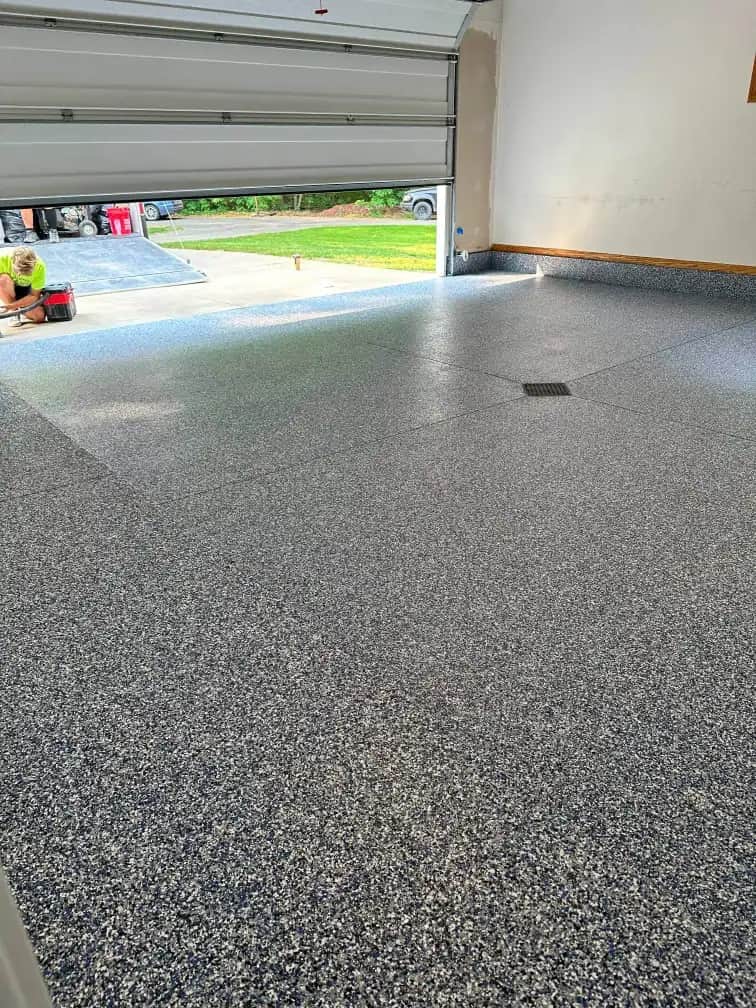
The gallery shows materials, finishes, and process details that can help you compare visual directions for a finished concrete floor.
Free Project Quote
Tell us about the space and we will follow up with a clear recommendation and quote conversation.
Phone
Business Hours
Free Estimate
Tell us about the room, the concrete, and the work you want the floor to support. We can talk through preparation, moisture questions, epoxy's place in a hybrid system, decorative choices, access, and care. A garage, basement, workshop, school, church, retail space, or small commercial interior can begin with the same useful step: an honest description of the floor in front of you. If you have photos, note the room's access, current floor condition, and any timing limits so our first conversation starts with useful context.