
Build Around Strong Adhesion To Properly Prepared Concrete
Epoxy can bond to a mechanically profiled slab and add build for the layers above it. That role is useful when preparation exposes sound concrete and the planned system needs a defined base.
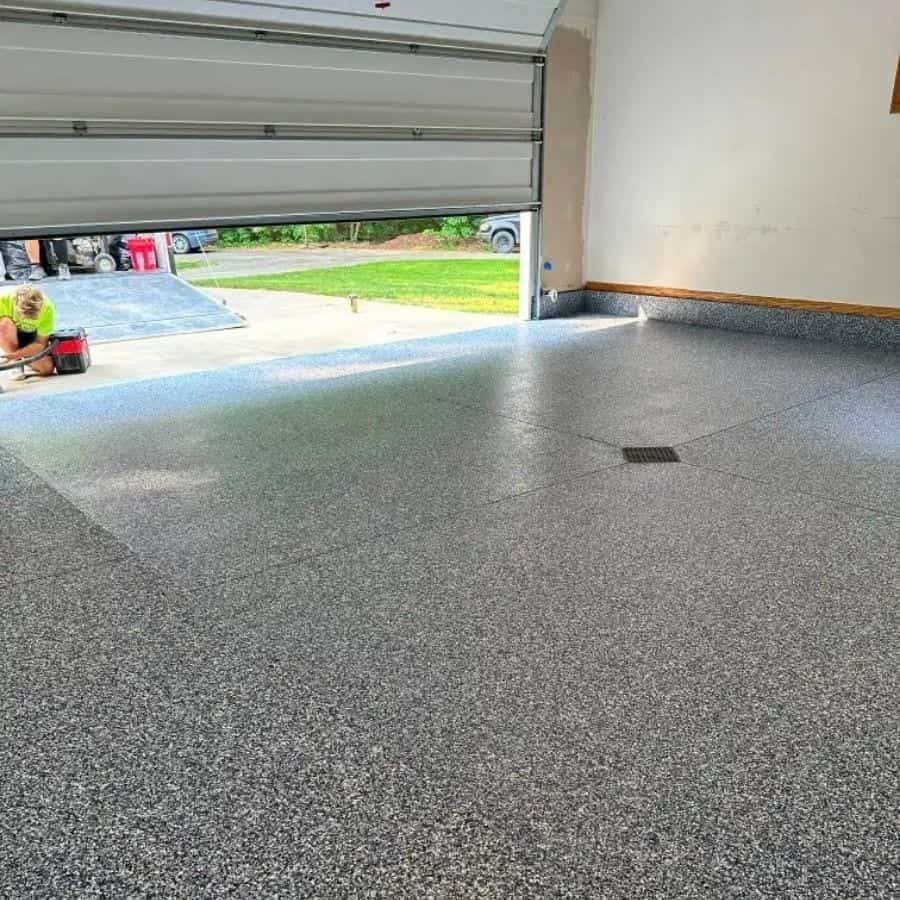
South Haven floors see more than ordinary wear. We look at sand tracked indoors, wet-season cleanup, slab condition, access, and the room's daily demands before recommending an epoxy floor system. Epoxy can provide adhesion and build within compatible layers, while preparation and maintenance expectations stay clear. Request a free estimate to compare a practical route.
Service Overview
A finish sample cannot reveal whether a South Haven slab has old adhesive, loose paste, repairs, or moisture concerns. The useful starting point is the concrete itself, followed by the room's traffic, access, cleaning routine, and timing. That sequence helps separate a workable coating plan from a surface that needs more investigation.
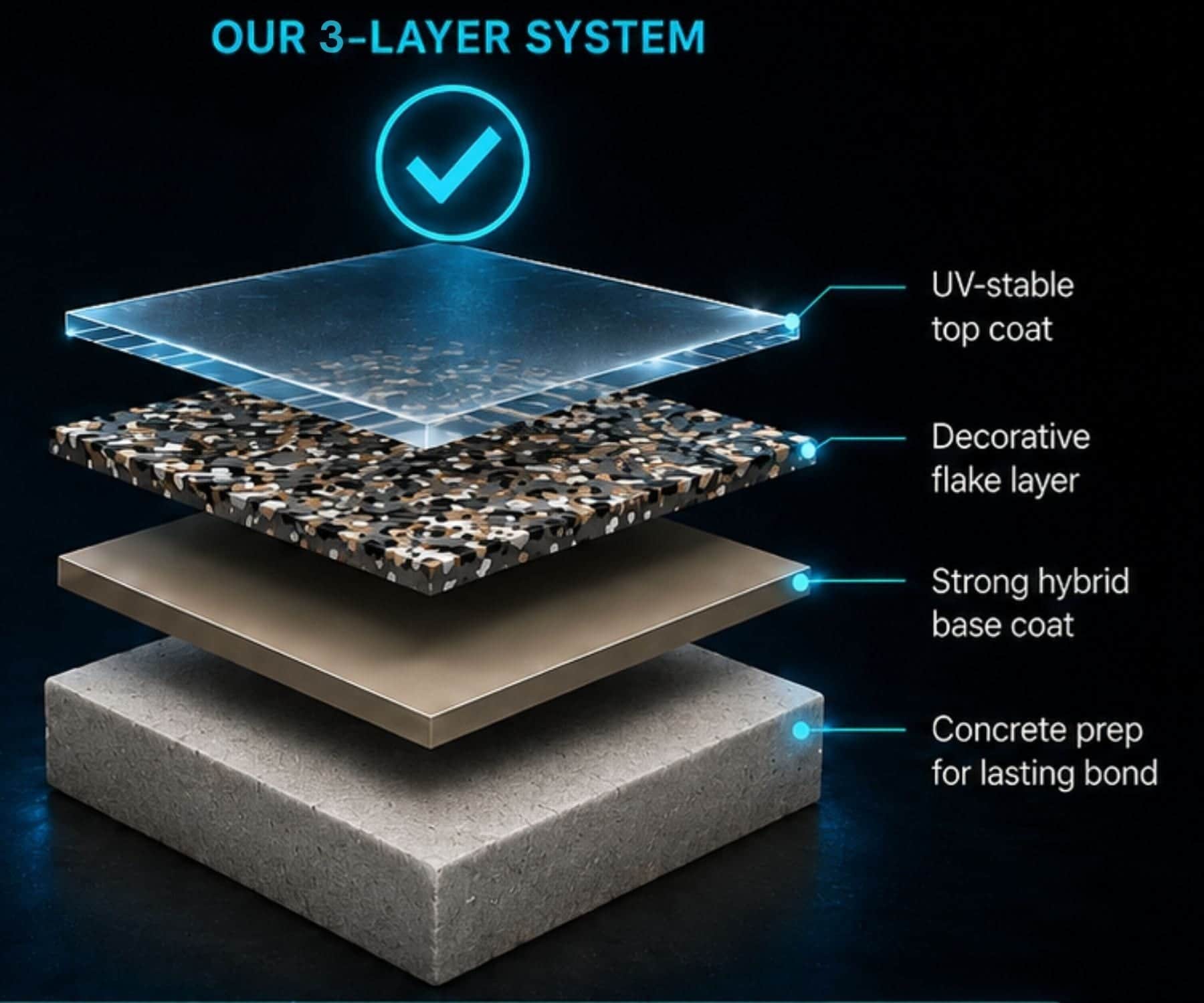
For suitable concrete, epoxy may serve as the adhesive and build layer beneath color, broadcast material, or another compatible finish. Polyurea and polyaspartic can have different jobs in a hybrid system. The recommendation depends on preparation, moisture review, repair needs, exposure, and the way the property will operate after installation.
Benefits
An epoxy recommendation earns its place when it answers a concrete use case. In South Haven, the questions may center on sand cleanup in a cottage, storage in a workshop, or steady presentation in a small commercial room.
Epoxy can bond to a mechanically profiled slab and add build for the layers above it. That role is useful when preparation exposes sound concrete and the planned system needs a defined base.
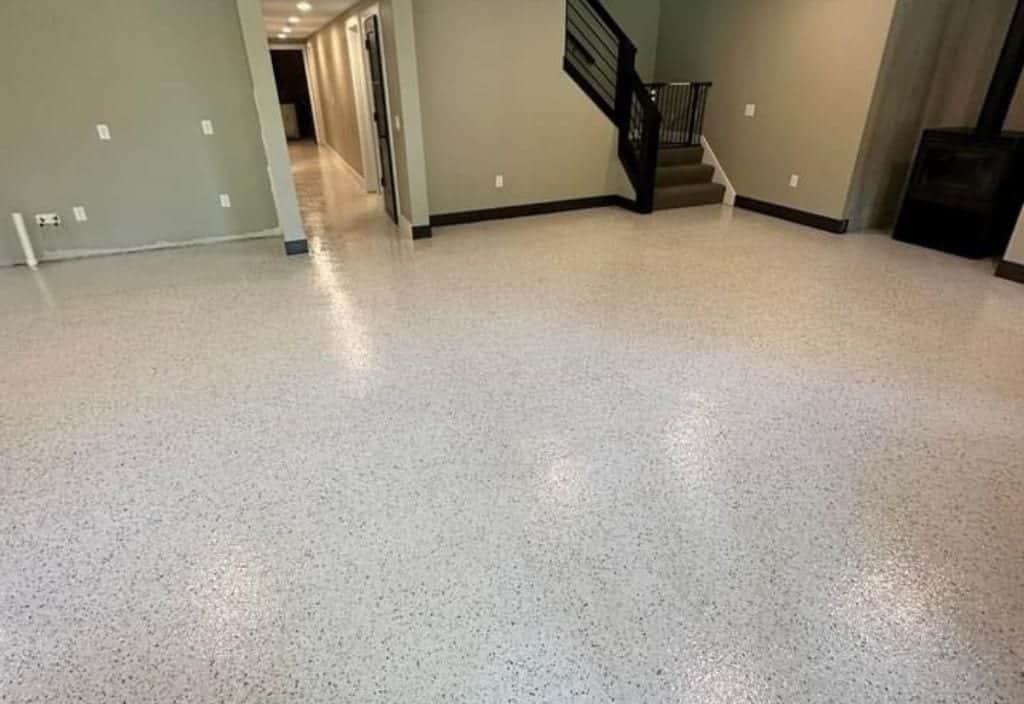
Color, decorative broadcast, texture, and sheen can be considered after the slab and room demands are understood. A system can support a chosen look without separating appearance from traffic, lighting, or cleaning.
A coated surface can make dust, sand, and ordinary spills easier to see and remove than worn porous concrete. The practical result still depends on a suitable substrate, cure, and care matched to the room.
Epoxy, polyurea, and polyaspartic can be assigned different jobs when a hybrid design fits. Keeping those roles distinct helps the recommendation account for adhesion, build, flexibility, finish, and the site's exposure.
Grinding can reveal weak surface zones, residue, old material, and repairs that need attention before coating. That information gives the scope a basis, especially where an older home or room has been changed over time.
Finish choices should answer the room's use, not lead it. In a garage, workshop, basement, or commercial floor, color and texture can be weighed alongside cleanup, traffic, and how the space is presented.
Installation Process
Each stage turns an observed condition into the next installation decision. The sequence moves from slab evidence to preparation, material placement, and a handoff the owner can understand.
Step 1
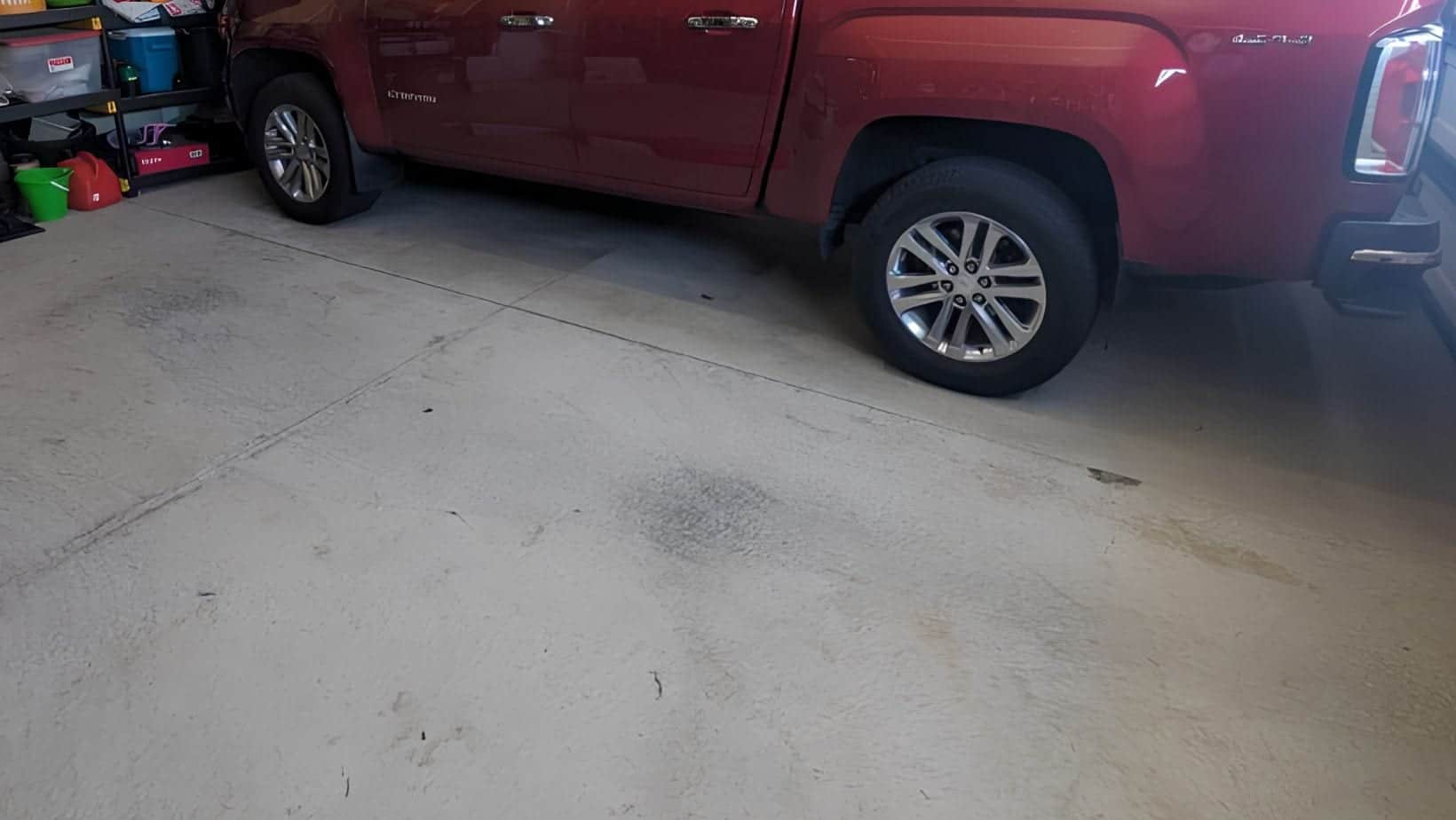
The slab sets this stage. We understand the slab and the job expected of it, consider use, traffic, exposure, moisture signs, previous materials, cracks, joints, access, and finish goals, and work to define whether epoxy belongs as the primary build layer or as part of a broader hybrid system. The initial review determines what the crew can responsibly prepare and what questions remain open.
Step 2
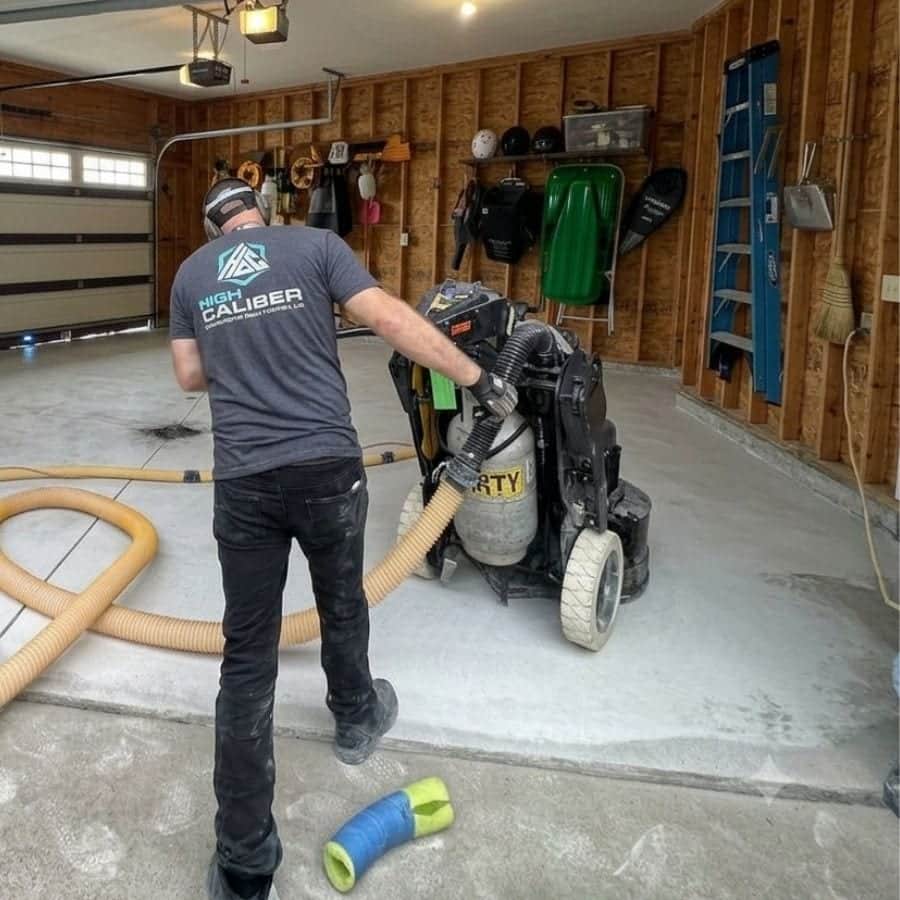
This phase asks how to establish a mechanical foundation for adhesion instead of relying on superficial cleaning alone. We answer by choosing to create a suitable concrete profile and reviewing diamond grinding, removal of weak surface material, edges, residue, dust control, and exposed conditions.
Step 3
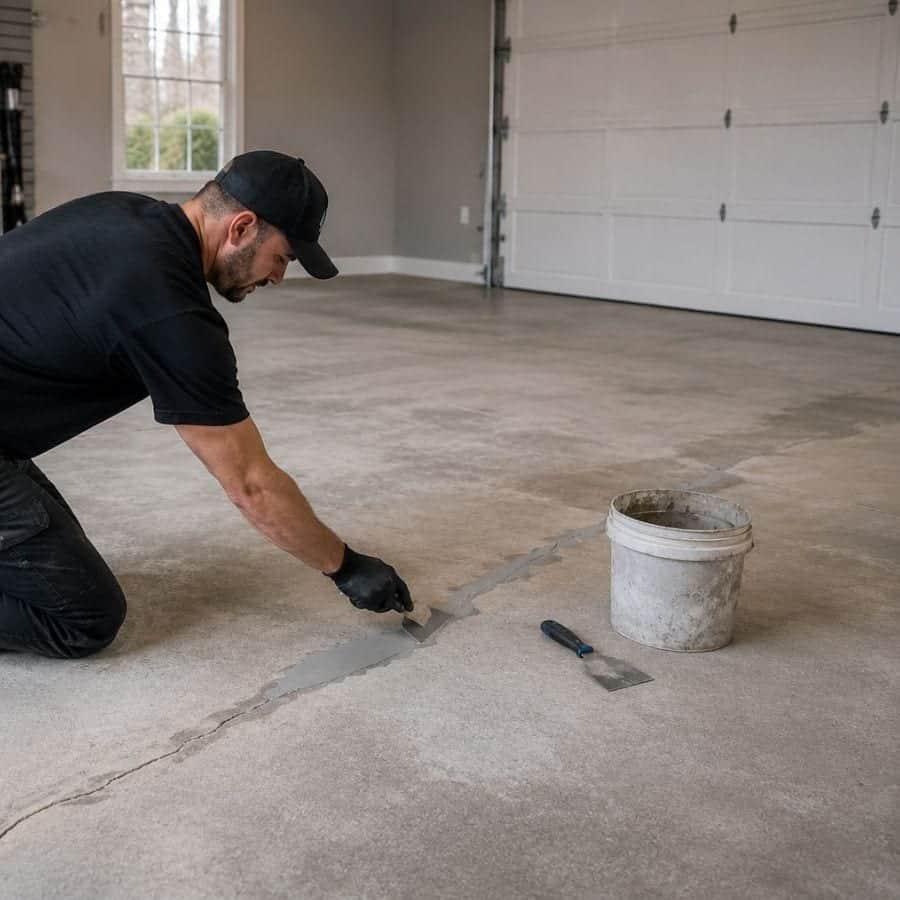
We prepare damaged areas identified in the scope around cracks, pits, spalls, transitions, and conditions that become clearer after grinding; the practical goal is to set realistic limits because repairs do not stop all future concrete movement. The repair discussion records what is visible now and what future movement may still affect.
Step 4
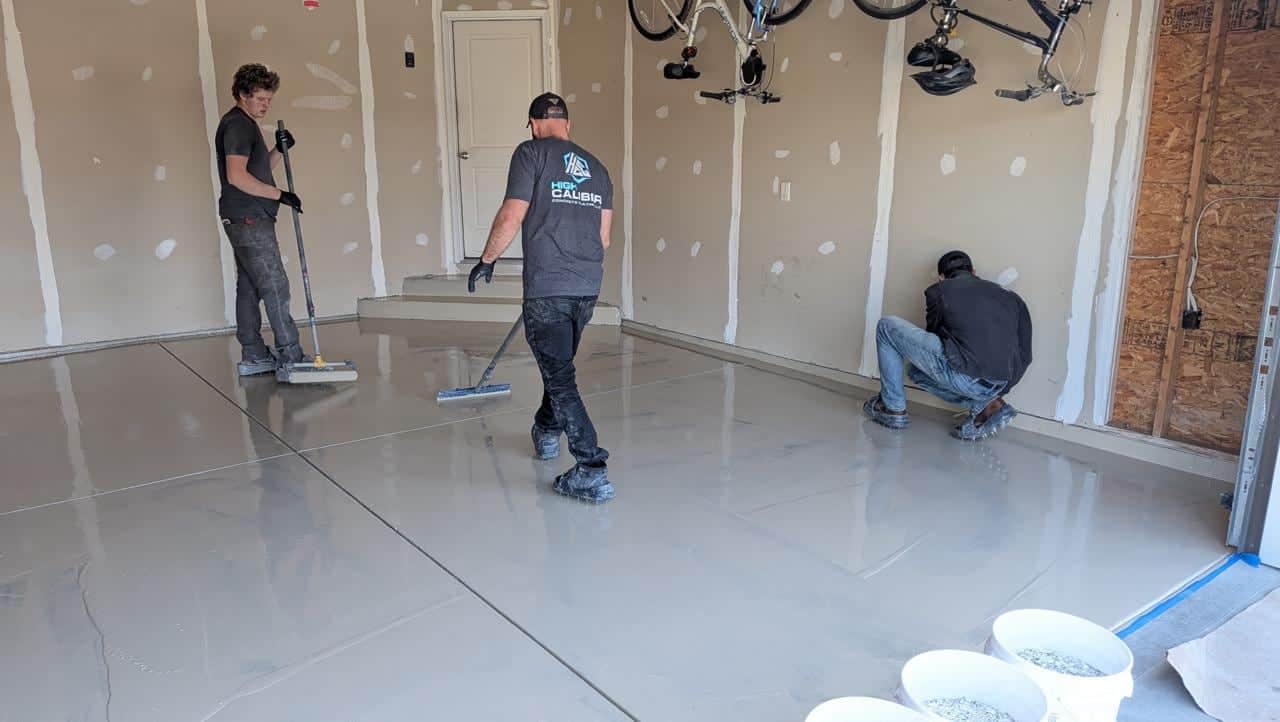
This is a working checkpoint: we place the epoxy basecoat for its intended role, evaluate bond, coverage, thickness, color, and compatibility with the next stage, and confirm how to use epoxy positively and accurately as an adhesion and build material. The basecoat stage is where the planned layer sequence becomes visible on the prepared slab.
Step 5
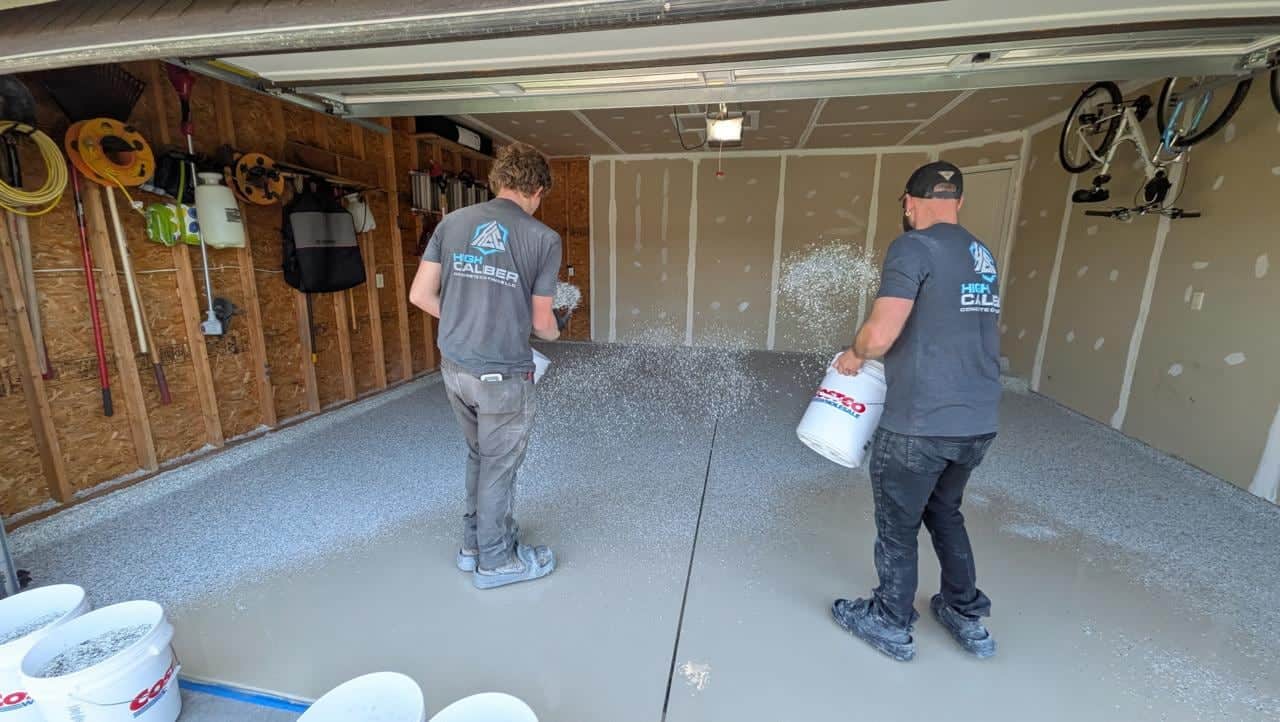
With additional resin, decorative broadcast, texture, or a compatible finish coat as the design requires in view, we add the selected system components. The evidence lets us keep the layer sequence connected to traffic, exposure, appearance, and maintenance, serving garages, shops, and business floors.
Step 6
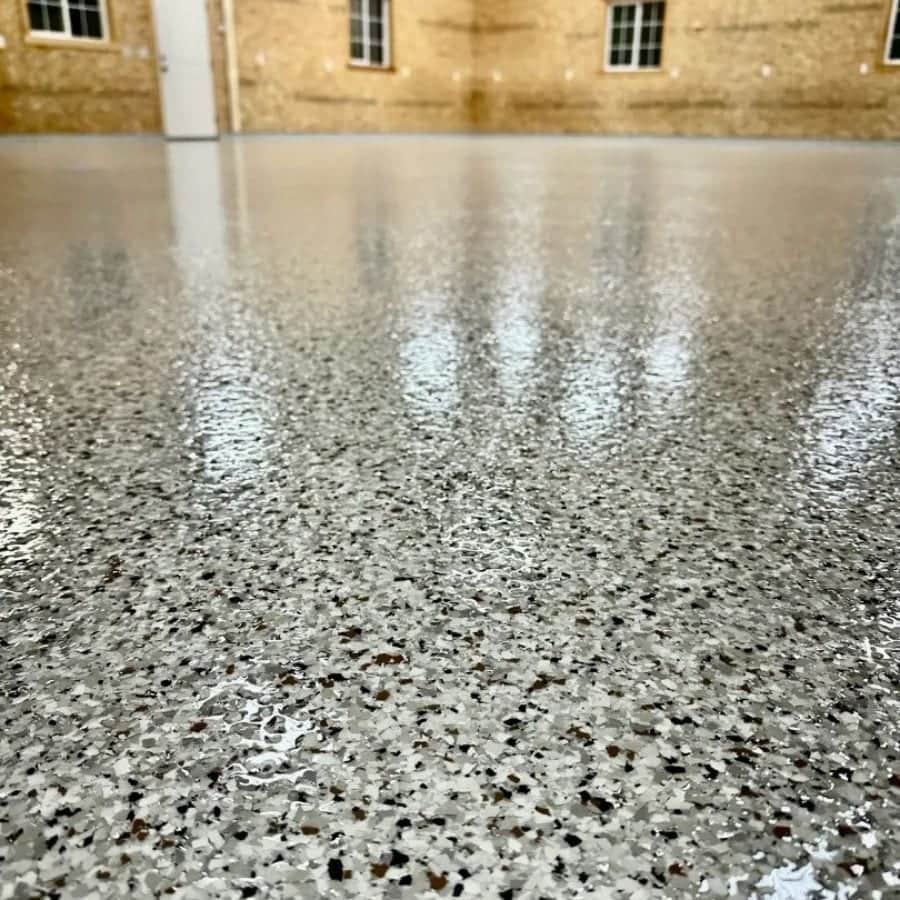
We avoid guesswork by choosing to review the completed floor and its care and accounting for coverage, transitions, access, cure conditions, cleaning, and return to service. This gives the next stage a basis to leave the owner with instructions that belong to the actual installation within that local mix of residential, rural-edge, and working properties.
Why High Caliber
Before any materials are selected, we connect the recommendation to the observed slab and the work expected in the room. The owner should leave the estimate knowing what the system is intended to do, where its limits sit, and what care it will require.
For concrete carrying household and working concrete areas, we protect the scope by explaining that epoxy is not treated as an inferior placeholder or as a universal answer; the second guardrail is that the right result depends on the slab, mechanical preparation, moisture review, repair scope, the rest of the system, and the use above it. The result is a defined sequence with material roles, preparation assumptions, and care guidance discussed in plain terms.
Customer Reviews
“Would highly recommend. No pressure sales, quality product, great communication and quality installation. I met Jeff at the home show. I was drawn into his booth by his very enthusiast kids. I got the immediate impression this was a family oriented business and that was reinforced by the conversation with both Jeff and his young son. These values drew me to this business. I signed up for a quote. Shortly after the show Jeff came to my home to present options and provide a quote. No pressure to buy, Jeff understood I needed to get thru tax season before I could be sure about my budget. Over the course of next few months Jeff was responsive to any questions I had and we got the job scheduled. Jeff provided a trailer in the quote to store contents of garage while job was being done, which was very helpful. When talking with others about the quote I learned my price was equal to or less than what neighbors had paid up to six years ago, so I felt this was good pricing. I had thought there would be a ton of dust and a big mess when grinding surface, but the machines had a vacuum attached, clean and efficient work. I was impressed that they coated steps and side walls as well as floor. No mess on drywall or driveway. Crew doing installation were great guys. They took time to fill me in on the process of installation, what to expect, how long for surface to cure and when I could empty trailer. Post install Jeff stopped out to grab trailer, filled me in on what to use and how to clean the floor. VERY happy with the whole process from sales to install to follow up. LOVE my new garage.”
“I can not express how awesome my garage floor looks. Your crew did a phenomenal job, we'll probably be the envy of the neighborhood now. Very polite, cleaned up the area, fast amazing job! My only complaint was the floor was going to look great so my wife said we had to clean out and paint all the walls and shelving, but it was worth it. Thank you again.”
“Wow! Jeff and Mike were amazing to partner with for my garage floor renovation! They did an amazing job but more importantly, they communicated directly with me thru texts, reminders, and in person! Jeff and his team left my garage and exterior area cleaner than when they arrived and gave clear instructions on follow up care needed for my new floor! I would highly recommend High Caliber Concrete Coatings anytime!”
South Haven, MI
South Haven's approved property mix includes older homes, cottages, detached garages, workshops, and retail spaces. A floor in one of those settings may need to handle tracked sand, wet shoes, seasonal storage, or customer movement, but the page cannot predict the condition beneath it. During an estimate, we use the room's actual purpose to frame questions about cleaning, access, and the existing concrete.
Lake-effect weather, snow, freeze-thaw cycles, road salt, spring melt, humidity, and sand tracked indoors are reasonable regional considerations for maintenance conversations. They can change what an owner notices during cleanup or what a crew checks before coating, without proving a particular moisture or damage condition. Epoxy remains one layer choice within that evidence-led discussion, with preparation defining whether the system is suitable.
Restaurants, hospitality spaces, and small commercial floors add another kind of demand: work may continue around the room, and cleanup or presentation may matter alongside wear. That does not make one coating universal. The scope still follows the substrate, schedule, access, and expected use. Nearby Saugatuck, Douglas, Fennville, Holland, and Allegan can be part of the broader service area, while this page keeps its recommendation tied to South Haven.
Start with the room's role, slab history, and upkeep routine before choosing a finish.
Seasonal use can change access, tracked material, and cleaning priorities even when a space is used only part of the year.
For customer-facing floors, discuss traffic paths, presentation, cleanup, and the practical limits of the selected system.
Frequently Asked Questions
Yes: epoxy can be a purposeful adhesion and build layer when it is matched to prepared concrete and installed within a compatible system; its suitability is guided by the slab, exposure, traffic, finish, and project design; this point should be settled for concrete in local homes and working buildings.
Mechanical preparation removes unsuitable surface material and creates a profile the coating can bond to; cleaning alone cannot replace that work when the selected system calls for a mechanically prepared substrate; for South Haven concrete affected by those room-specific demands involving traffic, damage, and upkeep, that clarification helps set the scope.
Those are common use cases when the slab and exposure support the selected system; vehicle traffic, hot tires, tools, chemicals, sunlight, moisture, and cleaning should all be discussed before the layers are chosen; the site review should confirm this matter for the property's main floor uses.
Many cracks, pits, and spalled areas can be addressed as part of preparation, but the scope is guided by what grinding and inspection reveal; repair should never be presented as a promise against future movement; for garages, shops, and household rooms, this is a practical point to confirm before scheduling.
Solid colors, decorative broadcasts, and compatible topcoat choices can create different appearances and textures; the room, lighting, traffic, cleaning, and owner preference should drive the decision; for South Haven, this comparison belongs before the owner commits to one route.
Material sequence, temperature, humidity, repairs, area size, and site access all affect timing; project-specific instructions from the installer should control when people, vehicles, or equipment return; a property shaped by the area's winter, spring, and summer exposure pattern needs this question answered at the site.
They are different resin chemistries with different working and performance characteristics; a responsible hybrid system can use epoxy for adhesion and build while assigning other materials to roles where they fit; the conditions tied to those nearby garages, shops, outbuildings, and service spaces should guide the final decision.
Related Services
Several rooms may call for different preparation or coating conversations, so compare related services by the work each floor must handle.
A different space may need this option: see how epoxy can work within a hybrid flake system designed for garage use.
Learn moreWhere the conditions created by use, weather, and the existing slab, owners may want to compare broader coating systems for residential and commercial concrete spaces.
Learn moreLearn why mechanical profiling and removal matter before a resin floor instead of giving two rooms one solution.
Learn moreTo broaden the comparison, plan resin flooring around business traffic, cleaning, access, and presentation.
Learn moreEvaluate layered systems for equipment, abrasion, fluids, and facility operations; the local fit depends on the community's range of home, storage, and work areas.
Learn moreGallery And Visual Proof
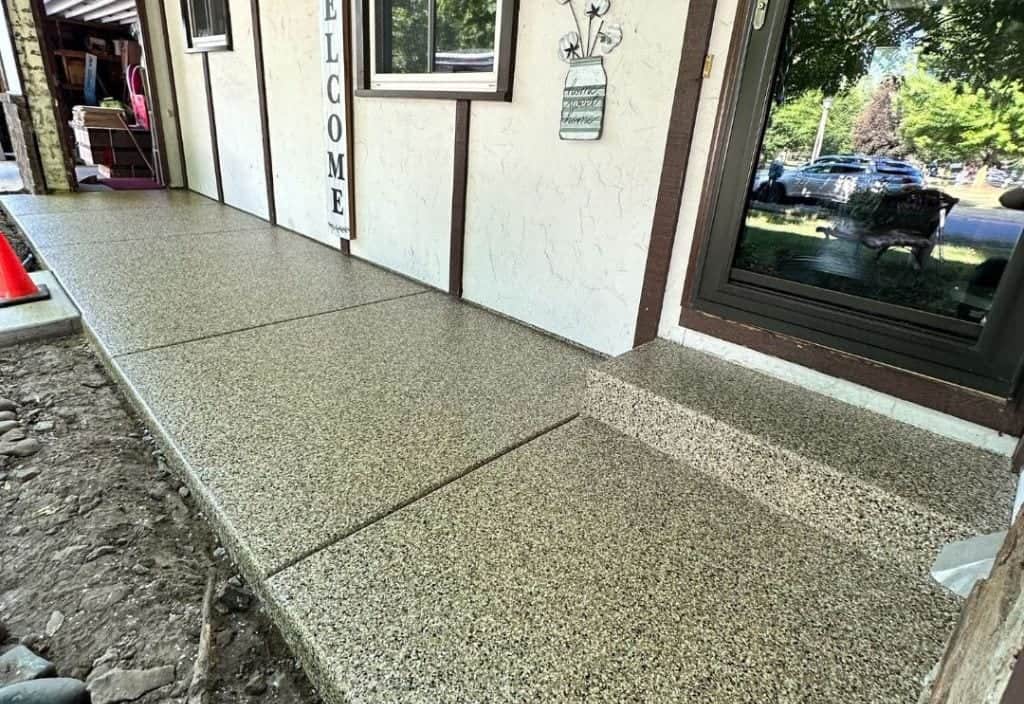
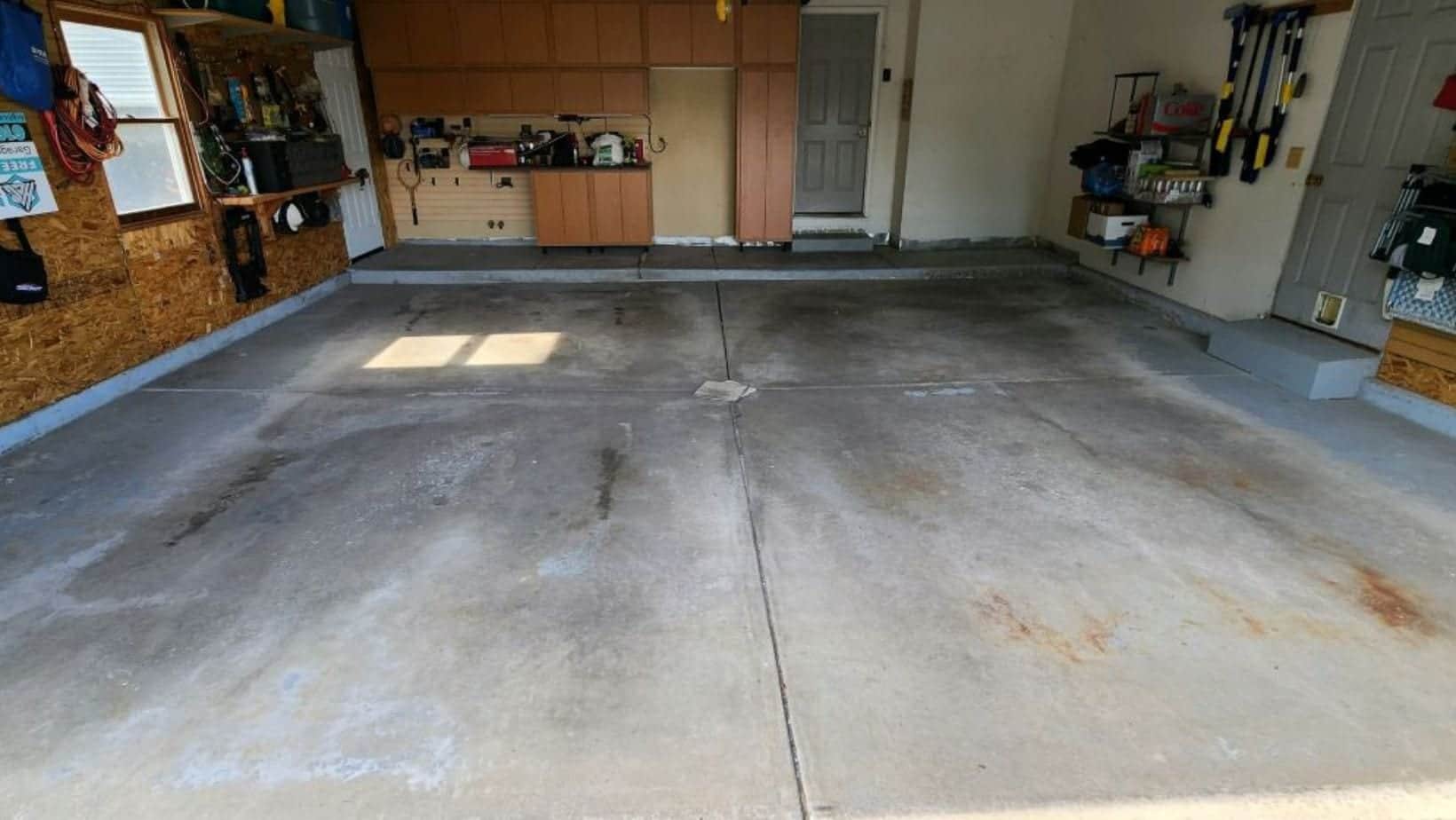
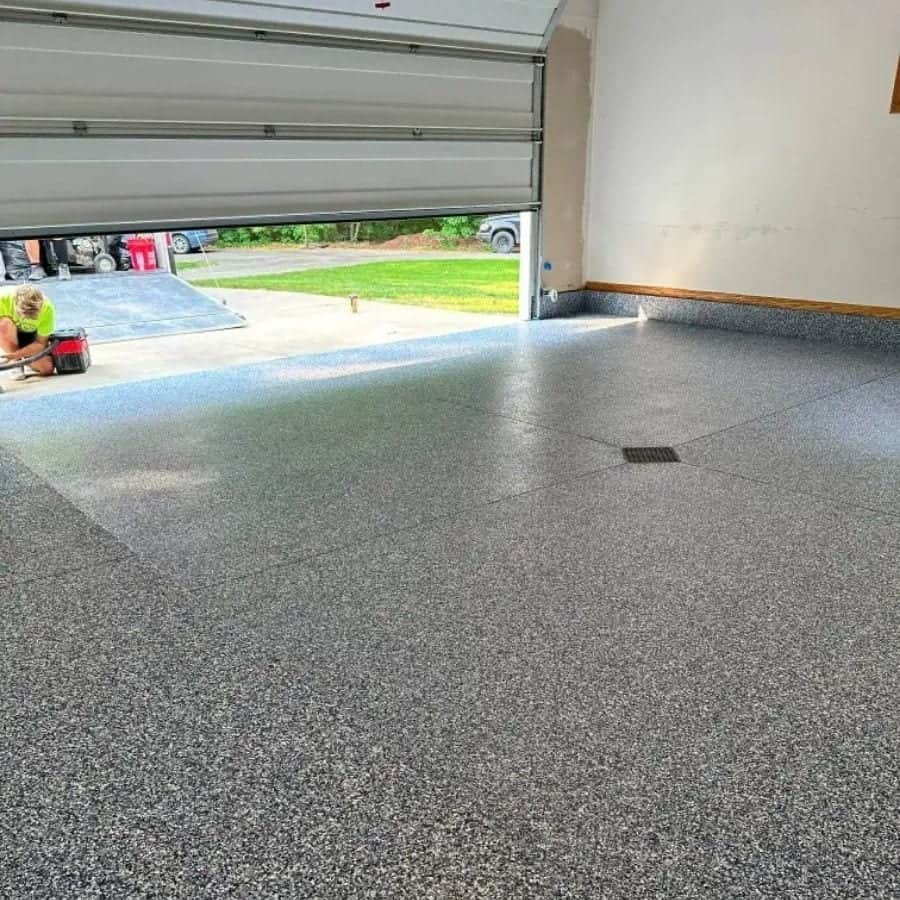
Use these images to discuss layer order, preparation, and finish questions; the site visit determines what belongs on the South Haven slab.
Free Project Quote
Tell us about the space and we will follow up with a clear recommendation and quote conversation.
Phone
Business Hours
Free Estimate
Bring the room's purpose, slab history, access limits, and maintenance concerns to the estimate. We can discuss where epoxy contributes adhesion and build, what preparation the concrete may require, and which compatible finish choices suit the setting. Share the conditions you already know, then use the conversation to set a realistic scope for your South Haven property. That keeps color, texture, cure expectations, and care instructions connected to how the floor will be used.