
A Sounder Starting Surface
A prepared surface gives the coating a sounder starting point, while the actual slab condition remains visible in the scope. That clarity helps set expectations before decorative choices enter the conversation.
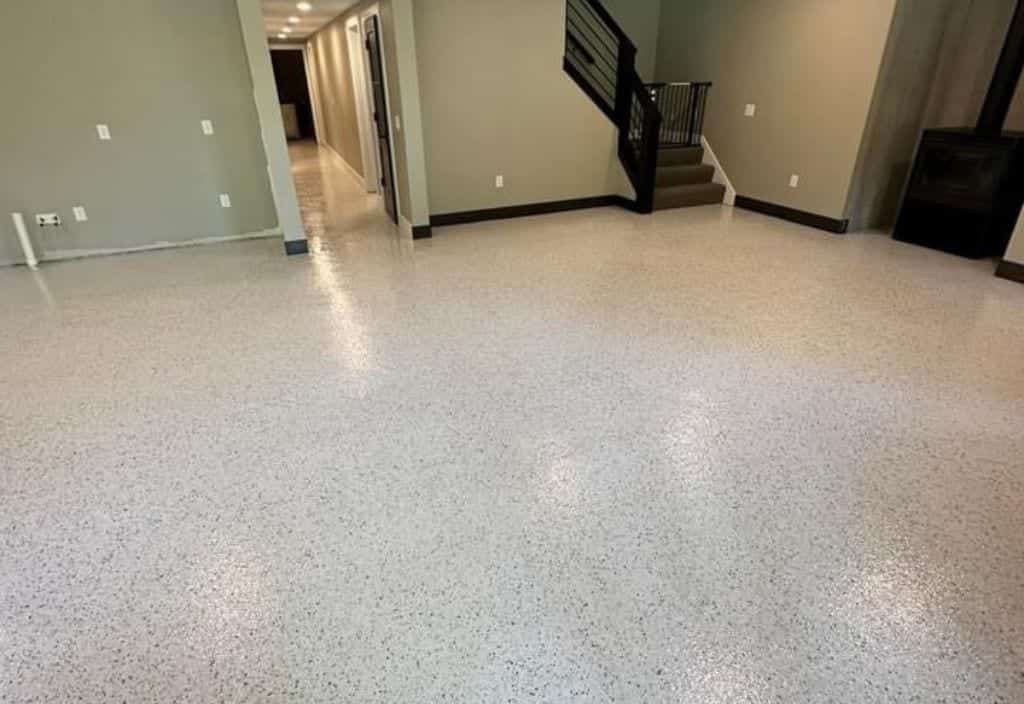
West Olive properties range from detached garages and rural workrooms to newer homes and small commercial spaces. We shape the epoxy conversation around the concrete, moisture exposure, traffic, and finish you need, using epoxy for adhesion and build within a compatible hybrid system when that layered approach suits the floor.
Service Overview
An epoxy floor earns its place by answering a room's demands. A detached garage may need a surface that handles tracked grit and simplifies cleanup. A workshop or pole barn brings tools, equipment, and change. A retail or commercial room may prioritize appearance and maintenance that fits opening hours. Those are different briefs, even when the word epoxy appears in each search.
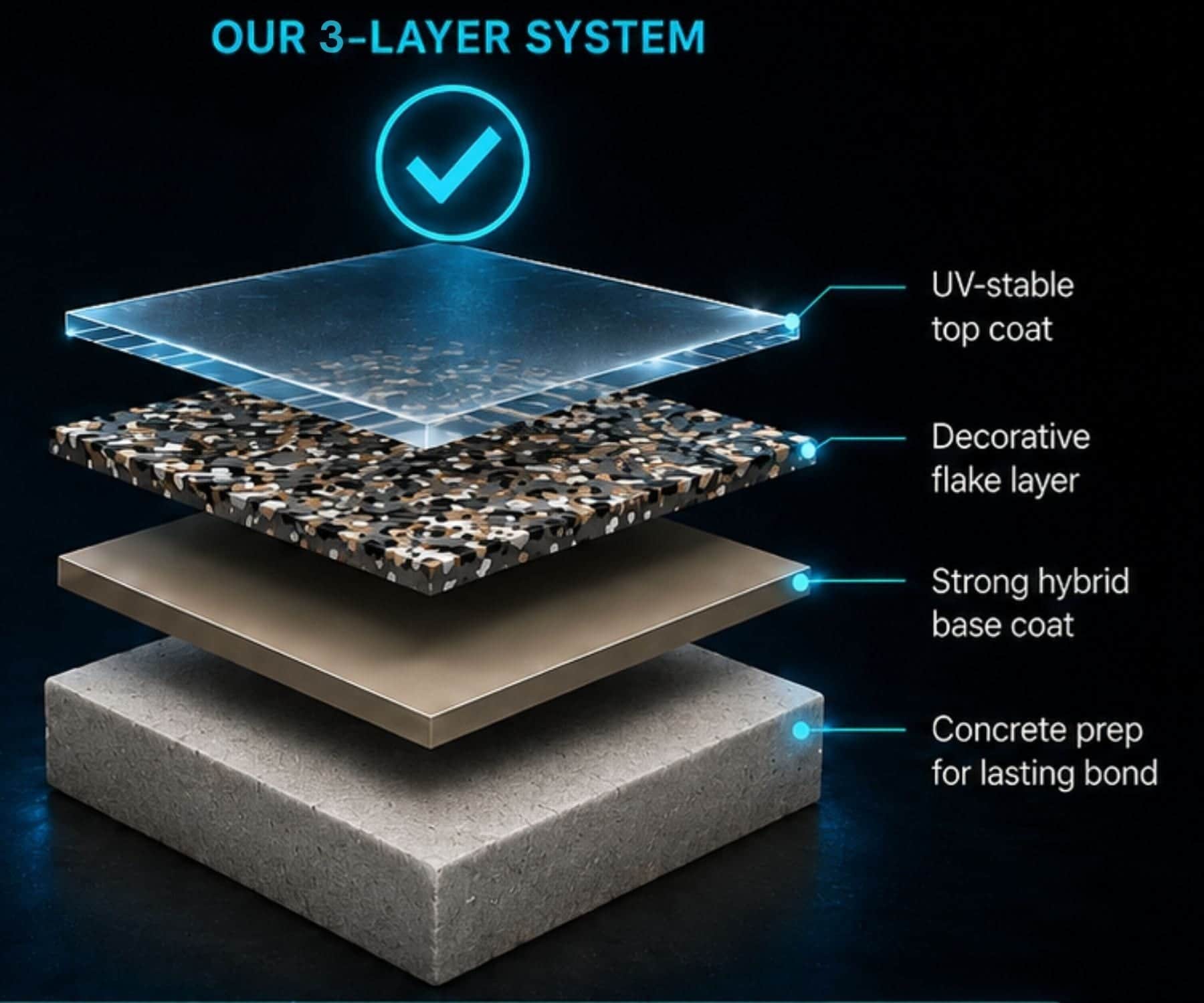
Before color, we consider slab condition, prior coating, repairs, moisture, and intended use. Diamond grinding creates a profile for the coating installation. Epoxy can form the basecoat where adhesion and build are useful; compatible polyurea or polyaspartic layers may serve other roles. The recommendation is assembled around the floor, not selected from a label.
Benefits
The useful question is not whether epoxy sounds familiar. It is whether the slab, room, exposure, and maintenance routine support a carefully selected system.
A prepared surface gives the coating a sounder starting point, while the actual slab condition remains visible in the scope. That clarity helps set expectations before decorative choices enter the conversation.
Winter residue can arrive with vehicles, boots, and equipment. A continuous finished surface can make salt, grit, and ordinary dirt easier to notice and remove during routine care.
Moisture is treated as a design question rather than a footnote. If dampness or vapor movement is present, it can change the preparation discussion and the compatible system.
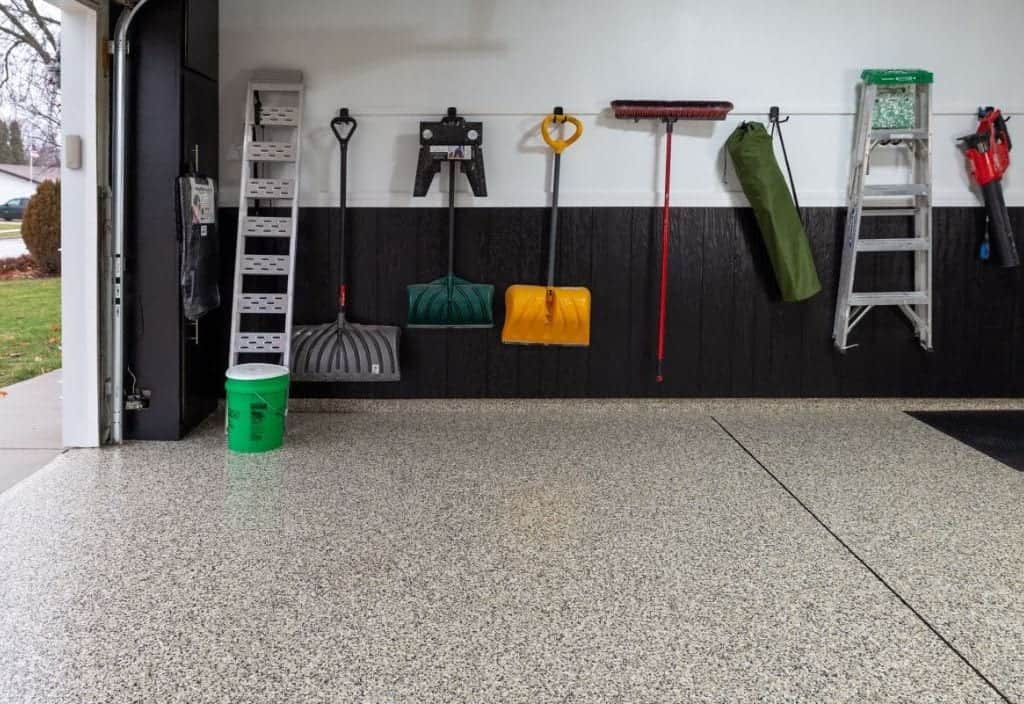
Color and flake can give a garage, workroom, or customer-facing room a more finished visual language. The choice still follows lighting, use, and the condition of the concrete.
Epoxy has a defined job in our hybrid approach. It can provide adhesion and build at the base, while other compatible layers may address flexibility, UV exposure, or cure needs.
A written conversation about repairs, access, layers, care, and realistic use gives homeowners and business owners something useful to compare when reviewing estimates before scheduling work.
Installation Process
For a West Olive garage, workshop, outbuilding, or small commercial room, the useful sequence follows the concrete's condition. We move from what the slab shows to the layers and care plan the space can support.
Step 1
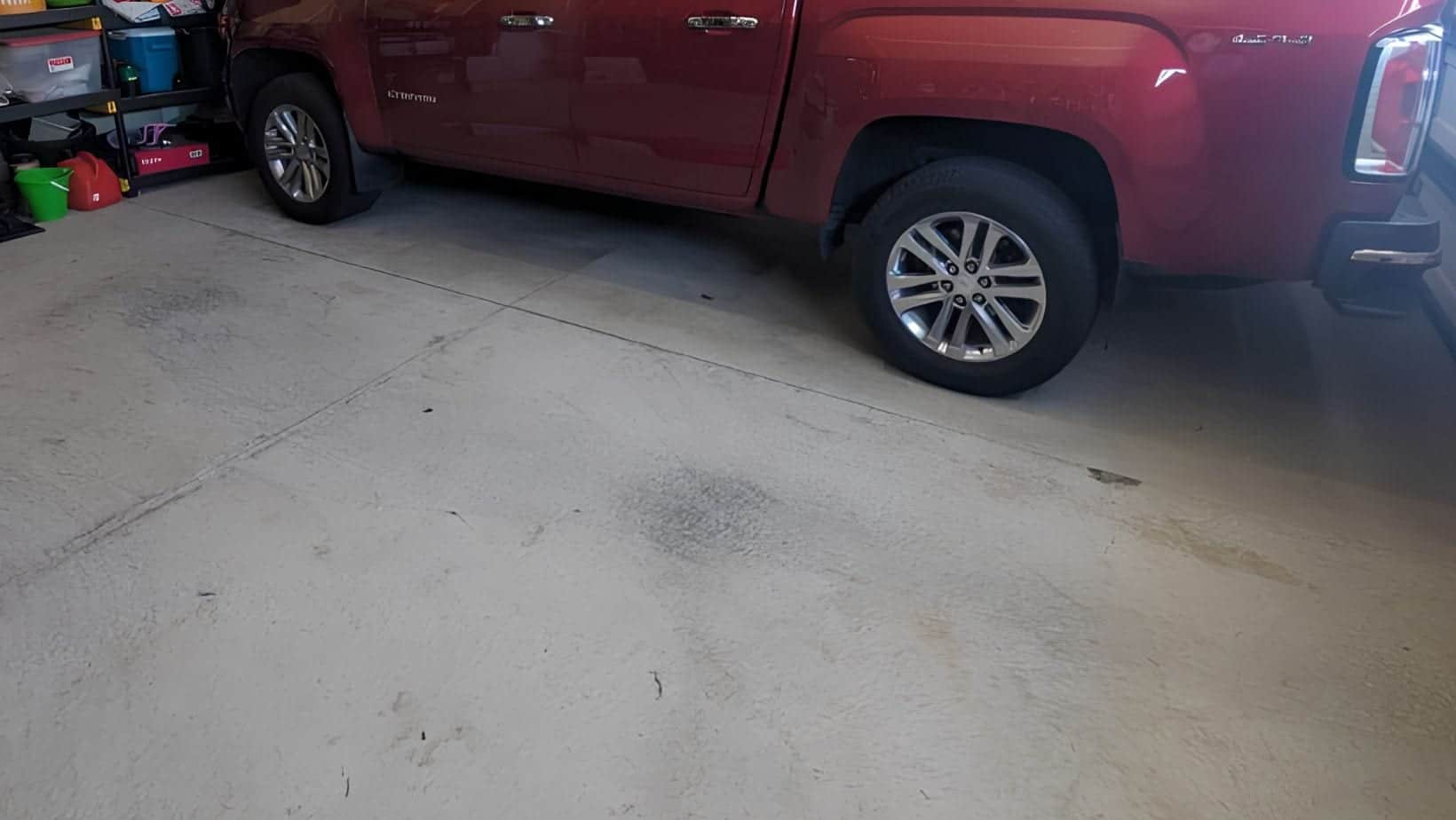
The first decision is what the existing slab can reasonably support. We consider its condition, any previous coating, visible moisture, traffic from vehicles or equipment, access, and the finish you want. A detached garage and a rural workroom may need different answers even when both are called epoxy projects.
Step 2
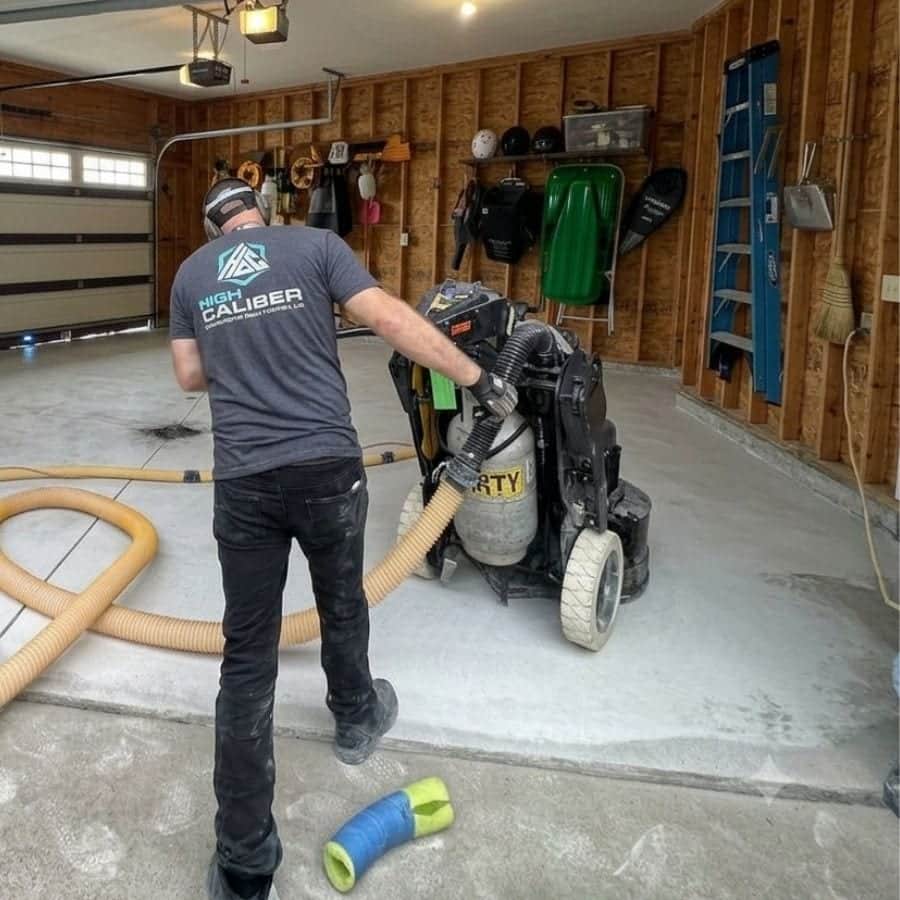
Diamond tooling removes weak material and gives the concrete a textured profile for the planned coating system. The work includes attention to coating residue, edges, joints, and areas that are easy to miss. Grinding prepares the surface; it does not promise to level the slab or correct structural movement.
Step 3
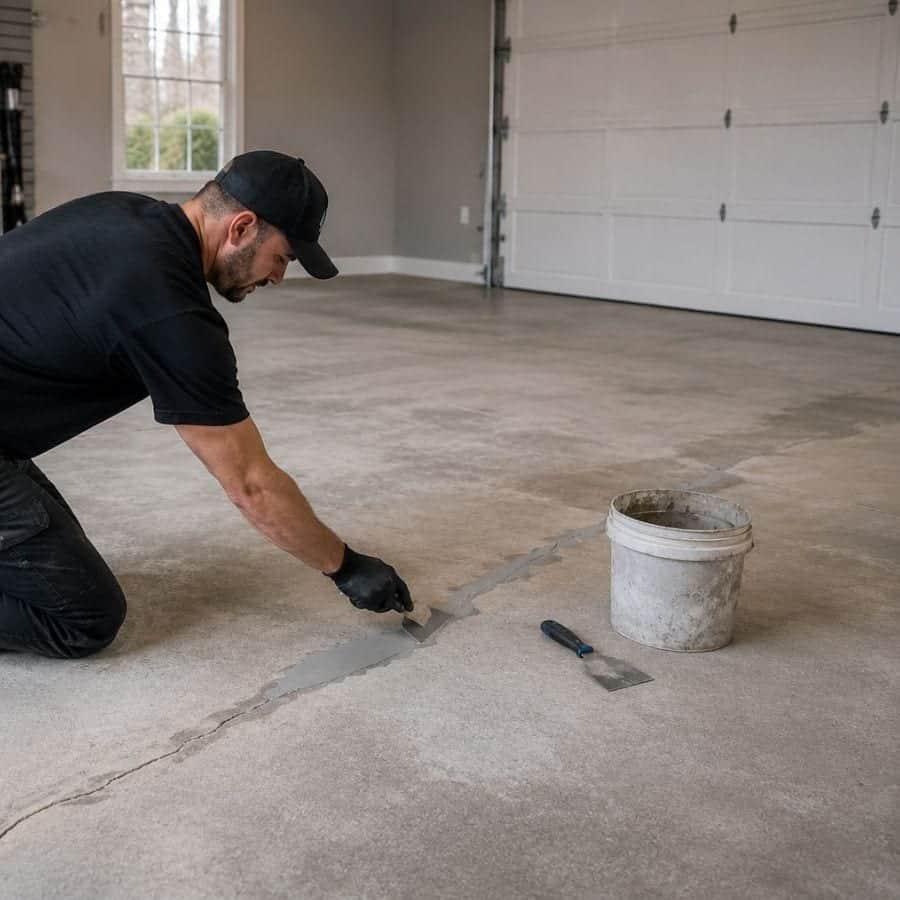
An opened slab makes cracks, pits, spalls, and damaged edges easier to assess. We fill or address repairable areas as part of preparation and separate those conditions from concerns that need more evaluation. Moisture findings also stay in view, including whether a moisture barrier epoxy belongs in the recommendation.
Step 4
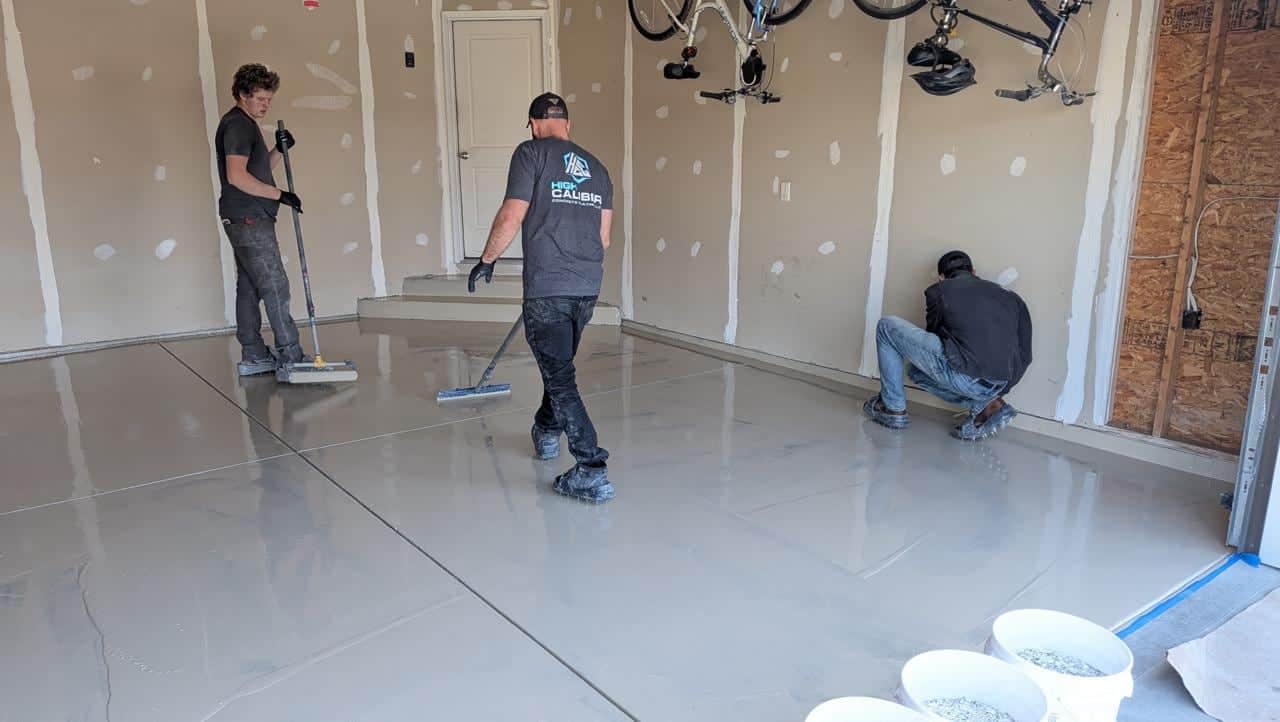
After the preparation is ready, epoxy can provide the base layer's adhesion and build. We apply it across the prepared concrete according to the selected system, with coverage, repairs, and cure sequence accounted for. The material has a purposeful role because the slab and the rest of the assembly give it one.
Step 5
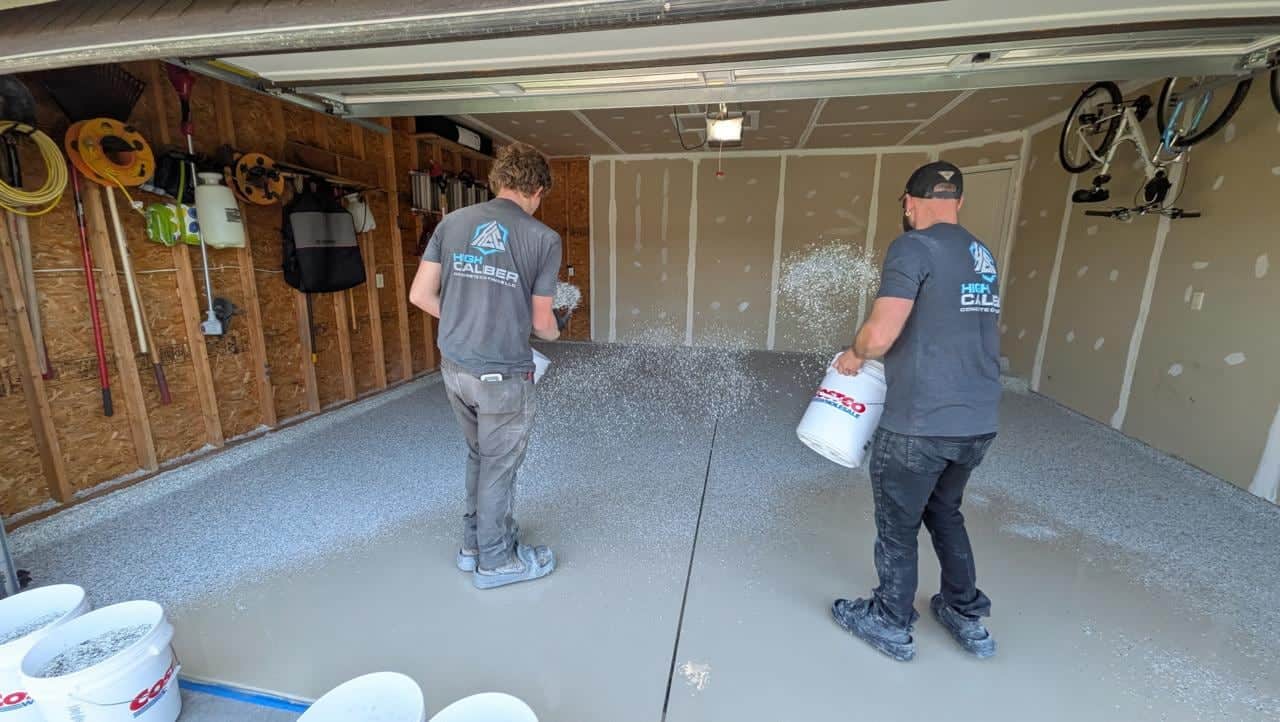
The planned finish is built over the basecoat. Decorative flake may be broadcast into a wet layer when that look suits the room, while polyurea or another compatible material can take its assigned place in the hybrid assembly. Color, exposure, traffic, and maintenance all inform the selection.
Step 6
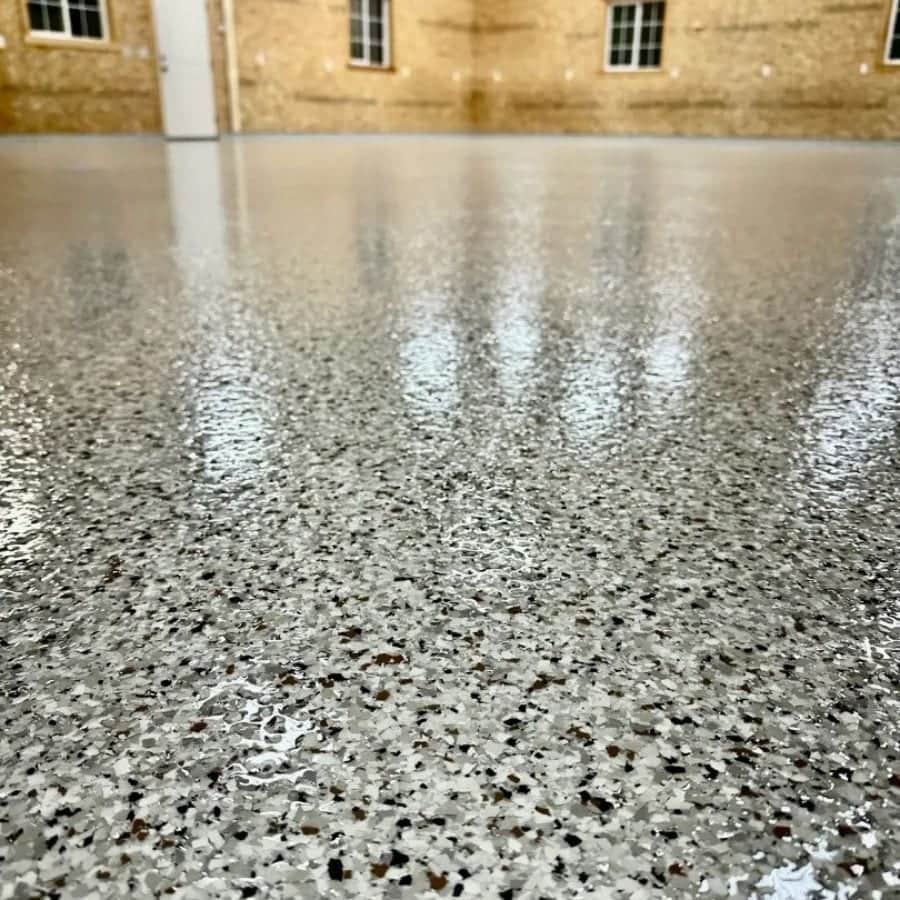
A compatible topcoat closes the planned assembly when its properties fit the job. We inspect the finished surface, then review access, cleaning, and realistic use expectations before the room returns to service. You should leave the handoff knowing what was installed and how to maintain it.
Why High Caliber
The company serving this work is family-owned and based in West Michigan, with roots in the Holland and Zeeland area. Our conversations are practical because a coating decision has to make sense after the tools leave, when the room is carrying vehicles, stored equipment, household activity, or customer traffic.
We describe what preparation can accomplish, where the slab sets limits, and why a hybrid stack may use different materials in different layers. Epoxy remains an important part of that explanation. Polyurea and polyaspartic can contribute other properties when the conditions and design call for them.
Customer Reviews
“Jeff and his team did the most amazing job epoxy floor coating my 38 year old garage floor. Outstanding, professional, skilled, great communication. Highly recommended.”
“We recently had our garage floors resurfaced with the Epoxy Floor coating with flakes. High Caliber Concrete did such an awesome job we cannot say enough good about them! So timely, well organized and a beautiful job!! Owner, Jeff, responded to any call ASAP. Shawn and Ethan, fantastic employees for the company, did a tremendous job which was labor intensive…They left no questions unanswered! Such a professional, beautiful job. We would highly recommend them! Lillian & Joseph Bakara Jr.”
“Would highly recommend. No pressure sales, quality product, great communication and quality installation. I met Jeff at the home show. I was drawn into his booth by his very enthusiast kids. I got the immediate impression this was a family oriented business and that was reinforced by the conversation with both Jeff and his young son. These values drew me to this business. I signed up for a quote. Shortly after the show Jeff came to my home to present options and provide a quote. No pressure to buy, Jeff understood I needed to get thru tax season before I could be sure about my budget. Over the course of next few months Jeff was responsive to any questions I had and we got the job scheduled. Jeff provided a trailer in the quote to store contents of garage while job was being done, which was very helpful. When talking with others about the quote I learned my price was equal to or less than what neighbors had paid up to six years ago, so I felt this was good pricing. I had thought there would be a ton of dust and a big mess when grinding surface, but the machines had a vacuum attached, clean and efficient work. I was impressed that they coated steps and side walls as well as floor. No mess on drywall or driveway. Crew doing installation were great guys. They took time to fill me in on the process of installation, what to expect, how long for surface to cure and when I could empty trailer. Post install Jeff stopped out to grab trailer, filled me in on what to use and how to clean the floor. VERY happy with the whole process from sales to install to follow up. LOVE my new garage.”
West Olive, Michigan
West Olive's Ottawa County setting brings lakeshore exposure into an ordinary concrete conversation. Lake-effect snow, freeze-thaw cycles, road salt, spring moisture, humidity, and wet conditions can all affect how a floor is used and maintained. None of those conditions turns a coating into a cure for an unresolved slab problem. They are reasons to ask better questions before choosing layers.
The property mix adds another useful distinction. A detached garage may collect salt and grit from vehicles, while a rural workshop or pole barn may see tools, equipment, dirt, and changing moisture. Agricultural outbuildings have their own working rhythm. Newer homes, retail rooms, and small commercial spaces may place more emphasis on appearance, access, and routine cleaning. The same product name does not give those rooms the same brief.
That is why our estimate conversation stays close to the space in front of us. We can discuss a West Olive floor alongside nearby service areas such as Holland, Grand Haven, Allendale, Spring Lake, and Zeeland, while keeping the recommendation tied to your concrete, exposure, and intended use. The local detail is useful when it changes the questions, not when it becomes decoration.
Snow, salt, meltwater, and freeze-thaw seasons can make entry conditions part of the floor planning discussion.
A rural workshop, pole barn, or agricultural outbuilding may ask different questions about dirt, equipment, access, and cleanup.
Regional conditions inform the conversation, but the slab's condition and the room's purpose decide what can reasonably be recommended.
Frequently Asked Questions
A garage, basement, workshop, pole barn, agricultural outbuilding, retail room, or small commercial space may be worth discussing. We look at the concrete, the traffic above it, moisture exposure, cleaning routine, and the finish you want. The space has to support the proposed system, so the estimate is built around its actual use rather than a generic room category.
Epoxy can serve as the base layer when adhesion and build are useful to the assembly. Other compatible materials may be selected for different layer responsibilities, including flexibility, UV stability, chemical resistance, or cure characteristics. That does not make epoxy incidental. It means each material is given a defined place in a system planned for the slab and its exposure.
Plan for the mess that arrives with the vehicle, not only the appearance you want on a dry day. Road salt, grit, meltwater, and repeated freeze-thaw conditions make surface condition and routine care relevant. A coating can create a more uniform finished surface, but preparation, moisture discussion, cleaning habits, and realistic expectations still matter to the recommendation.
Yes. Existing coating, loose material, cracks, pits, spalls, and edge conditions are useful information before a new system is chosen. Diamond grinding may be part of the preparation, while repairs or removal can change the scope. We explain what the visible condition suggests and identify anything that needs additional evaluation before installation is planned.
Moisture should be discussed before color or layer count is settled. We consider signs of dampness, possible vapor movement, the room's use, and whether the slab needs another response before coating. A moisture barrier epoxy may be relevant in some conditions, but it is not a substitute for understanding an unresolved moisture source.
They can share coating concepts without sharing the same plan. Equipment, agricultural dirt, foot traffic, carts, storage, sunlight, cleaning frequency, and access may all change the discussion. We ask what the floor must carry and how the room operates, then consider preparation, decorative choices, and compatible layers that fit that setting.
Tell us the room type, approximate size if known, current floor condition, any old coating, visible cracks or dampness, how the space is used, and the finish you prefer. Photos can help show the starting point, while an on-site discussion may reveal details that images cannot. Those details let us make the estimate conversation more specific.
Related Services
An epoxy decision sometimes connects to preparation, moisture control, or another way of finishing the slab. These related options help clarify the path without assuming every floor needs the same treatment.
Review the mechanical preparation step that creates a textured surface for a coating system.
Learn moreExplore a supporting epoxy option for concrete where moisture conditions need to be part of the decision.
Learn moreSee how polyurea may contribute a compatible role alongside epoxy in a planned floor system.
Learn moreLearn where polyaspartic properties may suit a selected topcoat or finishing layer.
Learn moreLook at decorative flake flooring for a garage finish shaped around color, use, and care.
Learn moreGallery And Visual Proof
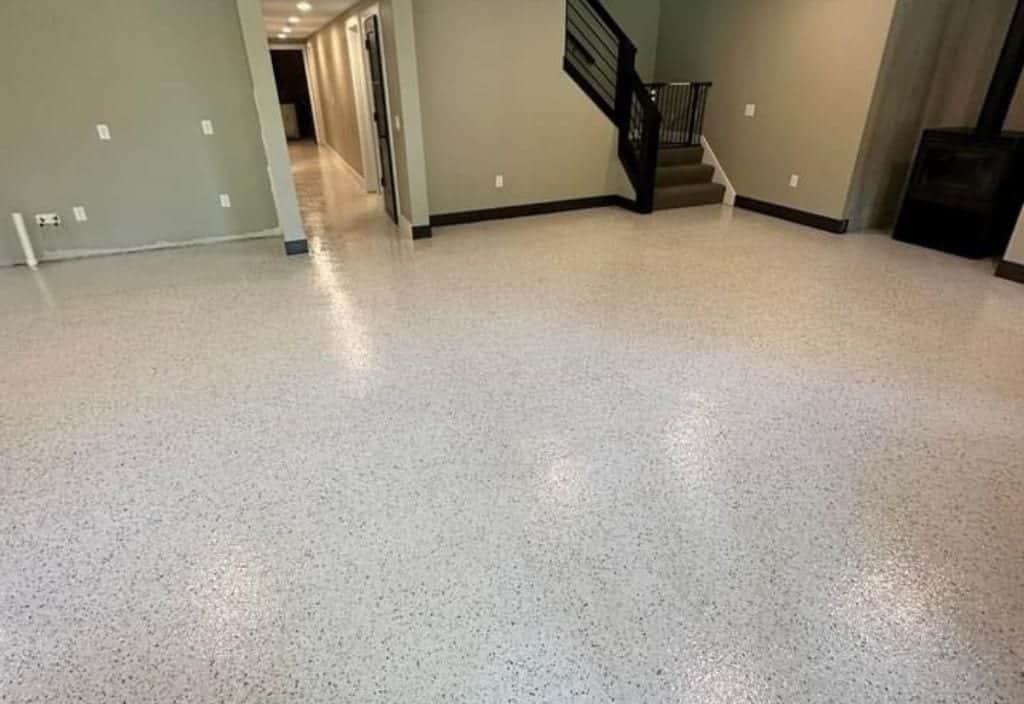
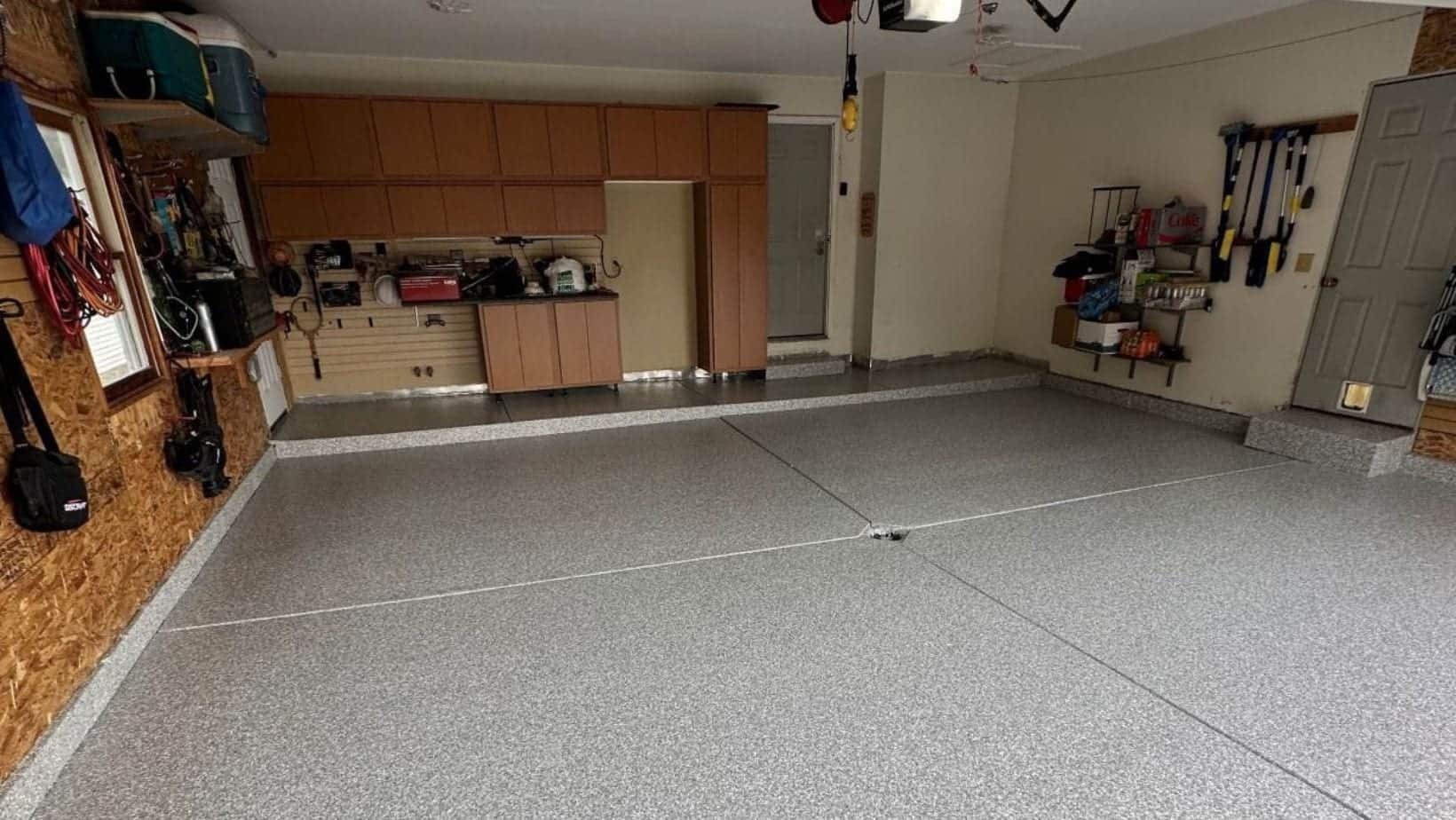
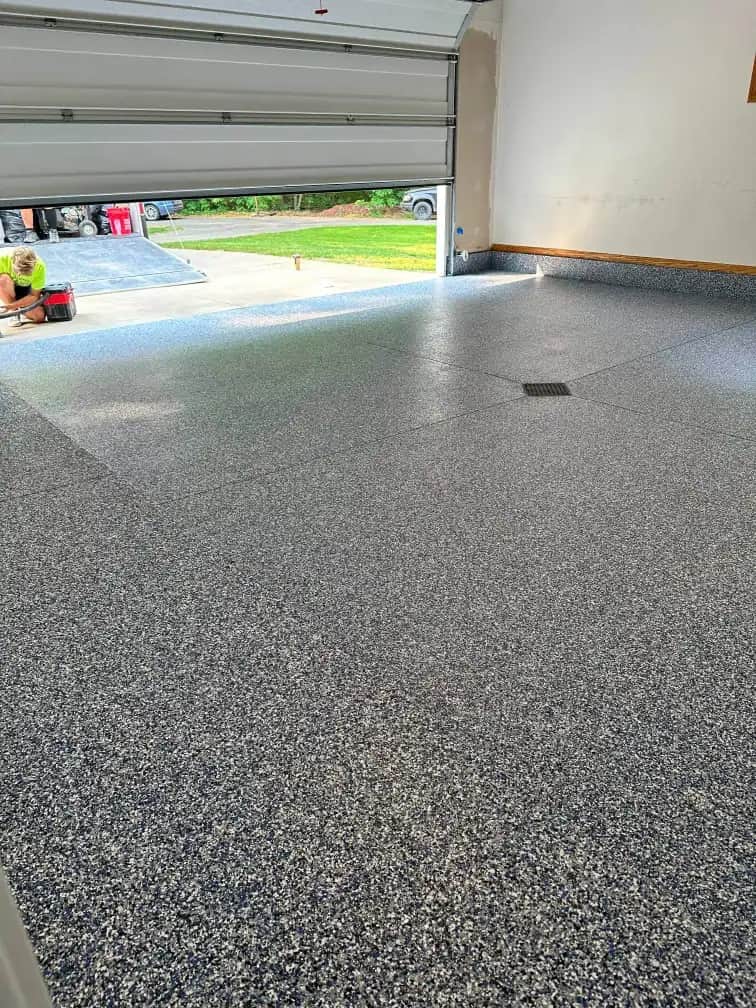
The examples below show finished surfaces, decorative flake, and a hybrid layer diagram. Appearance can vary with the concrete, lighting, chosen blend, and installation details.
Free Project Quote
Tell us about the space and we will follow up with a clear recommendation and quote conversation.
Phone
Business Hours
Free Estimate
Tell us what the room needs to handle, what the slab looks like now, and what kind of finish you have in mind. We can talk through preparation, moisture, epoxy's role, compatible layers, decorative choices, and care expectations for your West Olive space. If you are comparing options, include access details and any existing coating so the scope has fewer assumptions. Request an estimate online or call (616) 777-7348 to begin.