
Snowmelt becomes a maintenance signal
A consistent finished surface makes wet tracks, grit, and road salt easier to spot. It does not remove cleaning, but it gives seasonal residue a clearer place to be managed.
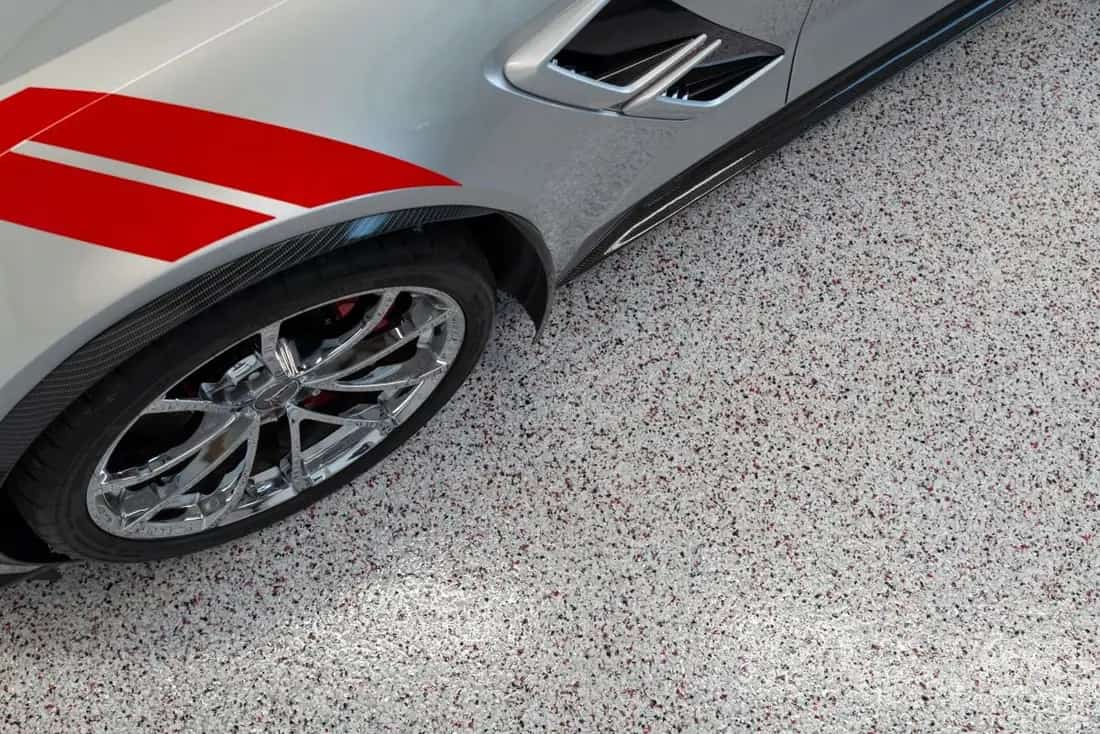
A garage floor has to carry the routes your household repeats: tires crossing the slab, shoes bringing in grit, bins shifting toward the wall, and meltwater settling near the door. We study those patterns with the concrete, then recommend preparation and coating layers that fit the way your Allendale garage is actually used.
Service Overview
A garage can change jobs all day. It may hold vehicles, gear, tools, and the route into the house. Those uses affect preparation and what a finished surface should make easier. We look at the slab's age and condition, previous products, repairs, cracking, and signs that moisture deserves attention before discussing color.
Our typical garage system uses epoxy and polyurea for different purposes. Epoxy gives the basecoat adhesion and build. Polyurea contributes flexibility, UV stability, and chemical resistance in the layers suited to those jobs. A polyaspartic topcoat can complete a decorative flake system. The point is a compatible stack selected for the concrete and room, not a one-material shortcut.
Benefits
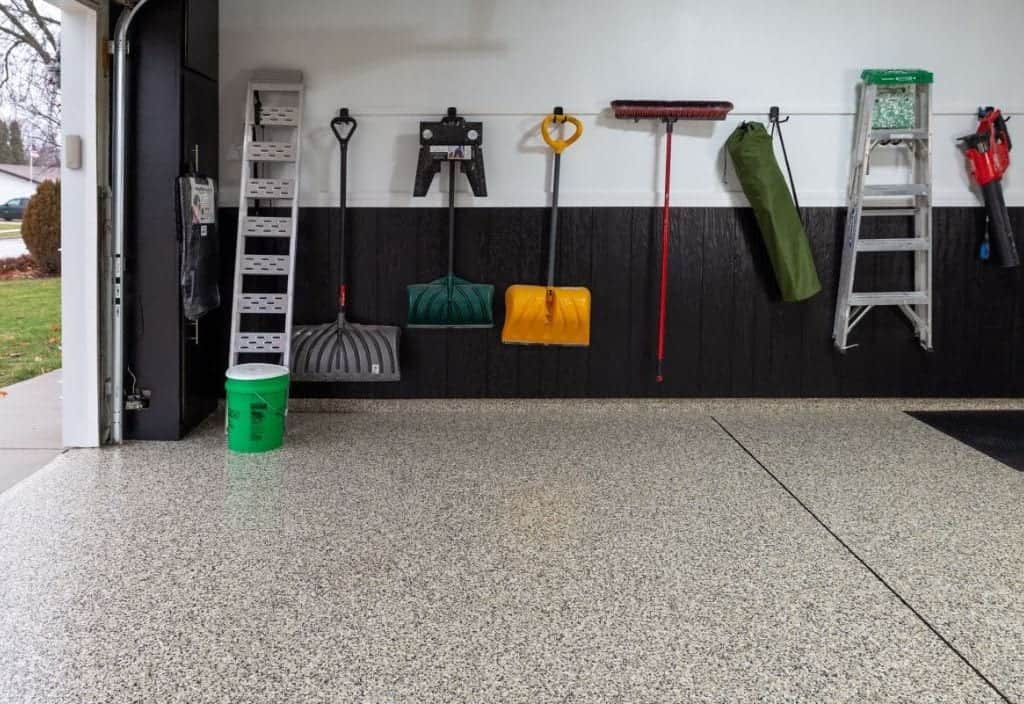
The useful difference is found in the repeated moments: opening the garage after a storm, moving equipment, sweeping near the vehicle lanes, and living with the room when it is not perfectly tidy.
A consistent finished surface makes wet tracks, grit, and road salt easier to spot. It does not remove cleaning, but it gives seasonal residue a clearer place to be managed.
Paint, pits, stains, patches, and loose concrete can change the preparation. We account for those conditions before presenting a finish, so the scope follows the surface rather than an assumption.
A garage used for bikes, tools, storage, and vehicles has different movement than an empty display space. We discuss those paths so the coating conversation remains useful after installation.
Bare concrete can hold dust and absorb spills. A suitable coating provides a more uniform surface for sweeping and washing, while ordinary care still protects the appearance and finish.
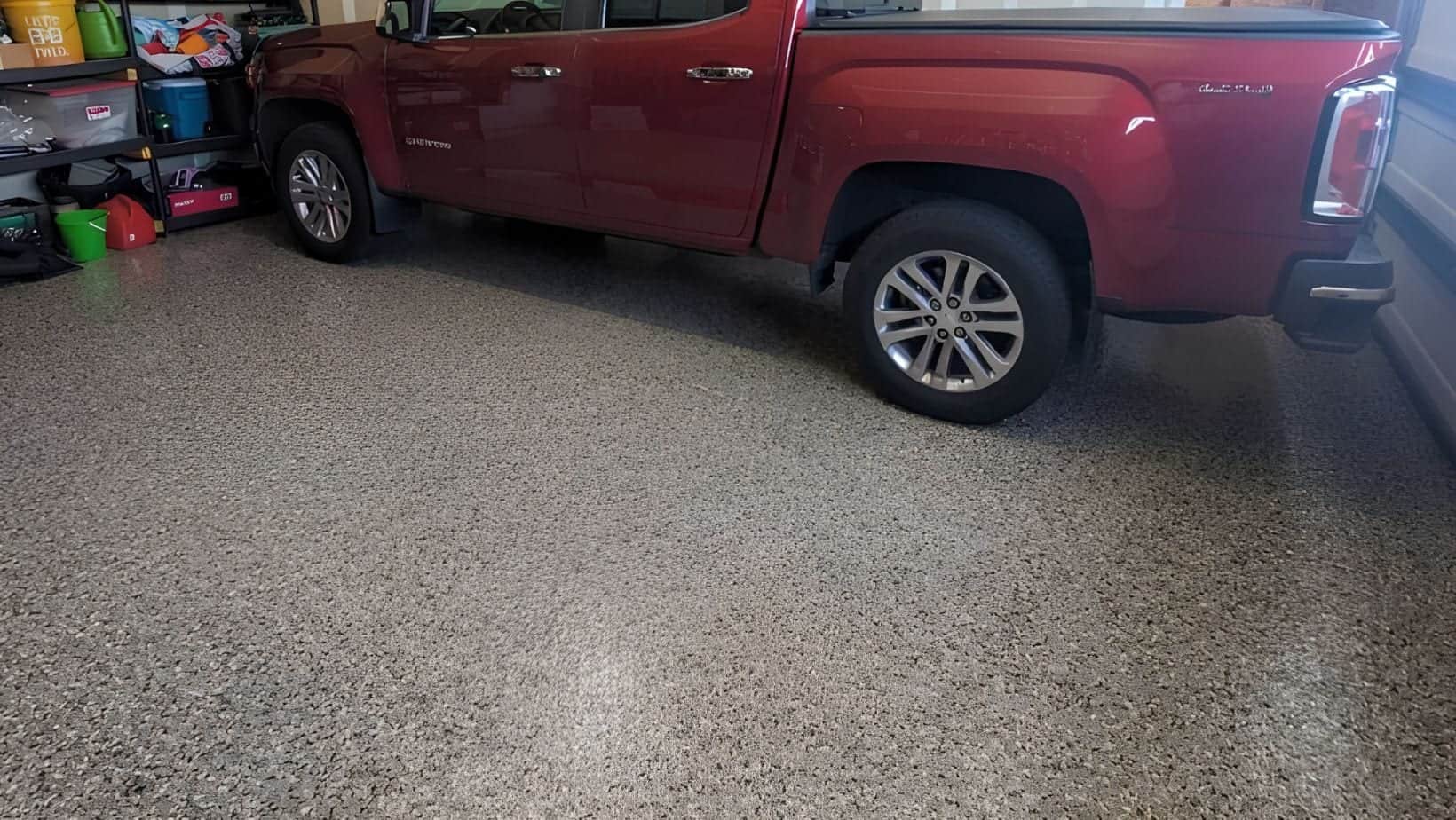
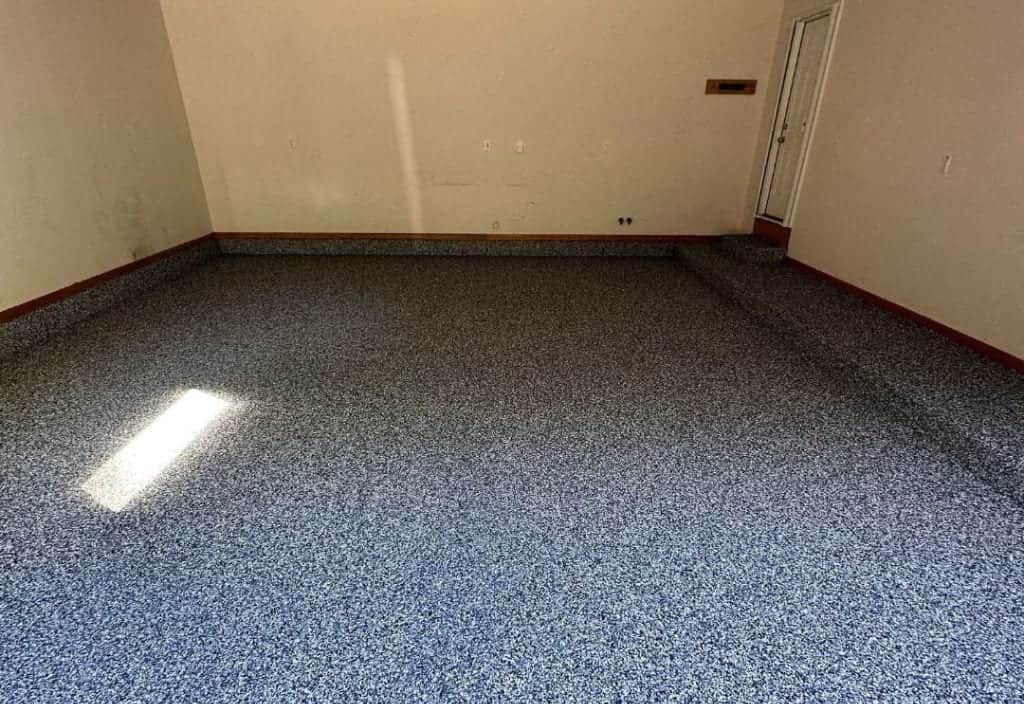
A decorative blend adds variation beneath vehicles and storage. We can discuss color in relation to light, cabinets, equipment, and the amount of visual activity already present.
Repairs can improve a prepared surface, but concrete may move and moisture can affect suitability. Clear limits help you choose a coating with realistic expectations from the beginning.
Installation Process
The finished floor depends on decisions made before the color appears. We examine the existing concrete, prepare its surface, address repair needs, and place each coating layer in order so the finished garage reflects its use and its slab.
Step 1
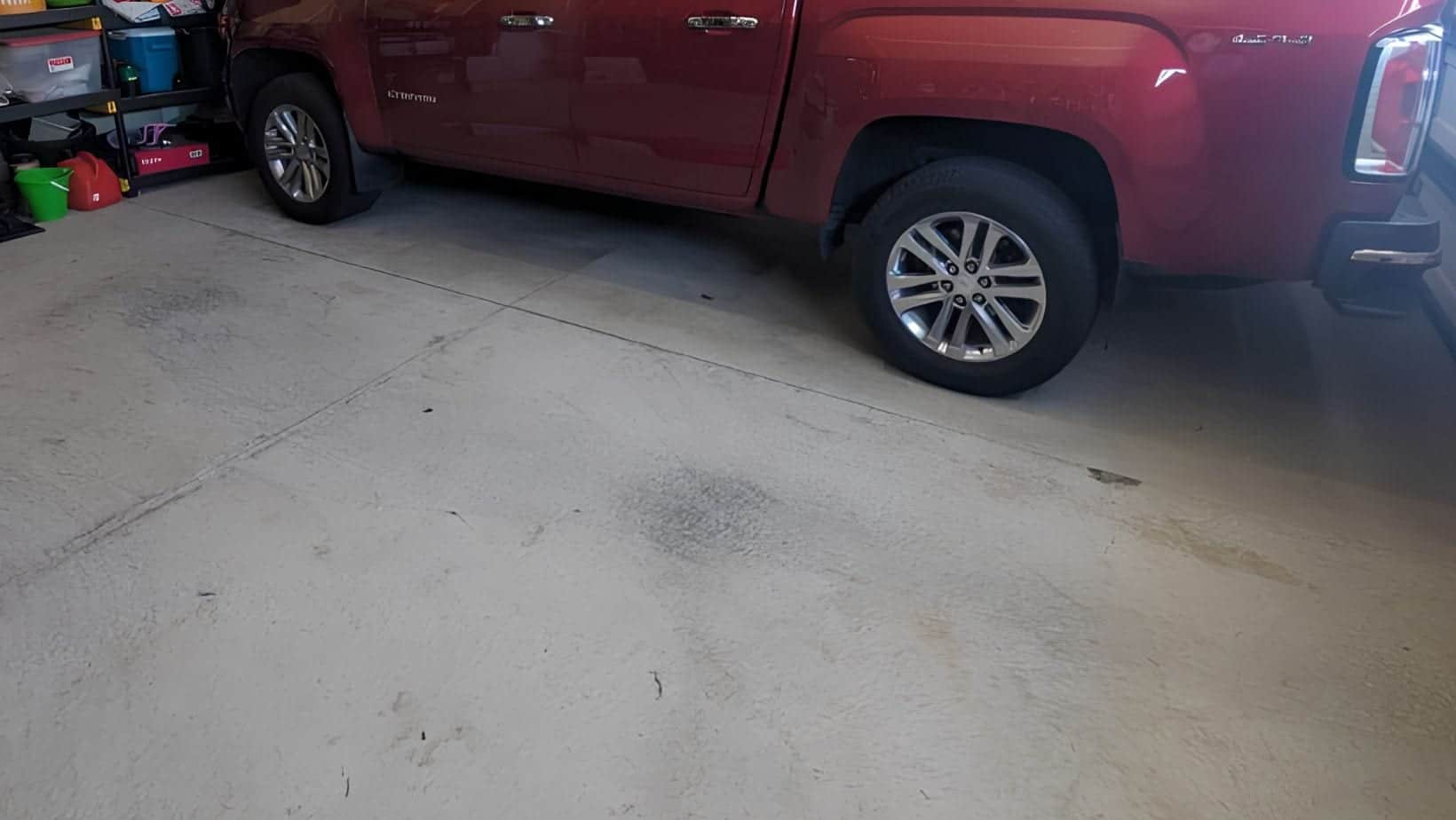
We begin with the concrete and the work it must support. Visible wear, previous coatings, cracks, stains, moisture clues, vehicle lanes, storage, and access all belong in the first evaluation. Your preferred finish helps us connect the slab's condition to a practical coating recommendation.
Step 2
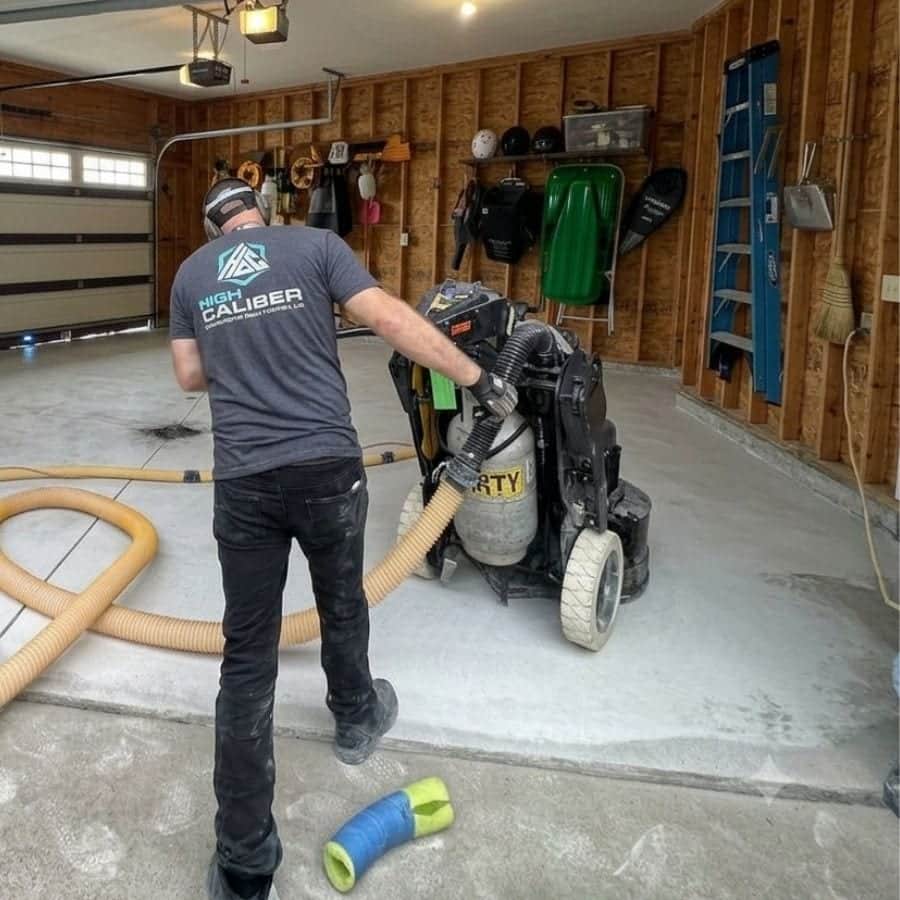
Diamond grinding removes weak surface material and opens the concrete to the profile needed for coating adhesion. It is a preparation step, not leveling or structural repair. The work also gives us a clearer surface for identifying what still needs attention before the system is applied.
Step 3
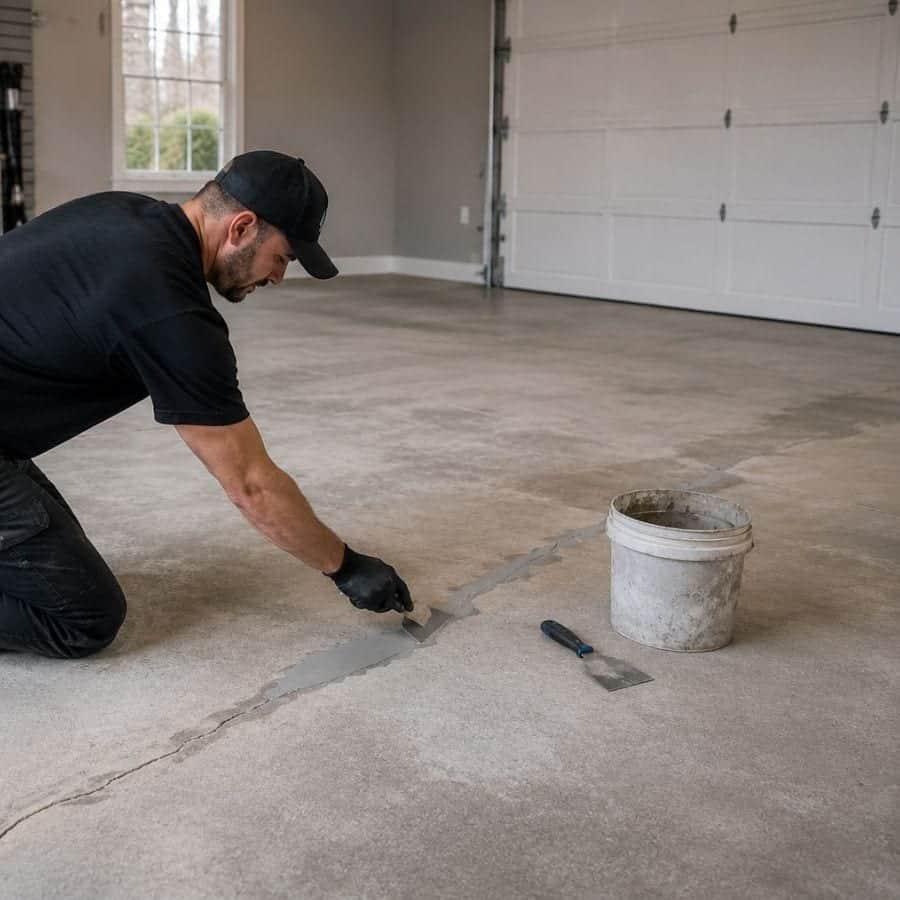
After grinding exposes the slab, we address cracks, pits, spalls, and other damaged areas that belong in the planned scope. Repair helps create a more coherent surface for the coating, while the estimate keeps expectations realistic because concrete can continue to move over time.
Step 4
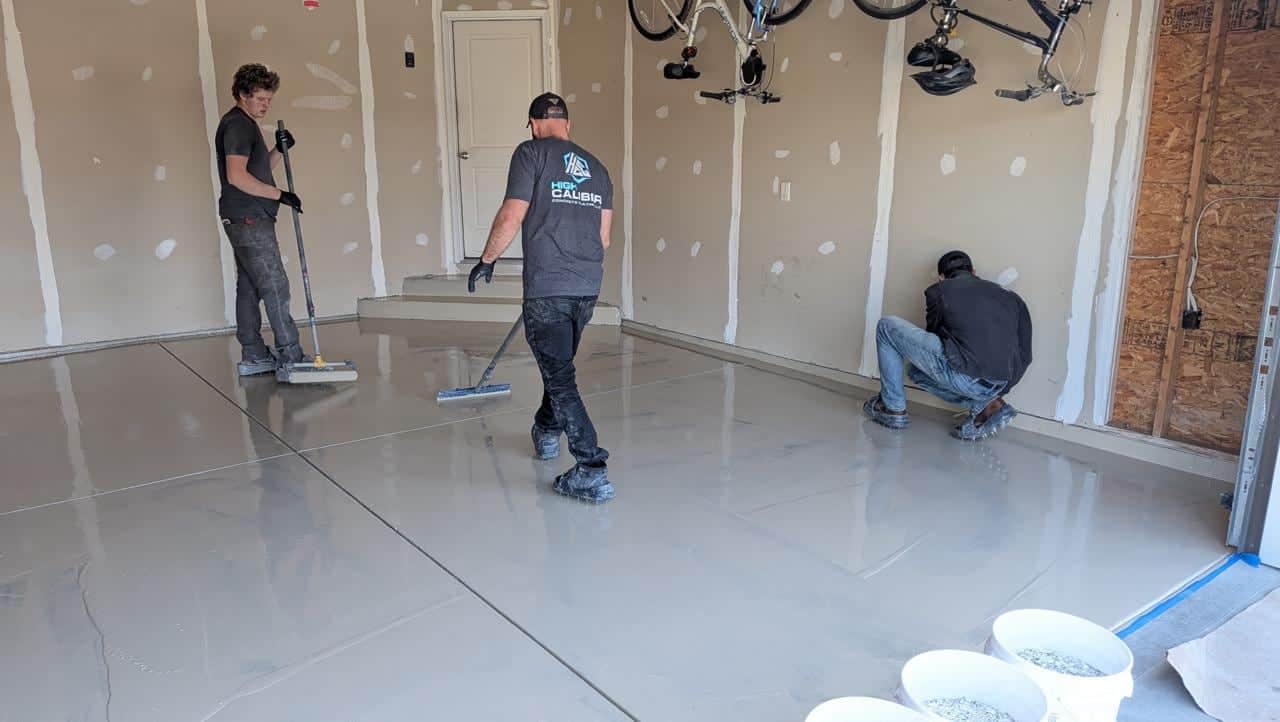
The prepared concrete receives the selected hybrid basecoat. Epoxy contributes adhesion and build, while compatible polyurea chemistry brings the properties assigned to its layer. We place the materials as a system around the slab and garage use, rather than treating the project as a single-product application.
Step 5
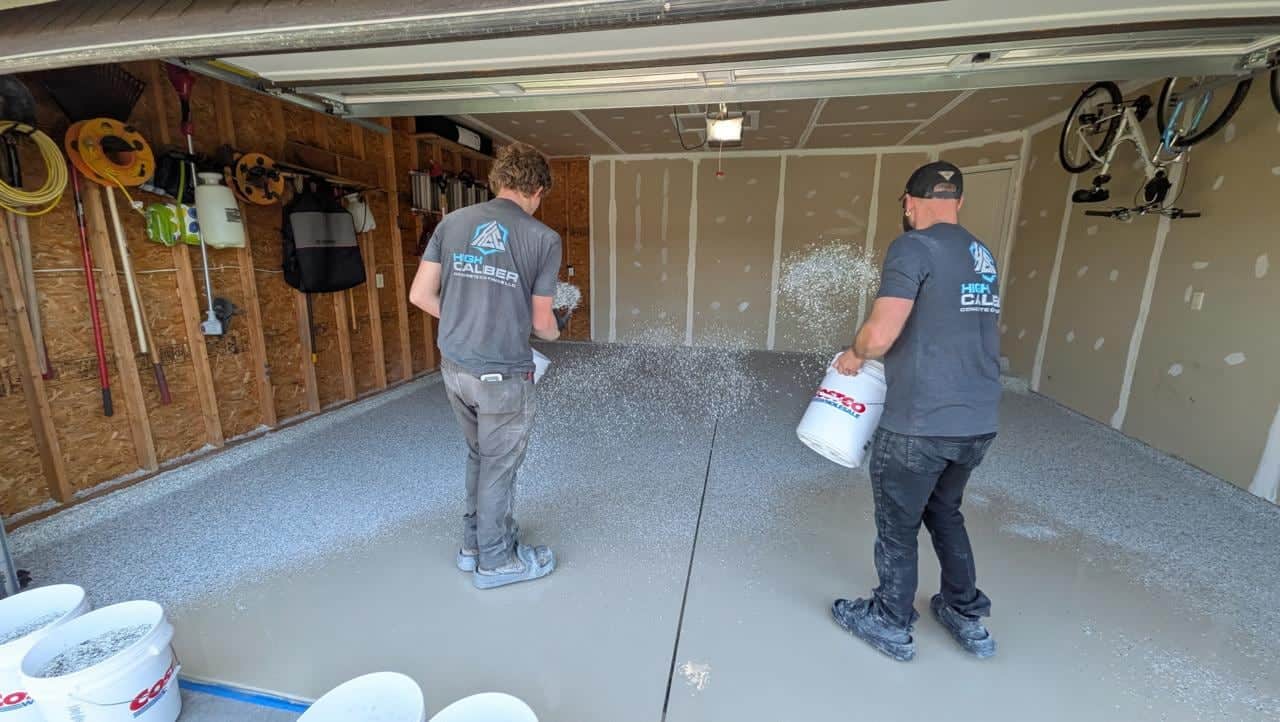
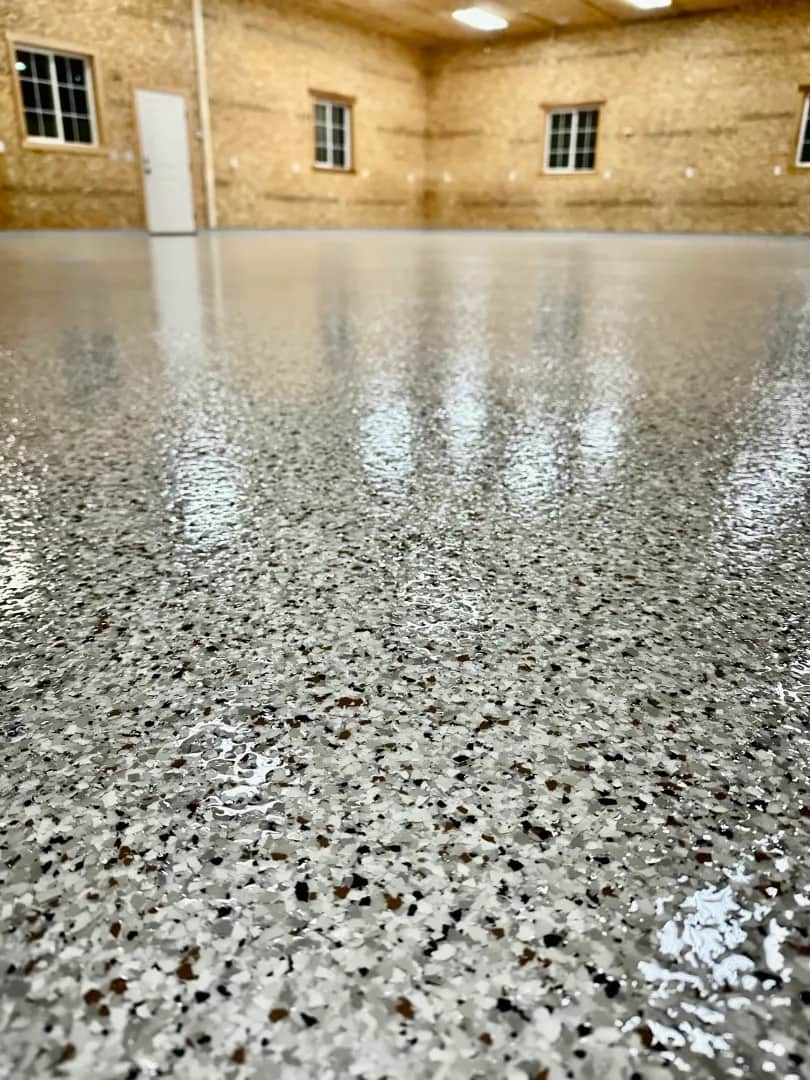
If you select a flake finish, we broadcast the chosen blend into the wet basecoat for its decorative texture and visual variation. Once the layer cures, loose flake is removed and the surface is prepared for the clear finishing coat.
Step 6
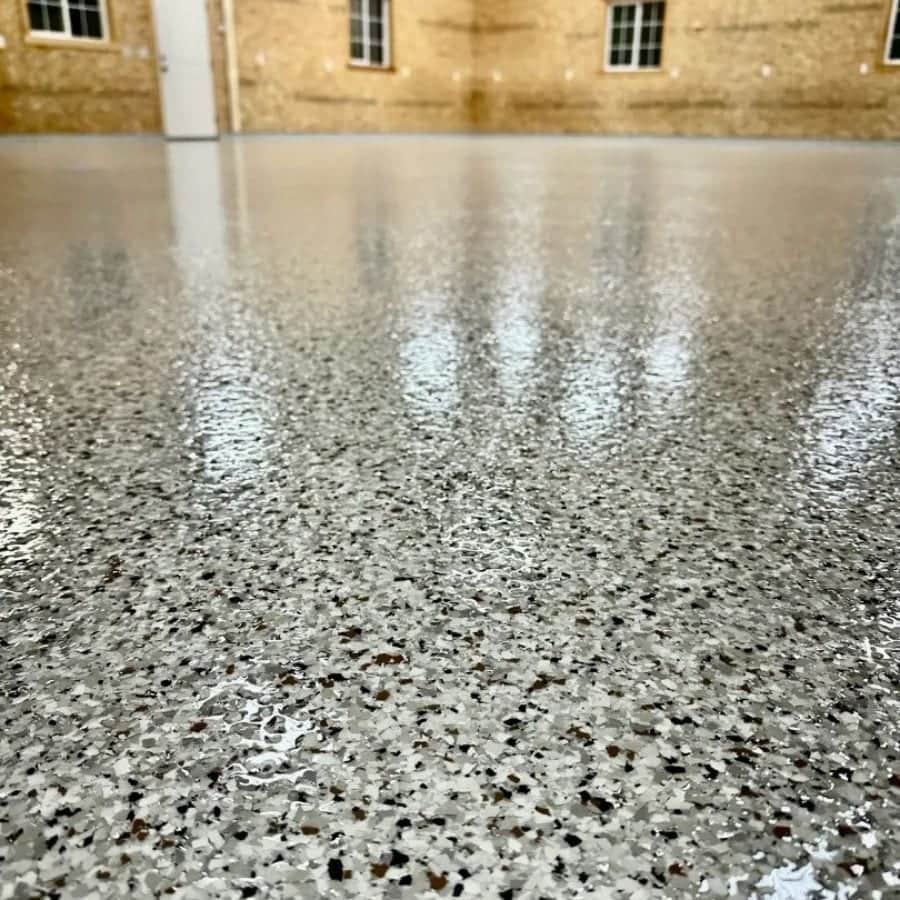
A polyaspartic topcoat completes a typical decorative garage flake system and seals the installation sequence. We inspect the finished surface, then review cleaning, access, storage, vehicles, and foot traffic so you know how to care for the floor as the garage returns to use.
Why High Caliber
Our family-owned operation works from the Holland and Zeeland area across West Michigan. We bring that regional perspective to Allendale while keeping the conversation tied to the property in front of us. A garage estimate should explain what we see, what the system is intended to do, and which conditions could change the plan.
We can walk through the difference between grinding and repair, the role of epoxy in a hybrid system, the use of polyurea and polyaspartic, and the effect of moisture or daily traffic. That gives you a way to compare options without reducing the project to a color or a single material name.
Customer Reviews
“We recently had our garage floors resurfaced with the Epoxy Floor coating with flakes. High Caliber Concrete did such an awesome job we cannot say enough good about them! So timely, well organized and a beautiful job!! Owner, Jeff, responded to any call ASAP. Shawn and Ethan, fantastic employees for the company, did a tremendous job which was labor intensive…They left no questions unanswered! Such a professional, beautiful job. We would highly recommend them! Lillian & Joseph Bakara Jr.”
“Wow! Jeff and Mike were amazing to partner with for my garage floor renovation! They did an amazing job but more importantly, they communicated directly with me thru texts, reminders, and in person! Jeff and his team left my garage and exterior area cleaner than when they arrived and gave clear instructions on follow up care needed for my new floor! I would highly recommend High Caliber Concrete Coatings anytime!”
“High Caliber Concrete Coatings did a wonderful job refinishing my garage floor. Jeff was very thorough explaining the entire process and this company had the best assortment of colors to choose from. The team was very professional and delivered a flawless result. Thank you Jeff and your team.”
Allendale, Michigan
Allendale is part of Ottawa County's West Michigan lakeshore and inland setting. Freeze-thaw cycles, lake-effect snow, winter road salt, humid summers, and spring melt moisture can all affect what comes through a garage door. Wet tires and gritty shoes tell us about exposure, but they do not reveal everything about a slab. We still need to discuss the concrete itself, especially where moisture or old surface damage is involved.
The housing mix gives garages different assignments. An older in-town home may have an established attached garage with years of storage traffic. A newer subdivision may have a cleaner slab but a busy entry route. Rural properties, pole barns, and outbuildings may bring equipment, agricultural activity, or wider temperature changes into the conversation. The intended use helps determine which preparation questions matter most.
Our service area includes Allendale and nearby West Michigan communities such as Wyoming, Grandville, and West Olive. If your project is in an attached garage, detached structure, workshop, or pole barn, tell us how the space is used and what the slab has experienced. We can then focus the estimate on access, traffic, moisture clues, repairs, and a finish that makes sense for your property.
Salt, meltwater, and grit deserve a care discussion because a coating changes the surface, not the weather that enters.
Previous paint, repairs, staining, and years of storage can shape preparation even when the desired finish looks simple.
Equipment and outbuilding traffic may call for different questions about exposure, access, and how the concrete will be used.
Frequently Asked Questions
The useful starting details are the approximate size, attached or detached construction, vehicle and storage patterns, previous coatings, visible repairs, cracking, staining, damp areas, and the finish you prefer. Access and the timing of your project also matter. Photos can begin the discussion, but the concrete condition controls the preparation plan.
The hybrid system gives different materials specific jobs. Epoxy contributes adhesion and build in the basecoat. Polyurea is used for properties assigned to the appropriate layer, including flexibility, UV stability, and chemical resistance. A polyaspartic topcoat can finish a decorative flake system. We select compatible layers around the slab and intended use.
Once diamond tooling has opened the slab, cracks, pits, spalls, paint, and damaged areas can be evaluated for planned repair. Preparation can improve the surface, but it cannot make a moving slab permanently static or guarantee that every irregularity disappears.
A finished floor still needs ordinary sweeping and washing when road salt, grit, and meltwater enter. The coating provides a more consistent surface for managing that residue, but it does not stop seasonal exposure or eliminate maintenance. We can review the access and care expectations for your garage before the project is complete.
It may, when the slab condition, access, exposure, and planned activity fit the system. A detached structure or pole barn may see equipment, storage, temperature variation, or traffic that differs from a home garage. Those facts affect the estimate and may change the preparation or finish discussion.
Damp areas, recurring staining, spring melt, previous coating failure, and a history of water entering the space are all useful to mention. Moisture does not automatically determine the outcome, but it can affect suitability and the system recommendation. We want that question addressed before grinding and coating begin.
Tell us how vehicles enter, where shelving or equipment sits, whether the garage is attached to the house, and which items need to stay protected or remain accessible. Clearing the work area as discussed helps the crew prepare the slab consistently. We will also review care and access expectations before regular use resumes.
Related Services
A coating is one possible direction for an existing slab. These related services help separate surface preparation, moisture response, finish chemistry, and decorative goals when you are deciding what belongs in the plan.
See how mechanical preparation opens the surface and creates the profile a coating needs for adhesion.
Learn moreExplore decorative flake finishes for garages and working concrete areas where texture and appearance both matter.
Learn moreLearn about a supporting option when moisture conditions need focused attention before the coating direction is chosen.
Learn moreUnderstand how polyaspartic chemistry can serve as a finish layer in decorative and exposed floor systems.
Learn moreGallery And Visual Proof
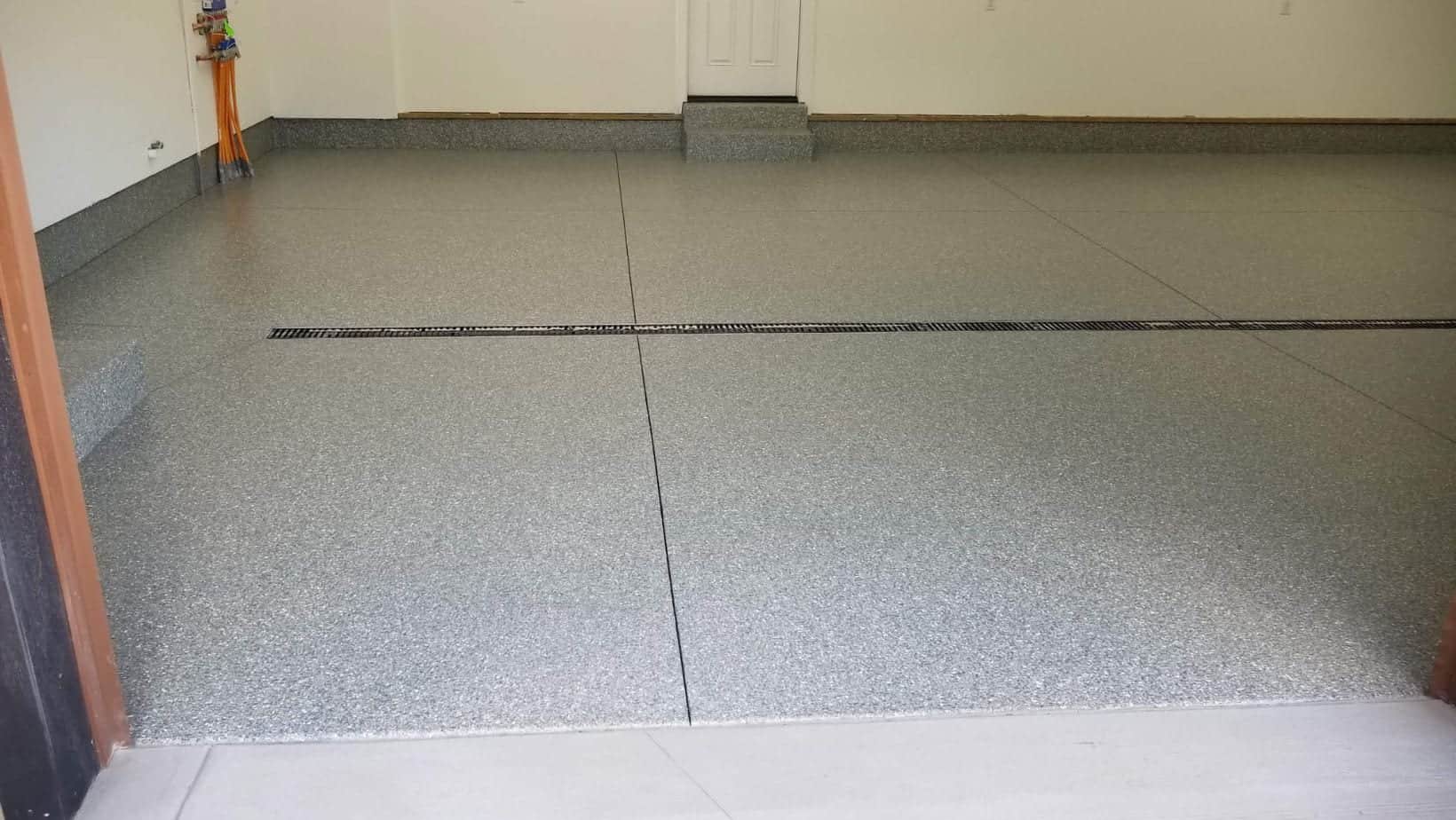
The High Caliber image library includes completed floors, flake variation, and surfaces in use. Use the images to discuss texture and appearance, then let your own slab and garage routine guide the estimate.
Free Project Quote
Tell us about the space and we will follow up with a clear recommendation and quote conversation.
Phone
Business Hours
Free Estimate
Share how the space works now, what the slab has been through, and what you want the finished floor to support. We can discuss grinding, repairs, moisture, hybrid coating layers, flake choices, access, and care before the work is scheduled. Request your free estimate online or call (616) 777-7348 to begin with the details that matter to your garage. We will explain the likely sequence and answer practical questions before you commit.