
Winter residue has a defined landing place
Snowmelt, salt, grit, and damp tire tracks still need attention. A finished coating gives that recurring mess a more consistent surface than unfinished, absorbent concrete.

A Byron Center garage has to change roles without losing its footing. It may hold a vehicle today, tools tomorrow, and wet boots throughout a Kent County winter. We look at the concrete, the traffic, and the way you use the room before building a coating recommendation around those realities.
Service Overview
Garage concrete records what the room has been asked to do. Tire paths, dropped equipment, stored bins, salt residue, old paint, and repaired areas can all inform the next surface. We discuss those clues with you so the project starts with the condition and purpose of the floor rather than a color sample alone.
Our hybrid system gives each layer a defined job. Epoxy contributes adhesion and build at the base, while polyurea and polyaspartic are selected for compatible roles above it. That sequence lets us match material choice to prepared concrete, intended traffic, and the finish you want to live with.
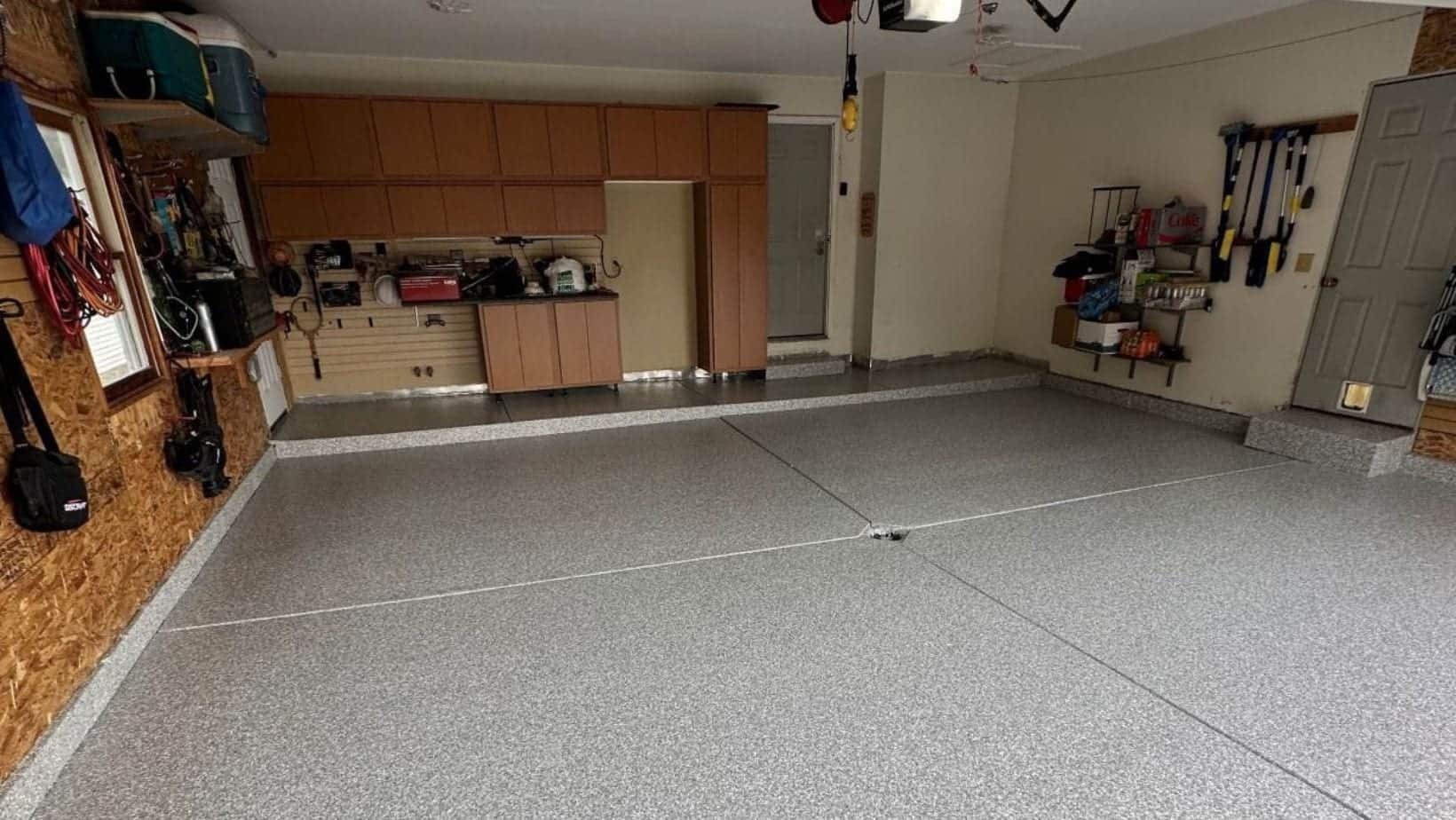
Benefits
A garage coating is useful when it answers the ordinary frustrations of the space. We connect the expected benefit to the preparation underneath, the materials selected, and the routines the finished floor must support.
Snowmelt, salt, grit, and damp tire tracks still need attention. A finished coating gives that recurring mess a more consistent surface than unfinished, absorbent concrete.
Vehicles, bicycles, equipment, shelving, and tools each use the floor differently. We account for those demands while discussing the system, access, and the work area.
A coated surface gives sweeping and washing a more uniform starting point. It does not eliminate maintenance, but daily dirt is no longer landing directly on porous slab.
Old coatings, pits, cracks, stains, repairs, and moisture concerns can change the scope. Reviewing them early keeps the finished expectation tied to the real concrete beneath it.
A decorative blend adds texture and visual movement without making the garage feel unfinished. We can discuss color in relation to light, storage, vehicles, and use.
Attached garages, detached garages, workshops, and rural outbuildings may differ in access and exposure. The estimate follows the property, its actual demands, and the way you enter the space.
Installation Process
A garage coating earns its place through the decisions made before the surface looks complete. We use the room's condition and intended use to guide evaluation, preparation, repair, coating, flake selection, and the final topcoat.
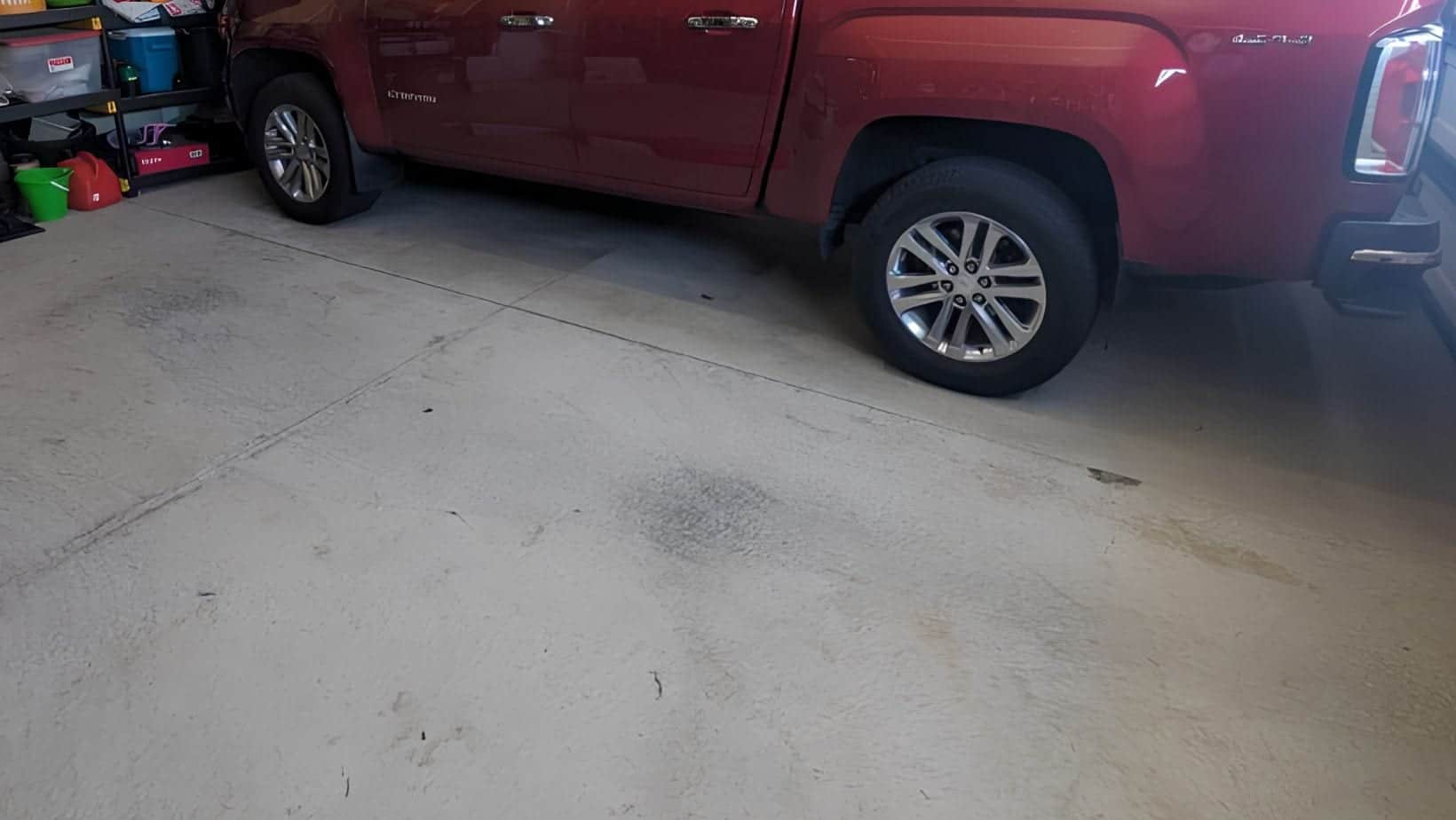
Step 1
We begin with the slab and the work it must support. Visible wear, previous coatings, cracks, pits, moisture questions, vehicle paths, storage, and access all help establish the right preparation scope for your Byron Center garage.
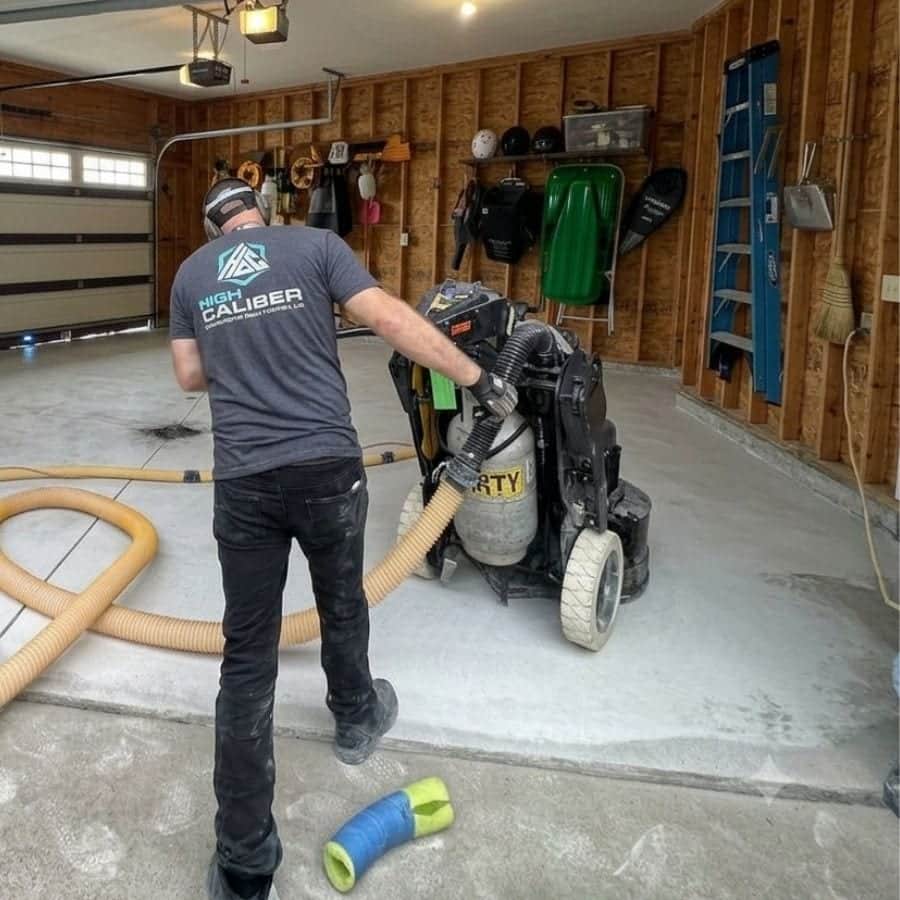
Step 2
Mechanical diamond grinding removes weak surface material and creates the profile the coating needs for adhesion. It also gives the crew a clearer view of the concrete. Grinding is preparation for the system, not a promise to level the slab or correct structural movement.
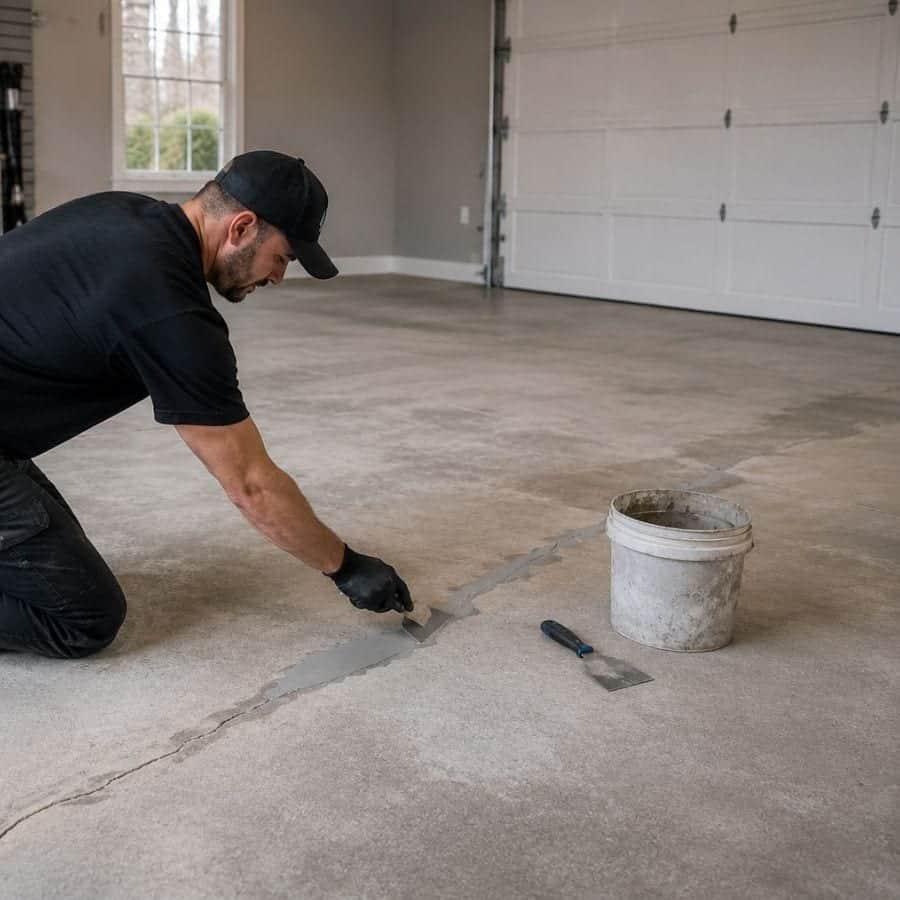
Step 3
Once preparation exposes the slab, we can address cracks, spalls, pits, and failed repair areas within the planned scope. Filling and patching improve the coating base, while the project conversation remains honest about concrete movement and future change.
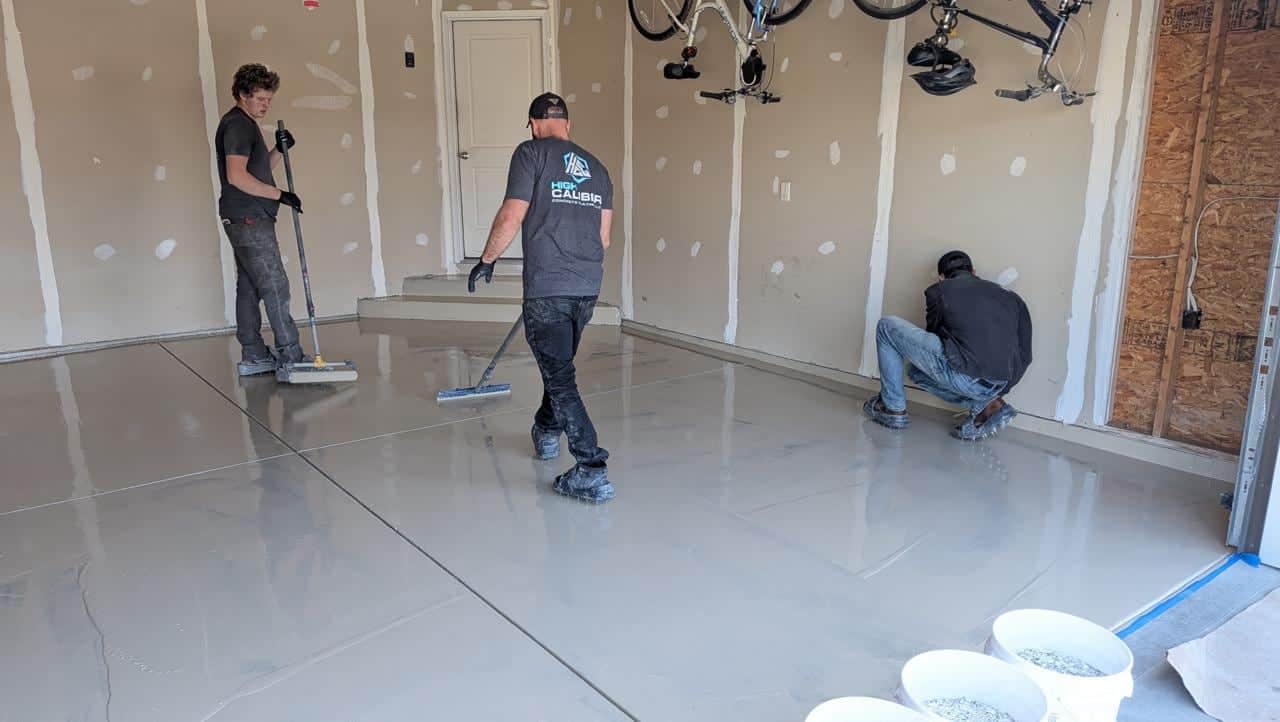
Step 4
The prepared concrete receives the selected basecoat across the planned work area. Epoxy contributes adhesion and build in that layer, while the hybrid system uses polyurea or polyaspartic where their compatible properties serve the next part of the floor assembly.
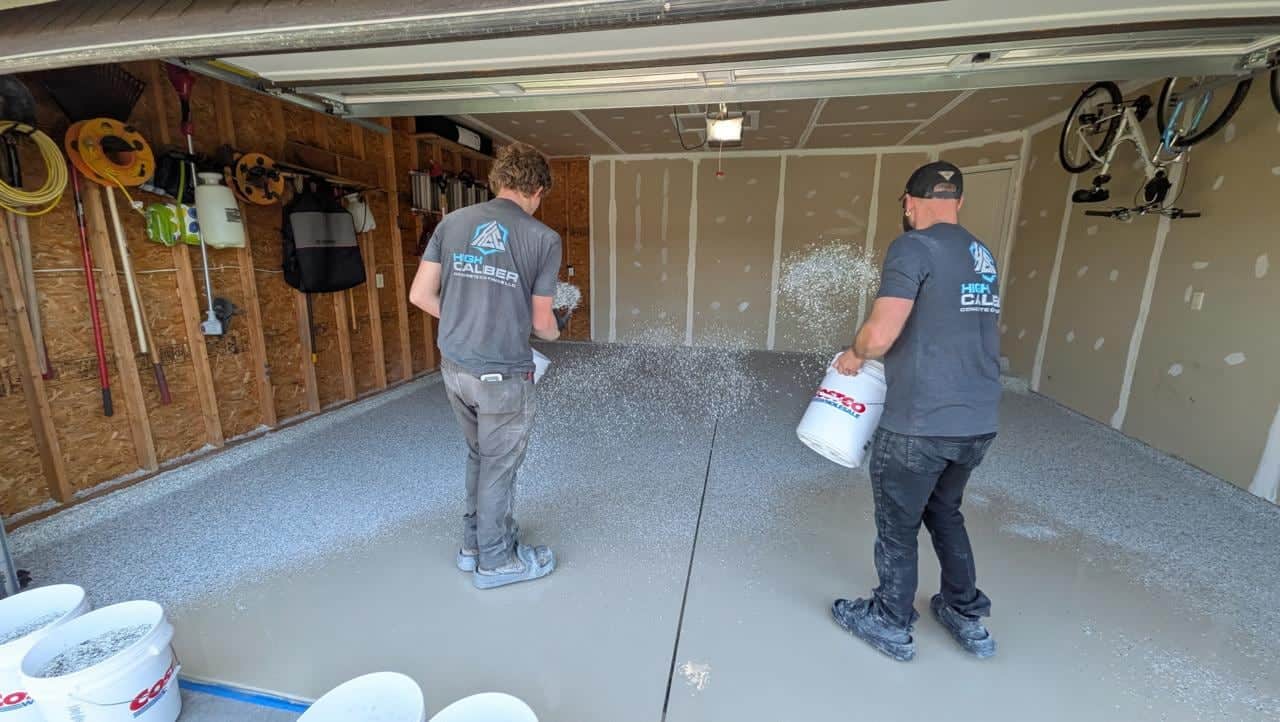
Step 5
For a flake finish, decorative chips are distributed into the wet basecoat to create the selected blend and surface character. After the coating cures, loose material is removed and the floor is prepared so the finishing layer can cover the broadcast evenly.
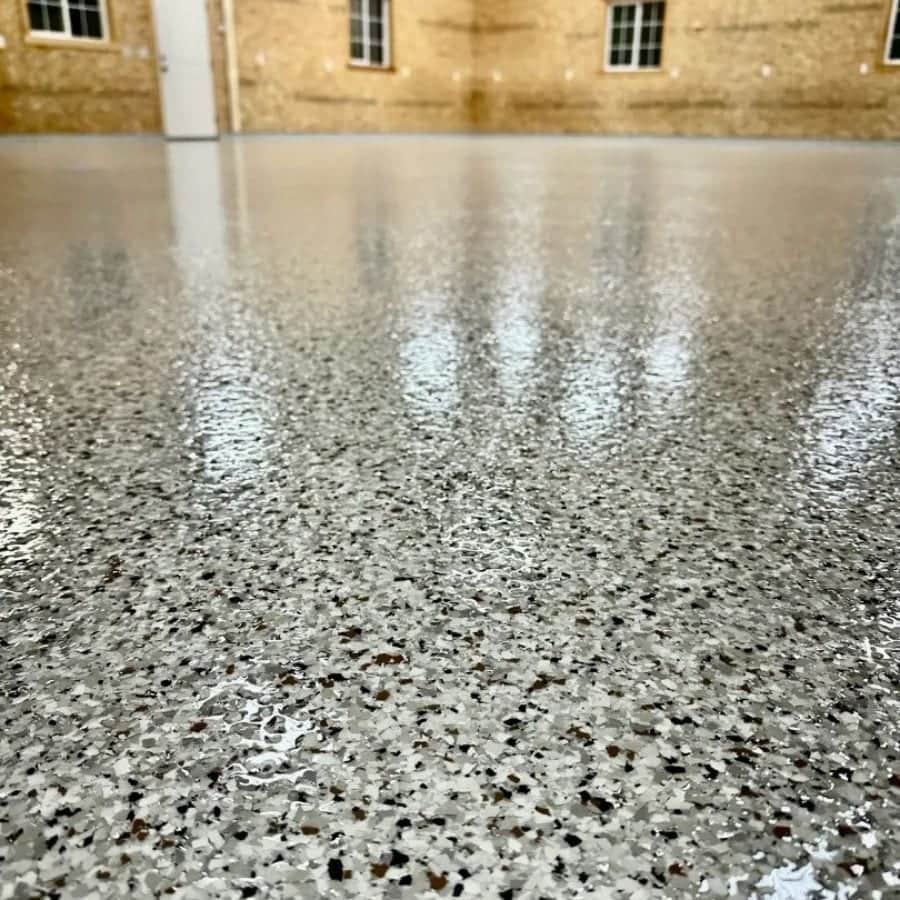
Step 6
A compatible polyaspartic topcoat seals the selected garage system and completes the finished appearance. We inspect the surface, discuss cleaning and access, and explain the return to use guidance for the coating sequence and conditions in your space.
Why High Caliber
Our company works from the Holland and Zeeland area, and our work is shaped by the concrete spaces found across West Michigan. For a Byron Center project, that regional experience is a starting point, not a substitute for looking at your garage. The slab, access, traffic, and expected use remain the deciding details.
We explain the material stack in plain terms and keep preparation in the same conversation as appearance. You should know what grinding does, what repairs can and cannot change, why epoxy belongs in the base layer, and how the selected finish fits the room before you commit to the work.
Customer Reviews
“Wow! Jeff and Mike were amazing to partner with for my garage floor renovation! They did an amazing job but more importantly, they communicated directly with me thru texts, reminders, and in person! Jeff and his team left my garage and exterior area cleaner than when they arrived and gave clear instructions on follow up care needed for my new floor! I would highly recommend High Caliber Concrete Coatings anytime!”
“High Caliber Concrete Coatings were awesome. Jeff the owner was awesome. It was a great experience start to finish. We did a three stall garage. They dropped a covered trailer so we could store everything that was in the garage. The crew that did the work showed up on time and did a great job! We are so happy with the results!”
“We recently had our garage floors resurfaced with the Epoxy Floor coating with flakes. High Caliber Concrete did such an awesome job we cannot say enough good about them! So timely, well organized and a beautiful job!! Owner, Jeff, responded to any call ASAP. Shawn and Ethan, fantastic employees for the company, did a tremendous job which was labor intensive…They left no questions unanswered! Such a professional, beautiful job. We would highly recommend them! Lillian & Joseph Bakara Jr.”
Byron Center, Michigan
Byron Center sits in Kent County, inland West Michigan, within the greater Grand Rapids area. Seasonal snow, freeze-thaw changes, road salt, humid summers, and spring moisture can all become part of a garage's routine. We use those conditions to frame useful questions, then look to your actual slab for the answers.
The local housing mix can include older neighborhoods, newer subdivisions, attached and detached garages, workshops, and rural edges. A floor used mostly for parking may need a different discussion from one that also supports equipment, storage, or a project bench. The room's changing jobs matter as much as its square footage.
Vehicles and footwear can carry salt, wetness, grit, and seasonal debris inside. That does not mean every Byron Center slab has the same moisture condition or damage history. We want to hear where water appears, which areas are difficult to clean, and what has already been applied to the concrete.
Hudsonville, Jenison, and Wyoming are nearby service-area references, not evidence of a particular Byron Center project. For your estimate, the valuable local context is the weather exposure at the door, the concrete under the visible wear, and the work you need the garage to perform.
Snow, salt, water, and grit can arrive with tires and shoes, making the entry area an important part of the maintenance discussion.
Storage, vehicles, tools, and equipment determine where traffic concentrates and how much access the installation plan must preserve.
The condition of the prepared concrete governs repair questions and realistic expectations for the coating.
Frequently Asked Questions
Tell us how the room is used now and what you want it to do next. Vehicle parking, storage, a workshop, equipment, pets, access routes, old coatings, visible damage, and damp areas all help shape the first discussion. A few clear details are more useful than choosing a finish before we understand the slab.
No. Byron Center garages still receive salt, snow, water, and grit from tires and footwear. A coating gives that material a finished surface to clean rather than leaving it directly on porous concrete. Regular sweeping and washing remain part of caring for the room, especially around the garage entrance.
Epoxy is useful in the basecoat because it contributes adhesion and build. Polyurea and polyaspartic serve compatible roles where their properties suit the layer and the project conditions. We are matching the chemistry to the job each layer performs, so the conversation is about a complete system rather than a contest between materials.
Those conditions become part of the preparation plan. Grinding can remove weak surface material and expose what needs attention, while repairs may address pits, spalls, cracks, or failed areas within the agreed scope. Repair improves the base, but it cannot guarantee that a moving concrete slab will never change again.
Those spaces can be considered when the concrete, access, exposure, and planned activity are appropriate for the system. Explain what the room holds, how equipment moves through it, where moisture enters, and how much of the floor must remain available. We will use that information to discuss whether the service fits.
We typically plan a residential garage flake installation as a two-day sequence. Preparation and basecoat work occur first, followed by flake handling, cleanup, inspection, and the topcoat. Repairs, moisture, square footage, access, materials, and installation conditions can affect the calendar, so your estimate will set the project-specific timing and return-to-use guidance.
The work area should be available for the agreed preparation and coating sequence. We will discuss vehicles, shelving, stored items, pets, entry routes, and any access limitations during scheduling. Let us know about dampness, previous products, repairs, or unusual use before installation so the plan reflects the garage you actually have.
Related Services
Some garage questions are really preparation or finish questions. These connected services explain the supporting work without turning every concrete condition into the same coating recommendation.
Learn how mechanical grinding prepares a concrete surface for better coating adhesion.
Learn moreExplore decorative flake finishes for garages where texture and visual character matter.
Learn moreReview a supporting epoxy option when moisture is part of the concrete assessment.
Learn moreSee how UV-stable polyaspartic chemistry can serve as a finish in decorative floor systems.
Learn moreGallery And Visual Proof
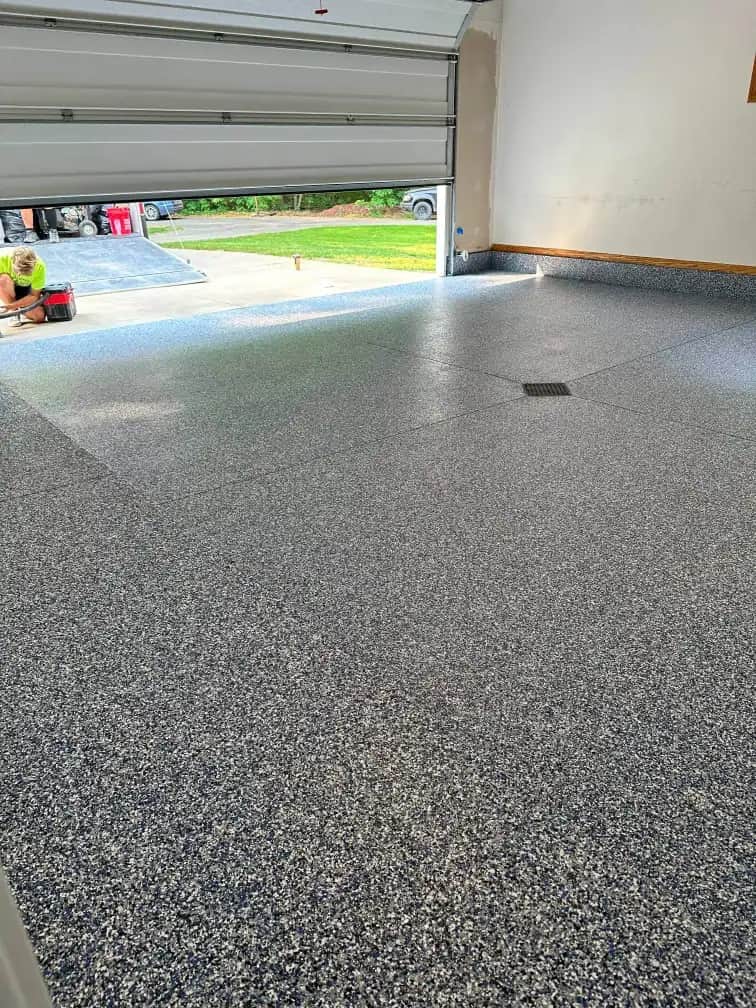
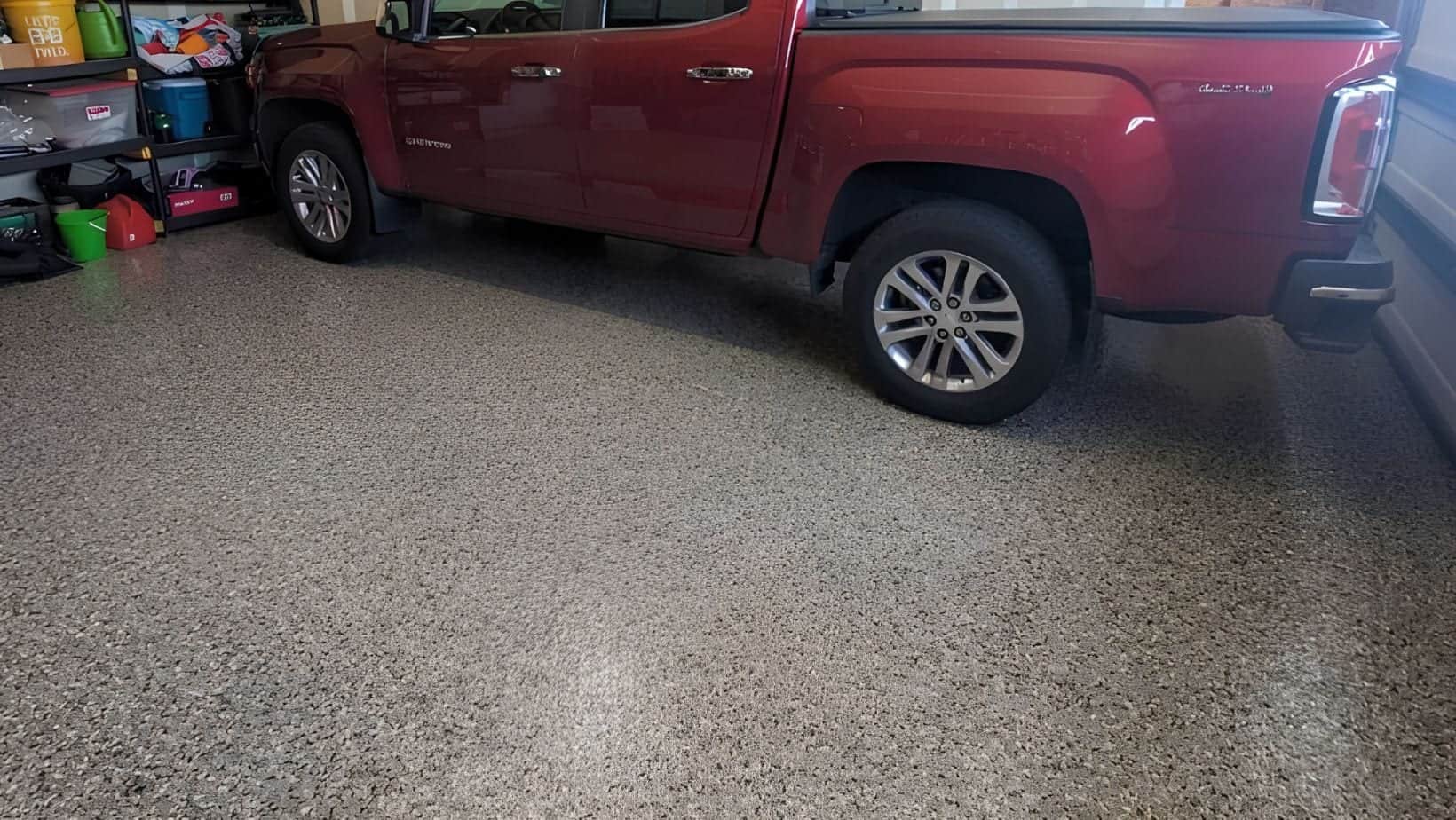
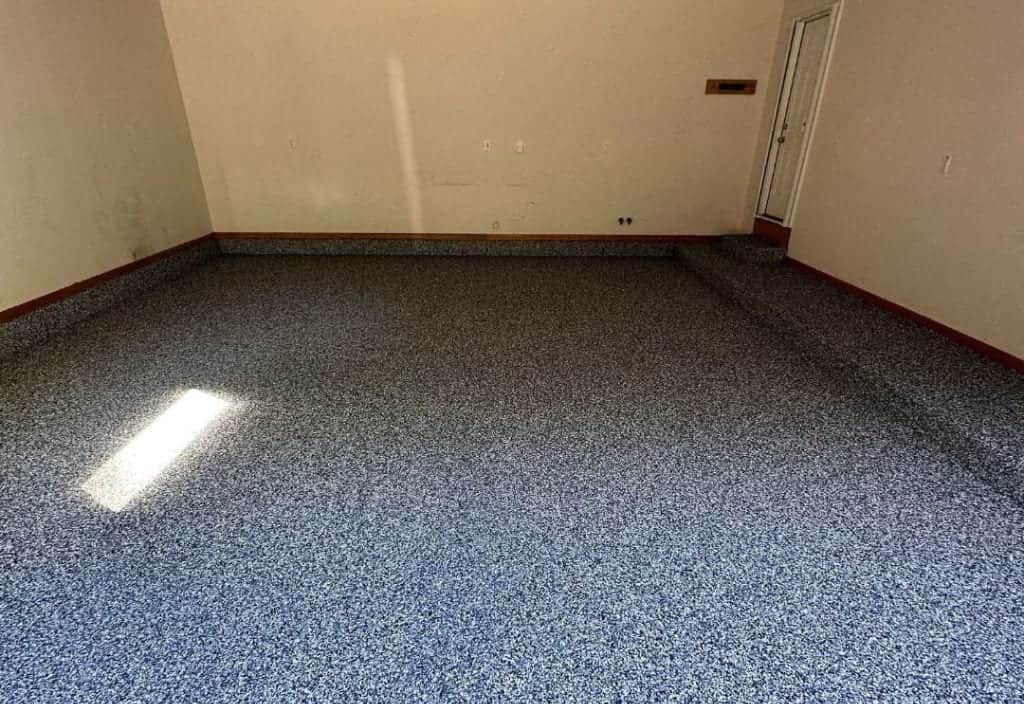
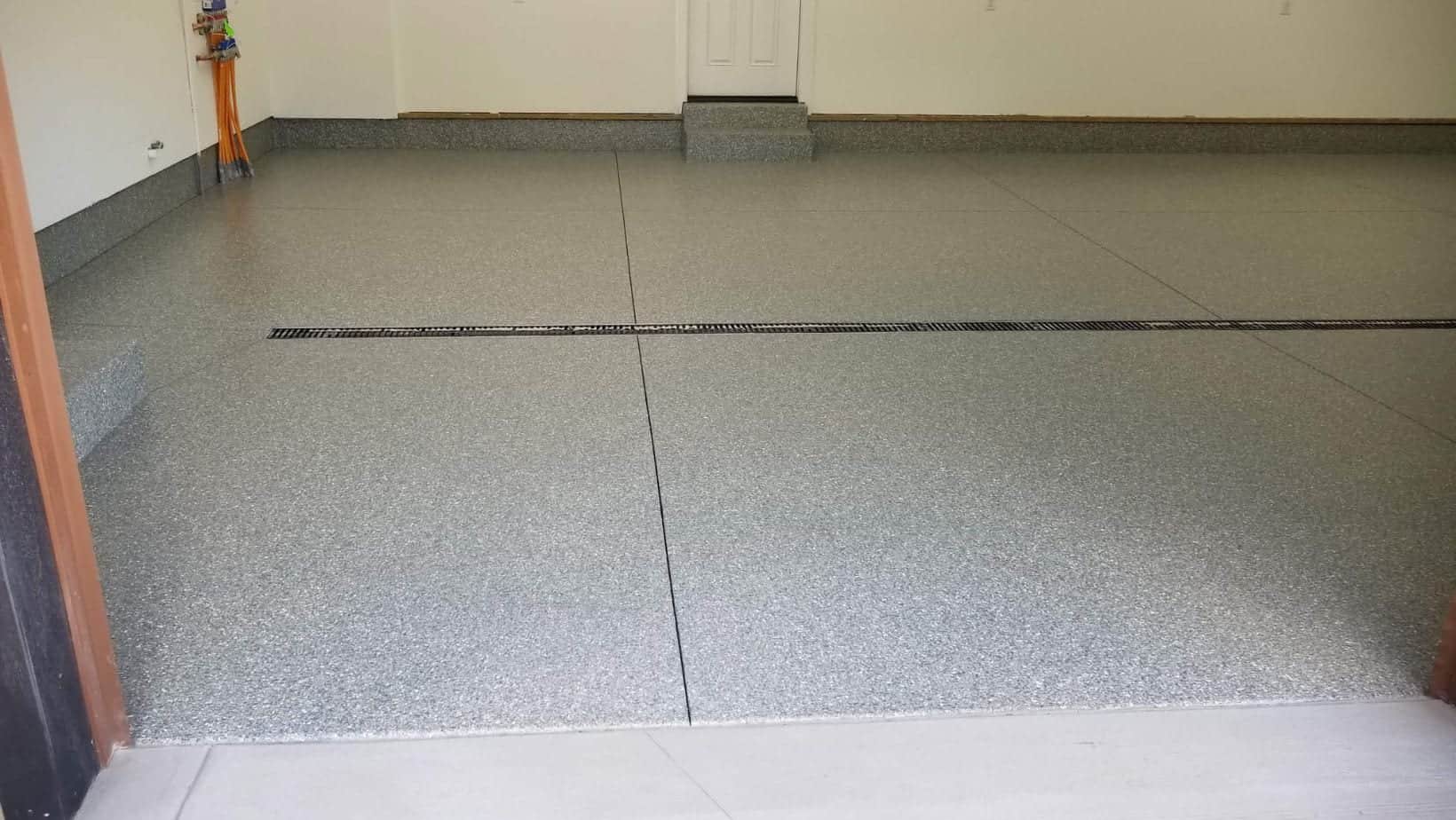
The image library shows real garage coating materials, flake blends, and completed surfaces. The photos illustrate finish and workmanship without assigning any image to a Byron Center property.
Free Project Quote
Tell us about the space and we will follow up with a clear recommendation and quote conversation.
Phone
Business Hours
Free Estimate
Share the room's current jobs, the condition of the concrete, and the seasonal exposure you notice at the door. We can talk through preparation, the hybrid layer sequence, flake options, access, timing, and care before you decide. Request your estimate online or call (616) 777-7348 to put the next conversation in motion. A few photos and notes about storage or old coatings can make that first conversation more productive.