
Winter Residue Has A Defined Surface
Wet tires, salt, and grit will still enter the garage. A suitable coating gives that material a more uniform place to sit while you sweep, rinse, and keep up with seasonal care.

Your Douglas garage may serve a home, a workshop, a farm outbuilding, or several of those at once. We look at the concrete through that daily workload, account for salt and moisture brought in by Michigan seasons, and build an estimate around preparation, compatible layers, and the finish you want.
Service Overview
A garage floor does not experience the room in the abstract. Tires cross certain lanes, shelves concentrate weight in others, and tools or equipment can turn one corner into a work area. We learn how the space operates before we suggest a coating, because the use helps define the preparation and the finish.
Our hybrid system gives each layer a specific assignment. Epoxy contributes adhesion and build at the base. Polyurea supports the system in its intended role, and polyaspartic chemistry can form a compatible exposed finish with useful UV stability. The concrete and the room's demands guide the combination.
Benefits
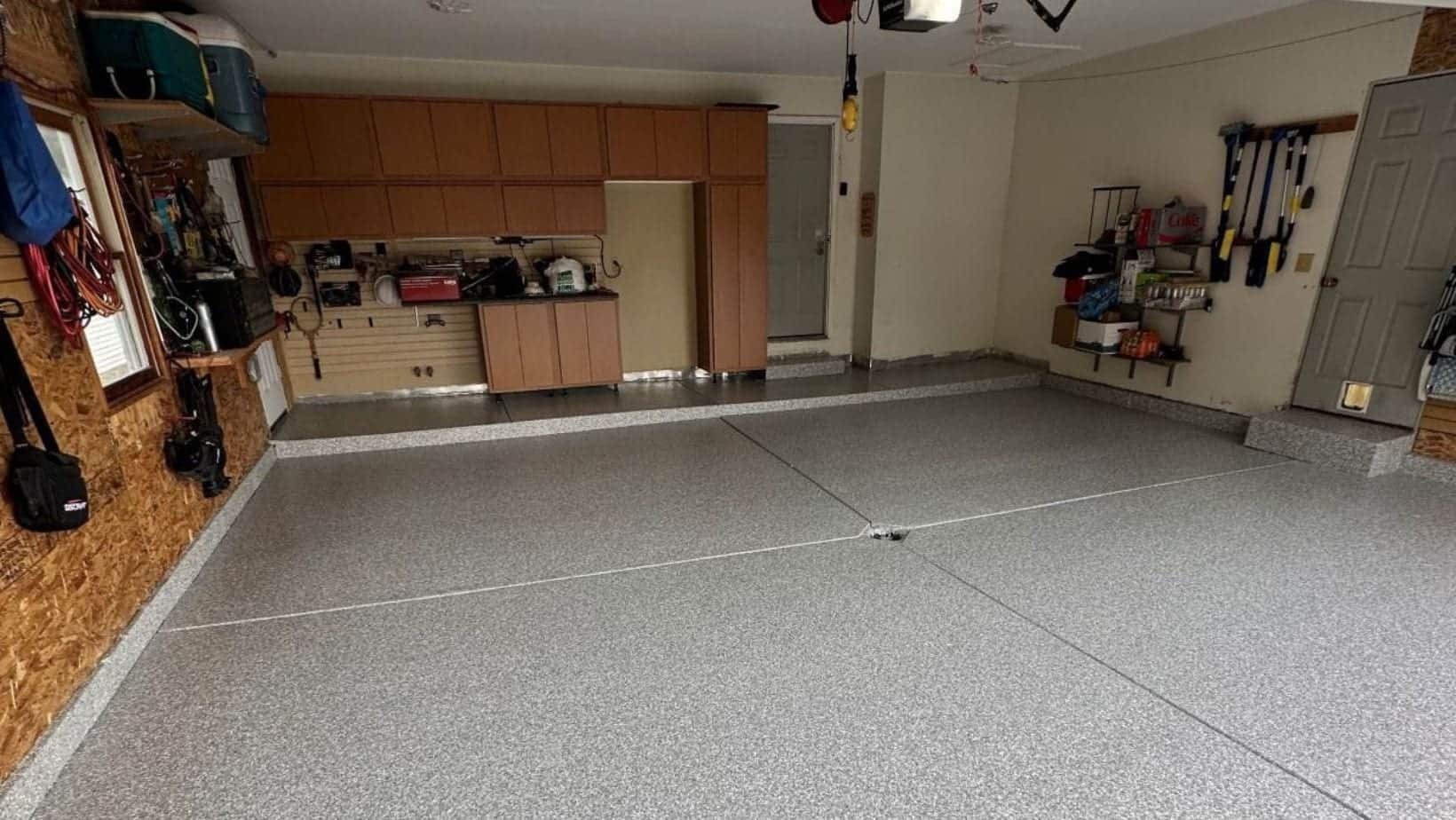
A finished garage floor matters when it makes the room more workable. We connect the conversation to the material that reaches the slab, the chores that follow winter, and the activities the garage is expected to hold.
Wet tires, salt, and grit will still enter the garage. A suitable coating gives that material a more uniform place to sit while you sweep, rinse, and keep up with seasonal care.
A vehicle bay, storage zone, and repair area do not create identical demands. We discuss traffic, equipment, and contact points before tying the system to the room.
Porous concrete can trap dust and spilled material. A properly prepared coating provides a more consistent finished surface for ordinary sweeping and washing through the changing seasons.
Epoxy is useful for basecoat adhesion and build. Polyurea and polyaspartic materials serve different roles, so the hybrid system assigns each product where it belongs.
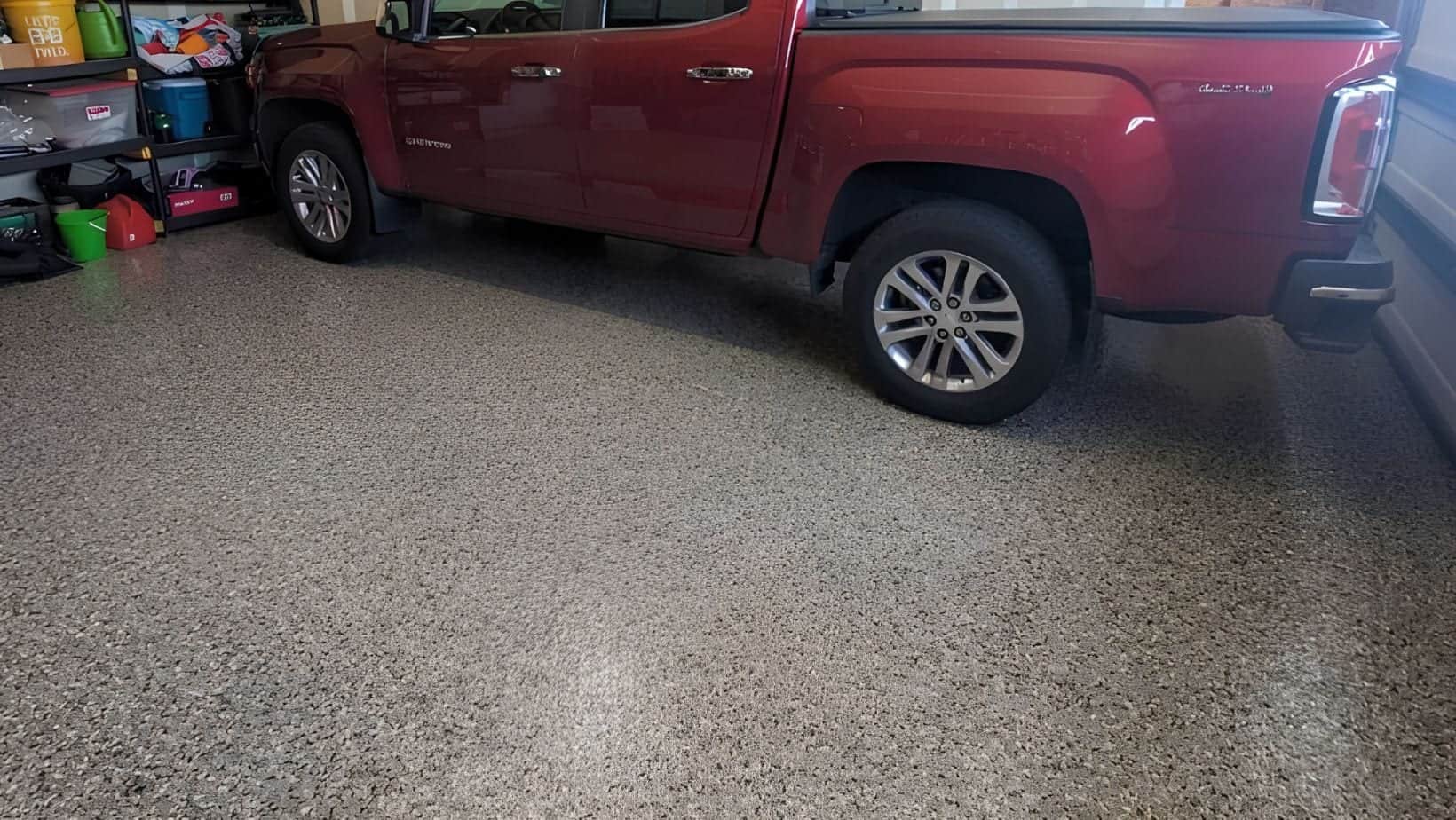
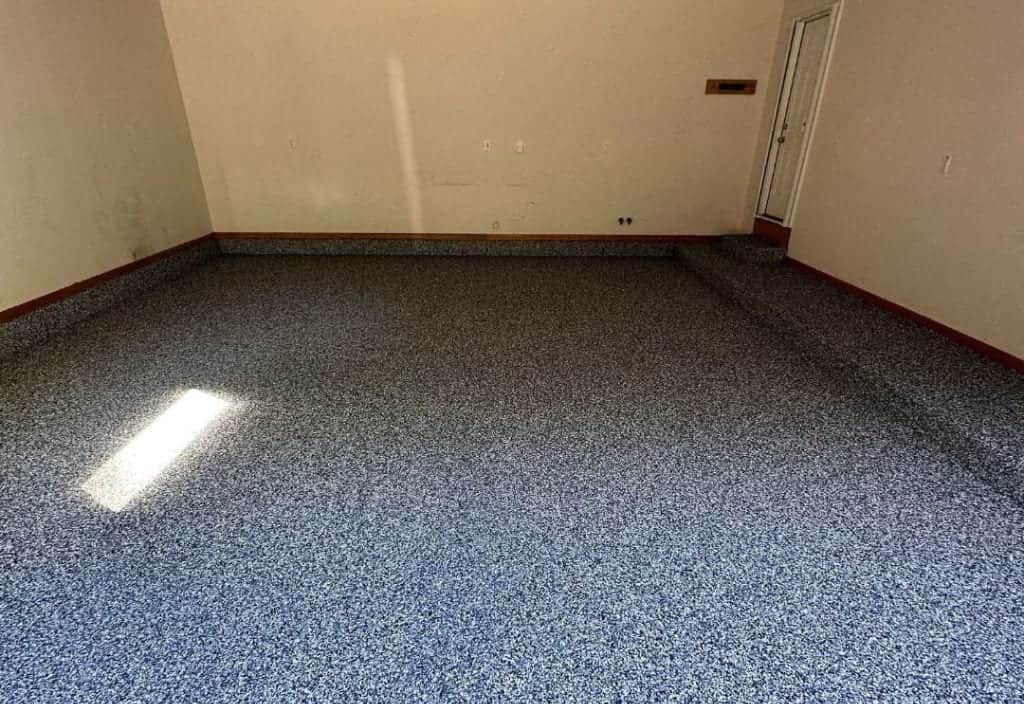
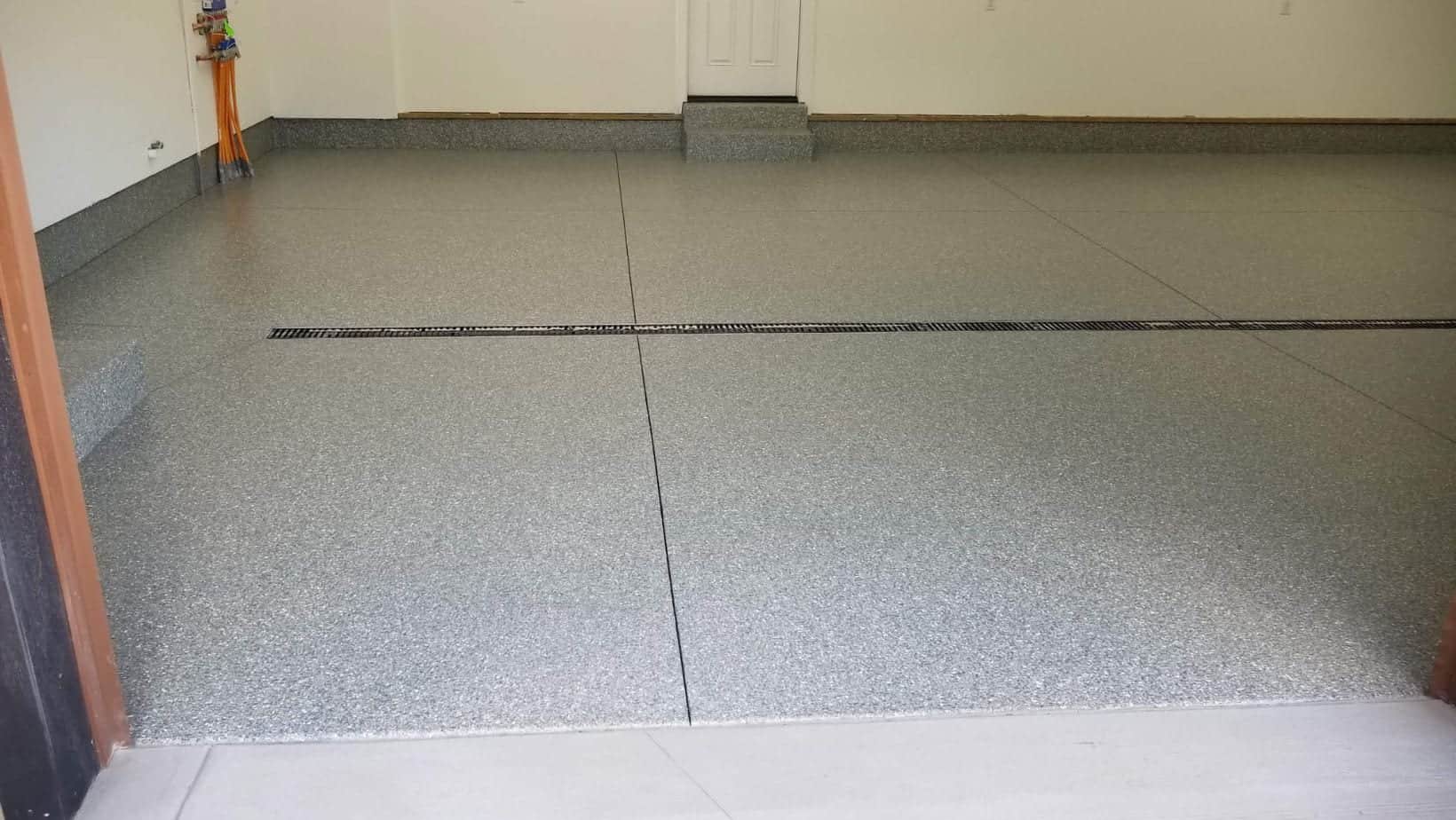
Decorative flake can give a busy garage a settled appearance. We consider light, vehicles, shelving, and storage before discussing blends and the finished visual texture.
Moisture, old coatings, pits, repairs, and movement affect the recommendation. Naming those conditions protects the estimate from promises the concrete cannot support before the installation plan is finalized.
Installation Process
A garage coating is built from the concrete upward. We evaluate the slab, create a clean mechanical profile, address agreed repairs, and install each compatible layer in sequence so the finished surface reflects the room's use and the condition we found.
Step 1
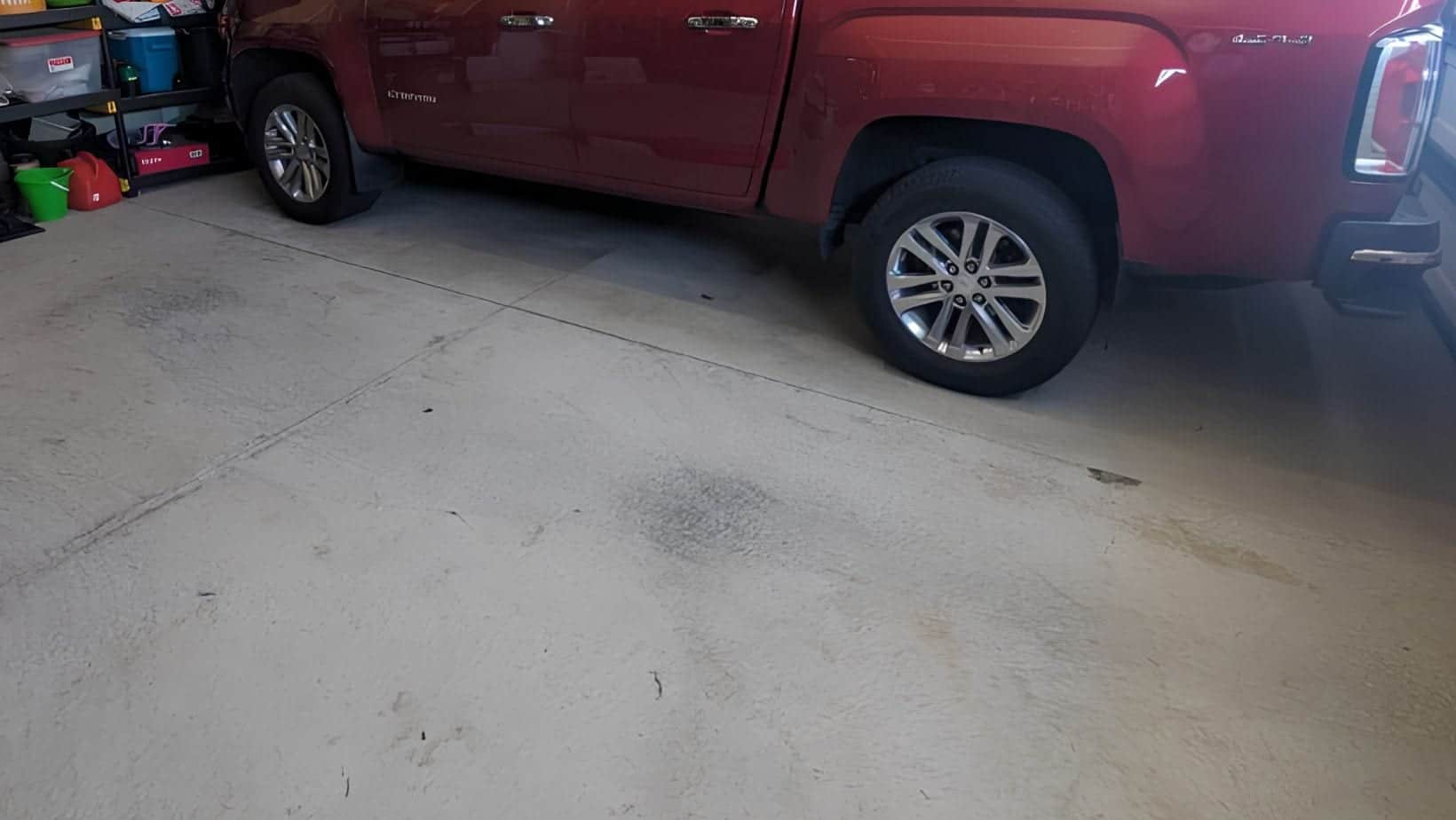
We look at the slab's condition, including stains, pits, spalls, cracks, old coatings, repairs, and signs that moisture needs closer attention. We also ask how you use the space, from parking and storage to workshop activity, so the recommendation fits the actual garage.
Step 2
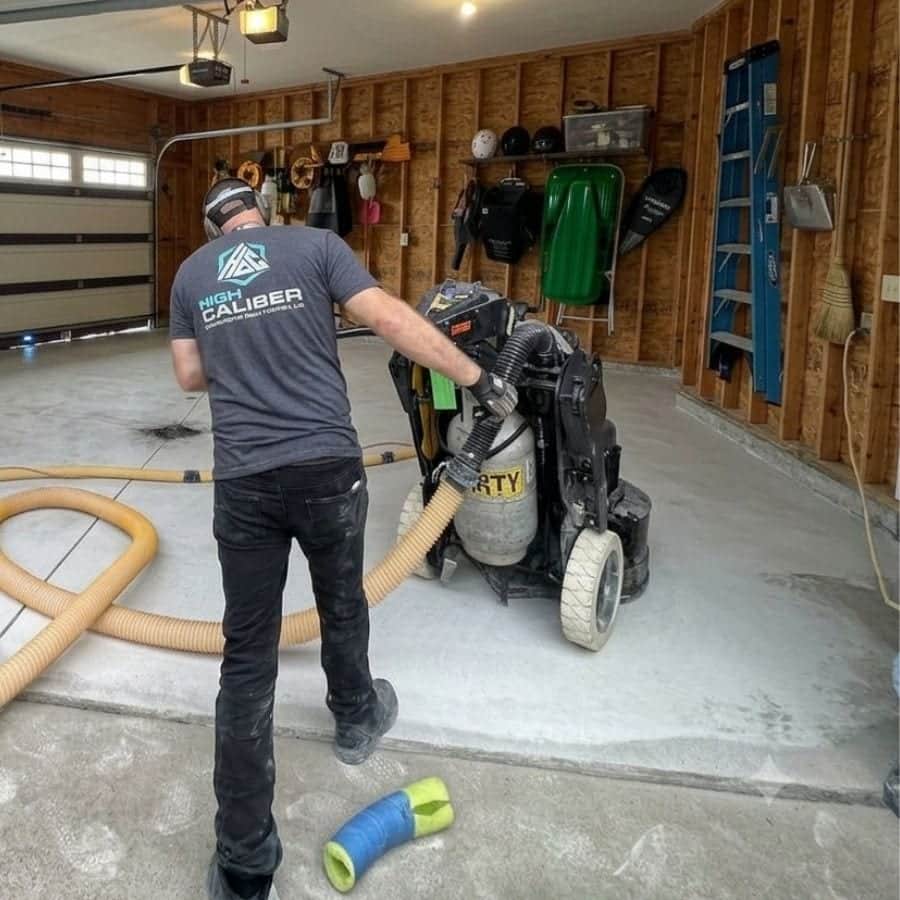
Diamond grinding removes weak surface material, residue, and incompatible remnants while opening the concrete for coating adhesion. The work creates a prepared profile across the accessible floor. It improves the starting surface, but it does not promise to level every irregularity or stop structural movement.
Step 3
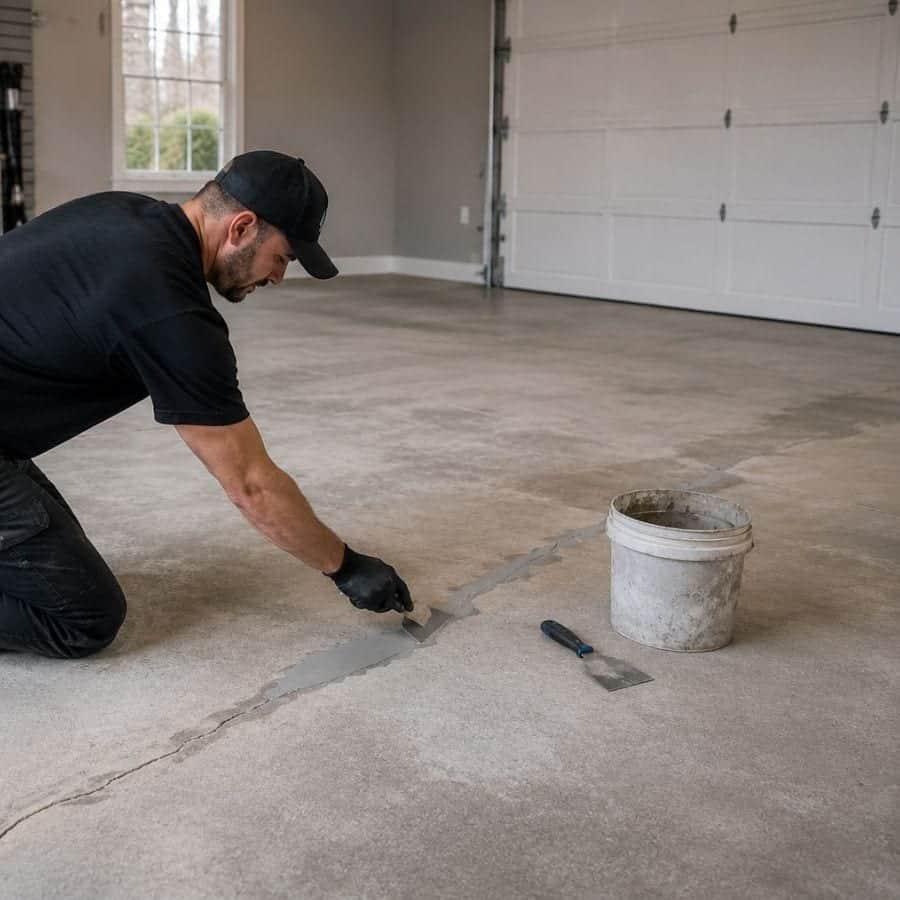
Once grinding exposes the concrete, cracks, pits, spalls, and other damaged areas can be addressed within the agreed scope. Repair work helps create a more coherent surface for the coating. Concrete can still move over time, so the finished plan includes realistic expectations about the slab.
Step 4
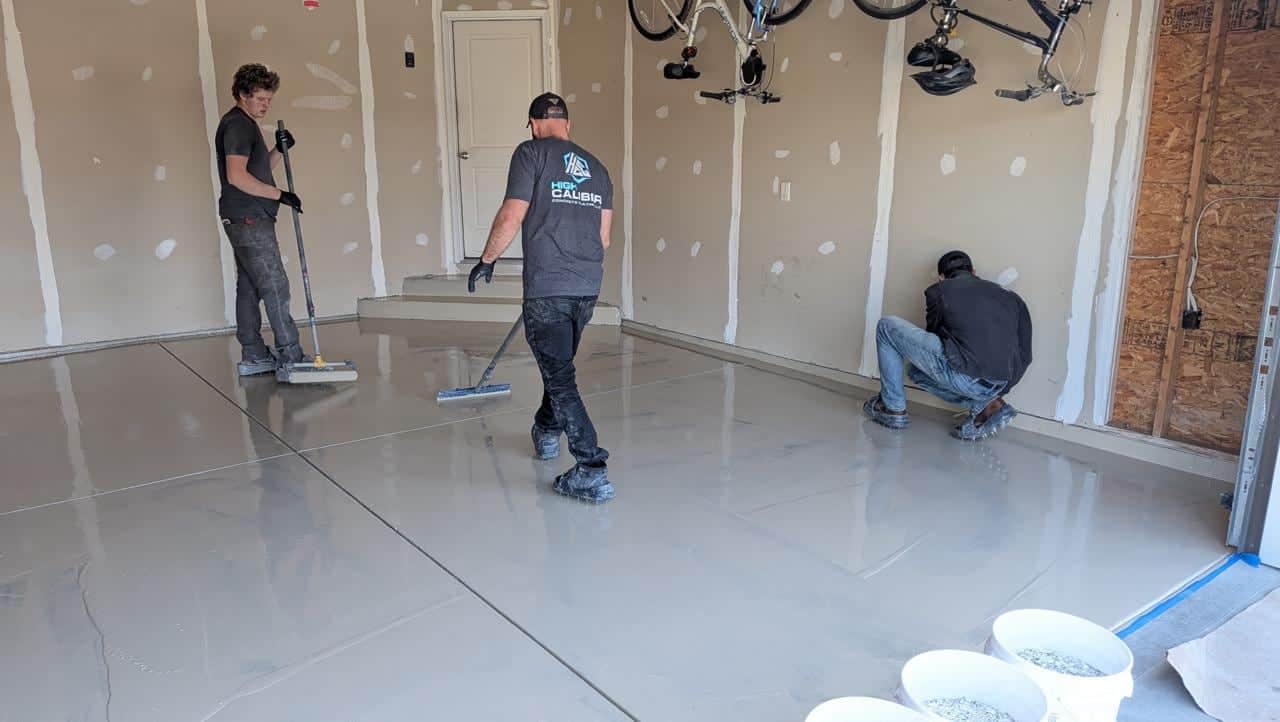
The prepared floor receives the selected basecoat after repairs and surface checks are complete. In our hybrid system, epoxy provides purposeful adhesion and build in the base layer, while the full sequence is selected around the concrete, moisture conditions, traffic, and intended use.
Step 5
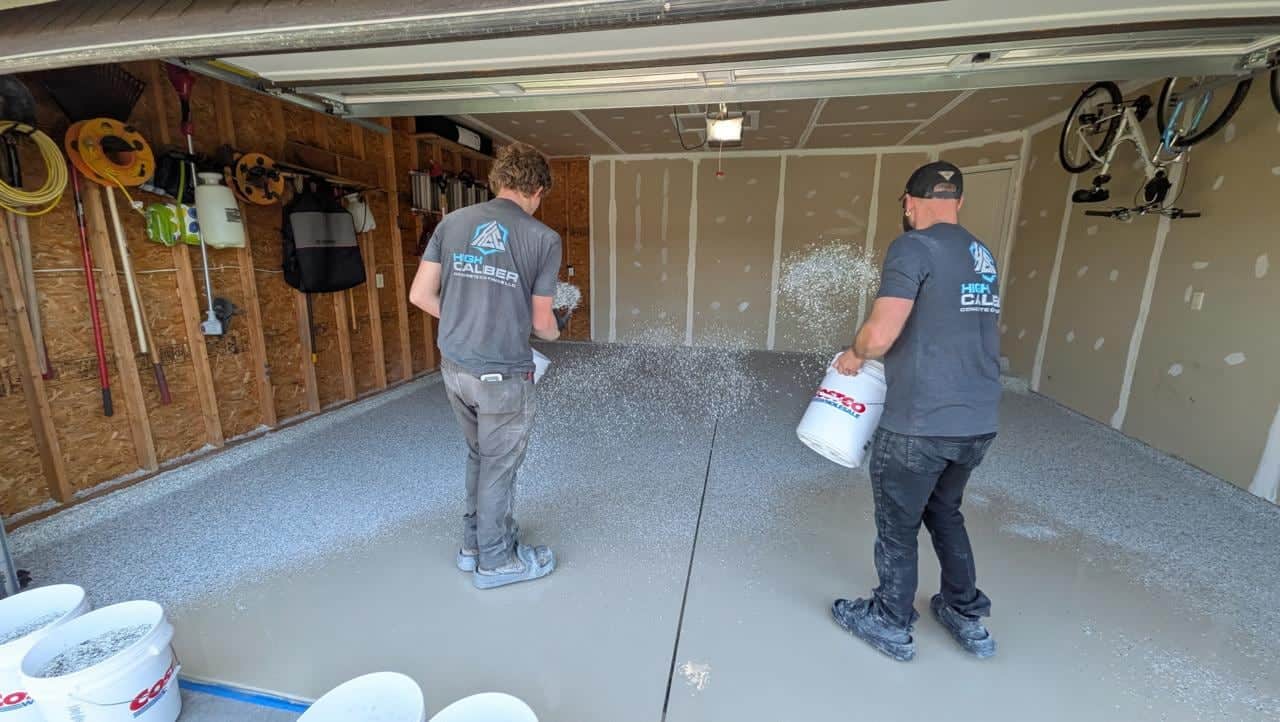
If you choose a decorative flake finish, we broadcast the flakes into the wet basecoat for visual texture and coverage. After the coating cures, loose material is removed and the surface is prepared for the final coat rather than leaving the broadcast as the exposed wear layer.
Step 6
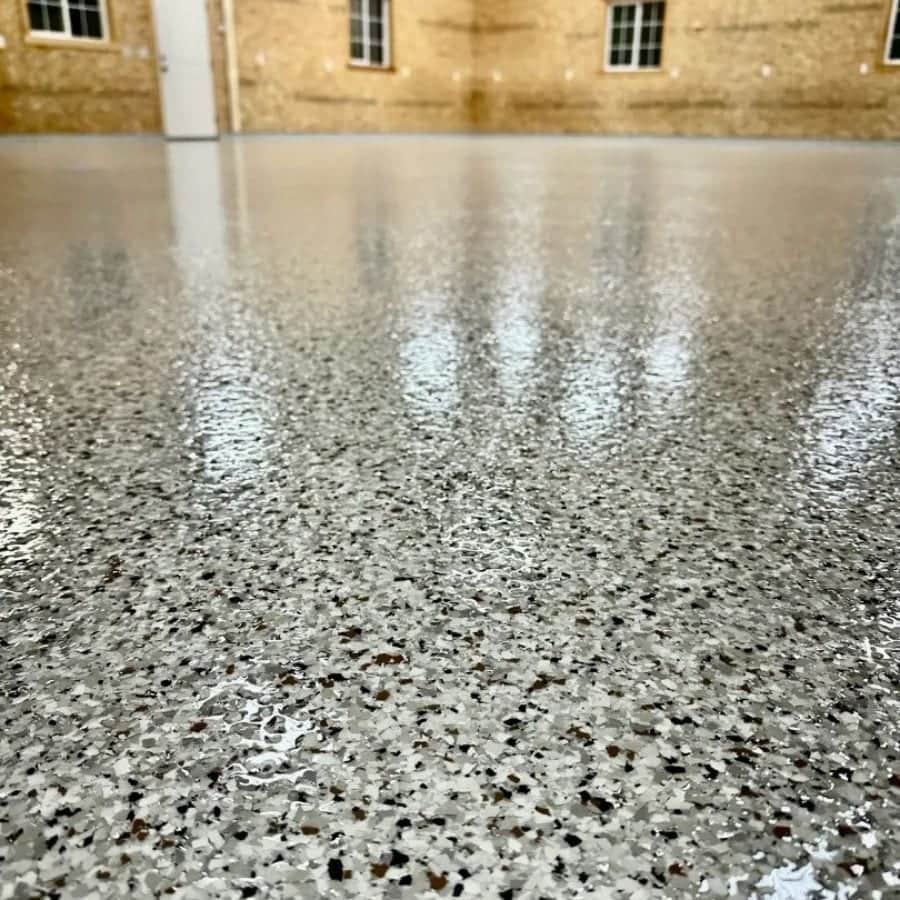
A polyaspartic topcoat completes the typical decorative garage system and becomes the exposed finish. We inspect the result, review care and access expectations, and explain the project-specific handoff so you know how to look after the floor once the installation is complete.
Why High Caliber
High Caliber is a family-owned West Michigan company based in Zeeland. We bring a local team to the Douglas conversation, with attention to the concrete itself and to the jobs the property asks it to perform. That gives you room to ask practical questions before a finish becomes the focus.
Our material explanation is equally practical. Epoxy is not a problem to eliminate; it is a useful adhesion and build layer. Polyurea and polyaspartic chemistry have their own places in a compatible system. We recommend the stack that fits the floor, the exposure, and the intended use.
Customer Reviews
“Wow! Jeff and Mike were amazing to partner with for my garage floor renovation! They did an amazing job but more importantly, they communicated directly with me thru texts, reminders, and in person! Jeff and his team left my garage and exterior area cleaner than when they arrived and gave clear instructions on follow up care needed for my new floor! I would highly recommend High Caliber Concrete Coatings anytime!”
“We recently had our garage floors resurfaced with the Epoxy Floor coating with flakes. High Caliber Concrete did such an awesome job we cannot say enough good about them! So timely, well organized and a beautiful job!! Owner, Jeff, responded to any call ASAP. Shawn and Ethan, fantastic employees for the company, did a tremendous job which was labor intensive…They left no questions unanswered! Such a professional, beautiful job. We would highly recommend them! Lillian & Joseph Bakara Jr.”
“High Caliber Concrete Coatings did a wonderful job refinishing my garage floor. Jeff was very thorough explaining the entire process and this company had the best assortment of colors to choose from. The team was very professional and delivered a flawless result. Thank you Jeff and your team.”
Douglas, Michigan
A Douglas property may include an older home with an original garage, a newer house, a detached workshop, a farm, a pole barn, or another outbuilding. Downtown storefronts, restaurants, service businesses, agricultural properties, and light industrial spaces also place concrete in different working conditions. We keep the discussion centered on the space you want to improve.
Allegan County seasons add real considerations without telling us what your slab will show. Freeze thaw cycles, snow, road salt, humid summers, spring melt, and moisture around older concrete can influence staining, wear, and preparation questions. We use those conditions to encourage a closer look at exposure and care, not to diagnose the floor from a distance.
Douglas also sits near West Olive, Saugatuck, and Spring Lake, which are service area references for our broader coverage. They do not establish a project, customer, or property detail. Your estimate remains specific to the access, concrete, and work pattern at your Douglas location before the estimate is prepared.
The garage entry is where water, salt, and grit often first meet the slab. That area deserves attention when condition and cleaning are discussed.
Patching, staining, pits, and worn areas can reveal how the slab has been used. Those observations help determine preparation and repair scope.
A workshop, farm space, or pole barn may see equipment and materials rather than only passenger vehicles. That difference belongs in the coating plan.
Frequently Asked Questions
Possibly, but the use of each space matters. A home garage may see vehicles, storage, and entry traffic, while a workshop or pole barn may add equipment, tools, and heavier work zones. We compare the concrete, access, moisture conditions, and maintenance expectations before deciding whether the same system and finish make sense in both places.
Epoxy contributes adhesion and build in the basecoat, giving the system a prepared foundation. Polyurea can add its intended properties in a compatible layer, and polyaspartic chemistry may serve as the exposed finish. The point is not to avoid epoxy. It is to place the right chemistry in the right layer.
They are reasons to examine the slab and the garage entry carefully. Road salt and grit can accompany wet tires, while spring melt and other moisture conditions may affect the concrete conversation. We consider staining, surface wear, visible dampness, prior flooring, and the room's cleaning routine before recommending the next step.
Those conditions become part of the scope instead of being hidden beneath a finish. Mechanical preparation can remove weak material and create a profile for adhesion. Selected cracks, pits, spalls, and damaged sections may be repaired as planned. Concrete can still move, so preparation improves the starting surface without promising permanent freedom from cracking.
Tell us what stays on the floor, where vehicles or equipment travel, whether shelving needs to move, and how the space connects to the house. Include known moisture, previous coatings, repairs, and access limitations. Those details help us discuss preparation, finish texture, color, protection, and the work needed before installation begins.
No. Flake can be considered for a garage that combines parking with storage, hobbies, or workshop activity when the concrete and proposed system fit the use. The blend is a visual choice, not a substitute for preparation. We discuss traffic, equipment, cleanup, light, and access before treating it as the right finish.
We review square footage, preparation needs, repairs, moisture questions, materials, stored belongings, vehicles, pets, and the access route. Those facts determine the project calendar and the point at which the floor can return to regular use. We confirm the project specific sequence with you rather than assigning a calendar before seeing the work.
Related Services
Your next question may concern preparation, moisture, decorative texture, or the job of a particular coating material. These related services give each part of that discussion a clearer place without assuming every Douglas slab needs the same answer.
See how mechanical grinding opens the concrete for coating adhesion, without promising leveling or structural repair.
Learn moreConsider decorative flake systems for garages, workshops, storage areas, and other suitable concrete spaces.
Learn moreLearn about a supporting option when moisture needs a more focused place in the slab plan.
Learn moreUnderstand the role polyurea can play within a compatible hybrid coating arrangement.
Learn moreReview why polyaspartic chemistry is commonly selected for exposed decorative floor surfaces.
Learn moreGallery And Visual Proof
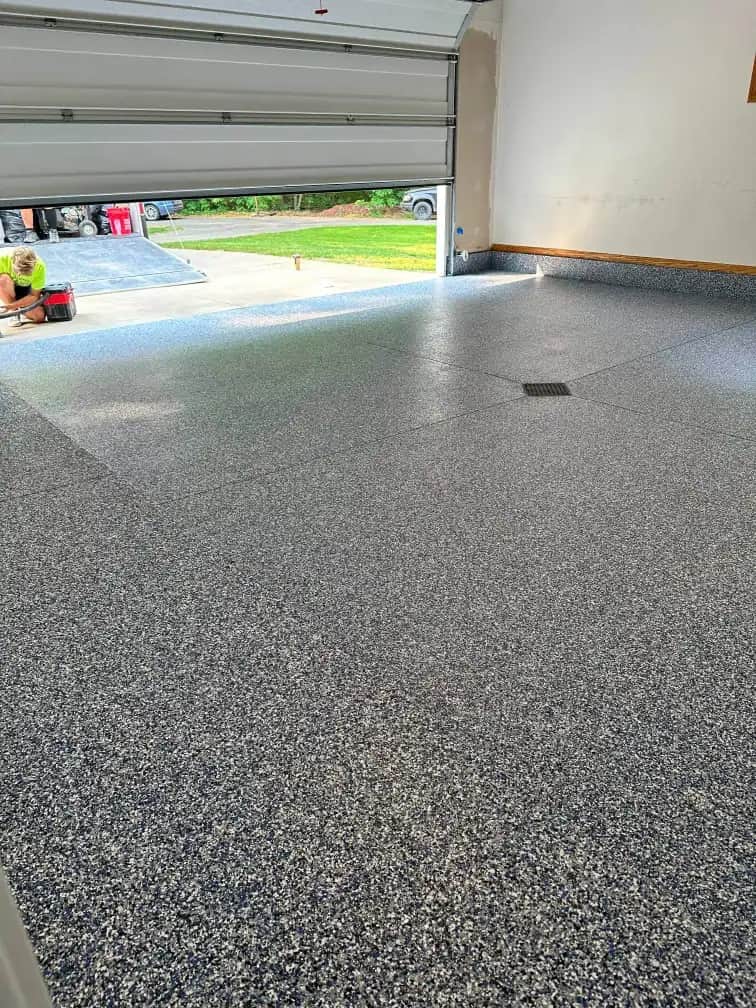
These photographs show real concrete preparation, material placement, decorative flake, and completed garage floors from the High Caliber library. They illustrate the work without identifying a Douglas location or promising an identical result.
Free Project Quote
Tell us about the space and we will follow up with a clear recommendation and quote conversation.
Phone
Business Hours
Free Estimate
Tell us what the room does now, what you want it to do next, and what you know about the concrete beneath it. We can talk through grinding, repairs, moisture, hybrid layers, flake choices, seasonal exposure, access, and care before you commit to a finish. Send your details online or call (616) 777-7348, and we will help shape the questions for a useful Douglas estimate.
The next step is a conversation about your actual floor, not a generic promise.