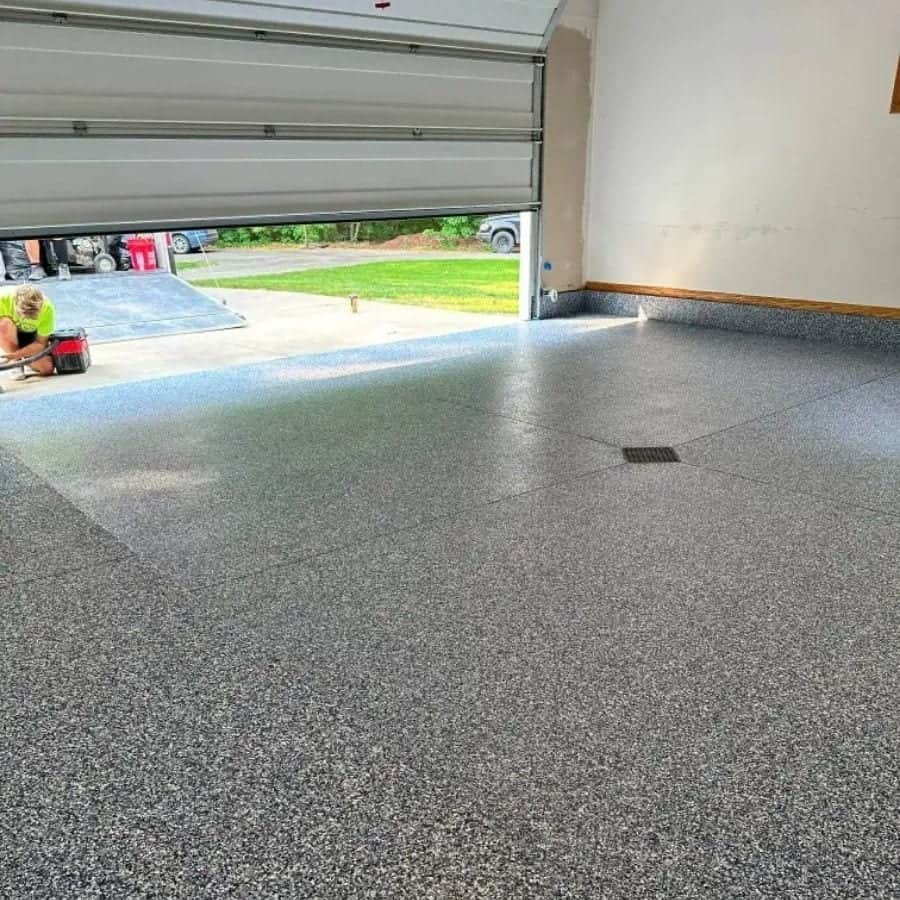
Finished floor review after coating installation

Industrial Floor Coatings In Fruitport

Fruitport concrete supports warehouses, fleet garages, workshops, agricultural processing areas, and light-industrial spaces. High Caliber evaluates the slab, traffic, equipment, abrasion, fluids, cleaning, access, and repairs, then explains a compatible coating sequence with realistic care and return-to-service expectations. The conversation starts with the room's demands rather than a preset package.

Service Overview

A Floor Plan Starts With The Slab And The Facility

Fruitport facilities may include warehouses, fleet garages, workshops, agricultural processing areas, and light-industrial spaces. Lake-effect snow, road salt, freeze-thaw cycles, spring wetness, humid summers, dirt, grit, wash-down water, spills, and moving equipment can all shape how an interior concrete floor is used and maintained.

The estimate connects those conditions to the existing slab, traffic paths, repairs, access, exposure, cleaning, and return-to-service needs. Epoxy may serve adhesion and build within a compatible system, while polyurea or polyaspartic can serve other roles where selected. The recommendation follows the room, not a universal industrial label.

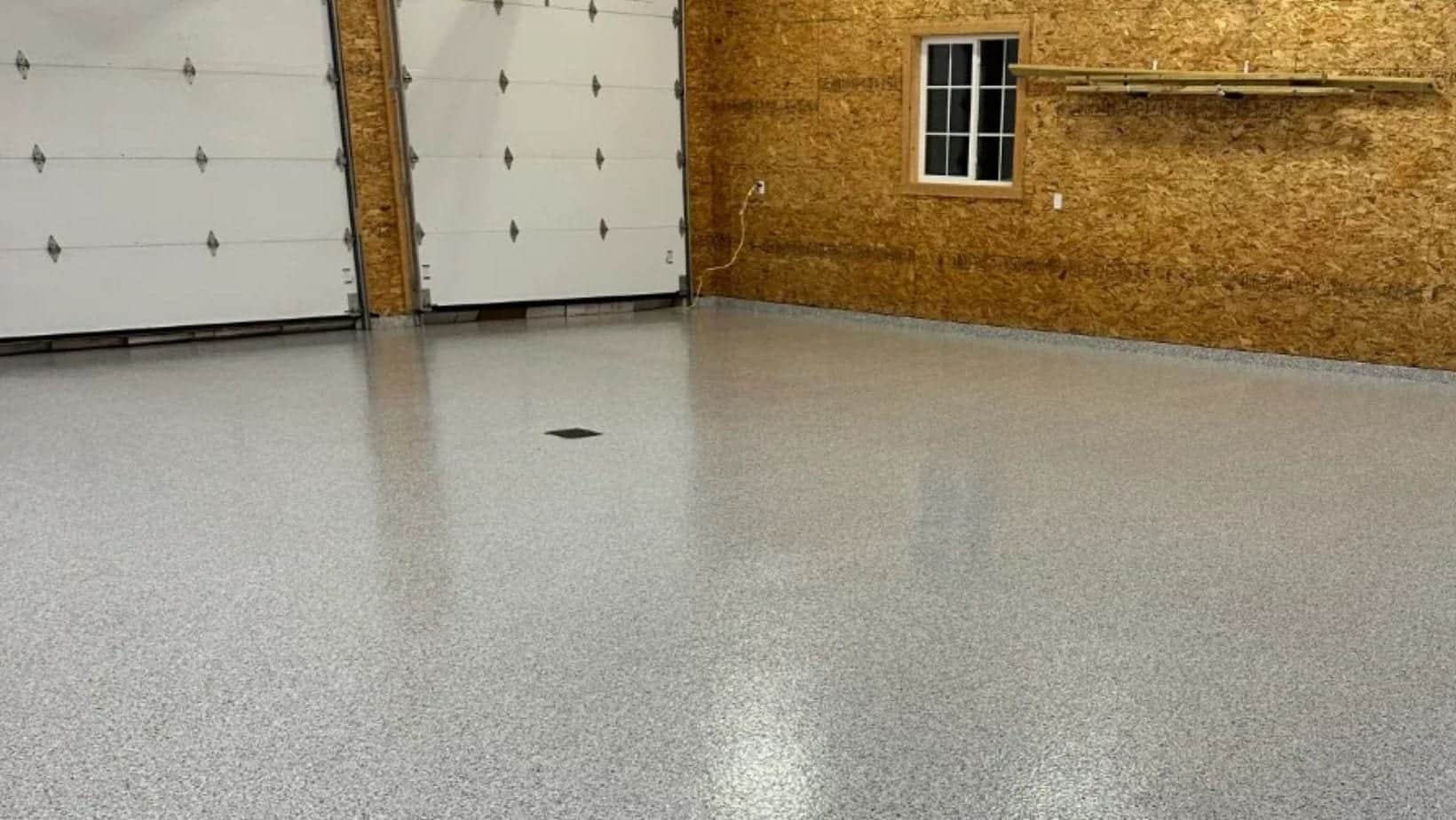
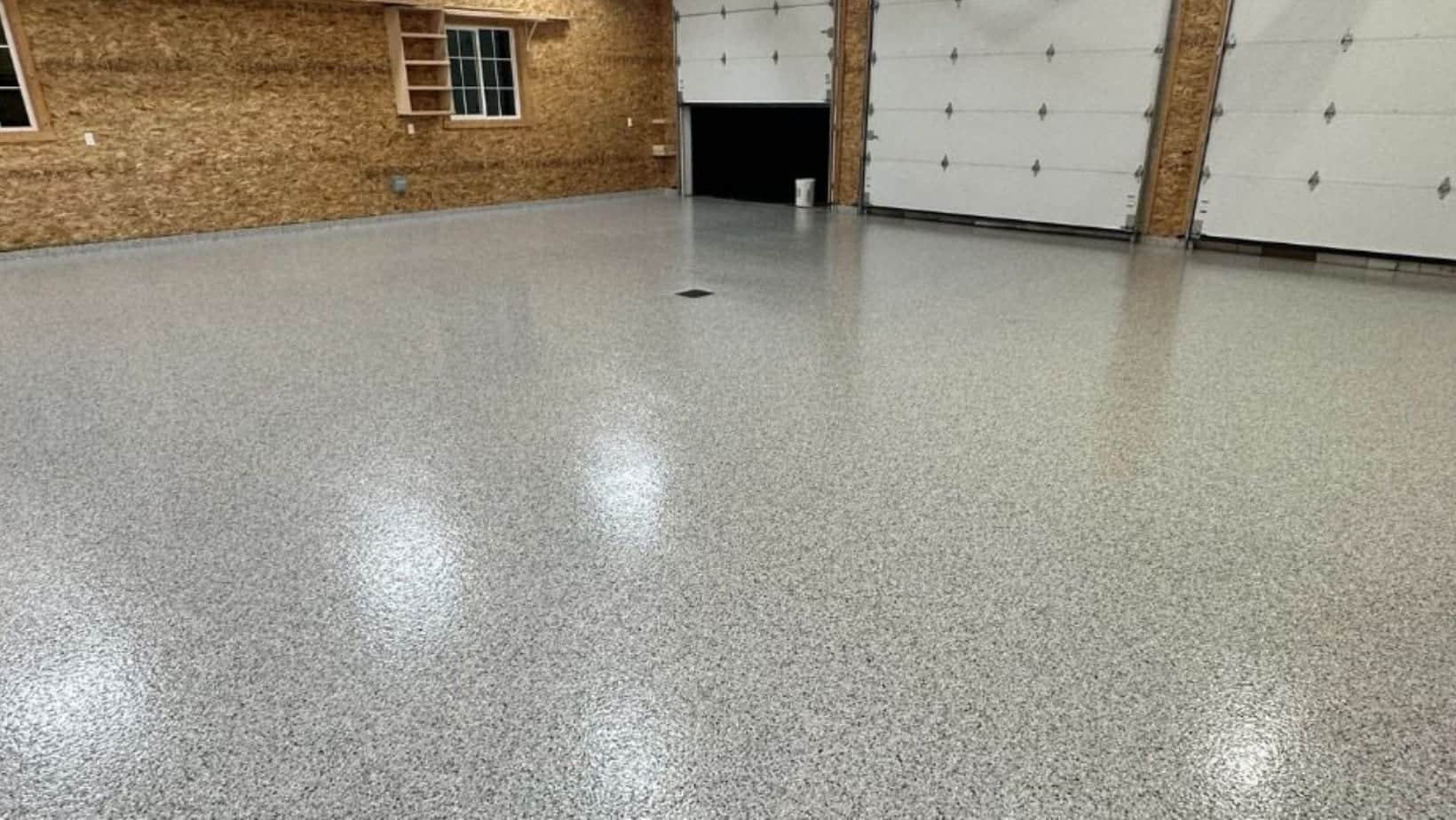
Gray flake coating in a pole barn

Benefits

Useful Outcomes Without Unsupported Promises

No benefit belongs automatically to every slab. Each one below is a potential result to evaluate against tracked dirt, equipment use, wet vehicles, and concrete serving several jobs in the same building and the owner goal.

A Wear Surface Planned For Actual Traffic For Daily Use

Traffic planning starts with wheel types, turning, loads, and routes. A selected system can organize the wear surface around forklifts, carts, vehicles, foot traffic, or stationary equipment after the facility describes how the room works.

Plan For Better Visibility During Cleaning

Road salt on tires and boots can move from entry routes into work zones. A defined surface gives staff a visible checkpoint for residue, tracked grit, and wash-down needs as they set cleaning priorities.

A Clearer Path To Exposure Considered Before Materials

Exposure planning considers moisture, chemicals, oils, sunlight, temperature changes, abrasion, impact, and cleaning methods before materials are selected. That conversation helps distinguish an interior work area from a room with wash-down or fluid contact.

The Case For Staging That Recognizes Facility Demands

Staging can account for work zones, equipment movement, adjacent operations, access, cure, and return to service. Giving those constraints a place in the scope helps the team understand when each area can be used again.

Where Compatible Layers With Defined Roles Helps

Epoxy may contribute adhesion and build, while polyurea or polyaspartic may contribute other characteristics where the design calls for them. Explaining each layer keeps the recommendation tied to facility needs instead of unsupported comparisons.

Build Around Repair And Preparation Before The Finish

Mechanical profiling can reveal cracks, spalls, contamination, weak material, joints, and previous coatings. Reviewing those conditions before the finish clarifies what preparation and repairs belong in scope, especially where traffic and equipment concentrate wear.

Installation Process

The Work Moves In A Deliberate Order

The order matters because preparation cannot be recreated after the visible finish is installed. We treat each step as evidence for the next decision.

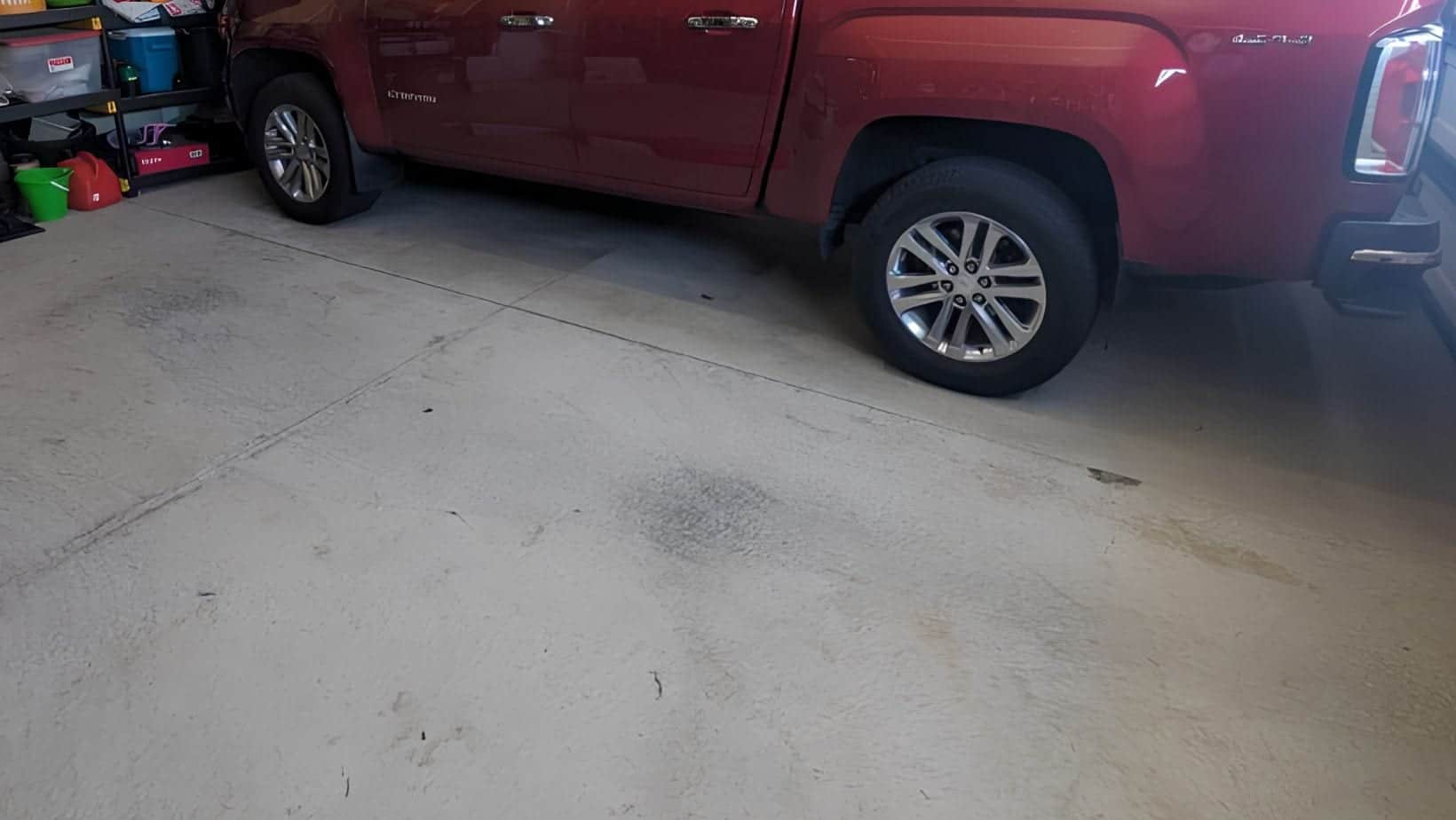
  1. Worn garage slab with visible cracks before coating preparation

    Step 1

    Evaluate The Industrial Floor

    We study the industrial floor in operation with attention to traffic routes, wheel types, equipment, impact, abrasion, spills, chemicals, wash-down, joints, damage, moisture signs, access, and maintenance. The result lets us translate facility demands into a site-specific coating scope for detached garages, pole barns and workshops, and local commercial spaces.

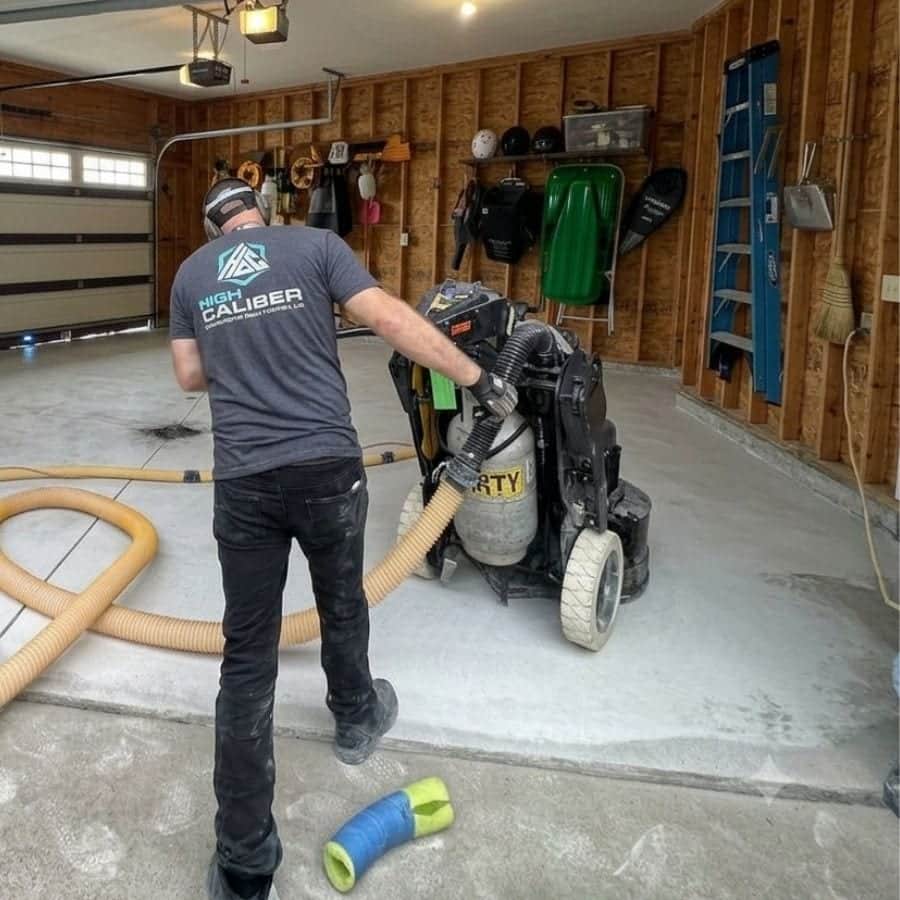
  2. High Caliber crew member diamond grinding a garage floor

    Step 2

    Plan For Facility Demands

    We coordinate the work plan with production and access while accounting for zones, shutdown opportunities, equipment relocation, adjacent operations, dust control, ventilation, cure, and return-to-service priorities. The resulting sequence gives the facility a clearer way to weigh operations against the coating schedule and room access.

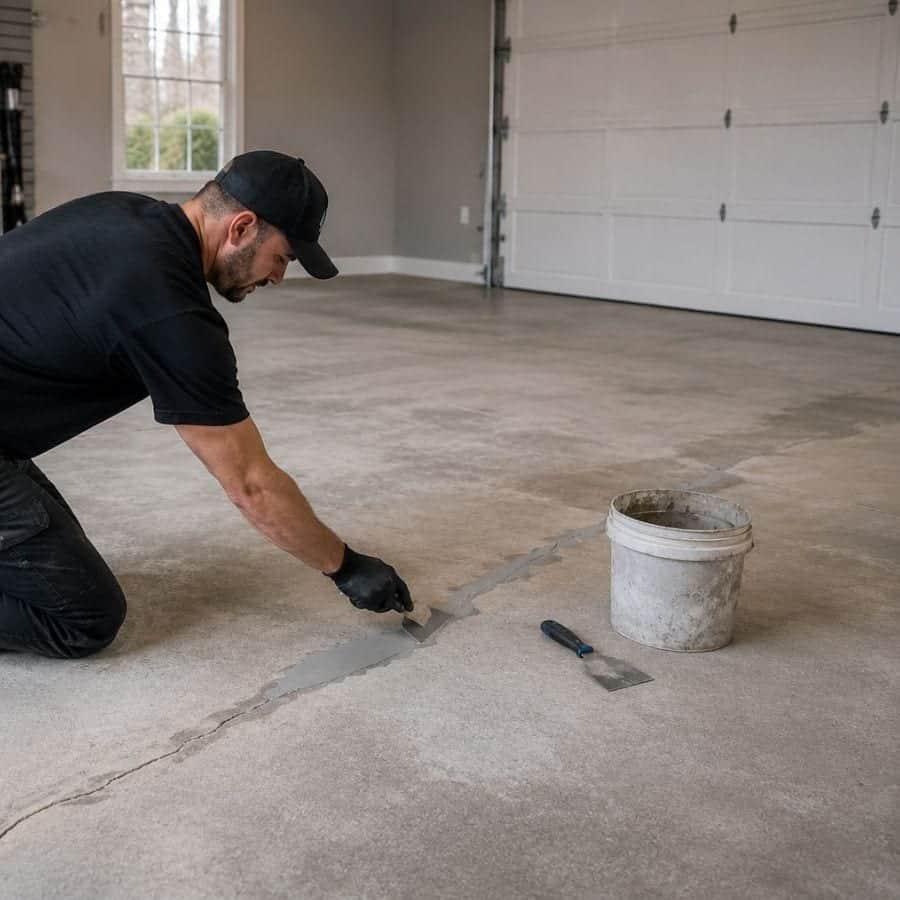
  3. Concrete floor crack being filled during surface preparation

    Step 3

    Mechanically Prepare The Concrete

    We mechanically prepare the concrete to the required profile and watch diamond tooling, old coatings, contamination, weak surface material, edges, joints, dust collection, and exposed conditions. This helps us build adhesion on prepared concrete without claiming that profiling repairs structural issues under conditions such as those combined traffic, moisture, temperature, and maintenance concerns.

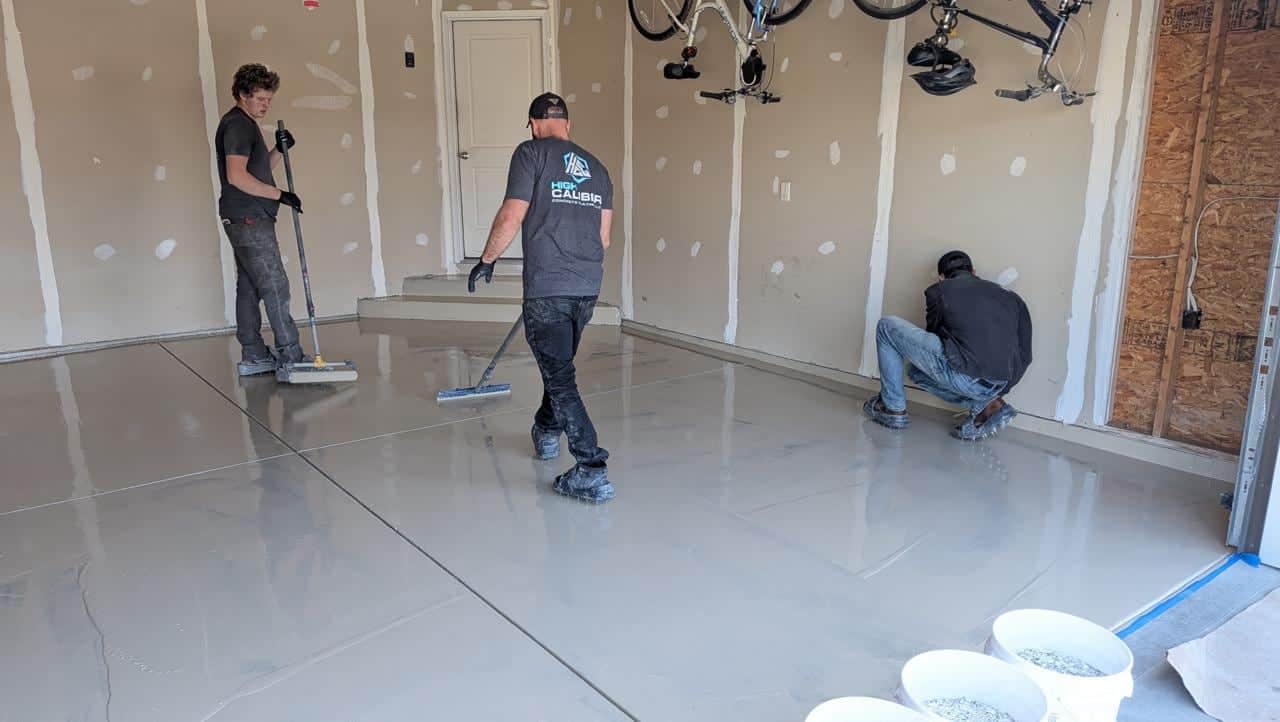
  4. High Caliber crew applying gray basecoat across a garage floor

    Step 4

    Repair Cracks And Damage

    We use joints, pits, transitions, edges, impact zones, and conditions uncovered during preparation as the checkpoint, then address cracks, spalls, and damaged details within scope; that sequence lets us explain what the selected repair can and cannot accomplish under ongoing facility use. It also respects garages, shops, and business floors.

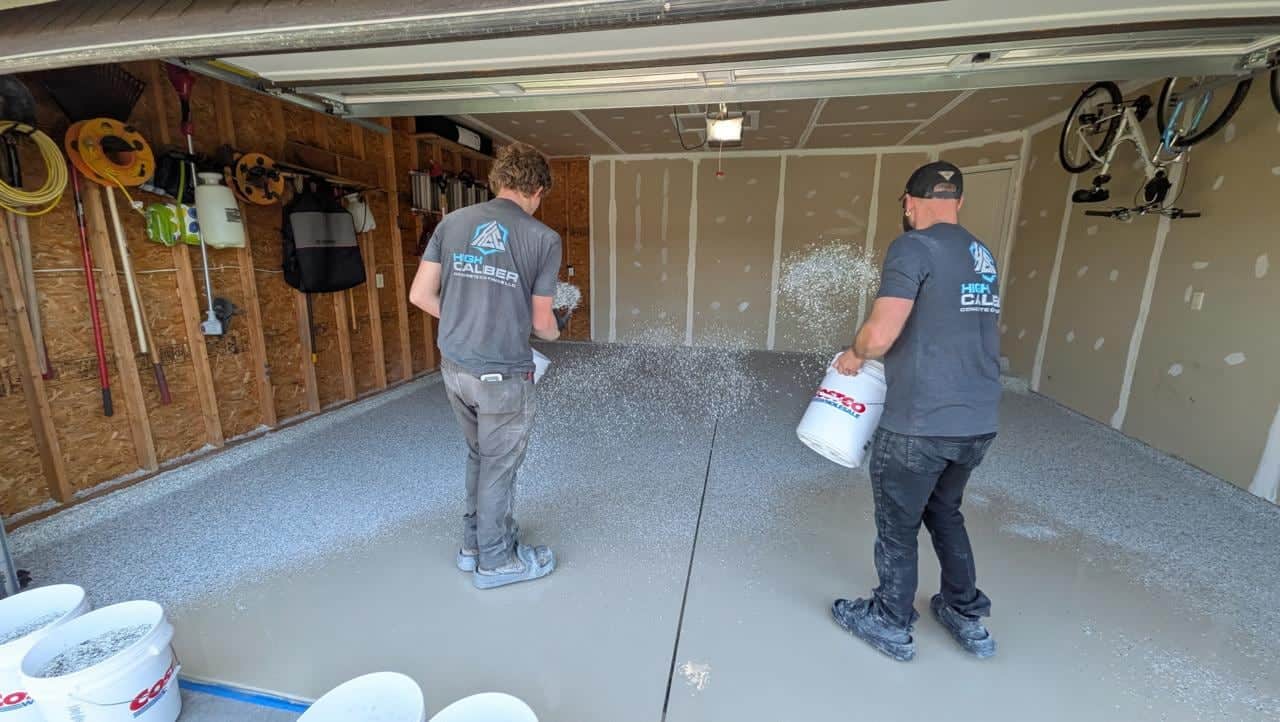
  5. High Caliber crew broadcasting decorative flake over a wet garage floor

    Step 5

    Apply The Specified System

    Before moving ahead, we apply the specified compatible coating sequence around base layer, build, broadcast or texture, topcoat, traffic, exposure, cleaning, and appearance. That gives us the basis to place each chemistry in the role supported by the facility design for those nearby garages, shops, outbuildings, and service spaces.

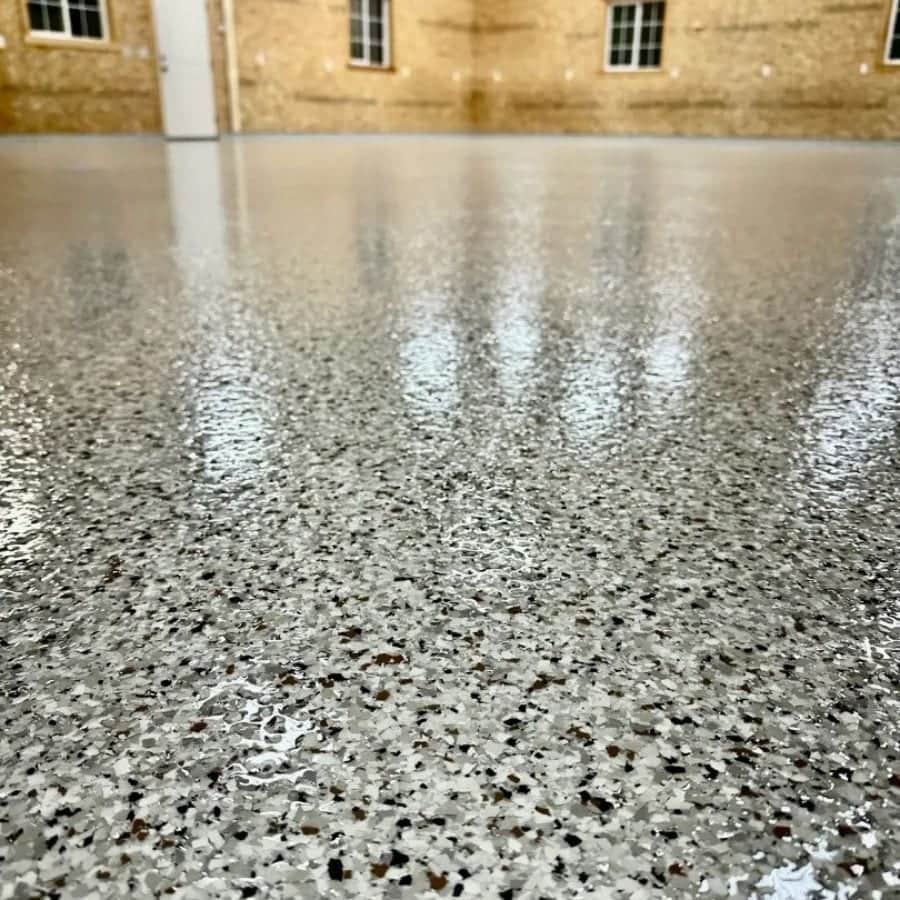
  6. Close view of a glossy polyaspartic topcoat over decorative flake

    Step 6

    Inspect Before Return To Service

    The slab sets this stage. We inspect the system before the area returns to service, consider coverage, transitions, cure, access, equipment return, cleaning, maintenance, and future observation, and work to complete a practical handoff with expectations tied to the actual floor. That review matters where wet use, grit, wear, and changing conditions meet.

Why High Caliber

Work That Connects Concrete To Daily Use

At a Fruitport facility, the estimate should identify where equipment movement, a wash-down area, or a fleet bay changes the floor decision. That map keeps repair boundaries, surface profile, material roles, and return-to-service planning attached to the building's actual work.

Our recommendation is not built on a universal claim, since industrial is not a universal heavy-duty label, and wheel types, loads, turning, impacts, contaminants, temperature, cleaning chemistry, joints, repairs, and downtime all affect the recommendation, and no coating replaces responsible facility maintenance when the actual floor is evaluated. This is also why timing and return-to-use guidance are confirmed for the actual project instead of repeated as a universal promise.

  • Preparation remains visible in the scope, which helps connect the coating conversation to Fruitport's range of storage, fleet, workshop, and work areas.
  • Material and tooling roles are explained against traffic, cleaning, and surface condition so the recommendation has a traceable reason behind it.
  • Damage, moisture signs, traffic, and access guide the scope for detached garages and pole barns and workshops.
  • Care and service limits are reviewed for local commercial spaces before handoff.

Customer Reviews

What Customers Value From Estimate To Handoff

No pressure, just quality

Would highly recommend. No pressure sales, quality product, great communication and quality installation. I met Jeff at the home show. I was drawn into his booth by his very enthusiast kids. I got the immediate impression this was a family oriented business and that was reinforced by the conversation with both Jeff and his young son. These values drew me to this business. I signed up for a quote. Shortly after the show Jeff came to my home to present options and provide a quote. No pressure to buy, Jeff understood I needed to get thru tax season before I could be sure about my budget. Over the course of next few months Jeff was responsive to any questions I had and we got the job scheduled. Jeff provided a trailer in the quote to store contents of garage while job was being done, which was very helpful. When talking with others about the quote I learned my price was equal to or less than what neighbors had paid up to six years ago, so I felt this was good pricing. I had thought there would be a ton of dust and a big mess when grinding surface, but the machines had a vacuum attached, clean and efficient work. I was impressed that they coated steps and side walls as well as floor. No mess on drywall or driveway. Crew doing installation were great guys. They took time to fill me in on the process of installation, what to expect, how long for surface to cure and when I could empty trailer. Post install Jeff stopped out to grab trailer, filled me in on what to use and how to clean the floor. VERY happy with the whole process from sales to install to follow up. LOVE my new garage.
Joy S

The envy of the neighborhood

I can not express how awesome my garage floor looks. Your crew did a phenomenal job, we'll probably be the envy of the neighborhood now. Very polite, cleaned up the area, fast amazing job! My only complaint was the floor was going to look great so my wife said we had to clean out and paint all the walls and shelving, but it was worth it. Thank you again.
Blue Streak

Cleaner than when they arrived

Wow! Jeff and Mike were amazing to partner with for my garage floor renovation! They did an amazing job but more importantly, they communicated directly with me thru texts, reminders, and in person! Jeff and his team left my garage and exterior area cleaner than when they arrived and gave clear instructions on follow up care needed for my new floor! I would highly recommend High Caliber Concrete Coatings anytime!
Kim Bickford

Fruitport, MI

From Seasonal Exposure To Everyday Traffic

Fruitport brings together agricultural processing, warehousing, service work, fleet garages, workshops, farm buildings, and commercial slabs. A floor in that mix may be asked to receive equipment, hold stored materials, support vehicles, or stay presentable for people moving through the building. The use pattern gives the estimate its starting point.

Lake-effect snow, road salt, freeze-thaw cycles, spring wetness, and humid summers can affect what reaches a work floor through doors, tires, boots, and ventilation. Dirt, grit, wash-down water, spills, and repeated equipment movement then create different preparation and maintenance questions. We discuss which exposures are real for the room instead of treating the climate as a product specification.

Norton Shores, Muskegon, and Spring Lake are nearby program communities, but a nearby floor does not establish the right scope for a Fruitport building. A warehouse aisle, agricultural work area, fleet garage, and service space can have different access and staging limits even when they share the same weather. We use the estimate to separate traffic routes, repair needs, cleaning expectations, and return-to-use priorities so the coating conversation stays specific to the facility.

Detached Garages

The concrete under detached garages has its own traffic and maintenance pattern, and those facts guide preparation and finish decisions.

Pole Barns And Workshops

For pole barns and workshops, appearance is only one concern because exposure, cleaning, damage, and access also shape the service scope.

Local Commercial Spaces

Local Commercial Spaces often put the floor to several jobs, so we identify the demands that matter before choosing the sequence.

Nearby service areas: Norton Shores, Muskegon, Spring Lake

Frequently Asked Questions

Industrial Floor Coatings Questions From Fruitport Buyers

With the existing slab in mind: what makes an industrial coating different?

The system and work plan must answer facility-specific questions about equipment, wheels, traffic, impact, abrasion, fluids, cleaning, moisture, access, staging, and return to service; a generic product label cannot replace that review; the site discussion makes this detail clearer for concrete affected by the local combination of wear, access, and seasonal exposure.

For a property-specific estimate: can a coating handle forklifts or heavy equipment?

Suitability responds to wheel material, loads, turning, impact, traffic frequency, slab condition, system selection, and maintenance; a responsible recommendation requires those details rather than a blanket promise; when the floor supports household and working concrete areas, this boundary should remain visible.

A practical question for Fruitport is: how can installation be staged?

The facility can discuss zones, shutdown windows, equipment movement, alternate routes, adjacent operations, cure, and handoff; the sequence must be built around the building and selected materials; owners across older and newer homes, detached garages, and workshops can use this distinction to compare appearance and maintenance.

When use and exposure are considered: what happens to damaged joints and spalls?

They are evaluated during preparation and may be included in a defined repair scope; ongoing movement, impact, traffic, and facility conditions still matter after repair, so limits should be stated clearly; in Fruitport, the answer should also account for those room-specific demands involving traffic, damage, and upkeep.

Before materials or tooling are selected: how are chemical or fluid exposures handled?

The specific substance, concentration, temperature, contact time, cleaning response, and frequency all influence material selection; general claims about chemical resistance are not a substitute for exposure details; the limit matters when the floor supports residential and commercial rooms.

Before the scope is set: can an industrial floor also look finished?

Yes: color, texture, broadcast, and sheen can support organization or presentation when they fit the facility; appearance should follow safety, use, cleaning, exposure, and maintenance needs; this point should be settled for concrete in local homes and working buildings.

As preparation is planned: should an industrial slab be coated, polished, or sealed?

Coating adds a separate layered surface, polishing refines the concrete, and penetrating sealing aims to reduce absorption while retaining a natural slab look; traffic, exposure, maintenance, and desired appearance guide the comparison; for Fruitport concrete affected by the conditions created by use, weather, and the existing slab, that clarification helps set the scope.

Gallery And Visual Proof

Real Images For A Better Floor Conversation

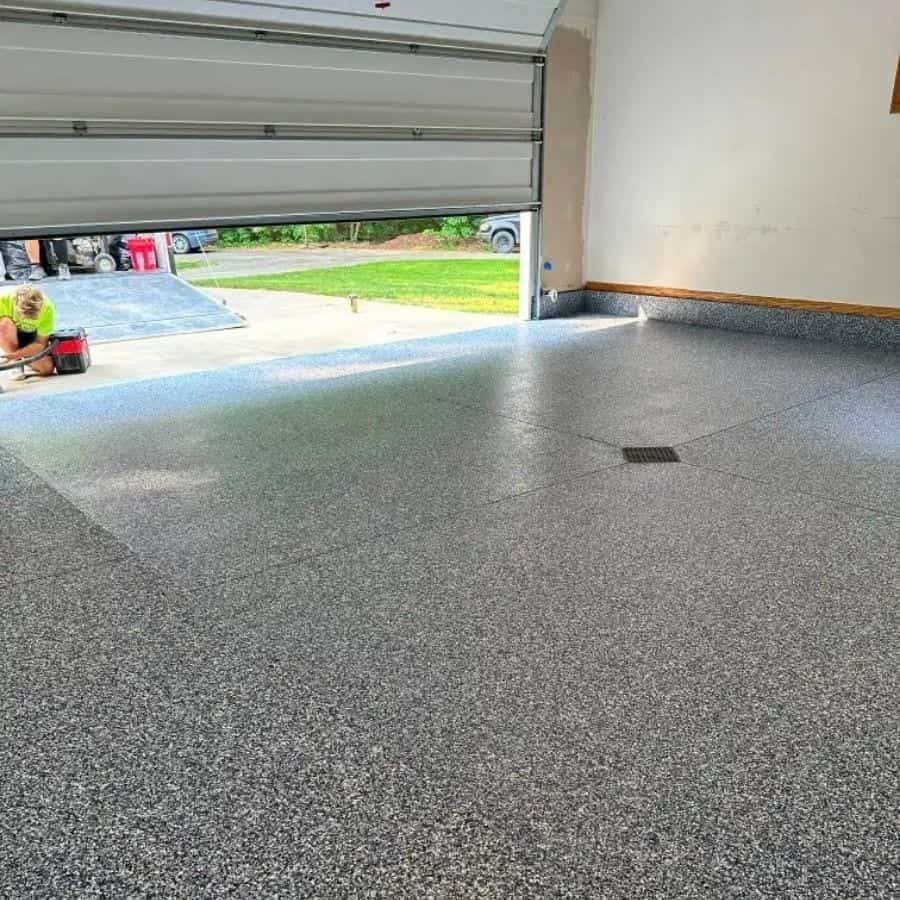
Use these photographs as general examples, not as claims about a completed Fruitport address.

View Color Charts
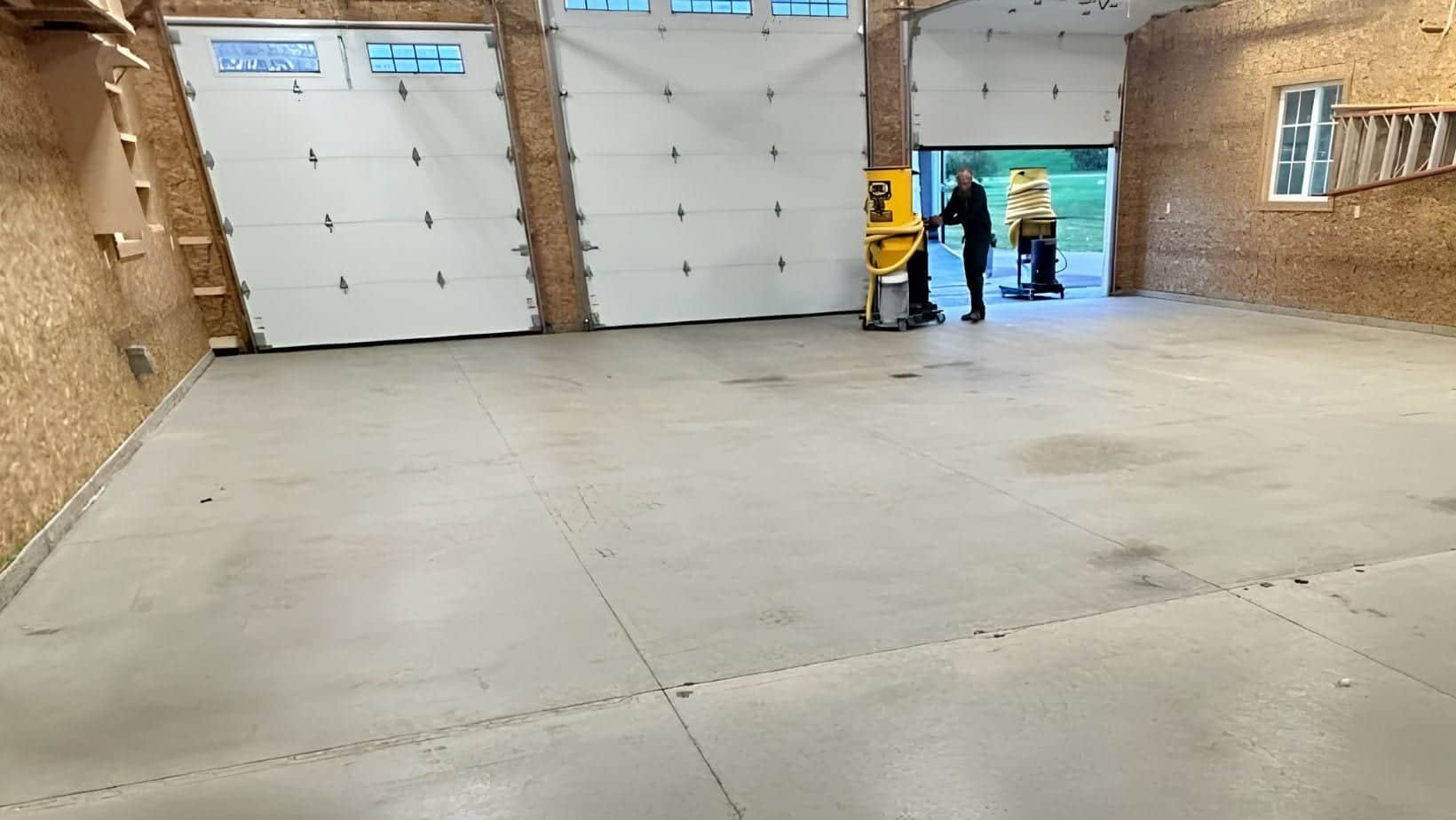
Finished industrial style floor coating in a large work spaceRough concrete floor in a large work spaceFinished floor review after coating installationGray flake coating in a pole barn
Browse the project gallery

Get Your Industrial Floor Coatings Estimate

Tell us about the space and we will follow up with a clear recommendation and quote conversation.

Free · About 60 seconds

Quote for Industrial Floor Coatings

1 / 4

What condition is the concrete in?

No wrong answer. This helps us plan the right preparation.

Free Estimate

Request A Practical Concrete Recommendation

Start with the floor you need to use, not a product name. Tell High Caliber whether the Fruitport space carries equipment, receives vehicles, manages wash-down, or balances several work zones. During the estimate, we can discuss slab condition, preparation, repairs, layer roles, staging, and care expectations, then clarify which conditions should be resolved before scheduling. If moisture, damage, or active operations change the plan, those limits can be identified while the scope is still being shaped.