
On this page30 sections
How Michigan Winters Affect Garage Floor Coating Lifespan
Michigan winters are no joke. Between road salt, slushy snow, freeze-thaw cycles, and constant moisture, your garage floor takes a beating for months at a time. It is not just about aesthetics either. Over time, these conditions slowly wear down concrete and can cause poorly installed coatings to fail much sooner than expected.
That leads to one of the most common questions homeowners ask: what is a realistic garage floor coating lifespan in West Michigan? If you are investing in a professional system, you should expect it to last for years, not just a couple of winters. The difference comes down to materials, preparation, and how well the system is designed for this climate.
Why Michigan Winters Are So Hard on Garage Floors
The freeze-thaw cycle in Michigan
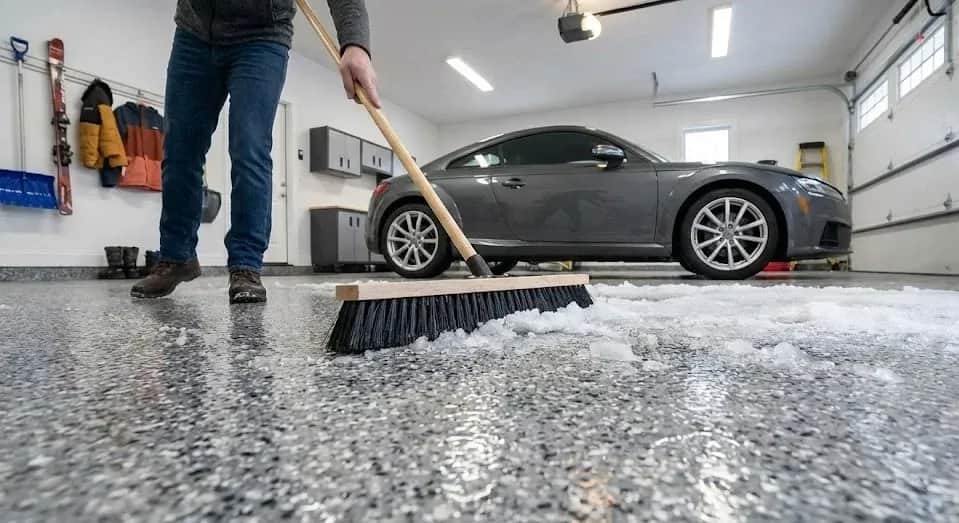
Every winter, your garage becomes the landing zone for everything your car brings home. Snow melts off your vehicle, mixes with salt, and sits on the floor. Then temperatures drop, and that moisture freezes again.
This freeze-thaw cycle repeats constantly throughout the season. Each time water freezes, it expands. When that happens inside concrete, it slowly weakens the surface from within.
How concrete breaks down over time
Concrete might look solid, but it is naturally porous. That means it absorbs water, salt, and chemicals over time. In Michigan, that combination is especially hard on garage floors.
As moisture works its way into the slab and freezes, it leads to surface flaking, small cracks, and eventually pitting. Many homeowners first notice this damage where their tires sit, since that is where the most moisture and salt collect.
This type of deterioration is a direct result of long-term exposure to road salt concrete damage and harsh winter conditions.
What Is the Typical Lifespan of a Garage Floor Coating?
Lower-end coatings (3 to 5 years)
At the lower end, you will find DIY epoxy kits or quick, one-day contractor installs that rely on minimal prep. These coatings can look great initially, but they are not built for Michigan winters.
In most cases, these systems last around 3 to 5 years before you start seeing peeling, wear, or discoloration. If the surface was not properly prepared, that timeline can be even shorter.
Professional systems (10 to 20 plus years)
On the other end of the spectrum are professionally installed systems like those used in garage flake floors. These are designed as multi-layer systems that can handle moisture, salt, and temperature swings.
A properly installed system can realistically last 10 to 20 years or more. That is a significant difference, especially when you consider how much abuse winter garage floors take each year.
Why the lifespan difference is so large
The gap comes down to how well the coating bonds to the concrete and how it responds to environmental stress.
Higher-performance materials, like those used in polyurea coatings, remain flexible and durable even as temperatures fluctuate. That flexibility helps prevent cracking and delamination over time.
What Actually Determines How Long a Coating Lasts?
Surface preparation
The most important factor in any coating system is what happens before the coating is applied. Professional installers use mechanical grinding to open the pores of the concrete and create a strong bond.
Cheaper installations often rely on acid washing, which does not provide the same level of adhesion. That difference alone can determine whether a coating lasts a few years or well over a decade.
Material quality
Not all coatings are created equal. Higher-quality materials are designed to resist chemicals, handle temperature changes, and maintain their bond over time.
Lower-quality products may look similar at first but tend to wear down faster, especially in climates like West Michigan.
Installation process
Even the best materials can fail if the installation is rushed or incomplete. A proper system includes repairing cracks, applying multiple layers, and allowing adequate cure time.
Understanding how this process works helps explain why shortcuts lead to early failure. If you want a closer look at what to expect, the installation timeline provides helpful context for how each step contributes to long-term performance.
The Biggest Reasons Garage Floor Coatings Fail Early
When coatings fail after just a few winters, there is usually a clear reason behind it. In most cases, it is not the idea of coating that failed, it is how the system was installed or what materials were used.
1. Poor surface preparation that prevents proper bonding
This is the number one reason coatings fail early. If the concrete is not properly prepared, the coating simply cannot bond the way it needs to.
Professional installers use mechanical grinding to open the pores of the concrete and create a strong surface for adhesion. When this step is skipped or replaced with acid etching, the coating sits more on top of the surface instead of bonding into it. Over time, that leads to peeling, especially in high-traffic areas like where your tires sit.
If a coating starts peeling in sheets, poor prep is almost always the cause.
2. Moisture vapor pushing up through the slab
Concrete does not just absorb moisture from above, it also allows moisture vapor to move up from below. This is something many homeowners are not aware of.
If moisture vapor is present and not addressed before installation, it creates pressure beneath the coating. That pressure can lead to bubbling, blistering, or full delamination over time.
This type of failure often surprises homeowners because the surface may look fine at first. Then after a season or two, issues start appearing seemingly out of nowhere. In reality, the problem was underneath the entire time.
3. Thin or low-quality materials that cannot handle wear
Not all coatings are created equal. Some systems use thinner materials or lower-grade products to reduce cost.
While these coatings may look good right after installation, they tend to wear down much faster, especially in environments like Michigan where floors are exposed to salt, water, and temperature swings.
Lower-quality materials are more likely to:
- Scratch and wear in high-traffic areas
- Lose their shine or fade over time
- Break down when exposed to chemicals like road salt
A thicker, higher-quality system provides a much more durable surface that holds up over years, not just seasons.
4. Single-coat systems that lack durability
Some coatings are marketed as quick and simple solutions, often advertised as a one-coat or single-layer system. While this may sound convenient, it usually comes at the expense of durability.
A long-lasting coating system is built in layers. Each layer serves a purpose, from bonding to the concrete, to adding strength, to protecting against moisture and wear.
Single-coat systems do not offer that same level of protection. Without multiple layers working together, the coating is more vulnerable to cracking, peeling, and general wear.
Once these issues are present, the signs show up quickly. You may notice peeling in high-traffic areas, bubbling caused by trapped moisture, or fading that makes the floor look older than it should.
Does Salt and Winter Moisture Damage Coatings?
Surface water vs moisture vapor
There are two types of moisture to consider. The first is surface water from snow and slush. The second is moisture vapor coming up from beneath the concrete slab.
Surface water is not usually a problem for a properly installed coating. High-quality systems are designed to resist water and allow for easy cleanup.
Moisture vapor is a different story. If it is not addressed, it can create pressure beneath the coating and lead to failure from below.
How coatings protect against salt damage
Salt can be extremely damaging to unprotected concrete. Over time, it contributes to staining, surface breakdown, and long-term wear.
A well-installed coating acts as a protective barrier. It prevents salt from penetrating the surface and makes winter cleanup much easier.
What a Long-Lasting Coating System Looks Like
The core layers of a durable system
A coating that lasts for years is not just a single layer applied to the surface. It is a system designed to work together.
Most high-performance systems include:
- A basecoat that bonds directly to the concrete
- A full flake broadcast that adds durability and texture
- A protective topcoat that seals the surface
Each layer has a purpose, and removing any one of them reduces the overall lifespan.
Why multi-layer systems last longer
Multi-layer systems distribute stress more effectively. They provide better resistance to wear, moisture, and chemical exposure.
Instead of relying on one thin layer, the system works together to create a stronger, more resilient surface that can handle the demands of Michigan winters.
When moisture mitigation is needed
Some garages have underlying moisture issues that need to be addressed before installation. In these cases, a moisture mitigation layer may be recommended.
A reputable contractor will test for moisture and explain your options. Skipping this step can lead to problems later, even with high-quality materials.
How to Tell If a Coating Company Is Built for Michigan Conditions
Questions to ask before you hire
If you are comparing contractors, asking the right questions can quickly separate experienced installers from companies that cut corners. A good contractor should be able to answer these clearly and confidently.
Here are the five most important questions to ask:
- Do you grind the concrete or use acid etching? Grinding creates a much stronger bond and is the standard for long-lasting systems. Acid washing alone is not enough for durability in Michigan.
- What type of basecoat and topcoat do you use? Look for clear answers like epoxy, polyurea, or polyaspartic. Vague answers usually mean lower-quality or inconsistent materials.
- Is this a full multi-layer system or a single-coat application? A long-lasting floor should include multiple layers, not just one thin coating.
- Do you test for moisture in the concrete before installation? Moisture vapor is one of the biggest causes of coating failure. A reputable installer will have a process to check for it.
- How is your system designed to hold up in Michigan winters? An experienced local contractor should be able to speak specifically about salt, freeze-thaw cycles, and long-term durability.
Red flags to watch for
Not every quote is created equal. In fact, some of the most appealing quotes at first glance end up being the most expensive mistakes long term.
As you review options, keep an eye out for these common red flags:
- Pricing that is significantly lower than other quotes
- No mention of concrete grinding or proper surface preparation
- Vague descriptions of materials or coating system
- Single-coat systems presented as long term solutions
- No discussion of moisture or vapor issues
- Minimal or unclear warranty details
- High-pressure sales tactics or “today only” pricing
When you see one or more of these, it does not automatically mean the company is bad, but it should prompt you to ask more questions before moving forward.
Why local experience matters
A contractor working in West Michigan understands how freeze-thaw cycles and road salt affect concrete over time. That experience shows up in how they design and install their systems.
It is one of the key differences between a coating that lasts a few years and one that holds up for the long term.
Make the Right Investment the First Time
When it comes to garage floor coating lifespan, the cheapest option is rarely the best value. A system that fails after a few winters often ends up costing more once you factor in removal and replacement.
A properly installed coating should hold up year after year, resist moisture and salt, and maintain its appearance with minimal maintenance. That is what makes it a long-term investment instead of a short-term fix.
High Caliber Concrete Coatings specializes in systems built specifically for West Michigan conditions. From surface preparation to final topcoat, every step is designed with durability in mind.
If you are ready to upgrade your garage floor or want to understand your options, you can contact us to request a quote.
Getting it done right the first time makes all the difference.