
Expose The Bonding Surface
Diamond tooling can take away weak surface material and reveal concrete that a coating, sealer, or selected finish can be evaluated against. The required profile depends on the next material.
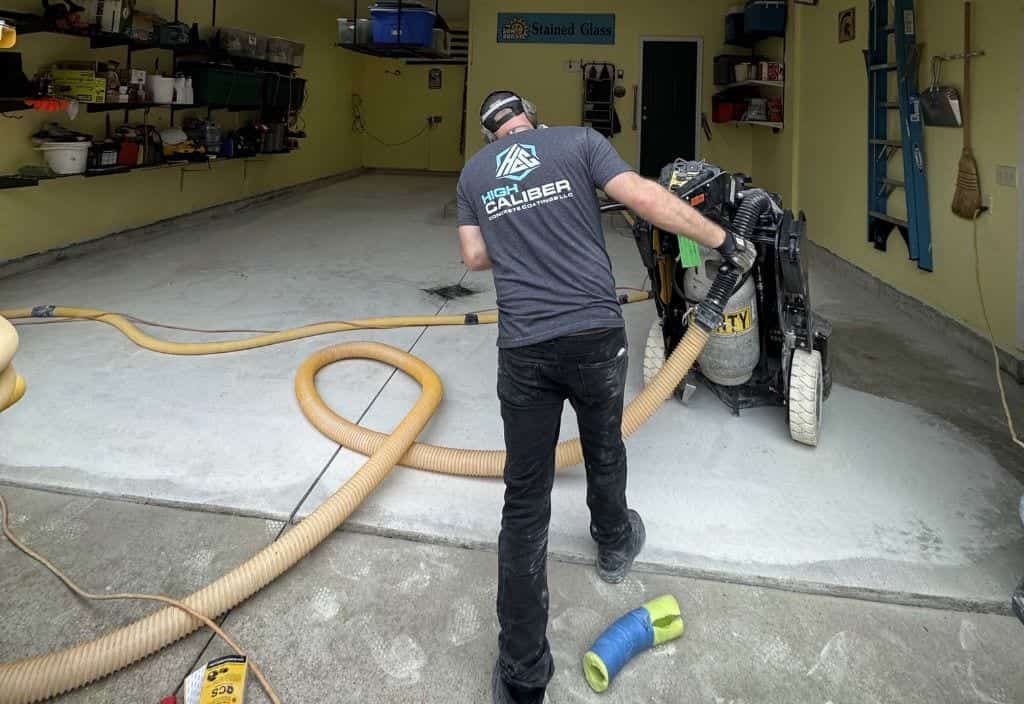
Concrete grinding gives an Allegan slab a deliberate start. We use diamond tooling to remove selected surface material, open the concrete for inspection, and establish preparation suited to the floor's next use. Whether an older garage, detached outbuilding, retail room, or working slab needs attention, we explain what grinding can change before work begins.
Service Overview
A slab can look generally sound and still carry paint, adhesive, weak surface paste, patching, or the remains of an earlier floor. Those layers influence what can bond, what can be cleaned, and what should remain undisturbed. Grinding gives us a mechanical way to investigate that boundary instead of choosing preparation from appearance alone.
For an Allegan home, farm property, detached garage, office, or light commercial room, the useful question is not simply whether concrete can be ground. It is which material needs attention, how much access the work requires, and what the floor must support afterward.
Benefits
Grinding is most useful when the removal has a reason. We match the tooling and passes to the material in question, the condition of the slab, and the finish or use that comes next.
Diamond tooling can take away weak surface material and reveal concrete that a coating, sealer, or selected finish can be evaluated against. The required profile depends on the next material.
Old paint, adhesive, residue, or a previous coating may interfere with the planned work. Grinding can address suitable materials while leaving a different removal method for conditions it cannot handle well.
A controlled pass can reduce rough texture and selected high areas within the limits of the slab. It is surface improvement, not a promise to correct structural slope or settlement.
Once coverings and weak material are opened, cracks, pits, joints, repairs, and moisture clues are easier to discuss. That information helps keep the next floor system grounded in reality.
The prepared surface may lead to a hybrid coating, penetrating sealer, polished concrete, or another treatment. Each option has different preparation needs, so the finish belongs in the conversation early.
Installation Process
Our sequence keeps the preparation decision connected to the room, the material on the floor, and the result you want to live or work with afterward.
Step 1
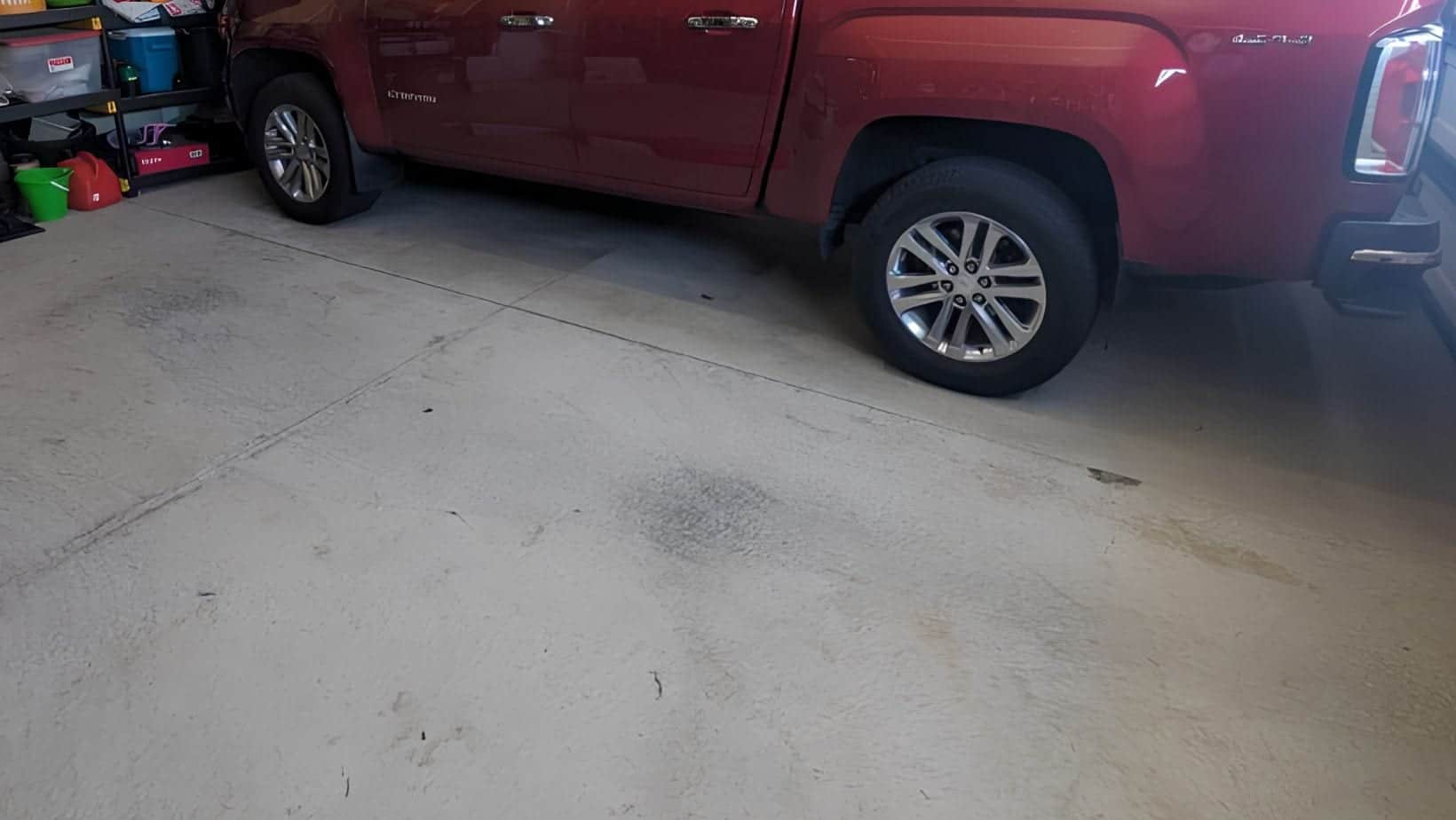
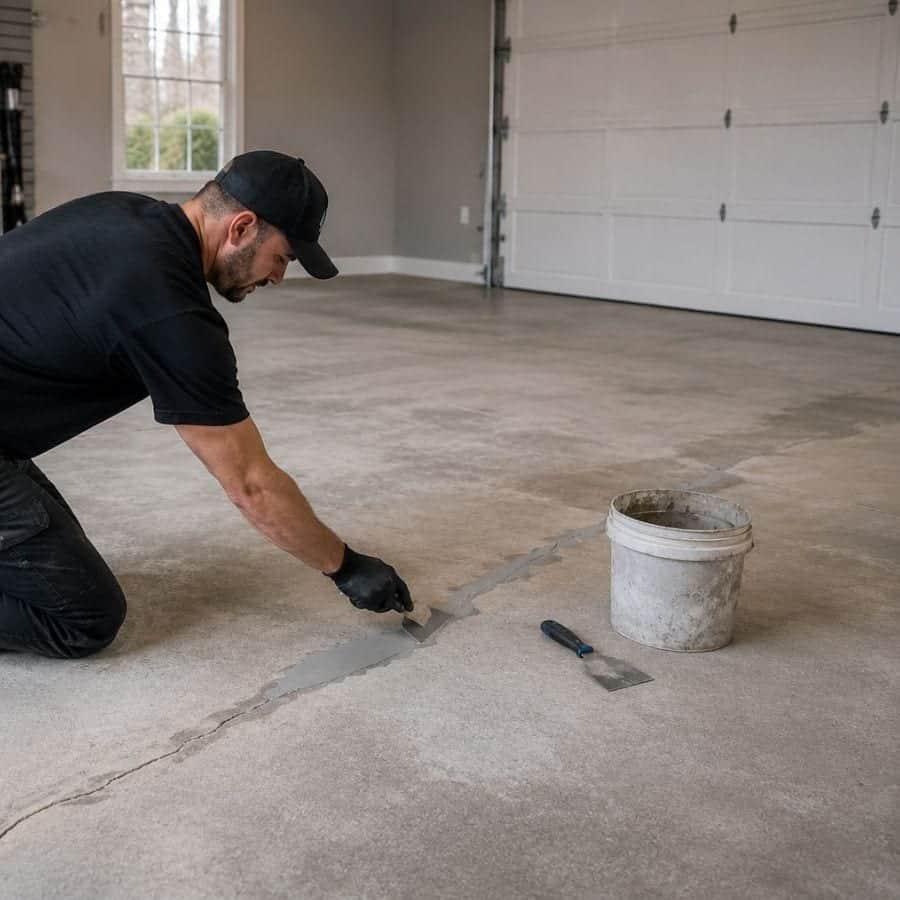
We begin by discussing the room's current use and the surface you can see. Worn areas, old coverings, visible repairs, joints, access, and the proposed finish all help define what deserves closer attention before equipment is selected. A garage, barn, and commercial room may share concrete but still require different boundaries for preparation.
Step 2
Different materials call for different tooling and expectations. We consider whether the work is opening concrete for a coating, preparing for a sealer or polish, improving a selected area, or removing residue that may require additional methods.
Step 3
Before grinding starts, the work area needs a practical access and protection plan. We discuss stored items, doorways, edges, nearby rooms, ventilation, dust control, and the way a residential, agricultural, or commercial space will be used during preparation. This keeps the equipment plan connected to the property rather than treating access as an afterthought.
Step 4
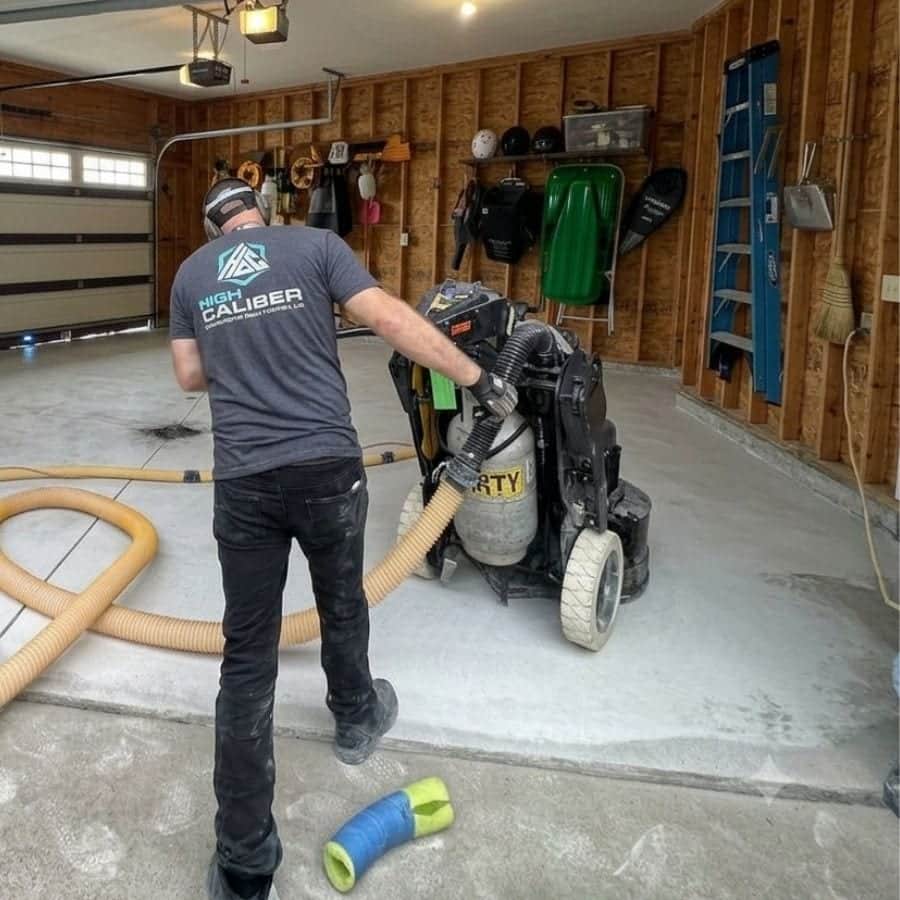
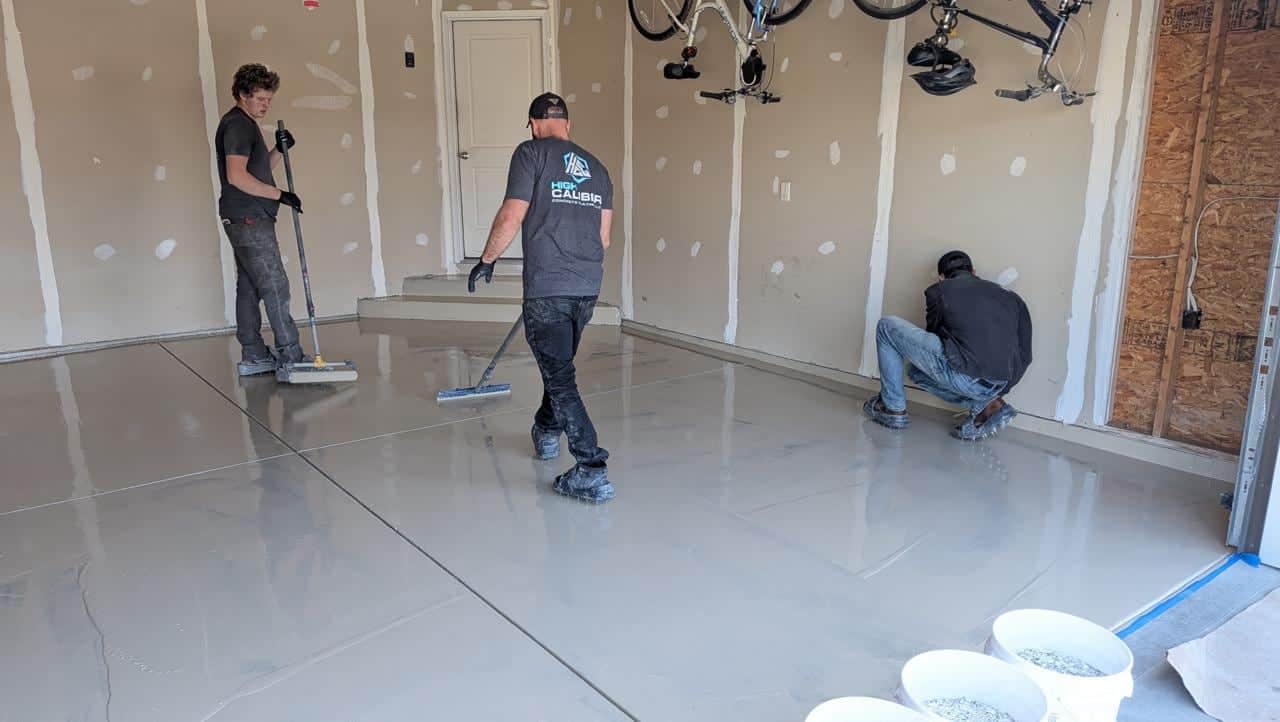
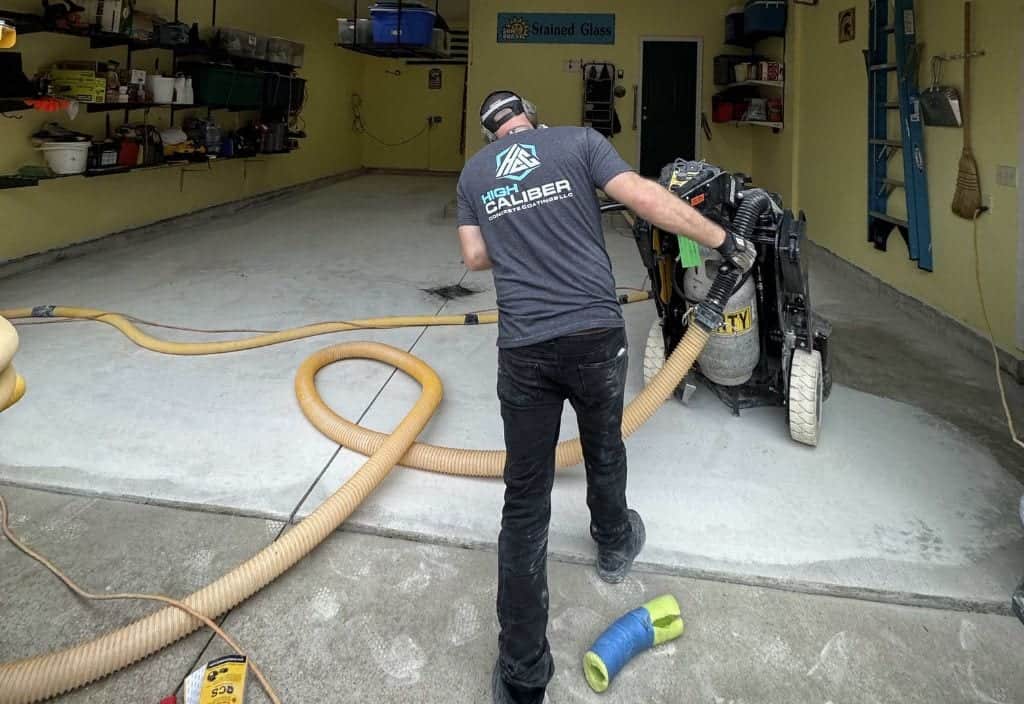
The grinder removes or opens the selected surface material through controlled passes. Dust management, consistent movement, and the chosen profile matter because the goal is a usable base for the planned next step, not needless removal.
Step 5
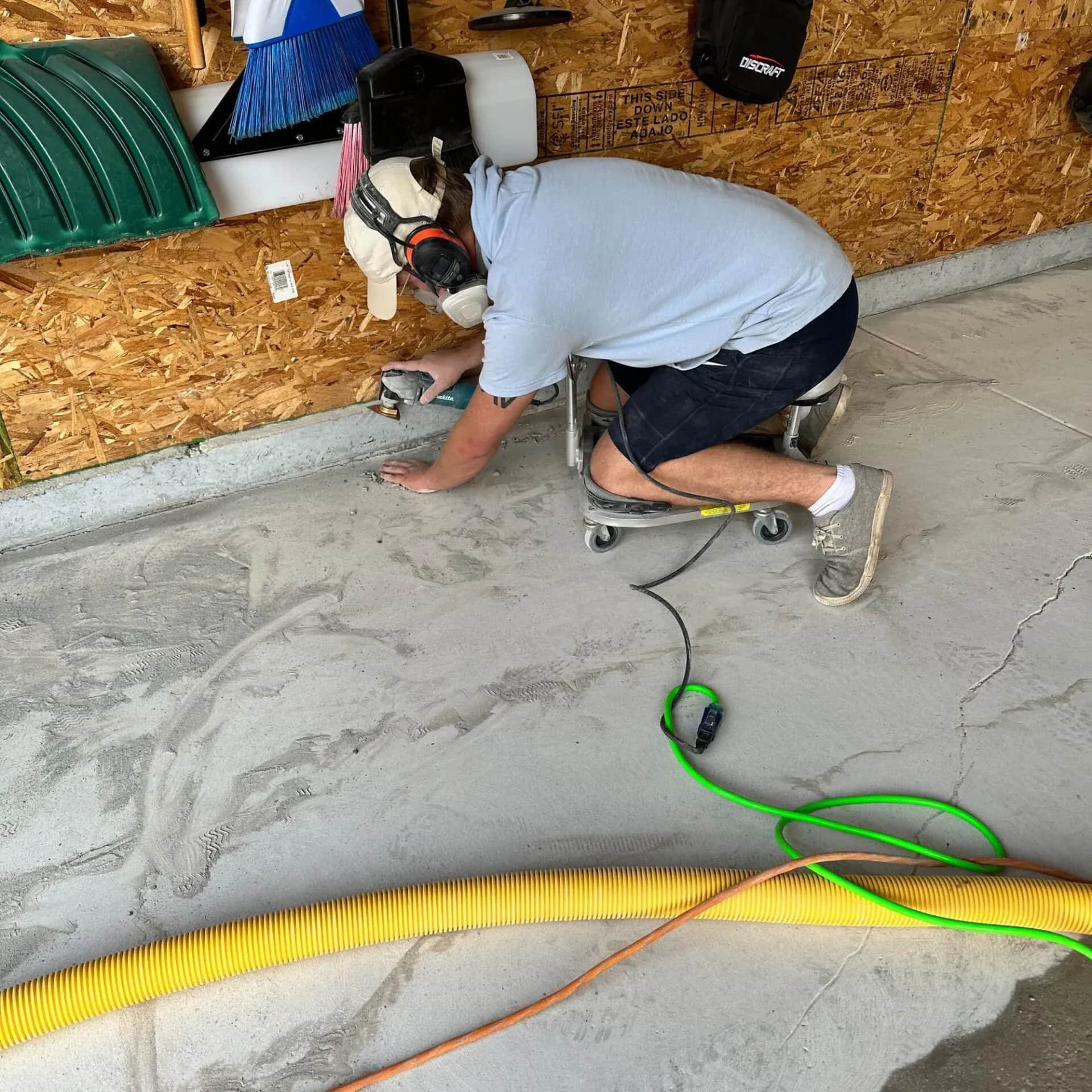
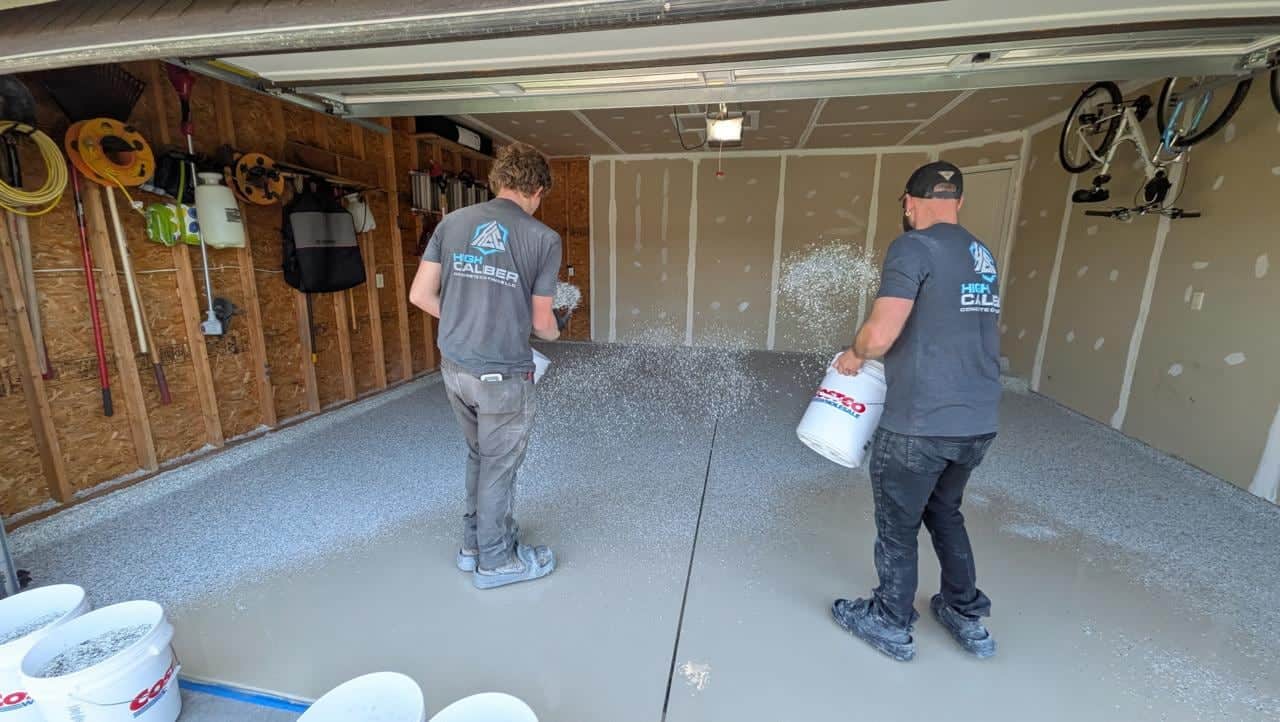
Perimeters, thresholds, joints, cracks, and tight transitions receive their own review. A large machine cannot define every detail by itself, so the scope explains where hand work, repair, cleaning, or another preparation step belongs.
Step 6
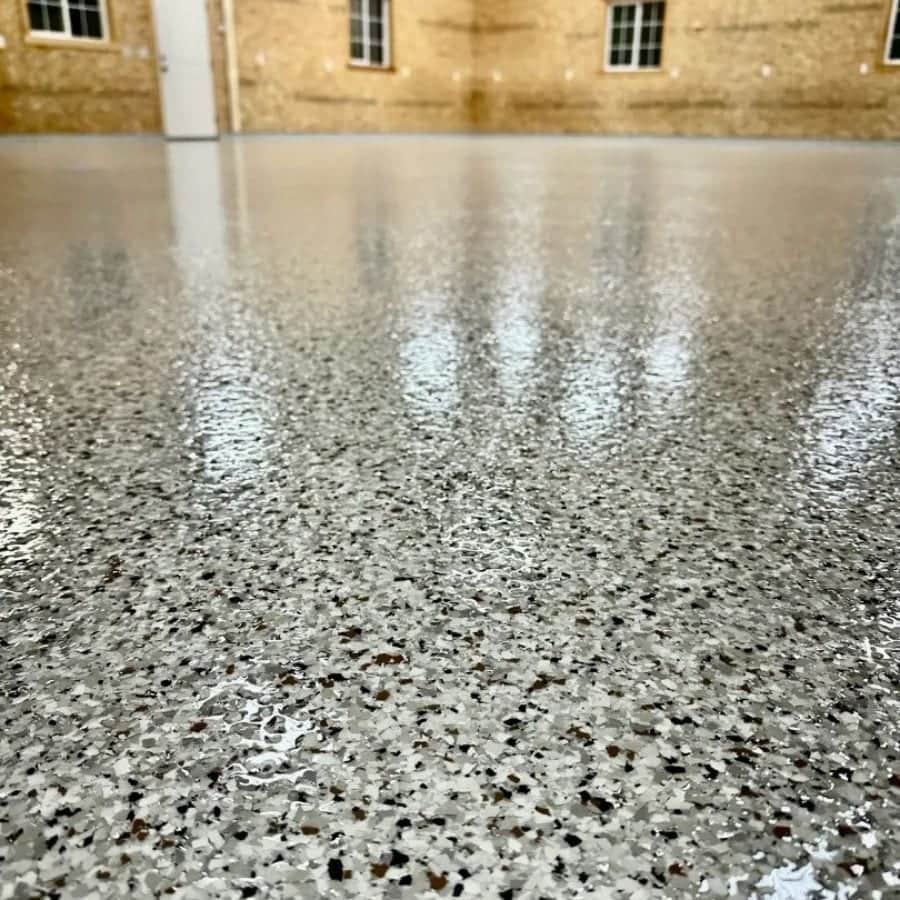
After the grinding work, we look at the exposed surface and confirm what it can support. Remaining defects, moisture concerns, or material that needs another response are explained before a coating, sealer, polish, or other finish is placed. The result is a clearer decision about the next material, not an assumption that grinding solved every condition.
Why High Caliber
We use the exposed slab as a decision point, not just a stopping point. Once the surface is open, we can separate work that belongs to grinding from repairs, cleaning, or finish preparation that should be handled next.
That also means being direct about limits. Grinding can remove selected surface material and improve preparation, but it does not rebuild missing concrete, stop structural movement, or make every change in elevation disappear.
Customer Reviews
“Wow! Jeff and Mike were amazing to partner with for my garage floor renovation! They did an amazing job but more importantly, they communicated directly with me thru texts, reminders, and in person! Jeff and his team left my garage and exterior area cleaner than when they arrived and gave clear instructions on follow up care needed for my new floor! I would highly recommend High Caliber Concrete Coatings anytime!”
“Jeff and his team did the most amazing job epoxy floor coating my 38 year old garage floor. Outstanding, professional, skilled, great communication. Highly recommended.”
“We recently had our garage floors resurfaced with the Epoxy Floor coating with flakes. High Caliber Concrete did such an awesome job we cannot say enough good about them! So timely, well organized and a beautiful job!! Owner, Jeff, responded to any call ASAP. Shawn and Ethan, fantastic employees for the company, did a tremendous job which was labor intensive…They left no questions unanswered! Such a professional, beautiful job. We would highly recommend them! Lillian & Joseph Bakara Jr.”
Allegan, Michigan
Allegan's county-seat setting along the Kalamazoo River brings together older homes, newer residential areas, detached garages, farms, pole barns, retail rooms, offices, and light commercial spaces. Those settings do not place the same demand on a floor. A garage may need a clean base for a coating, while a working outbuilding may need selected residue removed without turning every imperfection into a larger project.
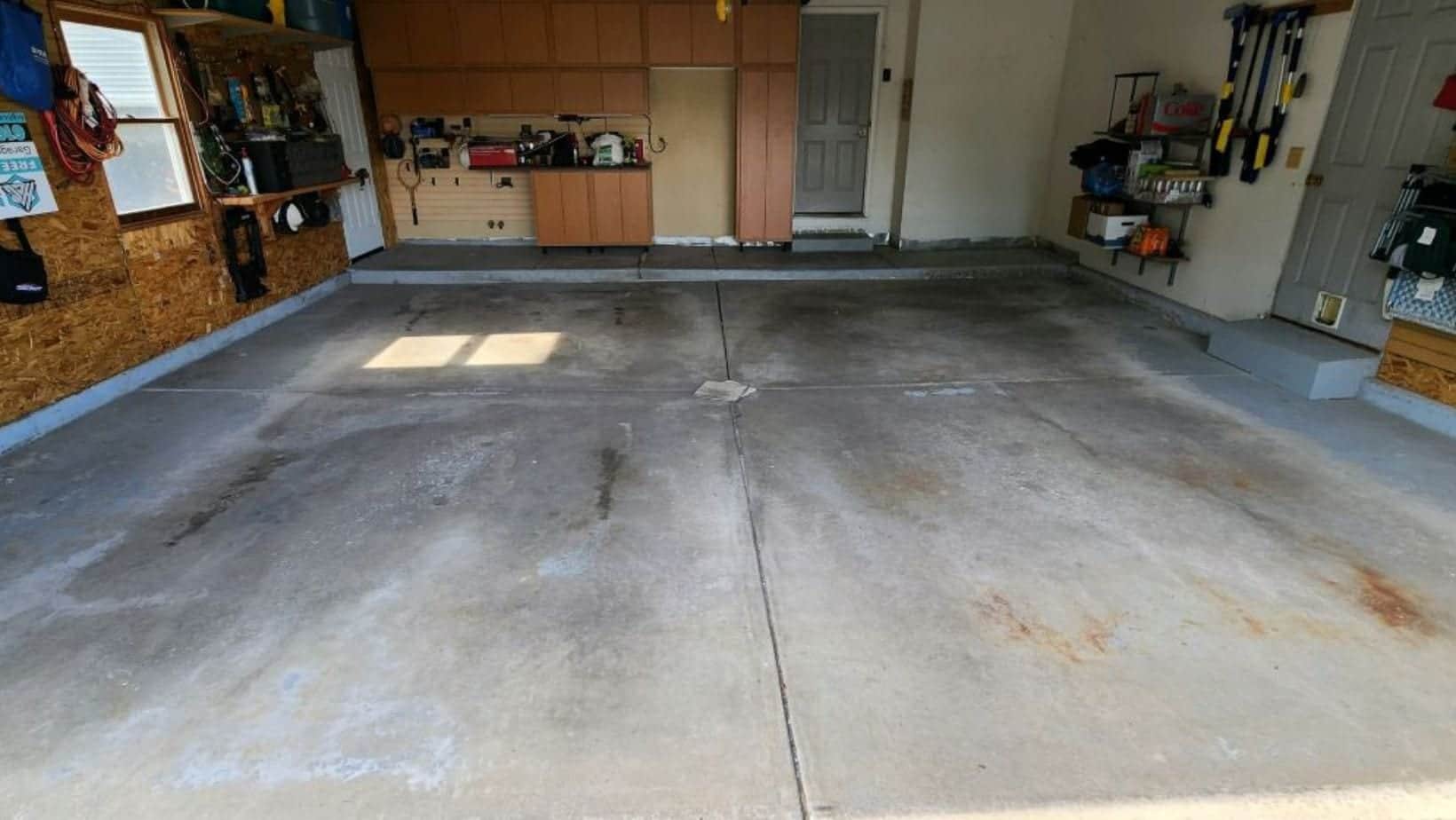
Southwest Michigan weather adds another practical reason to inspect the slab carefully. Freeze-thaw cycles, snow, road salt, humid summers, and spring moisture can all become part of the floor's history. Salt tracked into a garage may sit with grit and old finishes. Moisture can affect what is appropriate for a basement or slab. These conditions do not dictate one universal grinding scope, but they make a close look at the actual surface worthwhile.
If your Allegan property has a previous covering, worn repair, or uncertain surface, tell us what you know and what the room needs to do next. We can also discuss work near Fennville, Hamilton, or Wayland when the project fits our service area.
Road salt, tracked grit, snow melt, and humidity may help explain what is sitting on or moving through an older slab.
Garages, pole barns, offices, retail rooms, and light commercial floors may differ in access, dust control, and scheduling needs.
A hybrid coating, penetrating sealer, polished surface, or another use can change the profile and preparation details we recommend.
Frequently Asked Questions
Grinding uses diamond tooling to remove or open selected surface material. It can address weak concrete paste, some old coatings, paint, adhesive, rough texture, and selected high areas when the material and equipment are suitable. It also makes the slab easier to inspect before a coating, sealer, polish, or another finish. The scope depends on what is present and what the floor needs to do afterward.
Yes. Grinding is commonly part of preparing concrete for a coating because it creates a mechanical profile and removes material that could interfere with adhesion. We still need to consider cracks, spalls, joints, moisture clues, edges, and any previous floor covering. A hybrid epoxy and polyurea system uses the right chemistry in the right layer, so the preparation profile must support the coating system selected for the slab.
It may remove or prepare some surface materials, but no single method is right for every floor. Thickness, bond, softness, contamination, and the concrete underneath affect the recommendation. Adhesive can load tooling, and a firmly bonded or unusually thick material may need another removal method or an adjusted scope. We explain that distinction rather than promising that every layer will disappear in one pass.
Grinding can improve rough texture and reduce selected high areas, but it is not structural leveling. It will not correct settlement, rebuild a low area, or erase every change in elevation without a different repair or resurfacing scope. We look at whether the variation affects the planned finish and explain what preparation can reasonably accomplish before the work is approved.
Seasonal conditions are part of the inspection conversation, especially for garages and working slabs exposed to snow, road salt, freeze-thaw cycles, spring moisture, or humid summers. Those conditions may leave residue, contribute to surface wear, or raise questions for a coating or sealer. They do not automatically require extra grinding. The actual concrete and the planned finish determine the response.
The next step may be crack or spall repair, a hybrid coating, a penetrating sealer, polished concrete, or another planned floor treatment. We inspect the cleaned profile for remaining debris, repairs, joints, and moisture clues before the next material is installed. That review sets the handoff and identifies any work that must happen before finishing.
We can discuss it when the floor, access, and intended use fit the work. Pole barns, detached garages, offices, retail spaces, and light commercial rooms may require different plans for equipment movement, stored items, dust control, adjacent occupants, and scheduling. Share the approximate room use and what is on the slab so the estimate can address the real preparation questions.
Related Services
Grinding may be one stage in a larger floor decision. These related services help you compare what the prepared concrete can become.
See how prepared concrete can receive a protective and decorative hybrid coating system.
Learn moreLearn when a penetrating sealer may suit the concrete instead of a film-forming coating.
Learn moreCompare mechanical refinement when the concrete itself remains the finished surface.
Learn moreExplore a garage-focused finish path after the slab has been evaluated and prepared.
Learn moreGallery And Visual Proof
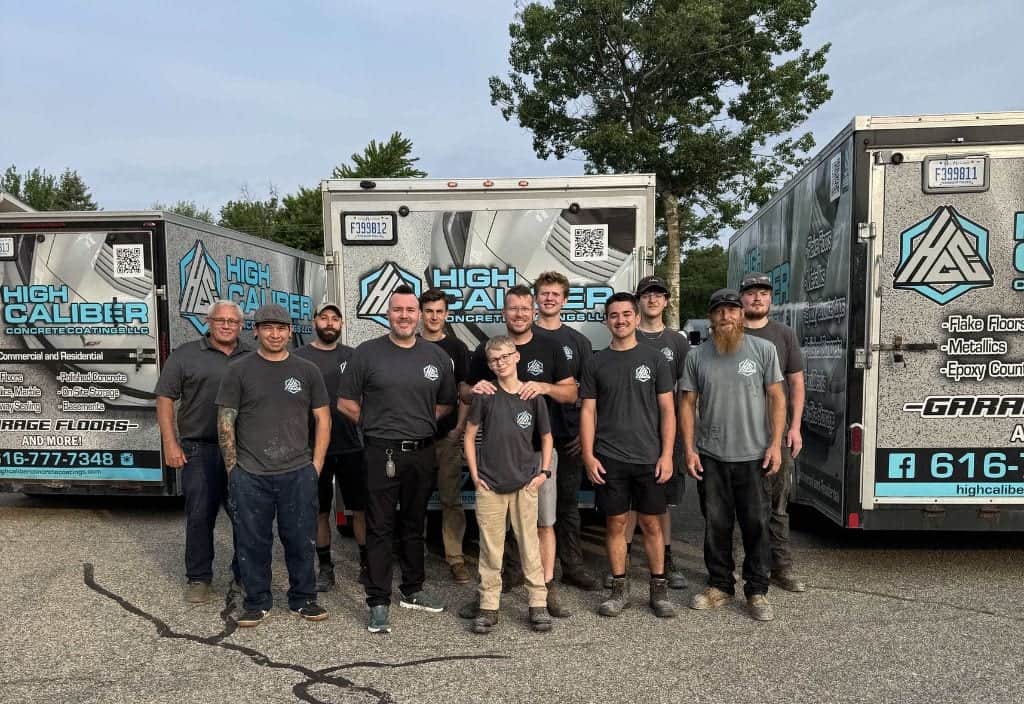
These images show concrete preparation and finishing work from the High Caliber library. They illustrate equipment, surface conditions, and finish stages without claiming that a pictured property is in Allegan.
Free Project Quote
Tell us about the space and we will follow up with a clear recommendation and quote conversation.
Phone
Business Hours
Free Estimate
Tell us what is on the floor, how the space is used, and what you want the concrete to become. We will help separate grinding, repair, cleaning, and finishing decisions so your Allegan estimate reflects the slab in front of you. You can ask about an older garage, detached outbuilding, pole barn, office, retail room, or light commercial floor. We will explain the practical next step before preparation is scheduled.