
Set The Profile For The Next Material
Diamond tooling creates a mechanical texture selected around the coating, sealer, polished finish, or other treatment planned for the slab. Profile requirements vary with the material and use.
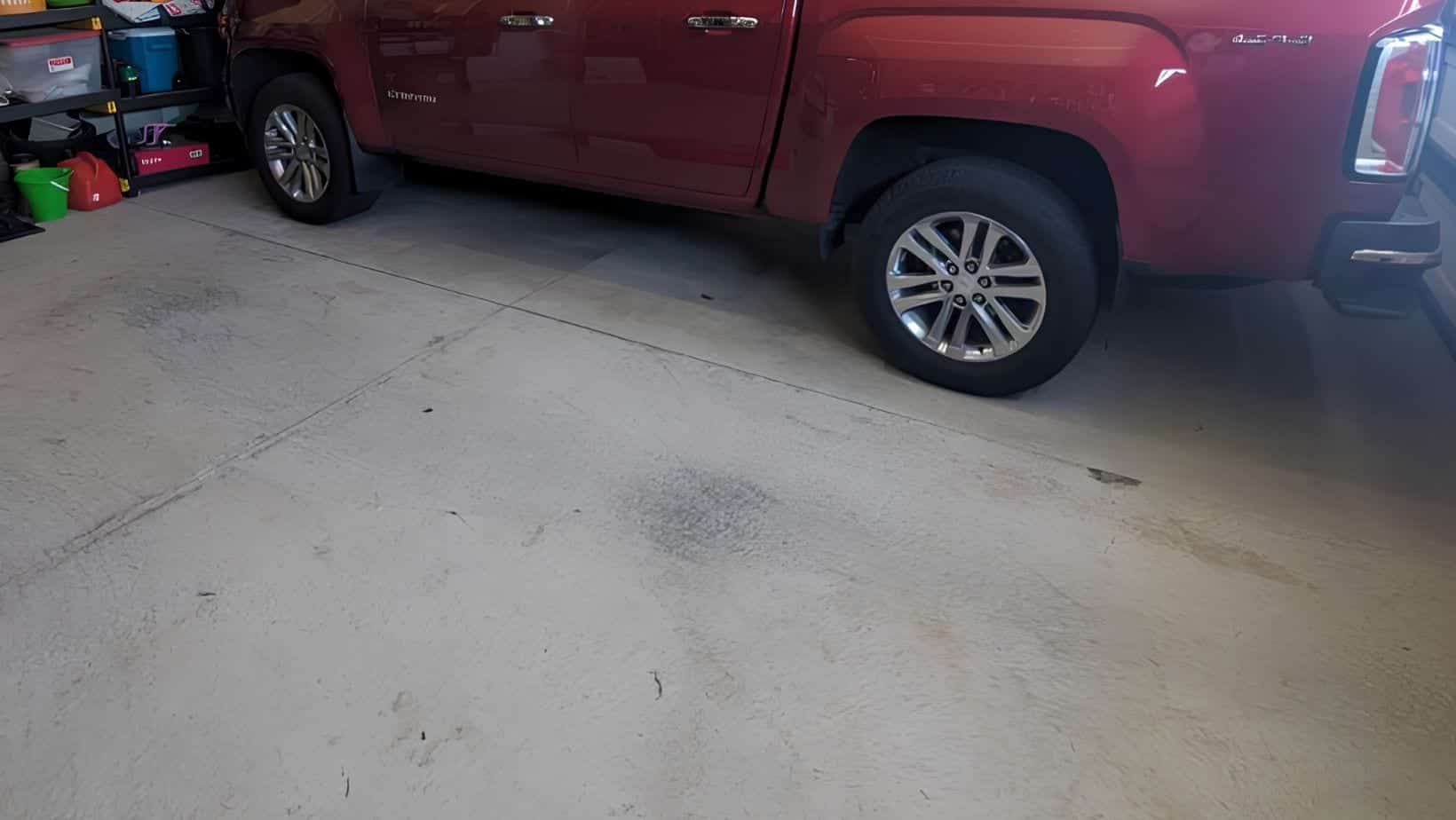
In Hamilton, a garage, workshop, pole barn, or small commercial floor may carry grit, equipment marks, patching, or residue. We use diamond tooling to prepare the concrete for the job ahead, whether that means a coating, sealer, polished surface, or a carefully defined grinding scope for your property's everyday working demands.
Service Overview
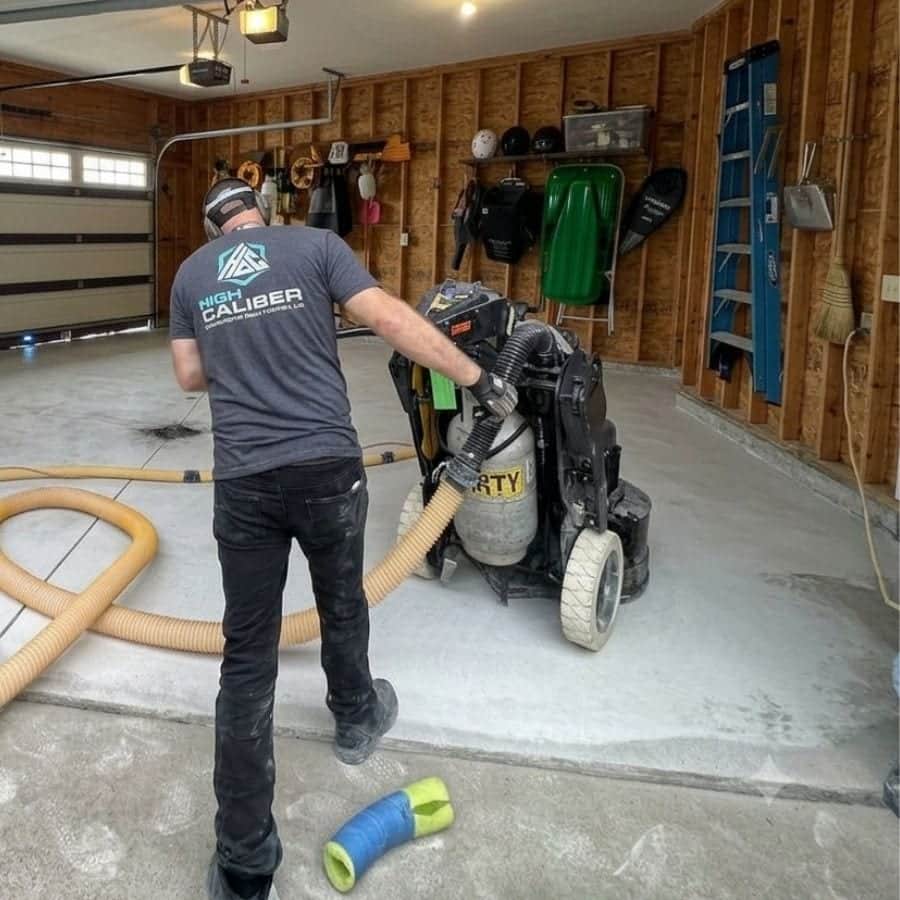
Concrete grinding is a mechanical step with a specific purpose. Diamond tooling can remove selected weak material, old surface layers, adhesive, paint, or rough texture while creating a profile suited to the material that follows. The right scope depends on what is on the slab and how much sound concrete should remain.
We start by asking what the floor needs to do after preparation. A garage may need a coating-ready surface, while a workshop, farm outbuilding, or small commercial room may call for a different access and cleanup plan. Grinding can stand alone in selected situations, but it is often one part of a broader finish decision.
Benefits
The useful result is not simply a freshly abraded floor. It is a surface that gives the next decision better information and the next material a more suitable starting point.
Diamond tooling creates a mechanical texture selected around the coating, sealer, polished finish, or other treatment planned for the slab. Profile requirements vary with the material and use.
Loose paste, failed coatings, paint, glue, and other residue can interfere with later work. Grinding addresses suitable materials while the inspection identifies conditions needing another method.
Opening the surface can make cracks, pits, joints, and patch transitions more visible. That information helps separate ordinary preparation from repairs that need their own scope.
Selected high spots and rough transitions may be improved through controlled passes. Grinding does not promise to correct structural slope, settlement, or every major variation in the slab.
Country homes, attached garages, workshops, pole barns, and small commercial spaces place different demands on access and finish. The planned use helps determine preparation priorities.
A prepared slab gives us a clearer basis for discussing coating, sealing, polishing, or additional removal. The recommendation can respond to the concrete actually uncovered.
Installation Process
A sound preparation plan accounts for the room, the material, and the finish in the same conversation. These six steps keep a Hamilton floor from being treated as an anonymous square of concrete before any work is scheduled on site.
Step 1
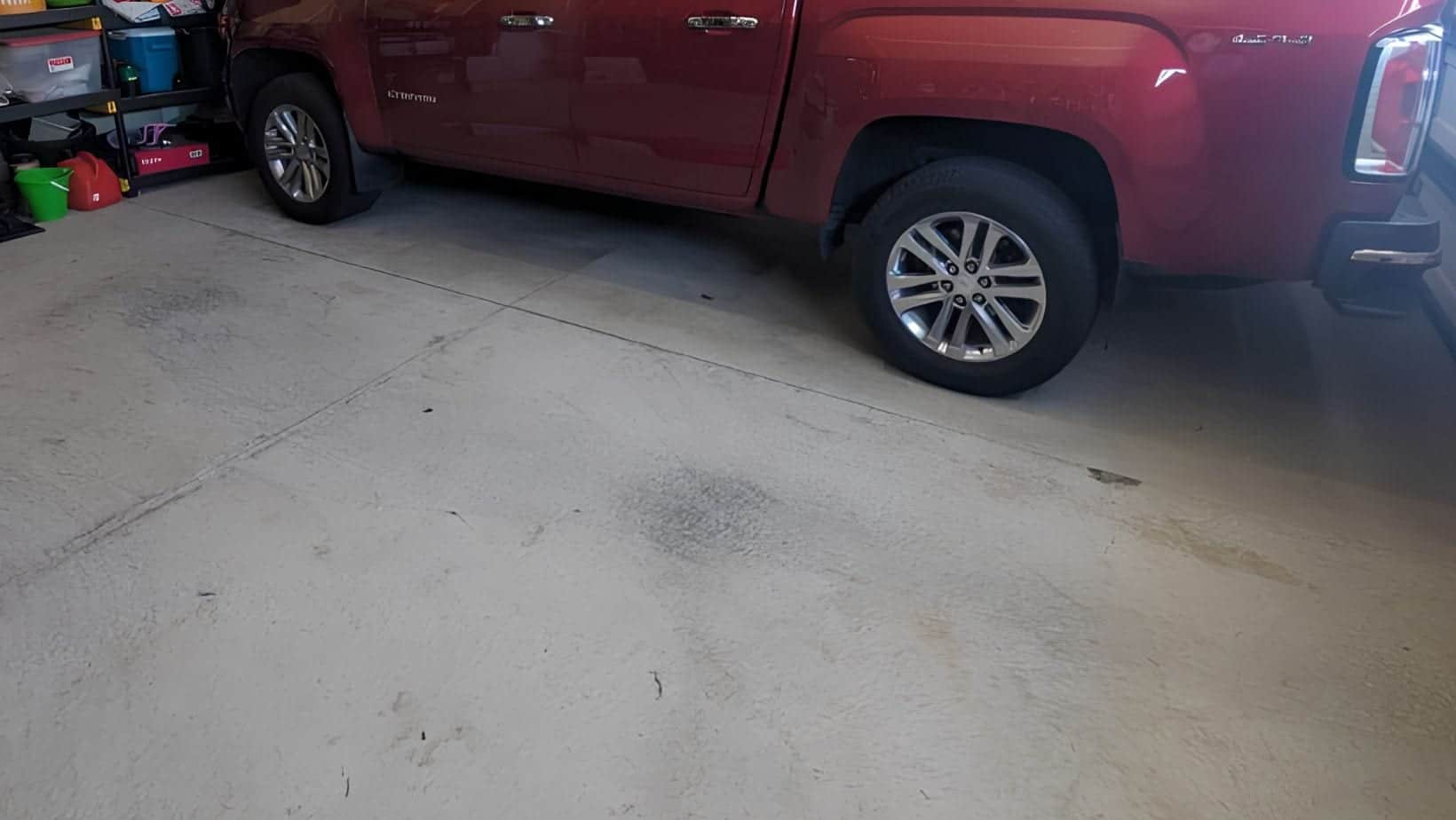
We look at the slab's visible condition, existing layers, cracks, patches, joints, edges, and access. The room's intended use matters too, because a garage, workshop, pole barn, and commercial space may need different preparation boundaries.
Step 2
Tooling and the number of passes are chosen around the material to be addressed and the profile required by the next finish. A thin coating, stubborn adhesive, weak surface paste, and rough concrete do not automatically call for the same approach.
Step 3
Before equipment moves, we discuss access, nearby belongings, work zones, ventilation, and dust-control expectations. Rural properties can include long approaches, stored tools, farm equipment, or outbuilding access that should be accounted for before the first pass.
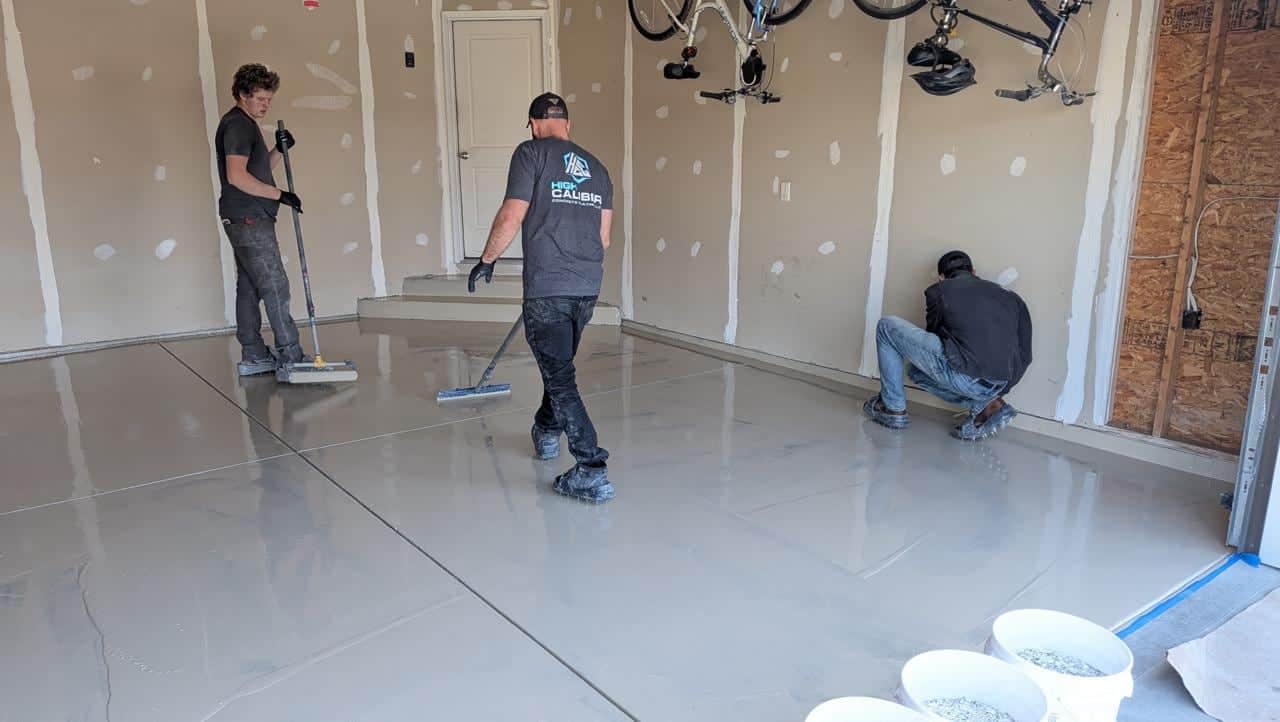
Step 4
The grinder removes or refines selected surface material through controlled diamond passes. Dust control, consistent movement, and attention to the slab's actual condition help create a usable profile without pretending that grinding changes the structure beneath it.
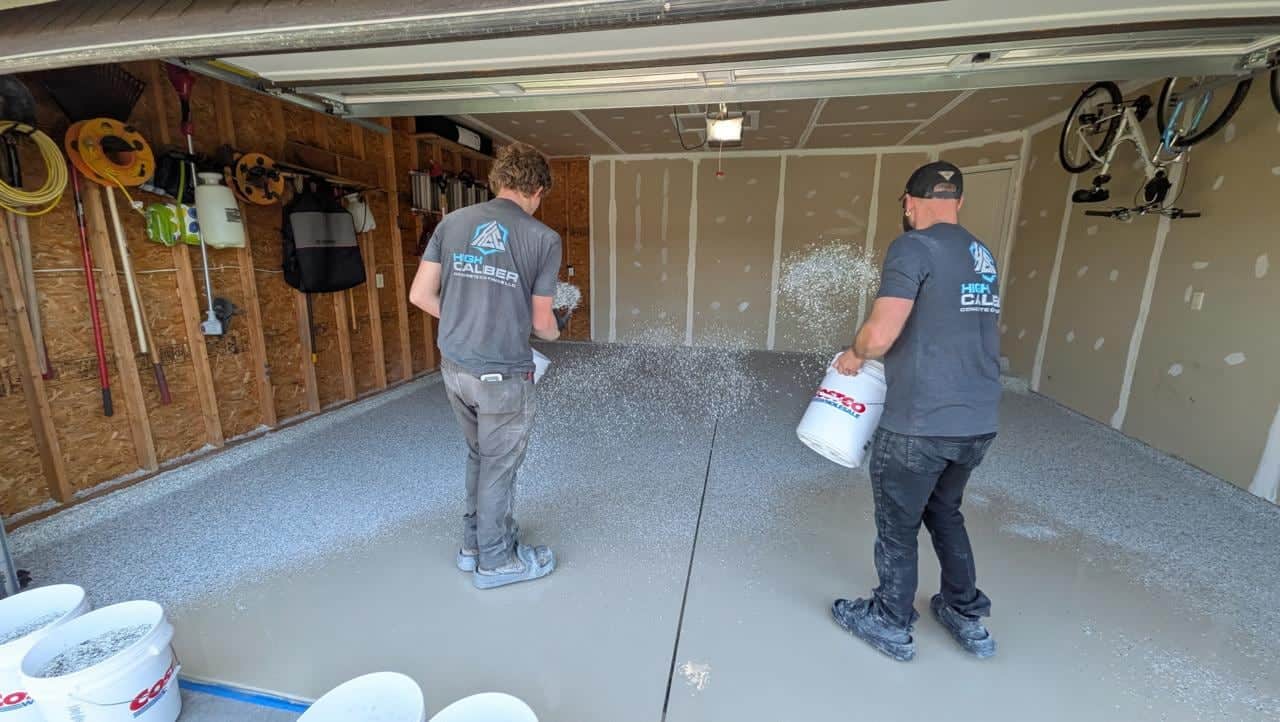
Step 5
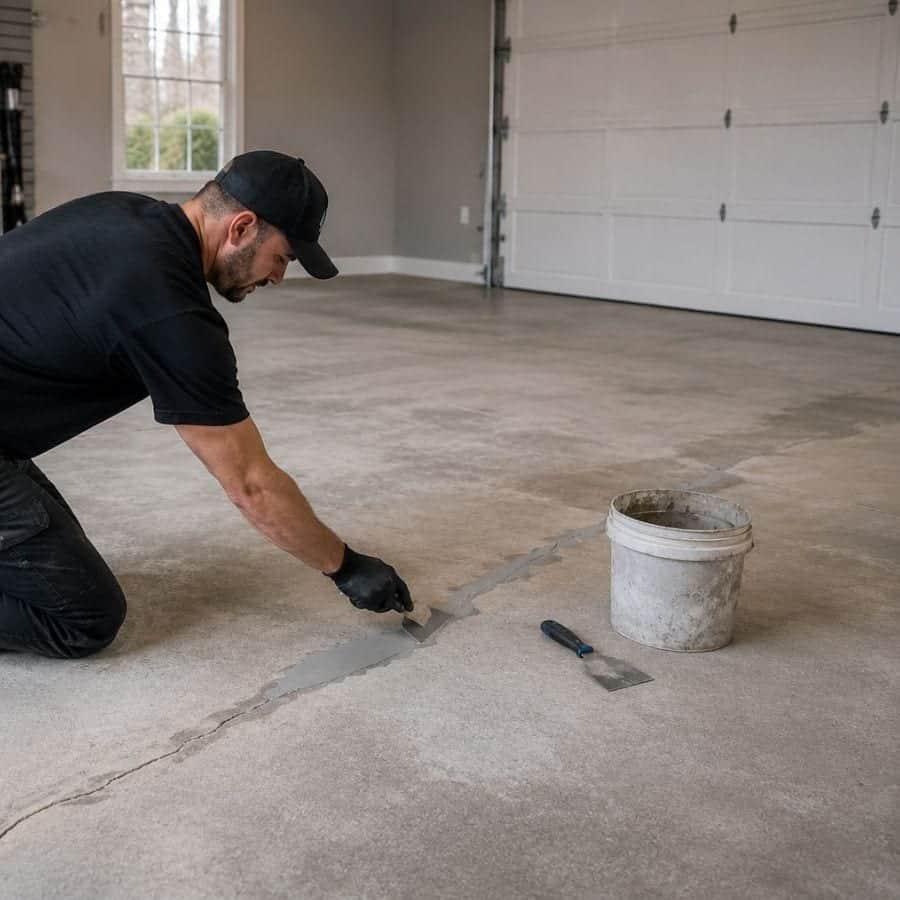
Perimeters, doorways, transitions, joints, and places the main machine cannot reach receive their own review. We identify repairs or remaining material that belong in the agreed scope, rather than hiding a difficult edge inside a general promise.
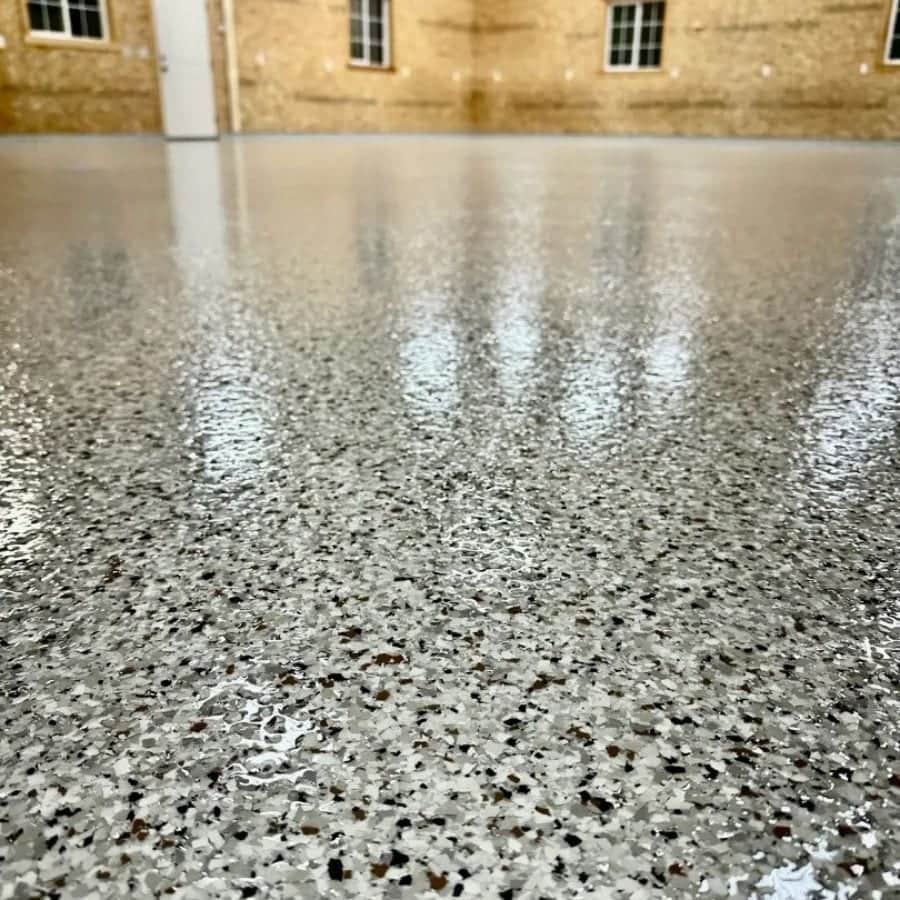
Step 6
After grinding and cleanup, we review the exposed concrete and confirm whether it is ready for the planned coating, sealer, polish, or other treatment. If the slab shows a condition that changes the recommendation, we explain that before the next material is installed.
Why High Caliber
A grinding estimate is more useful when it names what the floor must support and what the next material needs from the surface. We keep those questions together, so the scope can account for adhesion, build, appearance, access, and the slab's visible condition before work begins.
For a coating, that may mean preparing the slab for the right chemistry in the right layer. Our hybrid epoxy and polyurea system uses epoxy for adhesion and build, with polyurea providing the properties needed in the topcoat. For other floors, sealing or mechanically refining the concrete may be the better direction.
Customer Reviews
“Jeff and his team did the most amazing job epoxy floor coating my 38 year old garage floor. Outstanding, professional, skilled, great communication. Highly recommended.”
“We recently had our garage floors resurfaced with the Epoxy Floor coating with flakes. High Caliber Concrete did such an awesome job we cannot say enough good about them! So timely, well organized and a beautiful job!! Owner, Jeff, responded to any call ASAP. Shawn and Ethan, fantastic employees for the company, did a tremendous job which was labor intensive…They left no questions unanswered! Such a professional, beautiful job. We would highly recommend them! Lillian & Joseph Bakara Jr.”
“Would highly recommend. No pressure sales, quality product, great communication and quality installation. I met Jeff at the home show. I was drawn into his booth by his very enthusiast kids. I got the immediate impression this was a family oriented business and that was reinforced by the conversation with both Jeff and his young son. These values drew me to this business. I signed up for a quote. Shortly after the show Jeff came to my home to present options and provide a quote. No pressure to buy, Jeff understood I needed to get thru tax season before I could be sure about my budget. Over the course of next few months Jeff was responsive to any questions I had and we got the job scheduled. Jeff provided a trailer in the quote to store contents of garage while job was being done, which was very helpful. When talking with others about the quote I learned my price was equal to or less than what neighbors had paid up to six years ago, so I felt this was good pricing. I had thought there would be a ton of dust and a big mess when grinding surface, but the machines had a vacuum attached, clean and efficient work. I was impressed that they coated steps and side walls as well as floor. No mess on drywall or driveway. Crew doing installation were great guys. They took time to fill me in on the process of installation, what to expect, how long for surface to cure and when I could empty trailer. Post install Jeff stopped out to grab trailer, filled me in on what to use and how to clean the floor. VERY happy with the whole process from sales to install to follow up. LOVE my new garage.”
Hamilton, Michigan
Hamilton's rural setting can put several kinds of concrete under the same roof. A country home may have an attached or detached garage, while a farm property may include a pole barn, workshop, or outbuilding. Small commercial spaces can add customer access, equipment movement, and work-zone questions. Those differences affect how we prepare and protect the area around the slab.
Allegan County weather adds another reason to look closely at the floor rather than specify a generic pass. Freeze-thaw cycles, winter snow, road salt, humid air, and spring moisture can accompany the soil, grit, equipment marks, and patchwork repairs that collect on working concrete. These conditions do not prescribe one finish, but they belong in the discussion about cleaning, preparation, moisture clues, and the demands placed on the finished surface.
If the floor connects to a larger project, we can carry the preparation conversation toward a coating, a penetrating sealer, or mechanically refined polished concrete. Nearby property owners may also compare related work in Holland, Fennville, or Saugatuck, but the recommendation for your Hamilton slab should still come from its material, access, and intended use.
Salt, grit, soil, tools, vehicles, and equipment can all change what the surface needs before finishing.
A pole barn or workshop may need a different access, staging, and cleanup conversation than an attached garage.
Grinding can prepare for a coating or another finish, but it is not a promise to erase structural movement or every defect.
Frequently Asked Questions
A floor may be a candidate when weak surface material, old paint, adhesive, a previous coating, rough texture, or selected high areas are affecting the next use. We also consider cracks, joints, patches, access, and the finish you want afterward. Grinding is not automatically the right answer for every slab, so the condition and the desired result should be reviewed together before the scope is set.
We begin with what the room must support and what the equipment needs to reach. That can include vehicles, stored tools, farm equipment, shelving, work zones, doorways, and cleanup access. A garage prepared for a hybrid coating may have different profile and staging requirements than a workshop or pole barn receiving a sealer or another treatment. The estimate should make those practical details visible.
Road salt and tracked grit can leave residue or contribute to surface wear in a garage, while spring moisture and humid air make moisture questions worth discussing. These conditions do not determine a finish by themselves. We look at the actual slab, clean or remove suitable surface material, and consider moisture clues before recommending a coating, penetrating sealer, polish, or additional work.
Diamond tooling can address many surface materials, but the method depends on the material's thickness, bond, and what is underneath it. Adhesive, paint, a prior coating, and patch residue may behave differently. We identify what the floor contains before promising removal, and we explain when another removal method, repair, or a revised scope is needed.
Grinding mechanically refines or prepares the concrete. Choose a sealer when you want suitable concrete to remain the visible surface and the product fits its condition. Choose a coating when a built film is part of the performance goal. The two choices can follow related preparation, but they answer different floor-use questions.
It may, depending on the condition and the result you want. Grinding is commonly used to prepare concrete for a coating, including the preparation required before a hybrid epoxy and polyurea system. It can also be part of mechanically refining the slab for polished concrete. The surface is inspected after preparation so the next step follows the concrete that is actually present.
No. Controlled grinding can improve selected rough areas or high spots, but it does not promise to correct structural slope, settlement, or future movement. Cracks, spalls, joints, and other conditions may need separate repair decisions. We define what the equipment can reasonably change and keep those limits in the estimate.
Related Services
The next service should follow the floor's condition and the result you want, not a preset assumption about every Hamilton slab.
See how prepared concrete can receive a protective or decorative coating system when that fits the room and its use.
Learn moreExplore mechanically refined concrete when the slab itself is intended to remain the visible finished surface.
Learn moreReview penetrating sealer options when the goal is to protect suitable concrete without describing it as a film coating.
Learn moreConnect garage preparation to a complete floor system when vehicles, salt, grit, and daily use shape the finish decision.
Learn moreGallery And Visual Proof
These images show real preparation and finishing work from the High Caliber library. They illustrate equipment, surface conditions, and finish details without claiming that a pictured property is in Hamilton.
Free Project Quote
Tell us about the space and we will follow up with a clear recommendation and quote conversation.
Phone
Business Hours
Free Estimate
Tell us what is on the floor, what the room needs to support, and what you want the finished surface to do. We will review the concrete, explain the preparation scope, and connect it to the coating, sealer, polish, or other finish that fits the slab. Photos of the floor, its dimensions, old materials, and the room's access can help us begin the conversation, but an on-site review determines the actual scope.