
A More Definite Walking Surface
A planned coating gives suitable concrete a continuous finished surface. That can make a garage, basement, workshop, or business floor feel more intentional without pretending the coating repairs structural movement.
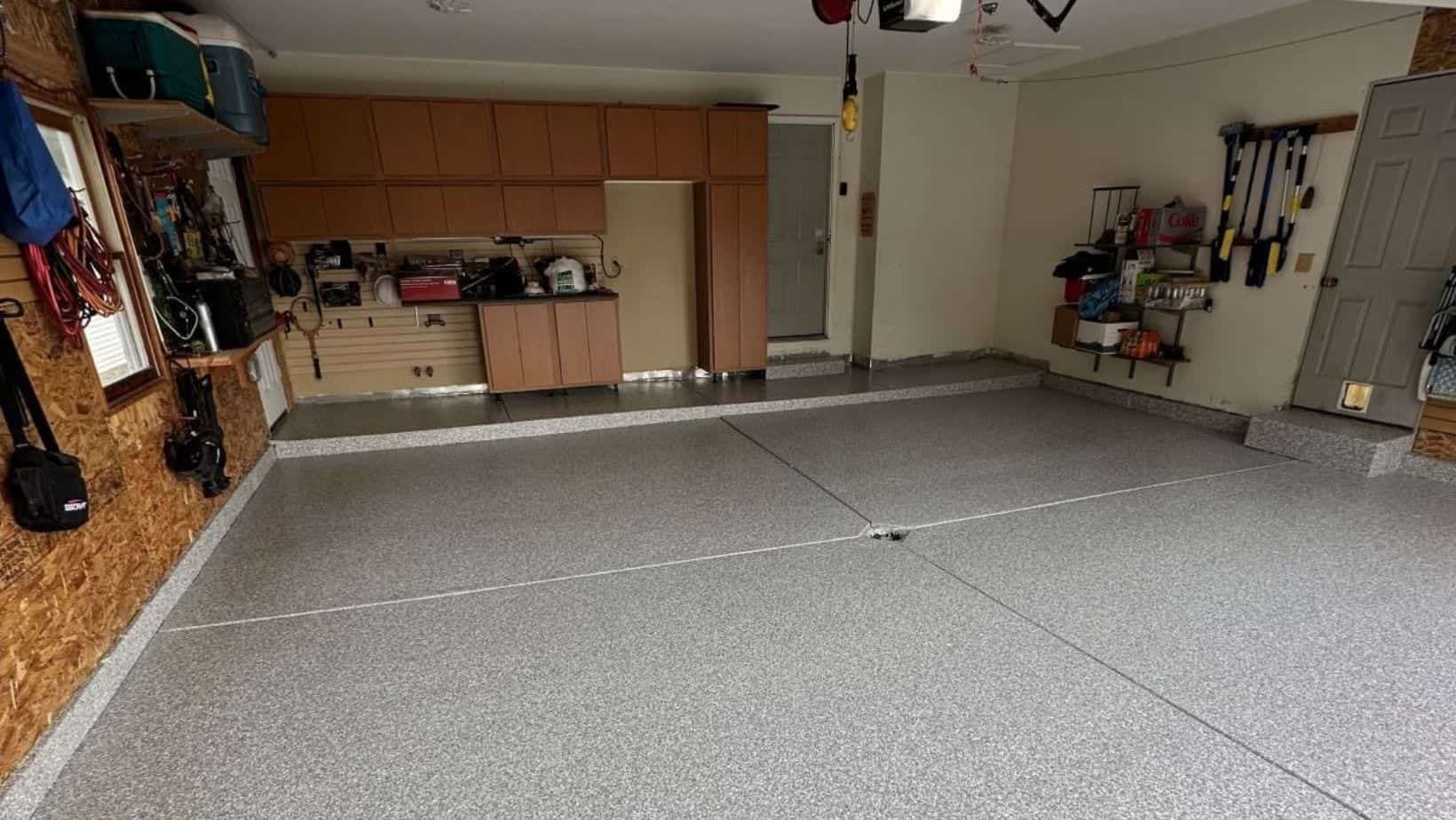
A Grandville floor may collect winter salt, vehicle grit, spring moisture, or the steady wear of a working space. We start with the concrete and the room's routine, then explain where epoxy can provide adhesion and build inside a compatible system designed for that use and the people who rely on the room.
Service Overview
Epoxy is one part of a floor decision, not a substitute for understanding the slab. Grandville homes and businesses may bring different questions about traffic, sunlight, moisture, cleaning, and access. Those details determine whether an epoxy basecoat, decorative broadcast, and protective topcoat belong in the proposed sequence.
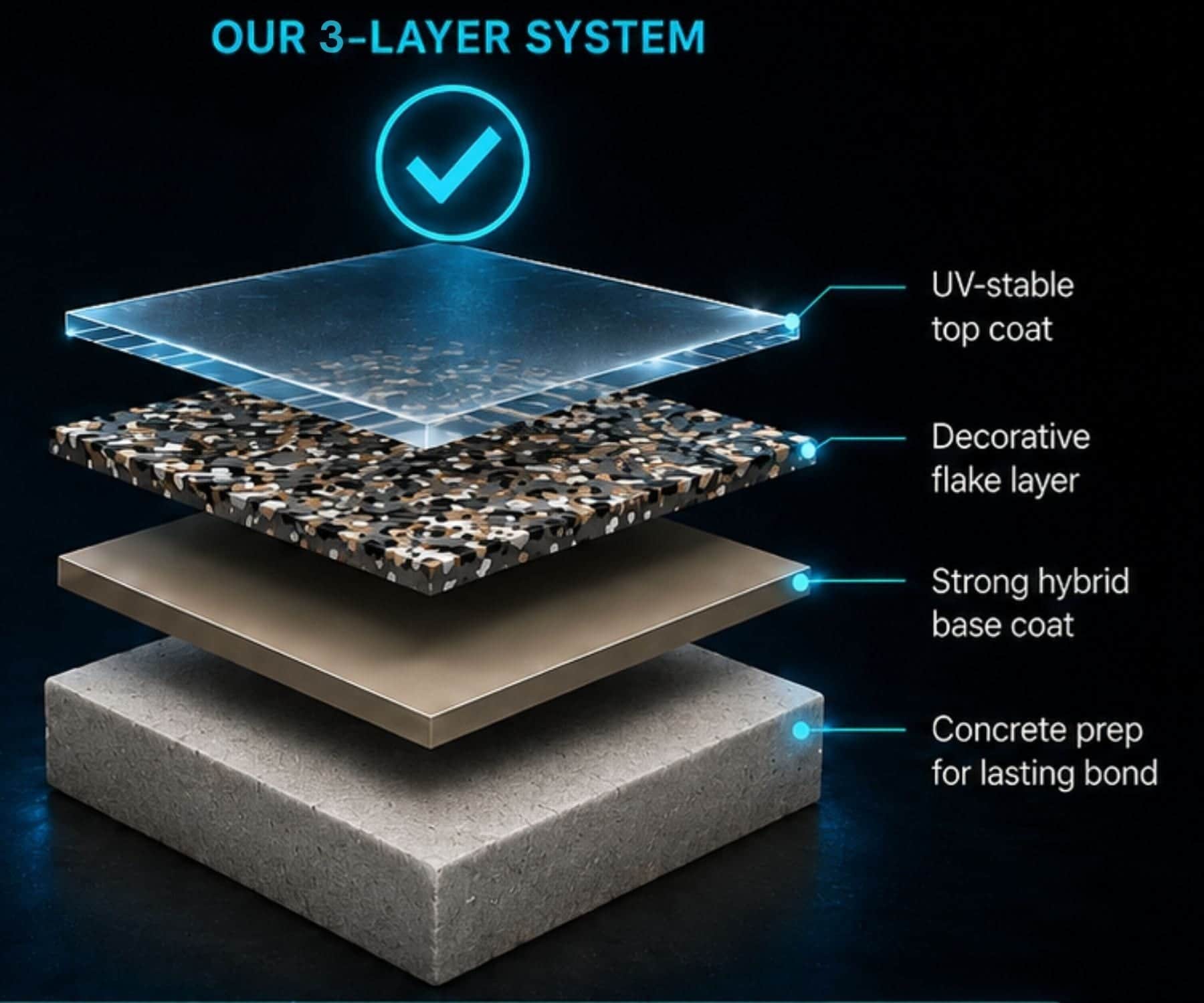
Our hybrid approach assigns materials by function. Epoxy can anchor the system and add build, while polyurea or polyaspartic can be selected for compatible roles above it. The goal is a coherent floor whose layers make sense together.
Benefits
A finished coating can support several practical outcomes, but none should be separated from the condition of the concrete or the way the room will be used. We discuss the useful possibilities and the limits together.
A planned coating gives suitable concrete a continuous finished surface. That can make a garage, basement, workshop, or business floor feel more intentional without pretending the coating repairs structural movement.
Salt, grit, and meltwater are familiar winter visitors in Kent County. A uniform finish can make residue easier to spot and remove, while regular sweeping and appropriate washing remain part of care.
Spring moisture and humid summer air deserve attention before color is selected. Reviewing moisture conditions early helps determine whether coating is appropriate and whether a moisture barrier discussion belongs in the scope.
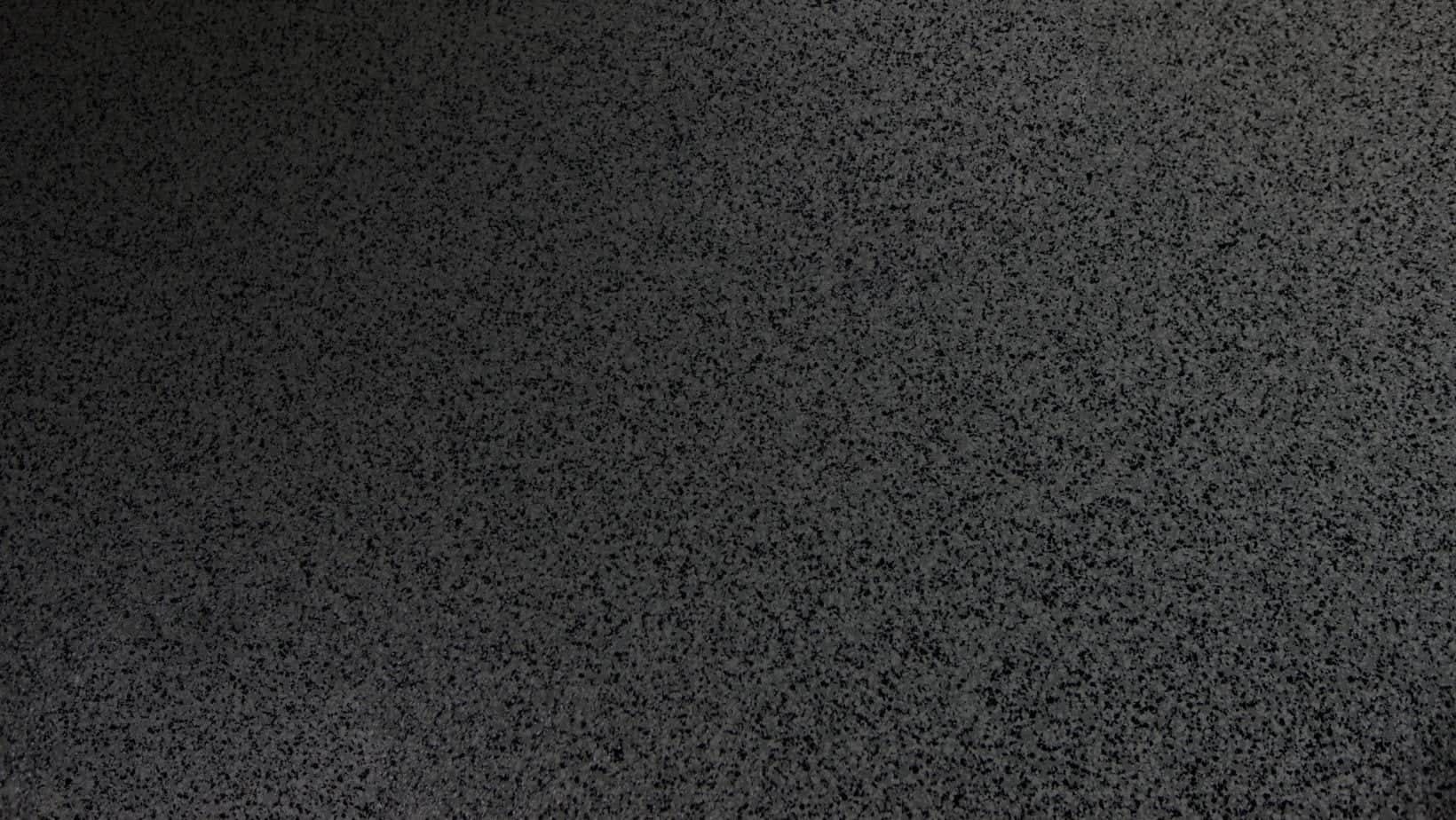
Decorative flake or a more uniform color can give the room a finished visual direction. Lighting, slab variation, and the selected broadcast affect the result, so examples inform the choice without promising a duplicate.
A residential garage may call for a different visual balance than a retail, restaurant, school, or service space. Traffic, sunlight, cleaning habits, and access help narrow the finish conversation.
Epoxy contributes adhesion and build where those properties fit. Polyurea and polyaspartic can serve other compatible roles, allowing the system to be discussed as layers rather than a single label.
Installation Process
An epoxy floor is built through a sequence of decisions, not a single material application. We use each stage to learn something useful about the concrete, prepare the next layer, and keep the finished system aligned with the room's actual work.
Step 1
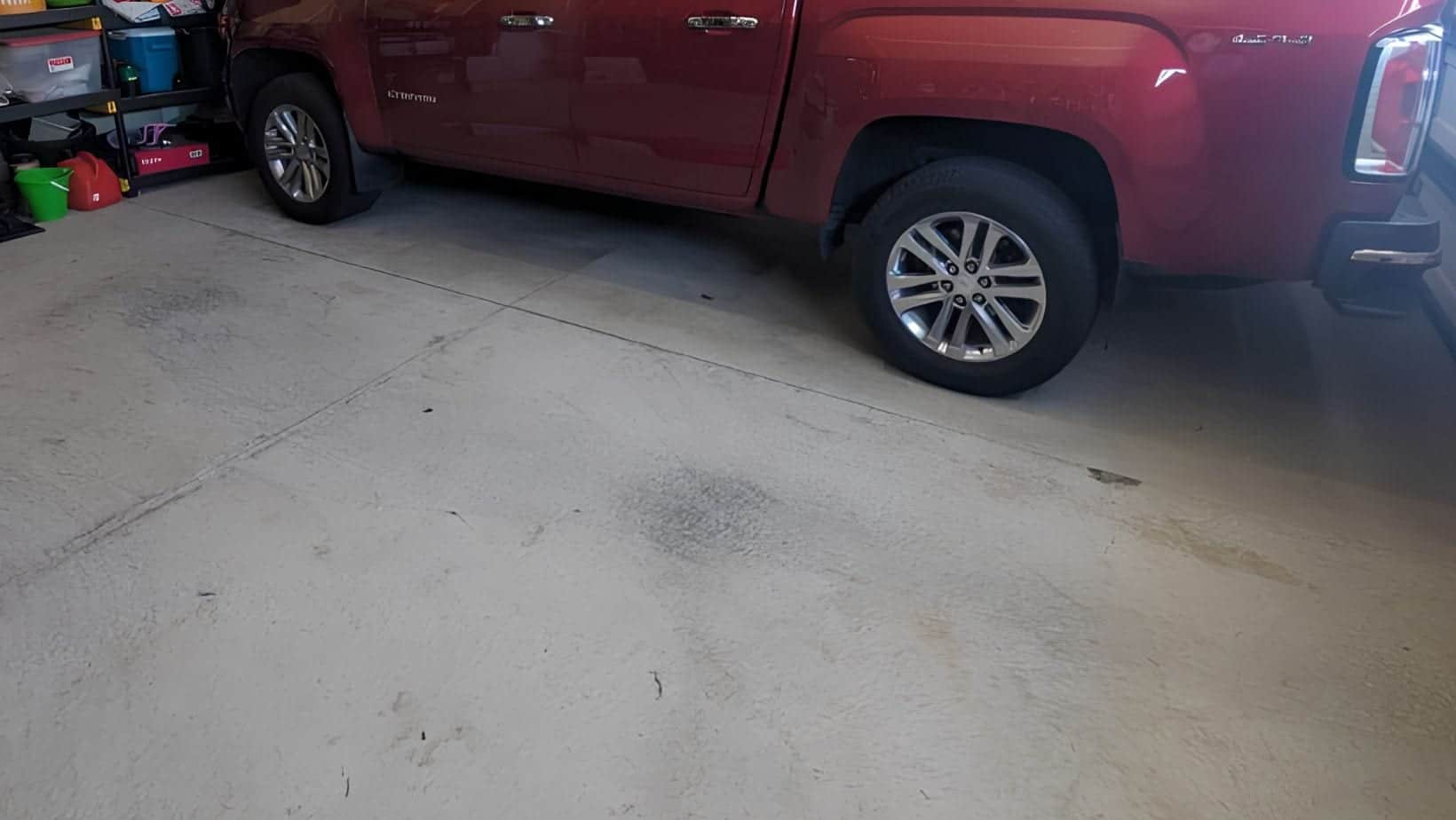
We begin with the floor's setting and responsibilities. Tell us whether it serves a garage, basement, workshop, pole barn, retail room, restaurant, school, or service space, along with the traffic, storage, sunlight, cleaning, and access involved. Existing coatings, stains, cracks, and moisture signs become part of the starting record before we discuss the finish.
Step 2
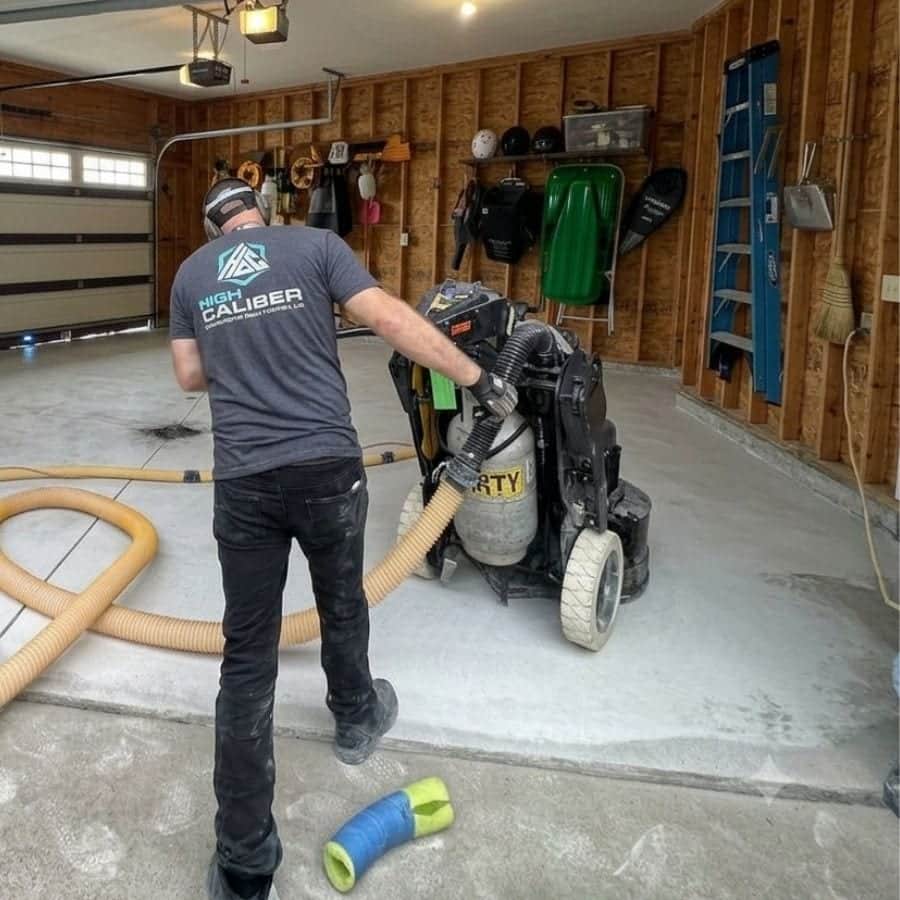
Diamond tooling removes weak surface material and contamination so the concrete can adhere to the coating. It also gives us a closer look at edges, joints, transitions, and areas hidden by wear or an earlier finish. Grinding creates the needed texture for the basecoat; it is preparation work, not a promise to level the slab or correct structural problems.
Step 3
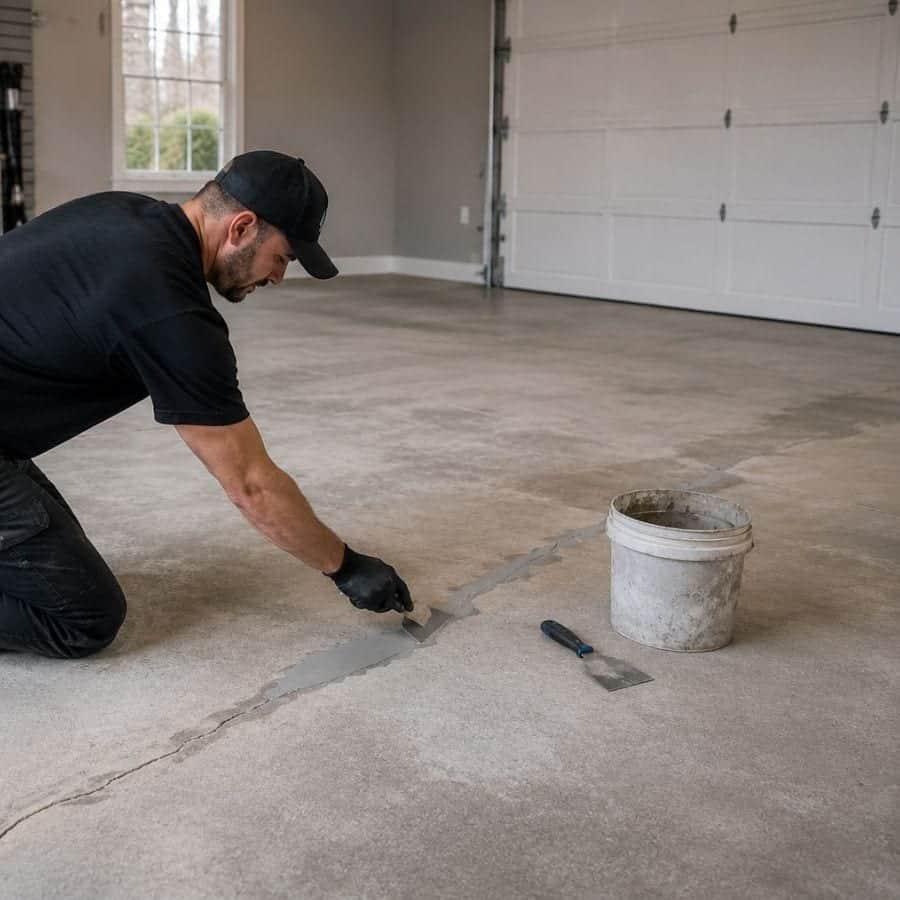
After the surface is opened, we identify cracks, pits, spalls, and worn sections that need attention in the agreed scope. Suitable filling and patching can improve the surface available for the coating, while movement and deeper concrete issues still need to be acknowledged. The repair plan follows what the prepared slab reveals and how the room is used.
Step 4
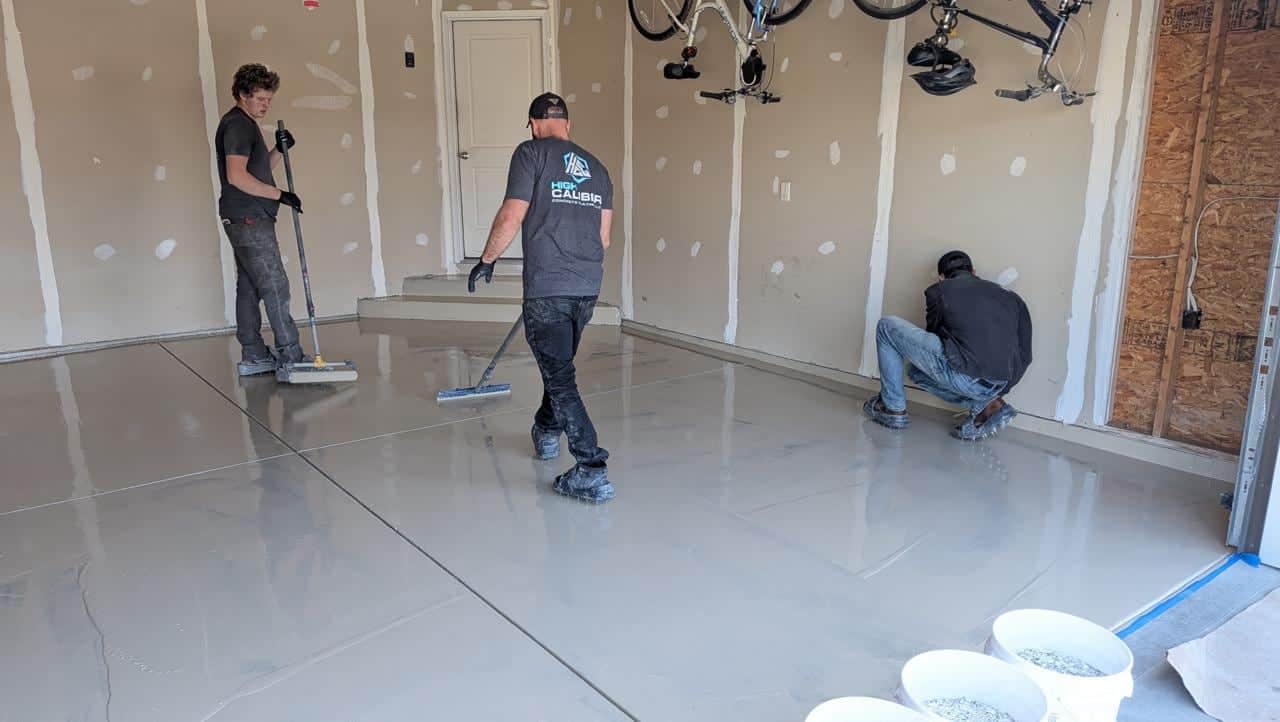
When the concrete and included repairs are ready, we apply the epoxy basecoat across the prepared surface. Epoxy contributes adhesion and build at this point in the hybrid system. Coverage, surface condition, moisture findings, and compatibility remain connected, because a sound base is meant to support the selected layers above it rather than stand in for the complete floor design.
Step 5
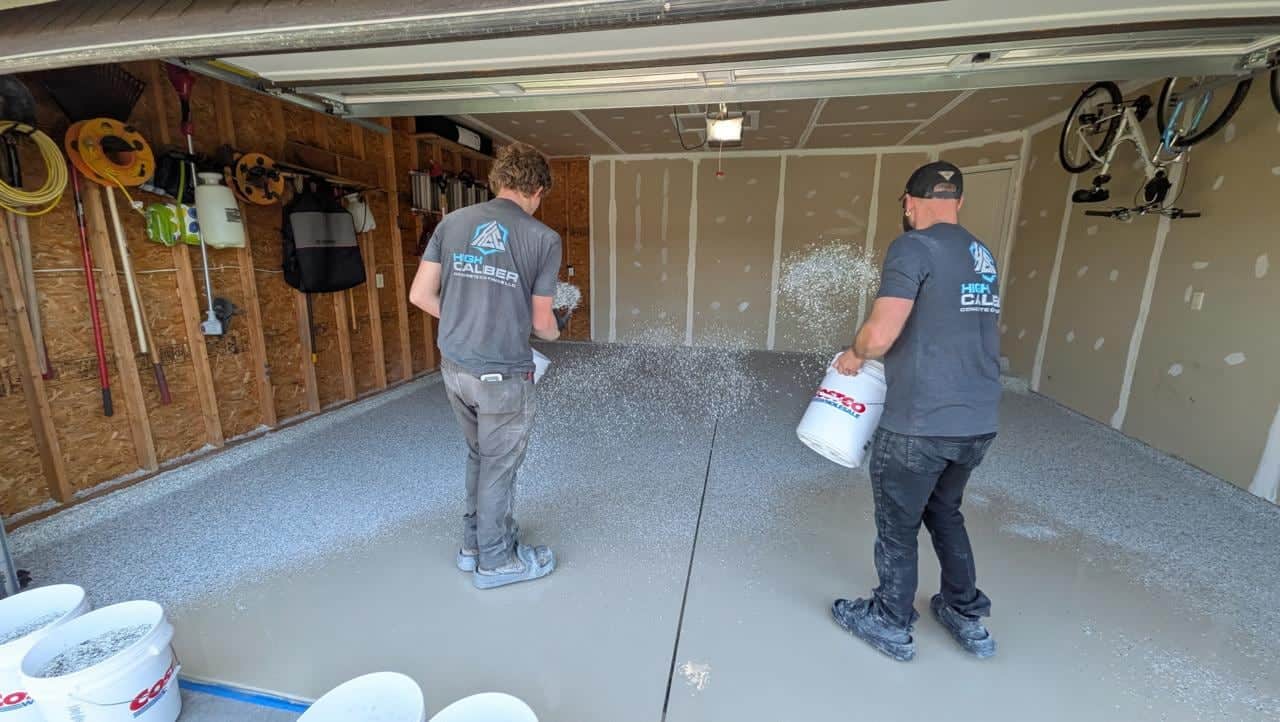
The next layer gives the floor its chosen appearance and supporting properties. We may broadcast decorative flake, then use a compatible polyurea or polyaspartic topcoat when that role fits the system. Color, light, traffic, exposure, and cleaning all inform the selection, so the finish responds to the room instead of being treated as a universal package.
Step 6
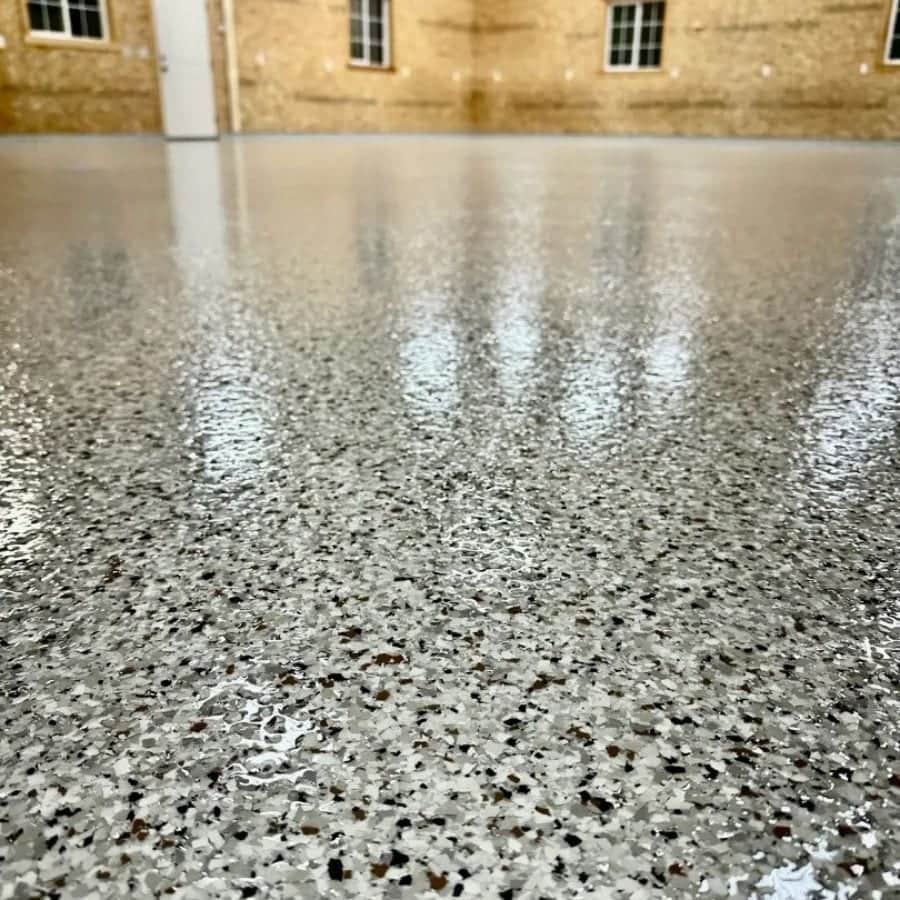
At completion, we review the visible surface, edges, transitions, and finish details with you. We also explain access and cure expectations, routine care, and practical cleaning for the selected system, including the salt and grit that may enter a Grandville space. The handoff should leave you knowing what was installed and how to look after it.
Why High Caliber
From our family-owned base in the Holland and Zeeland area, we serve residential and commercial spaces across West Michigan. We give a direct explanation of what the concrete can support, what the room demands, and why a particular layer belongs in the recommendation.
That includes explaining what epoxy does well. It can be a purposeful adhesion and build layer in a hybrid epoxy and polyurea system. We also talk plainly about moisture, repairs, sunlight, cleaning, access, and the conditions that can limit a coating.
Customer Reviews
“Jeff and his team did the most amazing job epoxy floor coating my 38 year old garage floor. Outstanding, professional, skilled, great communication. Highly recommended.”
“Would highly recommend. No pressure sales, quality product, great communication and quality installation. I met Jeff at the home show. I was drawn into his booth by his very enthusiast kids. I got the immediate impression this was a family oriented business and that was reinforced by the conversation with both Jeff and his young son. These values drew me to this business. I signed up for a quote. Shortly after the show Jeff came to my home to present options and provide a quote. No pressure to buy, Jeff understood I needed to get thru tax season before I could be sure about my budget. Over the course of next few months Jeff was responsive to any questions I had and we got the job scheduled. Jeff provided a trailer in the quote to store contents of garage while job was being done, which was very helpful. When talking with others about the quote I learned my price was equal to or less than what neighbors had paid up to six years ago, so I felt this was good pricing. I had thought there would be a ton of dust and a big mess when grinding surface, but the machines had a vacuum attached, clean and efficient work. I was impressed that they coated steps and side walls as well as floor. No mess on drywall or driveway. Crew doing installation were great guys. They took time to fill me in on the process of installation, what to expect, how long for surface to cure and when I could empty trailer. Post install Jeff stopped out to grab trailer, filled me in on what to use and how to clean the floor. VERY happy with the whole process from sales to install to follow up. LOVE my new garage.”
“We recently had our garage floors resurfaced with the Epoxy Floor coating with flakes. High Caliber Concrete did such an awesome job we cannot say enough good about them! So timely, well organized and a beautiful job!! Owner, Jeff, responded to any call ASAP. Shawn and Ethan, fantastic employees for the company, did a tremendous job which was labor intensive…They left no questions unanswered! Such a professional, beautiful job. We would highly recommend them! Lillian & Joseph Bakara Jr.”
Grandville, Michigan
Grandville sits in Kent County, where concrete sees winter salt and snow, freeze-thaw cycles, spring moisture, and humid summer air. Those are useful planning conditions, not proof of what any individual slab is experiencing. They can influence how residue, dampness, and surface wear enter the conversation. The floor still needs to be examined before a coating system is chosen.
The city's property mix includes established and newer garages, basements, retail, restaurants, schools, service spaces, and commercial floors. A residential floor may be judged by vehicle residue and daily cleanup, while a business may also need to consider traffic patterns, sunlight, customer access, and cleaning demands. One city can contain several different flooring briefs.
That variety is why our Grandville conversation stays concrete-specific. We can discuss the regional exposure and nearby communities such as Grand Rapids, Wyoming, Hudsonville, Jenison, and Walker, while keeping the recommendation tied to the actual room, slab, and intended use. The page's location does not replace an evaluation of the floor itself in front of us.
Snow, salt, freeze-thaw movement, spring dampness, and summer humidity can affect how a concrete floor is evaluated and maintained.
Garages, basements, retail, restaurants, schools, and service spaces can place different demands on traffic, appearance, access, and cleaning.
Regional context helps frame the estimate, but preparation findings and the room's real routine determine the appropriate coating discussion.
Frequently Asked Questions
Epoxy may be considered for an established or newer garage, basement, workshop, retail area, restaurant, school, service space, or other commercial floor when the concrete and use support a coating. We do not choose from the room name alone. Traffic, sunlight, moisture, cleaning, access, existing material, and the desired appearance all affect the recommendation.
Epoxy can provide adhesion and build in the basecoat. That is a purposeful role, not a material to dismiss. Polyurea or polyaspartic may be used in compatible layers where their properties fit the design. We explain the job of each layer so the system can be judged as a whole rather than by a single product name.
Salt, snow, grit, and meltwater can influence how a garage or working floor is cleaned and maintained. They do not create one automatic coating specification. We discuss the entry area, traffic, drainage, cleaning routine, and condition of the slab, then consider a finish that supports the way the space is actually used.
An old coating needs to be evaluated for bond, condition, compatibility, and removal requirements. Cracks, pits, and spalls are considered after preparation exposes the surface. Mechanical grinding and suitable repairs may be part of the scope, but neither promises to correct structural movement or make every older slab behave like new concrete.
Yes. Moisture should be discussed before an interior coating is selected. We consider visible signs, the room's conditions, and what is known about the source. A moisture barrier epoxy may be relevant when the actual situation supports it, but coating should not be used to ignore unresolved water movement or a condition that needs separate attention.
Often, the questions are different even when the material family is familiar. A commercial floor may need discussion of customer or employee traffic, carts, service activity, sunlight, cleaning frequency, access, and downtime. The same hybrid concept is not copied into every room. The layers and finish are considered around the work the floor must support.
Tell us the room type, approximate size if known, how the floor is used, what is currently on the concrete, any cracks or moisture signs, the finish you prefer, and access limitations. Photos can help start the discussion, while an estimate still depends on the actual preparation and conditions. We can then explain the likely decisions clearly.
Related Services
A complete floor plan can involve preparation, moisture discussion, or a different finishing route. These related services help put the epoxy decision in context.
See how diamond grinding prepares concrete for a coating without promising to level or structurally repair the slab.
Learn moreReview the moisture conversation when an interior slab or basement needs more evaluation before finishing.
Learn moreLearn how polyurea can contribute a compatible role alongside an epoxy basecoat in a hybrid system.
Learn moreConsider where polyaspartic chemistry may fit when sunlight, finish, and the selected layer sequence matter.
Learn moreExplore decorative flake choices for a garage finish while keeping preparation and daily care in view.
Learn moreGallery And Visual Proof
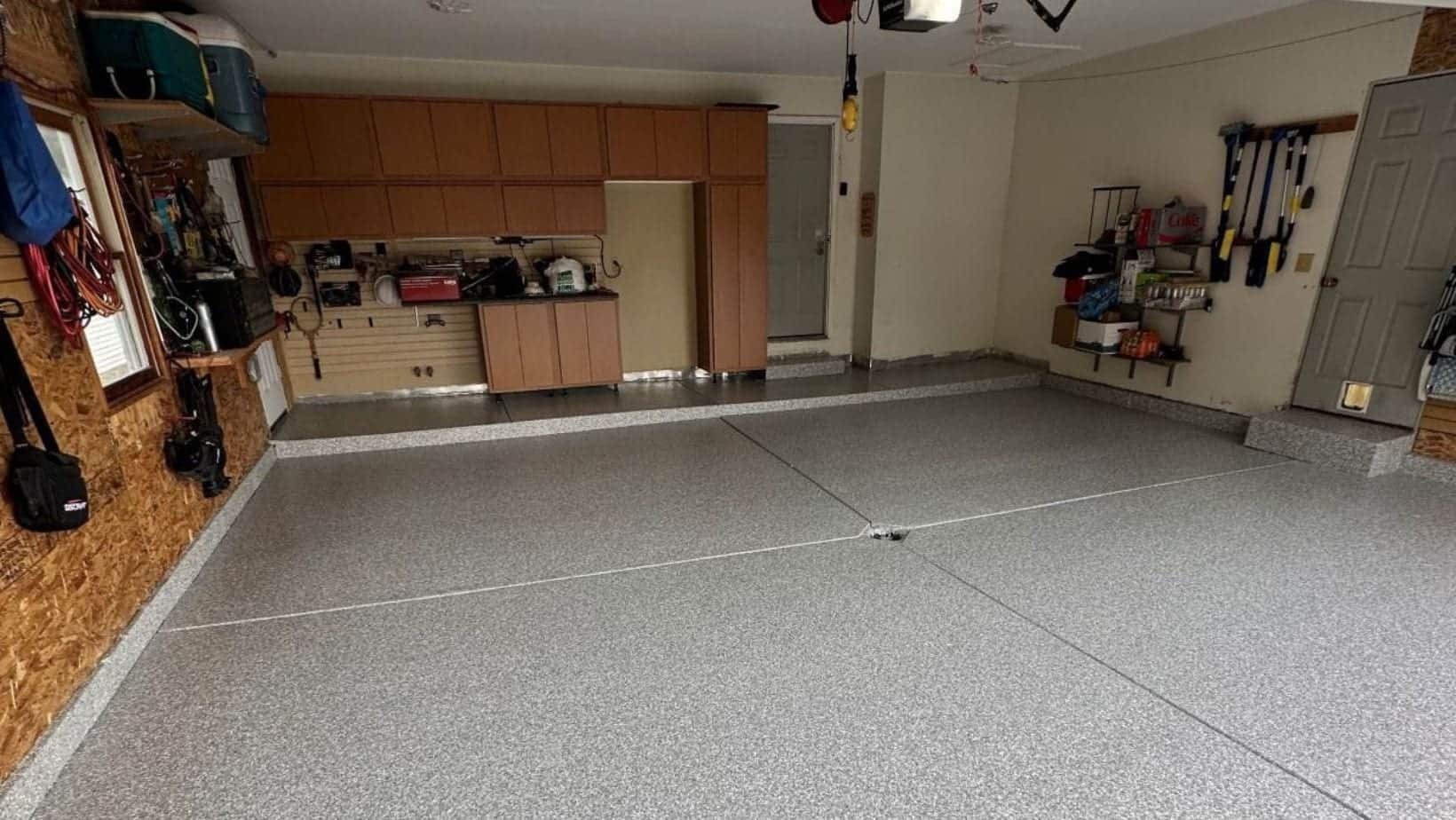
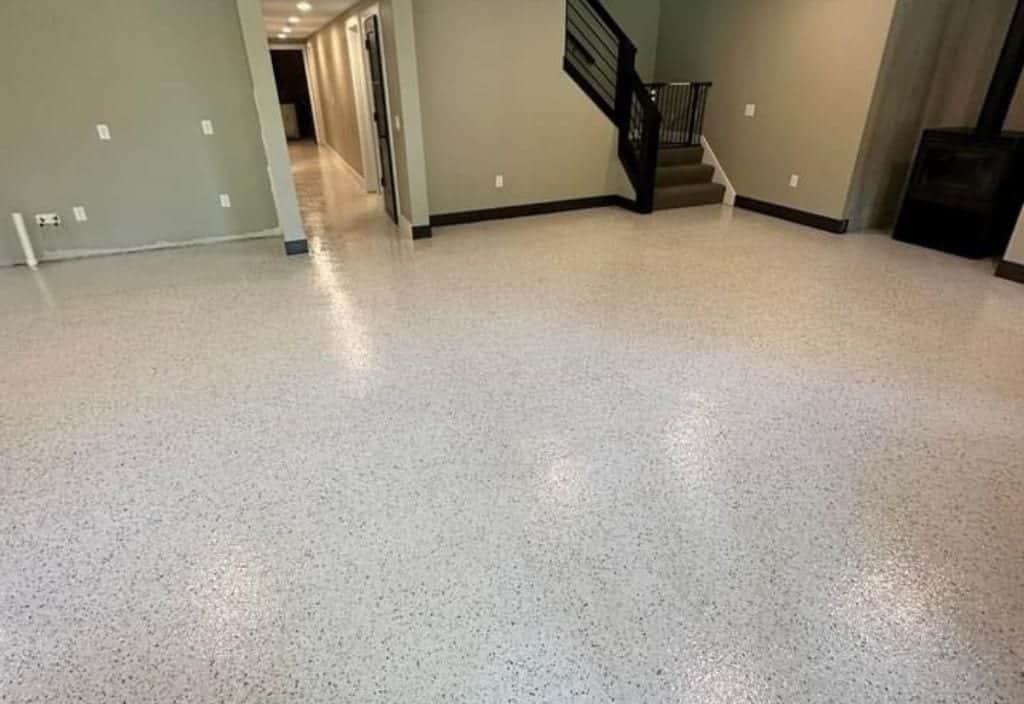
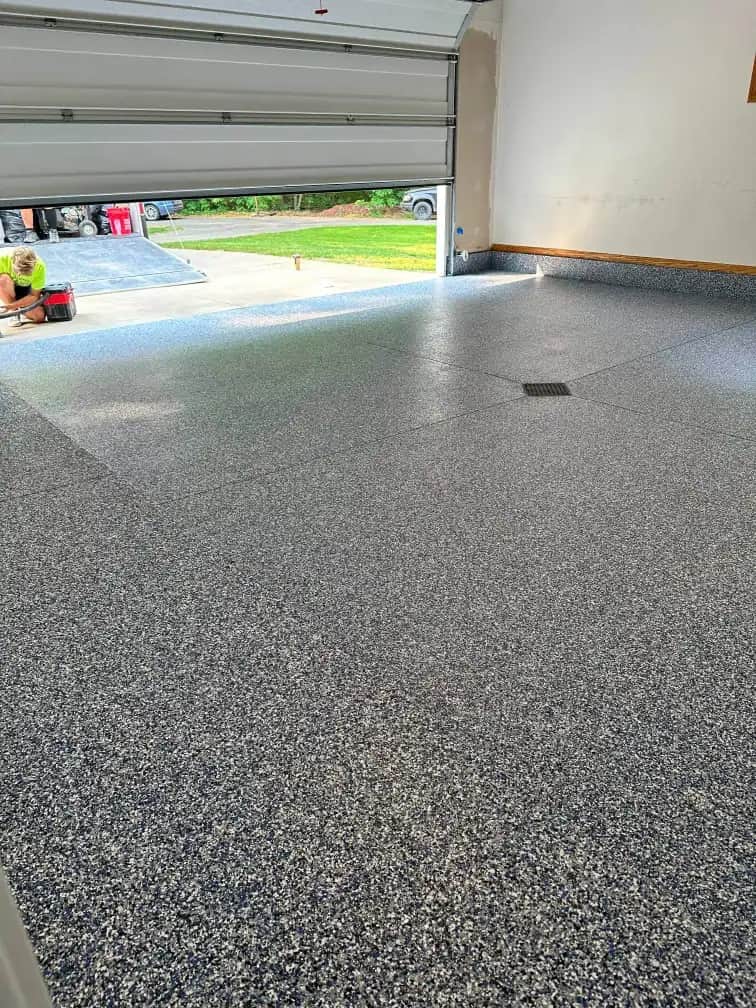
Use these visual references to compare texture, flake distribution, layer behavior, and finished appearance. They are useful for the conversation, not a promise that every Grandville floor will look identical.
Free Project Quote
Tell us about the space and we will follow up with a clear recommendation and quote conversation.
Phone
Business Hours
Free Estimate
Tell us what the room needs to handle, what the concrete looks like today, and what kind of finish you have in mind. Include the room type, any existing coating, visible damage, moisture concerns, and access limitations if you know them. We can discuss preparation, moisture, epoxy's role in the hybrid system, compatible topcoat options, access, and care. Request a Grandville estimate online or call (616) 777-7348 to begin.