
Give The Surface A Defined Role
A suitable coating creates a finished wear surface for vehicles, stored items, foot traffic, or work activity. We match the recommendation to what the concrete must handle every day.
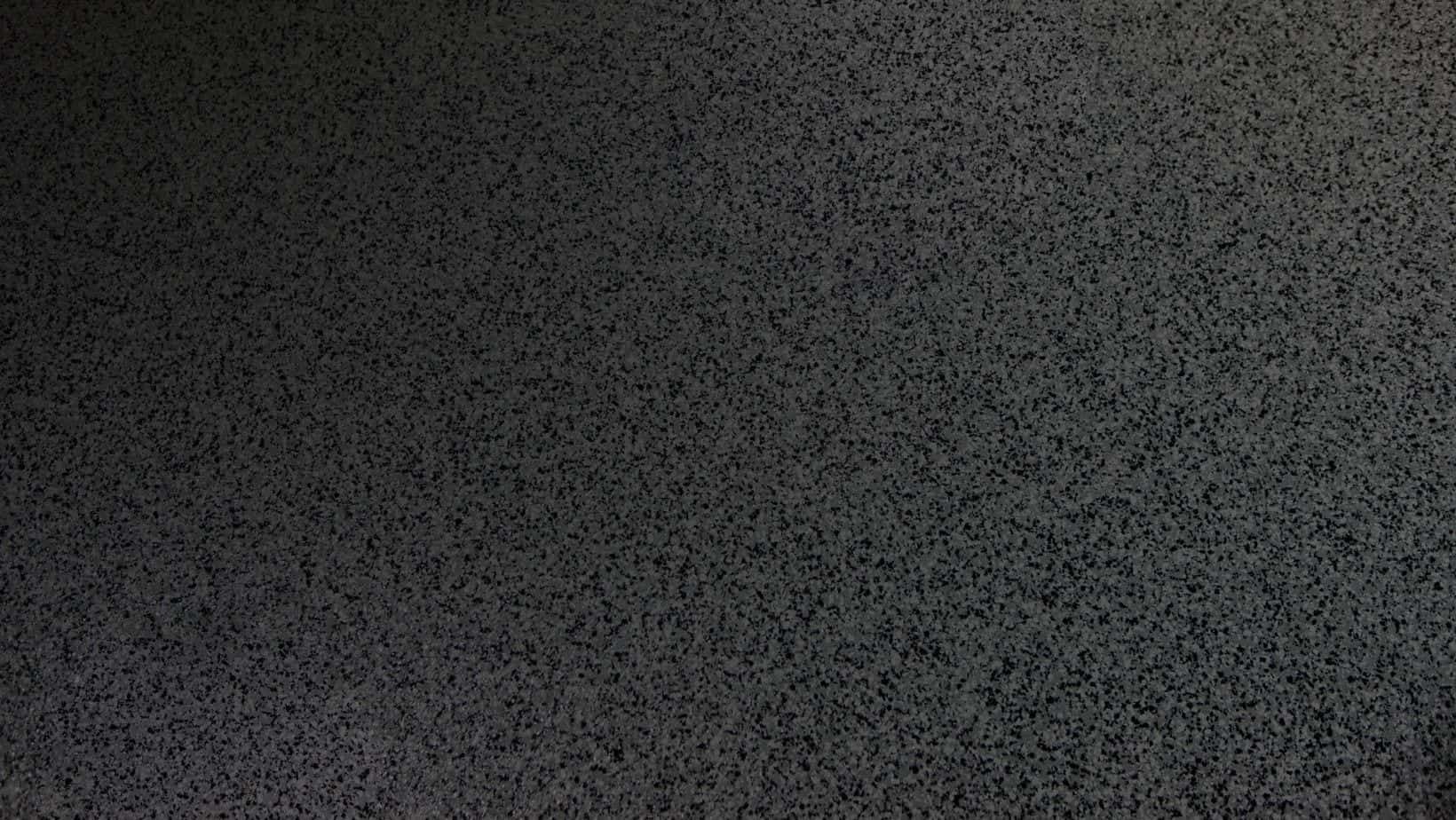
Douglas floors often sit between lake weather and indoor routines. Wet shoes, road salt, vehicles, storage, and customer traffic can all leave different demands on concrete. We look at the room, the existing surface, and the finish you want, then use a free estimate to outline a realistic coating direction today.
Service Overview
A concrete coating adds a planned surface to an existing floor. That makes the condition beneath the finish important. A garage with wet tires, a basement with moisture questions, a patio exposed to weather, and a commercial room with regular cleaning do not call for the same conversation. We start by understanding the space instead of choosing a product from a color sample.
Our hybrid system uses epoxy for purposeful adhesion and build, with polyurea and a compatible topcoat considered for their roles in the finished stack. The layers work together after the surface has been evaluated and prepared. The result should suit the concrete, the exposure, and the way you expect to use the room.
Benefits
A coating is worth discussing when it answers a real need in the room. The useful benefits depend on preparation, exposure, traffic, and the condition of the concrete.
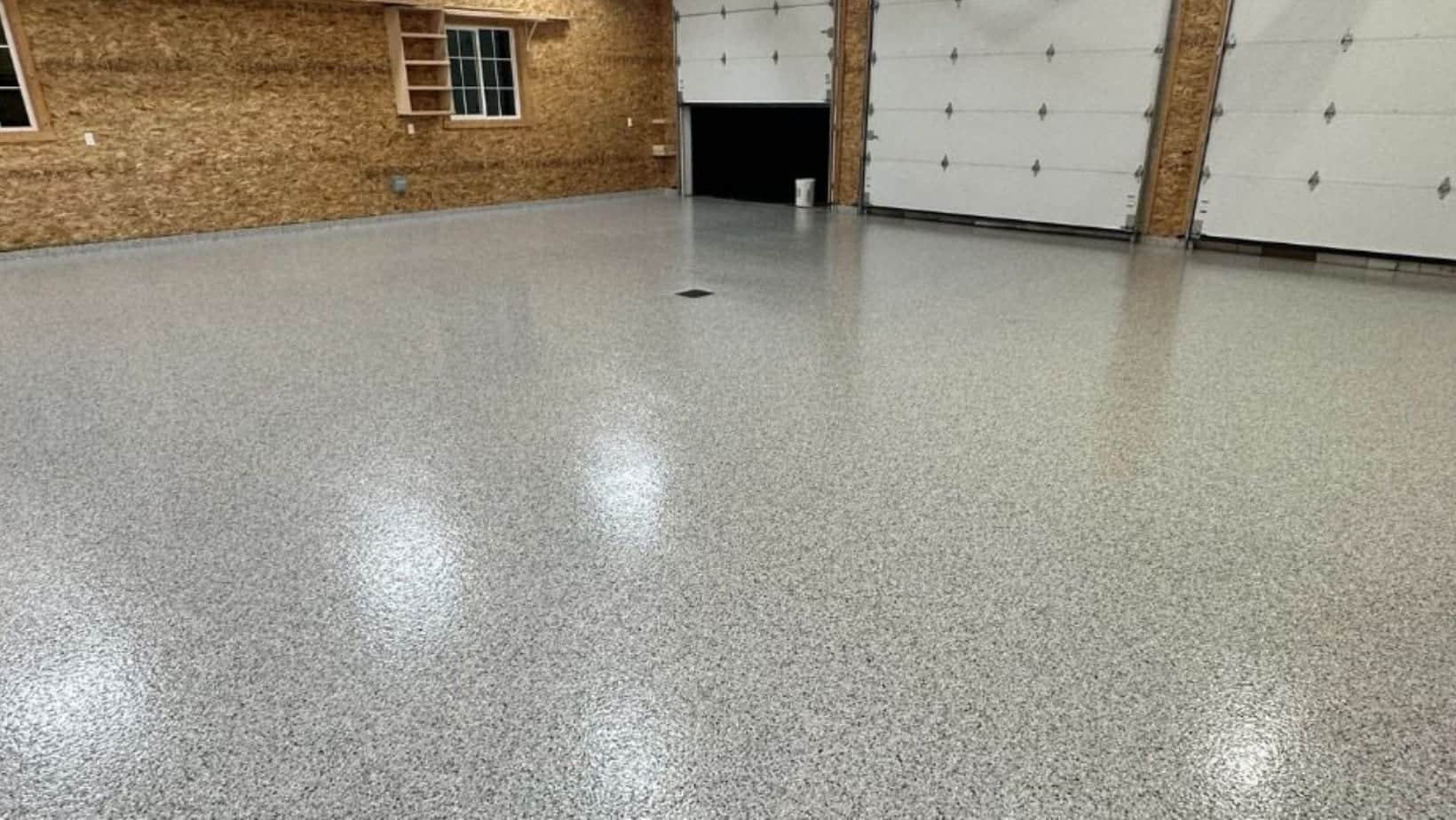
A suitable coating creates a finished wear surface for vehicles, stored items, foot traffic, or work activity. We match the recommendation to what the concrete must handle every day.
Road salt and grit can arrive on tires, boots, and carts. A coating gives us a way to discuss that exposure, routine cleaning, and the surface expected to receive it.
Spring moisture, humid air, and basement conditions can affect a coating decision. We consider what the concrete is experiencing before a finish is selected for appearance.
Decorative flake, solid color, and other finish choices can give a garage, workshop, or customer-facing room a deliberate look while keeping preparation central to the result.
A consistent finish can make dust, grit, and spills more visible during ordinary care. It does not remove maintenance, but it can make the routine easier to understand.
Epoxy, polyurea, decorative broadcast, and a topcoat may each have a place in the system. Their roles are discussed alongside exposure, use, moisture, and finish goals.
Installation Process
A coating installation earns its finish through the order of the work. We identify the slab's demands, prepare the concrete, repair what preparation exposes, and place each layer only after the previous step is ready.
Step 1
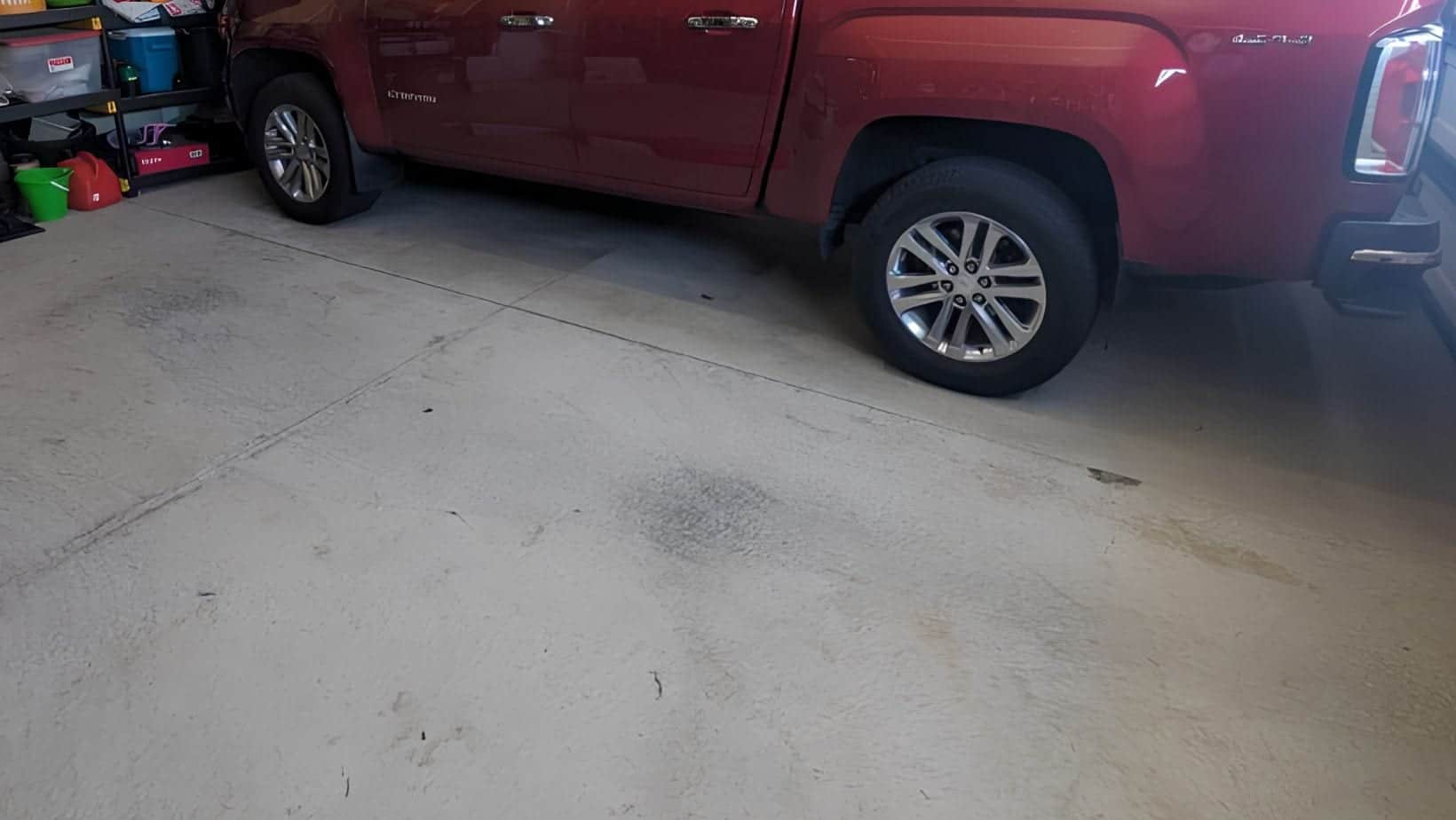
Before selecting color or texture, we review how the concrete is used and what reaches it. We look for old coatings, wear, cracks, pits, joints, moisture questions, traffic, sunlight, cleaning expectations, and access. That review gives the estimate a concrete scope and helps determine whether a coating system fits the space.
Step 2
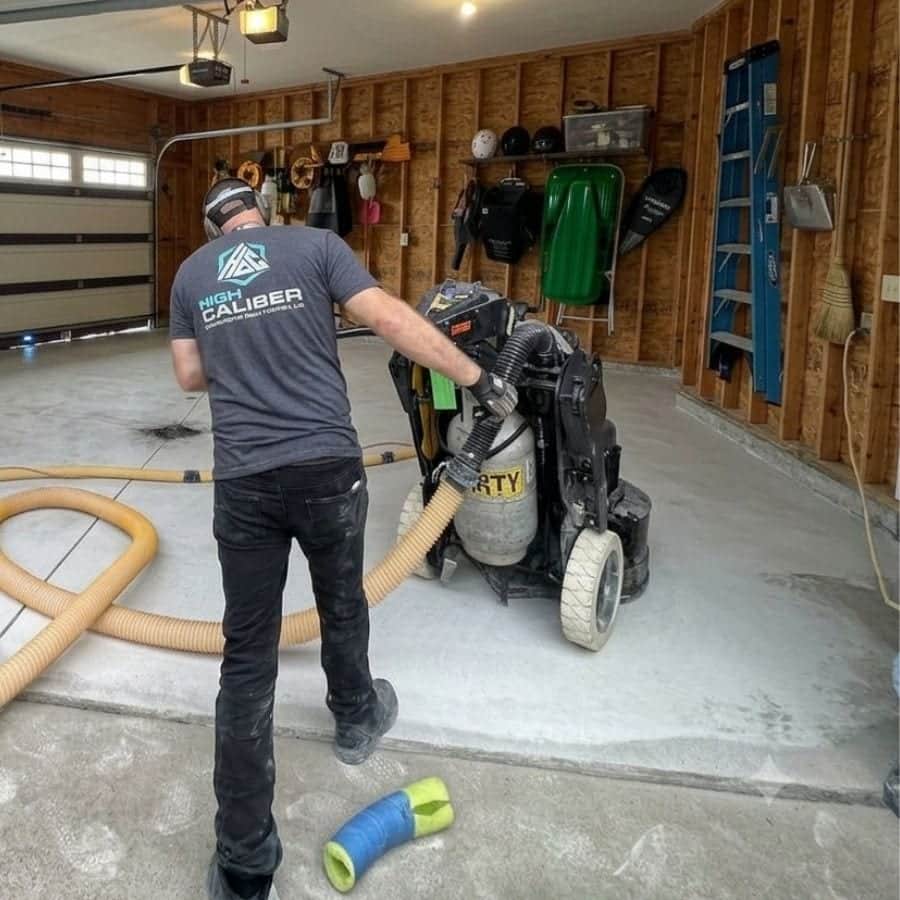
Diamond grinding mechanically removes weak surface material and creates the profile needed for adhesion. The work follows the slab, including edges, joints, old material, and areas that need extra attention. Grinding prepares the surface; it does not level the floor, provide structural repair, or promise to stop future movement.
Step 3
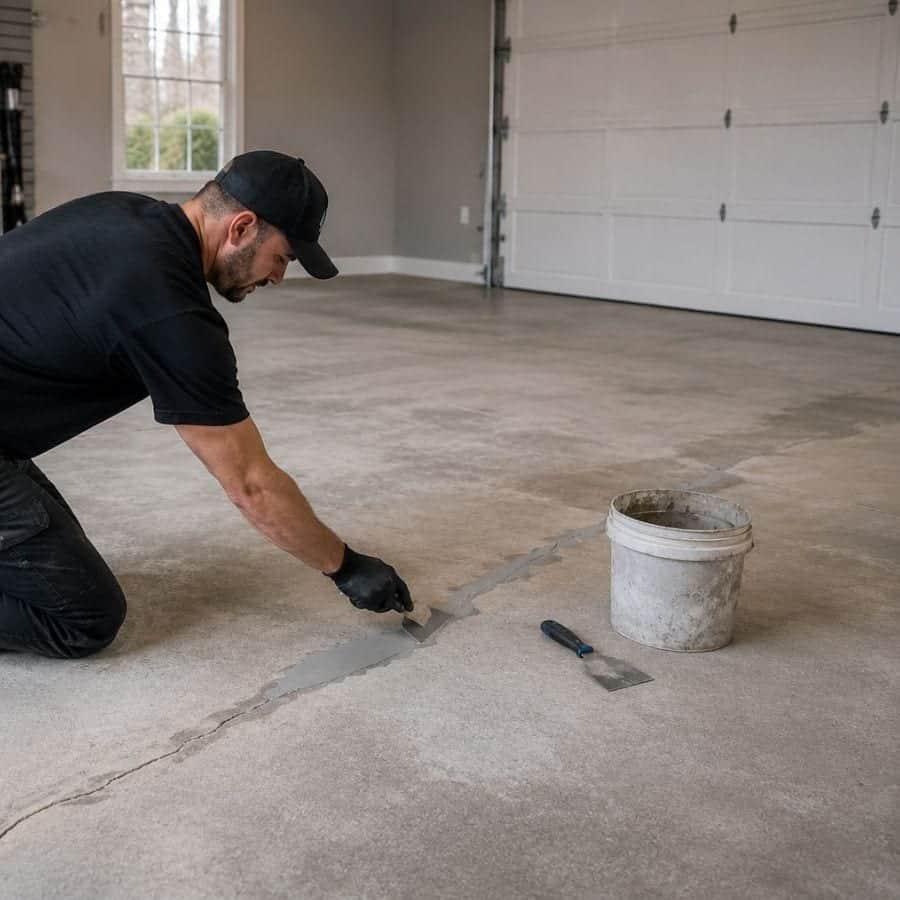
Once preparation exposes the concrete, we fill or repair cracks, pits, spalls, and other damaged areas included in the recommendation. We also keep moisture and existing movement in view. The repair scope should tell you what is being addressed before the coating covers the prepared base.
Step 4
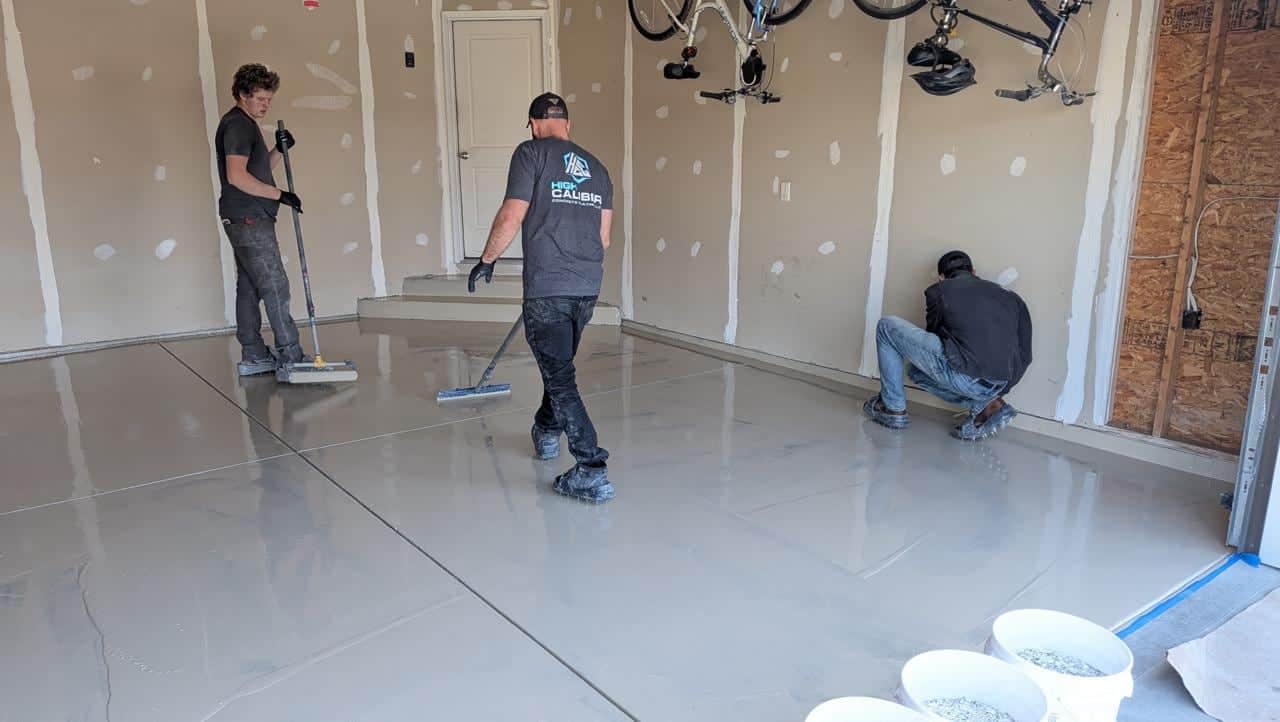
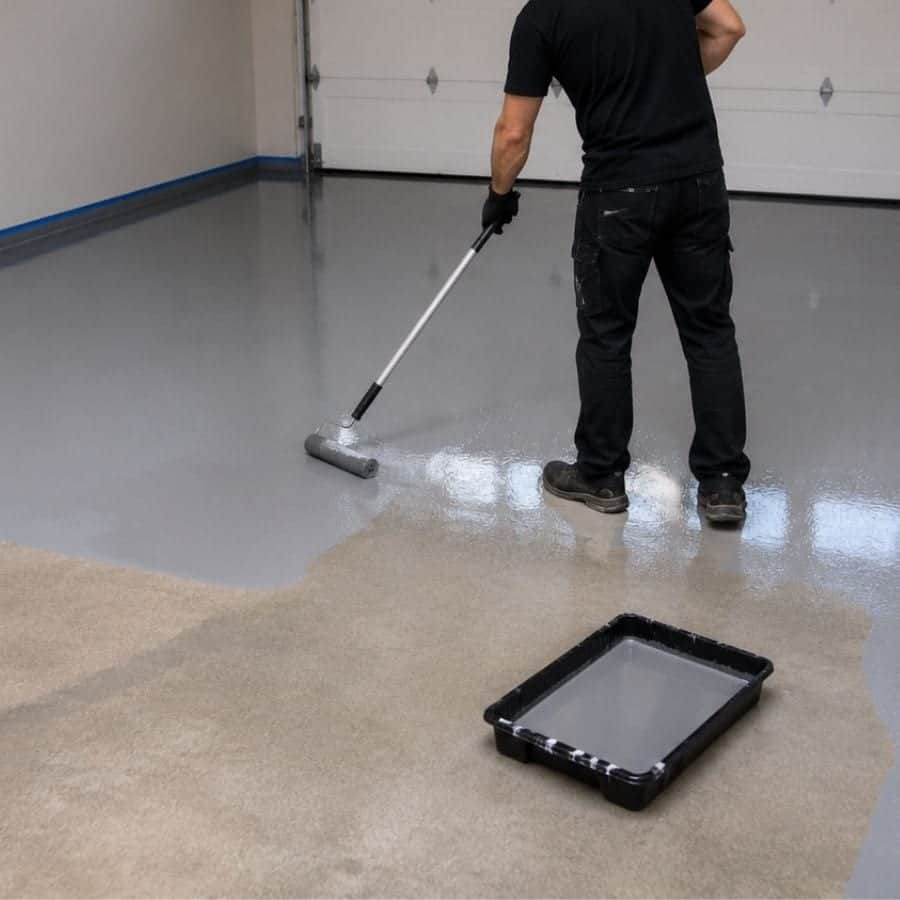
After the base is ready, we apply the planned epoxy basecoat for adhesion and build. The basecoat is one part of the hybrid epoxy and polyurea system, not a stand-alone promise. Coverage, edges, and the intended finish are checked as the installation moves to the next layer.
Step 5
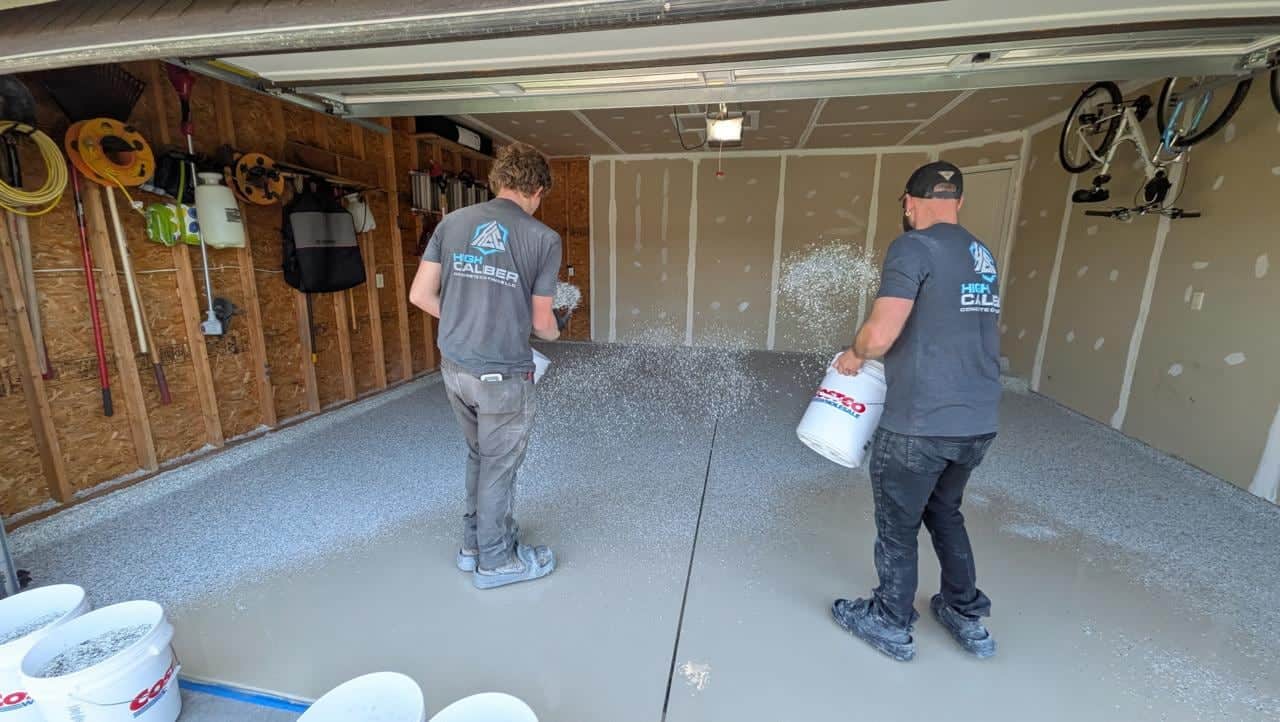
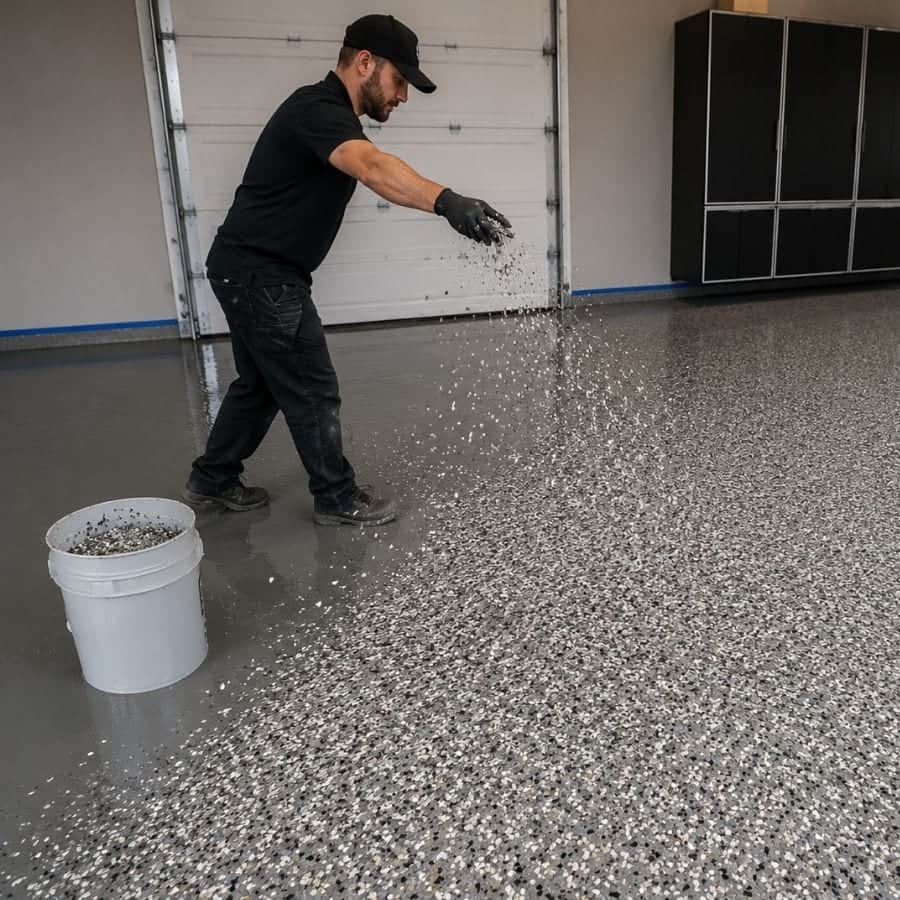
If decorative flake is part of the selected finish, it is broadcast across the wet basecoat to create the planned texture and appearance. The amount and color follow the project scope. This stage also gives the crew a surface to prepare for the final protective layer.
Step 6
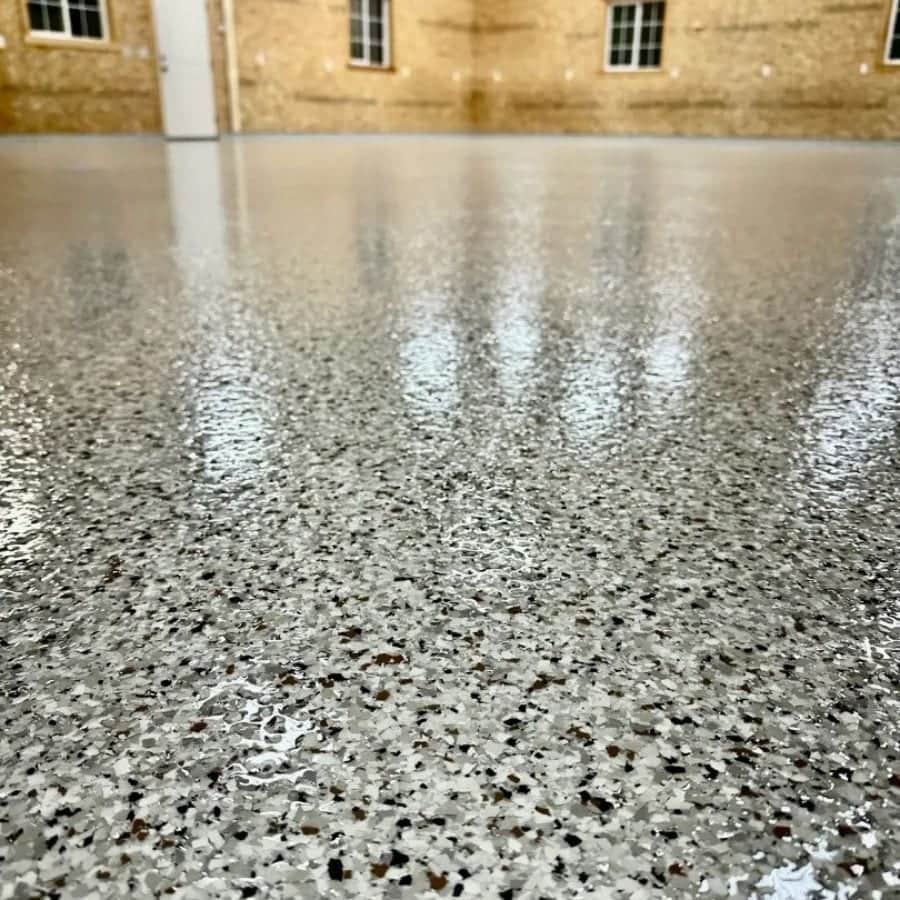
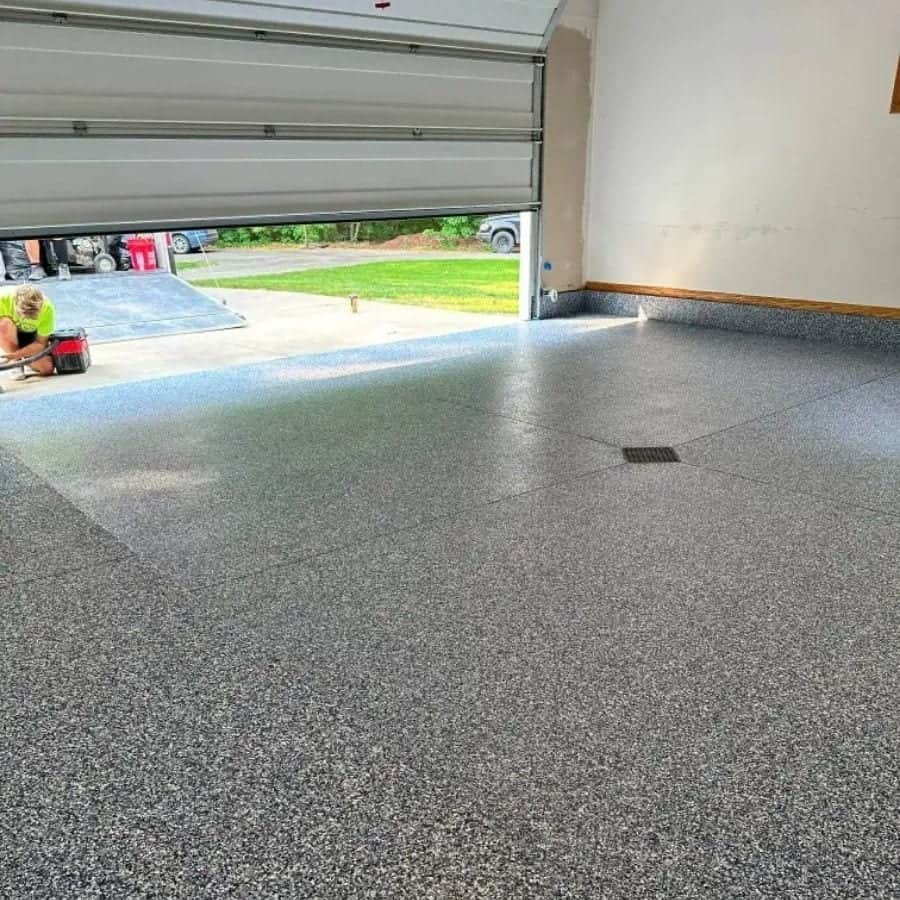
A compatible polyaspartic or other planned topcoat completes the system when appropriate. It locks in the selected appearance and provides the finish layer for the room's expected use. We review the completed surface, care guidance, access, and use expectations during handoff.
Why High Caliber
Zeeland is home base for our family-owned West Michigan company. We work with residential and commercial property owners who need a useful answer about concrete, not a slogan that skips over the surface. Our conversation connects the room's workload to the preparation and materials that may support it.
We also explain where a coating has limits. It can protect and finish suitable concrete, but it cannot make unresolved moisture disappear, prevent every future crack, or replace structural work. A careful estimate gives you enough information to choose the next step with realistic expectations.
Customer Reviews
“Wow! Jeff and Mike were amazing to partner with for my garage floor renovation! They did an amazing job but more importantly, they communicated directly with me thru texts, reminders, and in person! Jeff and his team left my garage and exterior area cleaner than when they arrived and gave clear instructions on follow up care needed for my new floor! I would highly recommend High Caliber Concrete Coatings anytime!”
“High Caliber Concrete Coatings were awesome. Jeff the owner was awesome. It was a great experience start to finish. We did a three stall garage. They dropped a covered trailer so we could store everything that was in the garage. The crew that did the work showed up on time and did a great job! We are so happy with the results!”
“We recently had our garage floors resurfaced with the Epoxy Floor coating with flakes. High Caliber Concrete did such an awesome job we cannot say enough good about them! So timely, well organized and a beautiful job!! Owner, Jeff, responded to any call ASAP. Shawn and Ethan, fantastic employees for the company, did a tremendous job which was labor intensive…They left no questions unanswered! Such a professional, beautiful job. We would highly recommend them! Lillian & Joseph Bakara Jr.”
Douglas, Michigan
Each Douglas property may include an older home, newer construction, detached garage, condominium, or waterfront setting. Each can place a different demand on its concrete. A garage may receive wet tires and salt, while a patio or entry may connect the floor directly to changing outdoor conditions. We want to understand the actual space before discussing the finished appearance.
Allegan County's lakeshore setting brings familiar West Michigan questions into view: freeze-thaw cycles, winter road salt, spring moisture, and humid summer air. Those conditions do not automatically determine whether a coating belongs on a floor. They do make the slab's condition, moisture questions, exposure, and care routine worth discussing before materials are committed.
Douglas also has retail, restaurants, hospitality, galleries, and service buildings where appearance and daily operation can share the same floor. A customer-facing room may need a different discussion from a workshop or pole barn. Nearby Saugatuck, Holland, South Haven, Fennville, and Hamilton provide regional context, but your estimate still turns on the concrete and use in front of us.
Where outdoor moisture, salt, and grit meet an interior floor can influence preparation questions and routine care.
An older home, condominium, waterfront property, restaurant, gallery, or service building still needs an evaluation of its own concrete.
The color and texture come after we understand cracks, wear, moisture, access, exposure, and the work the floor must support.
Frequently Asked Questions
Possibly. We look at the existing surface, prior materials, cracks, pits, wear, moisture, access, and the work happening in the room. The age of the concrete is one detail, not the entire decision. An estimate should identify preparation and repair needs before a coating direction is selected.
Tell us whether the space is a garage, basement, patio, workshop, pole barn, or business floor; how it is used; what reaches the concrete; and what finish you want. Photos may help begin the discussion. We can then focus on the slab's condition, moisture questions, traffic, access, and realistic preparation.
Freeze-thaw cycles, winter road salt, spring moisture, and humid summer air are relevant environmental conditions in Douglas. They do not by themselves approve or reject a coating. We consider where water and salt arrive, how the room is used, the state of the concrete, and the care the finished surface will receive.
Epoxy is a purposeful part of the system. It can provide adhesion and build in the basecoat, while polyurea can contribute flexibility and other performance characteristics in its planned role. A compatible topcoat may complete the stack. We discuss the chemistry as a coordinated set of layers rather than treating one material as right for every condition.
Preparation can expose conditions that need attention before coating. We assess cracks, pits, spalls, and worn sections, explain the repair work included in the recommendation, and keep concrete's potential for future movement visible. A repair discussion is more useful than promising that a coating will erase every underlying issue.
No. Diamond grinding is mechanical preparation that removes weak surface material and creates a profile for bonding. It is not a promise of a perfectly flat floor, structural correction, or a permanent end to movement. Variations, damage, and repairs require their own evaluation before the coating layers are installed.
Yes, those uses can be discussed when the slab and selected system fit the traffic, cleaning routine, exposure, scheduling, and desired appearance. A commercial floor may need planning around operations, while a gallery or hospitality room may place more emphasis on presentation. The room's actual demands guide the recommendation.
A penetrating sealer protects concrete without creating the same film surface as a coating. Polishing mechanically refines the slab itself rather than applying a film. Coating adds a selected surface system over prepared concrete. We compare those paths using the floor's condition, appearance goal, exposure, moisture, and maintenance needs.
Related Services
The right service depends on what you want the existing concrete to become. These options can help frame that decision before an estimate.
Explore mechanical surface preparation as one possible step before a bonded concrete finish.
Learn moreExplore coating choices for vehicle areas, storage, winter residue, and decorative flake.
Learn moreReview how a penetrating sealer can protect concrete when your project does not call for a film coating.
Learn moreLearn about mechanically refining the existing slab for a different finished appearance.
Learn moreDiscuss a moisture-focused layer when slab conditions make that part of the coating conversation relevant.
Learn moreGallery And Visual Proof
These library images show preparation, application, and completed surfaces. They are examples of materials and process, not photographs identified as Douglas projects.
Free Project Quote
Tell us about the space and we will follow up with a clear recommendation and quote conversation.
Phone
Business Hours
Free Estimate
A useful estimate can begin with a few concrete details: the room, the exposure, the traffic, visible wear, moisture questions, and the finish you hope to achieve. We will help you understand preparation, repairs, hybrid layer roles, and care expectations before you commit to a direction. You will know what we observed, what the system would involve, and what questions remain open. Request a free estimate online or call (616) 777-7348.