
Let The Finish Set The Texture
A coating, sealer, or polished finish asks different things of concrete. We choose the preparation profile around the next layer instead of treating every Georgetown Township floor to the same grinding pass.
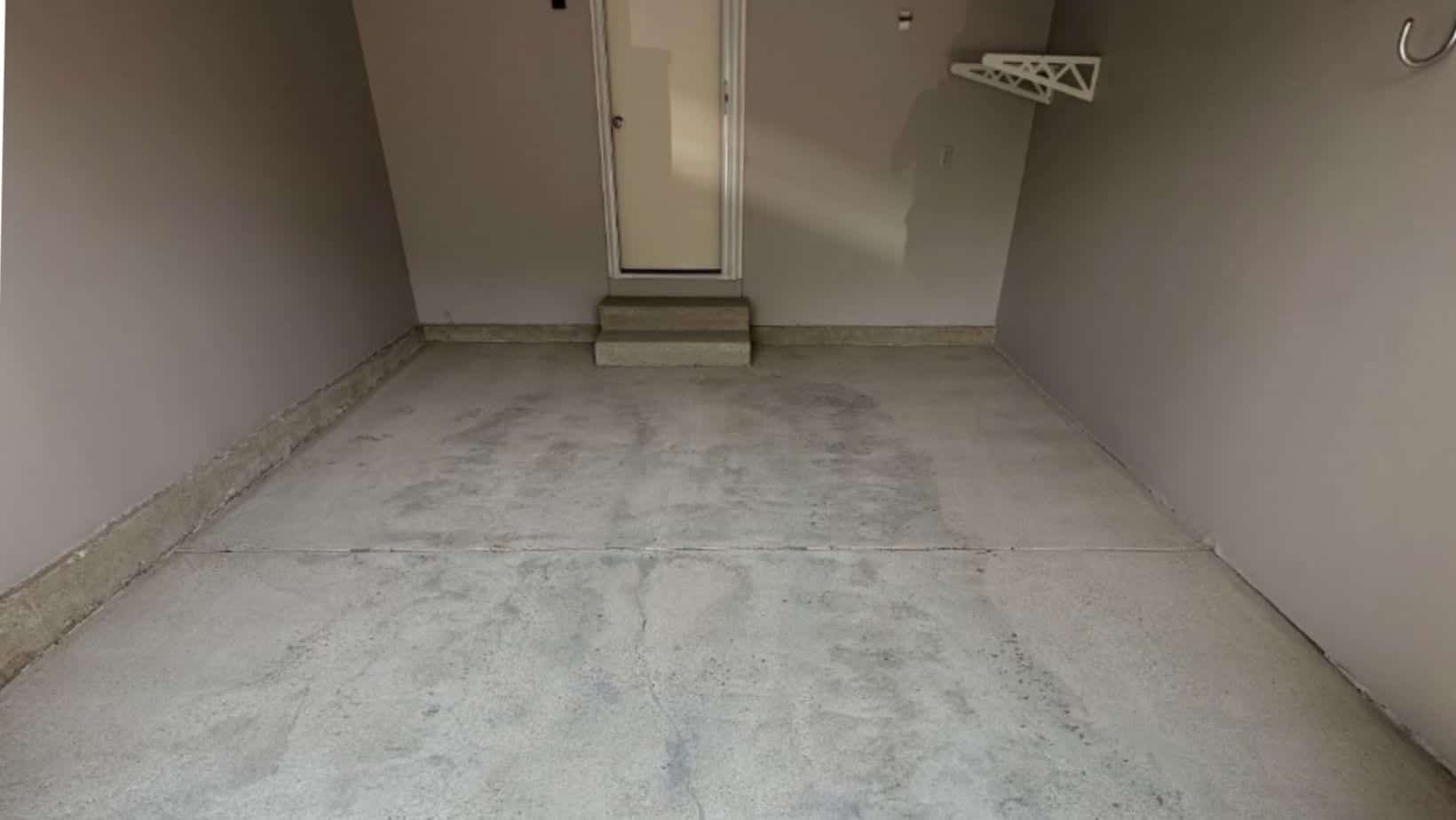
Concrete grinding gives a Georgetown Township floor a more deliberate beginning. We use diamond tooling to remove selected surface material, establish a profile for the next finish, and reveal conditions that deserve attention. The plan can fit a home garage, detached shop, office, retail area, or other concrete space nearby.
Service Overview
A concrete floor can look serviceable while still carrying laitance, old paint, glue, a failing coating, or rough areas that affect what comes next. Grinding removes or refines selected surface material with diamond tooling. It creates a mechanical profile for an appropriate finish and gives us a better view of the slab beneath the first layer.
The work is planned around the room and the intended result. Preparation for a hybrid coating has different requirements from a grind and seal or mechanically refined polished floor. We discuss the condition, access, edges, repairs, and next material before defining how much work the concrete needs.
Benefits
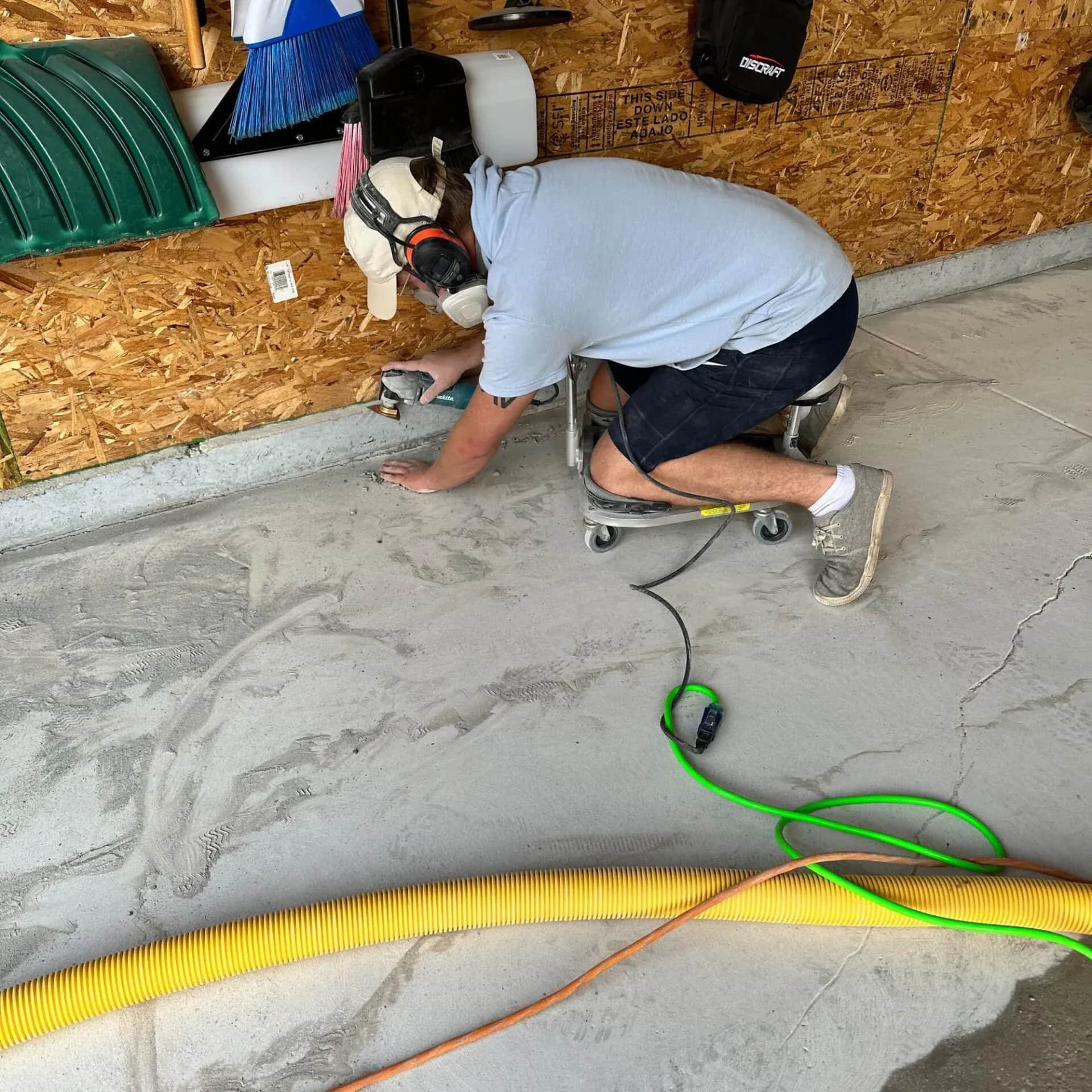
Grinding is useful when the top of the slab is standing between the concrete and the floor you want. The result depends on the material present, the selected tooling, and the limits of the existing slab.
A coating, sealer, or polished finish asks different things of concrete. We choose the preparation profile around the next layer instead of treating every Georgetown Township floor to the same grinding pass.
Old paint, adhesive, weak surface paste, and selected coating residue can interfere with installation. Appropriate diamond tooling can address some materials, while heavier or unusual layers may need another method.
Opening the surface can make cracks, pits, spalls, joints, and moisture clues easier to see. That information helps us separate preparation from repairs and explain changes before the finish is installed.
Grinding can refine rough areas, high spots, and uneven texture within the slab's practical limits. It is not structural leveling, but it can make a threshold or localized transition more workable.
A home garage, workshop, office, retail area, or commercial building may have different access and scheduling needs. We account for use, nearby items, work zones, and the finish sequence.
A prepared slab gives the next step a clearer boundary. We can review cleanliness, edges, repairs, and profile before a coating, sealer, polish, or other treatment moves forward.
Installation Process
Our preparation sequence keeps the equipment, the concrete, and the intended finish connected. Each step answers a practical question about what the slab can support and what the work area needs before the next material arrives.
Step 1
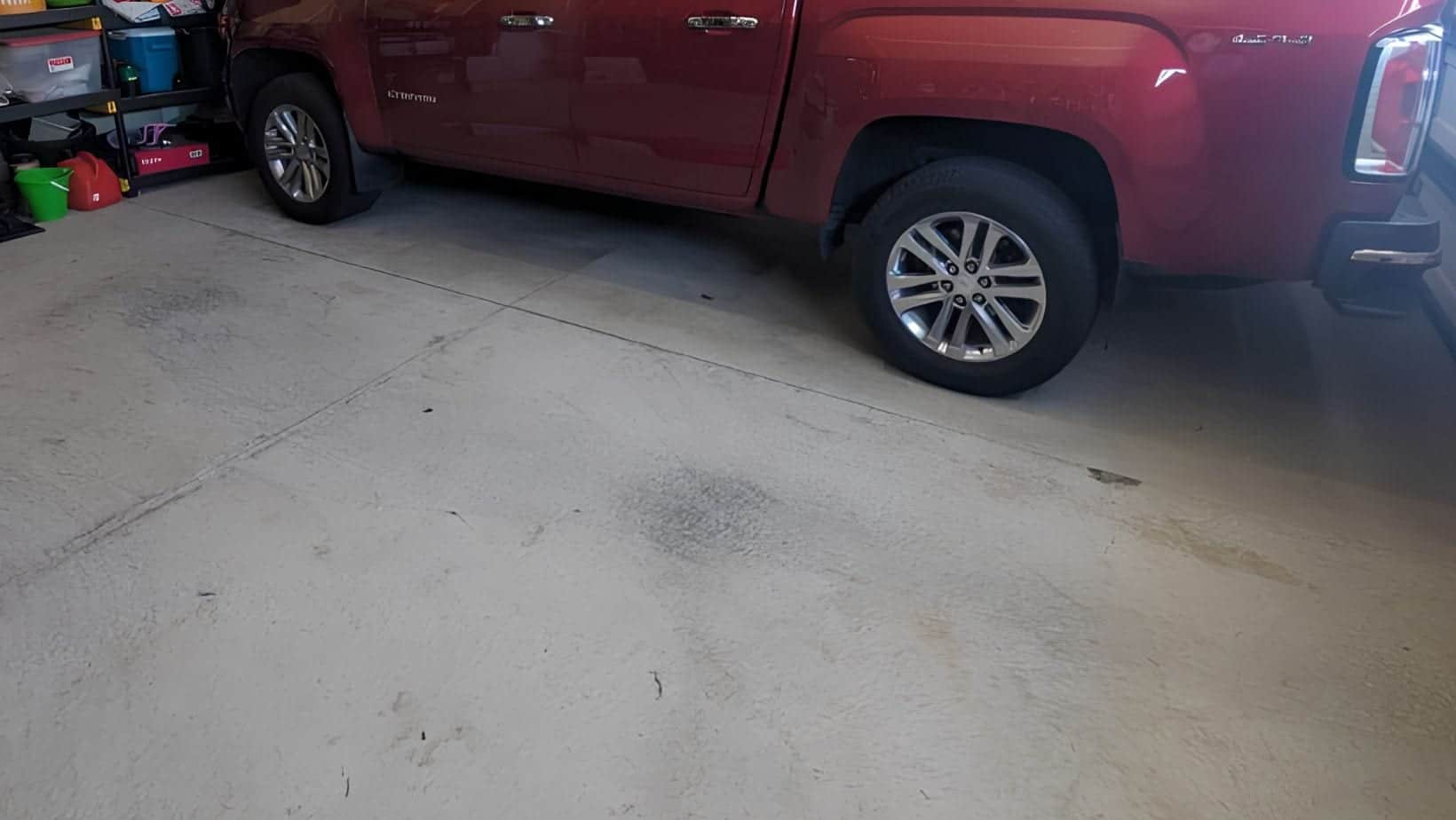
We begin with the room, the slab, and the work it must support. Existing paint, glue, coating, repairs, joints, moisture clues, access, and the desired result all help define a sensible grinding scope for a Georgetown Township property. We document what the concrete shows so the next decision has a useful basis.
Step 2
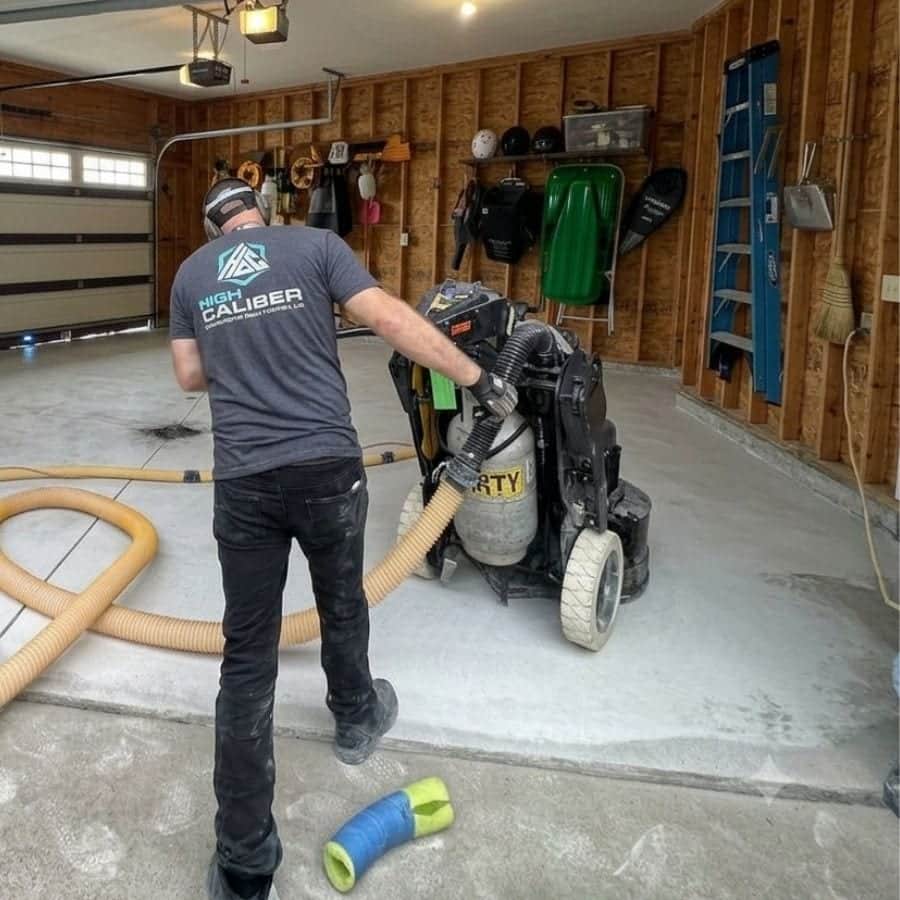
Diamond tooling is selected for the material on the floor and the profile the next finish requires. We consider whether the goal is coating preparation, residue removal, selected surface refinement, or a path toward sealing or polishing.
Step 3
Before grinding begins, we plan equipment movement, access, nearby belongings, edges, ventilation, and dust-control practices. A garage may need a different setup from an occupied office, retail room, or commercial floor with traffic concerns.
Step 4
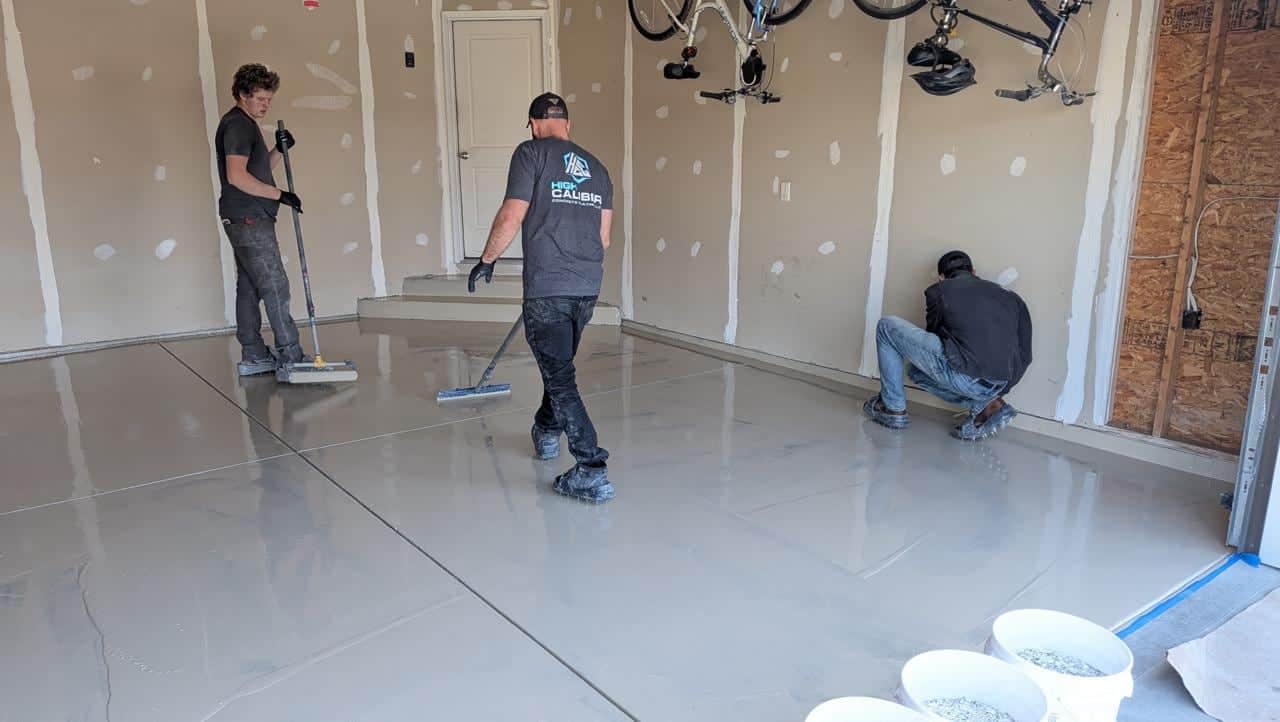
The grinder works across the slab in controlled passes. We remove or abrade selected material, develop the planned texture, and watch how the concrete responds. Dust control and consistent coverage matter as much as the machine itself.
Step 5
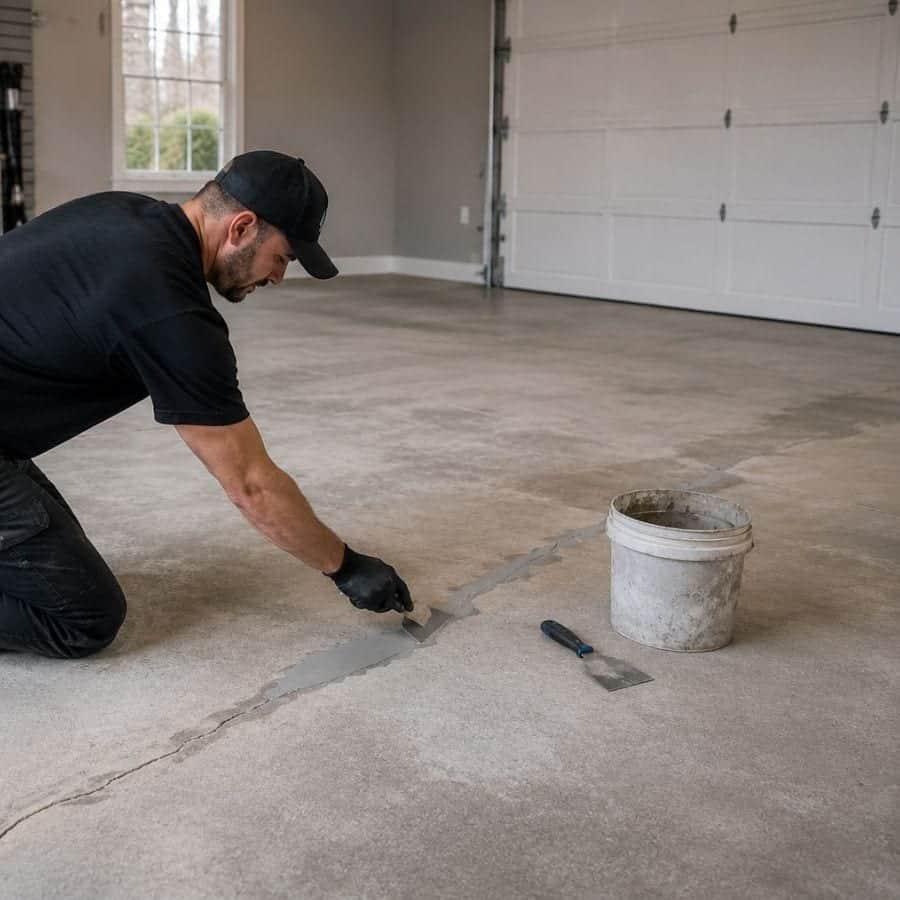
Perimeters, doorways, joints, cracks, pits, and localized transitions receive their own review. We handle repairs or detail work that belongs in the agreed scope, while calling out conditions that require a separate decision.
Step 6
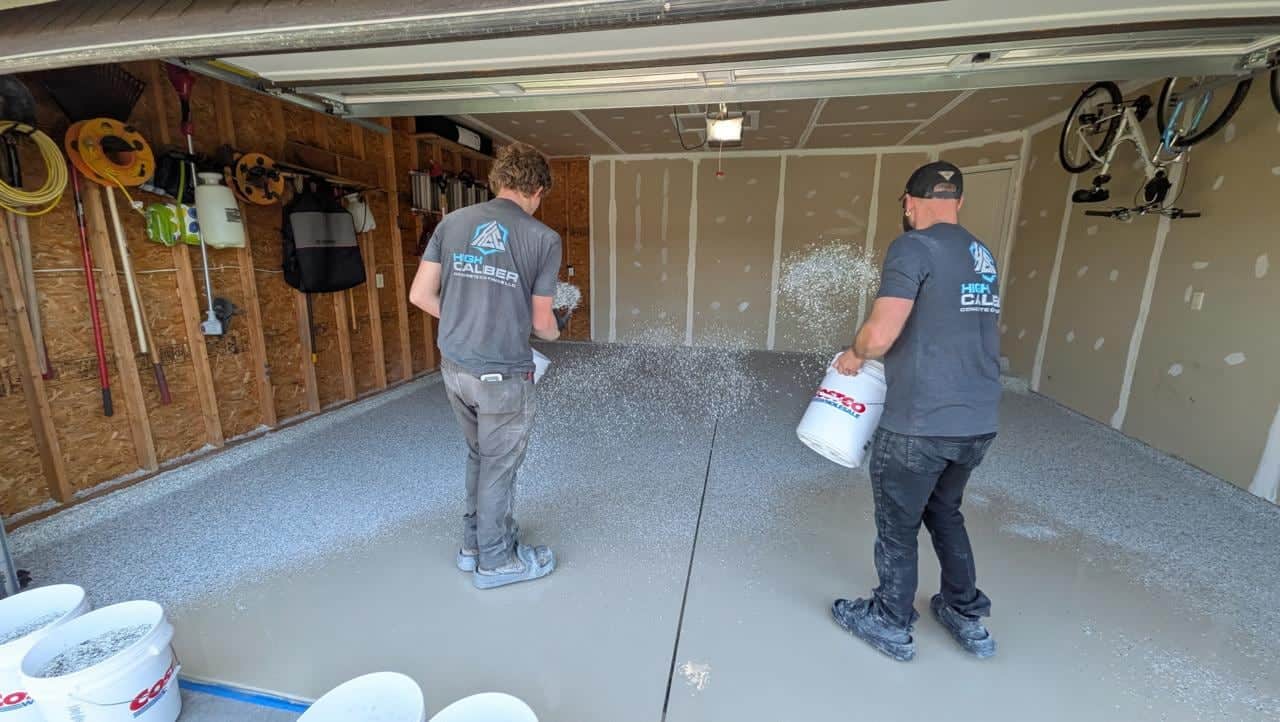
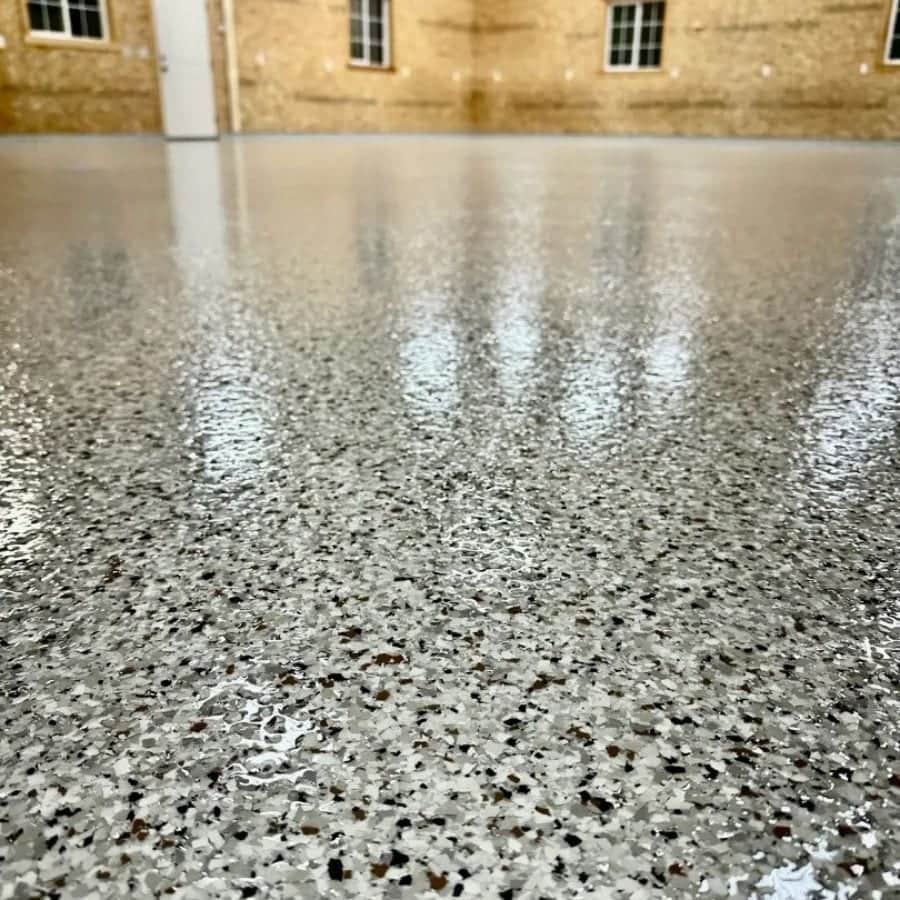
We check the finished preparation for profile, cleanliness, edges, repairs, and remaining concerns. If a hybrid coating follows, the epoxy basecoat provides adhesion and build before the polyurea topcoat. Other floors may move toward sealing or polishing.
Why High Caliber
High Caliber Concrete Coatings is a local, family-owned West Michigan company based in the Holland and Zeeland area. Our concrete preparation work connects directly to the finishes we install, so the grinding discussion can stay focused on the floor's actual condition and the result you want.
We also keep the limits clear. Grinding does not rebuild a slab, stop future movement, or make every change in elevation disappear. A useful recommendation identifies what the equipment can address, what needs repair, and what the selected finish will require.
Customer Reviews
“Wow! Jeff and Mike were amazing to partner with for my garage floor renovation! They did an amazing job but more importantly, they communicated directly with me thru texts, reminders, and in person! Jeff and his team left my garage and exterior area cleaner than when they arrived and gave clear instructions on follow up care needed for my new floor! I would highly recommend High Caliber Concrete Coatings anytime!”
“High Caliber Concrete Coatings did a wonderful job refinishing my garage floor. Jeff was very thorough explaining the entire process and this company had the best assortment of colors to choose from. The team was very professional and delivered a flawless result. Thank you Jeff and your team.”
“I can not express how awesome my garage floor looks. Your crew did a phenomenal job, we'll probably be the envy of the neighborhood now. Very polite, cleaned up the area, fast amazing job! My only complaint was the floor was going to look great so my wife said we had to clean out and paint all the walls and shelving, but it was worth it. Thank you again.”
Georgetown Township, Michigan
Georgetown Township sits in Ottawa County between Hudsonville, Jenison, and Grandville, with a mix of newer subdivisions, established homes, attached garages, detached shops, offices, retail spaces, and commercial buildings. That range matters during preparation. A busy garage may have tracked-in grit and winter salt, while an office or retail floor may require a work area that fits around access and daily use.
Snow, freeze-thaw cycles, humid summers, spring moisture, and road salt are part of the regional environment. They do not determine a grinding scope by themselves, but they make it useful to ask what the slab has carried and what the next finish must handle. We use those questions to shape the inspection, not to assume a condition we have not seen. That variety makes careful floor-specific planning valuable here.
Winter residue and tracked grit can contribute to a worn garage surface. Cleaning is not always enough when weak material or an old layer still interferes with the next finish.
A newer garage, established home, workshop, or larger commercial space can call for a different access and preparation conversation. The room's use helps set priorities for this township.
Spring moisture and humid conditions are reasons to discuss the slab and planned finish carefully. Grinding prepares the surface, but it does not replace evaluation of a moisture-related installation concern.
Frequently Asked Questions
We look at the material on the surface, its bond, roughness, cracks, pits, joints, edges, access, and the finish you want afterward. A floor with old paint or adhesive may need a different approach from a slab that mainly needs a profile for a coating. The estimate should explain the observed condition and the preparation decisions tied to it.
The coating system sets the profile and cleanliness requirements. For our hybrid system, the epoxy basecoat provides adhesion and build, while the polyurea topcoat contributes flexibility, UV stability, chemical resistance, and faster cure. Grinding is planned to give that system a suitable starting surface, with repairs addressed where they belong.
Adhesive varies in thickness, hardness, bond, and what it leaves on the slab. Diamond tooling may address some residue, but a thick or gummy layer can load the tooling or require another removal step. We need to see the material and the concrete beneath it before promising that grinding alone will remove everything.
Grinding can make existing cracks easier to read, but it does not repair structural movement. We document what is visible, discuss whether filling or other repair work fits the project, and explain how the condition affects the planned finish. The right response depends on the crack, surrounding concrete, and use of the room.
Commercial planning may involve equipment access, adjacent occupants, dust control, work zones, deliveries, and the schedule for the finish that follows. Offices, retail rooms, and other commercial buildings do not all operate the same way. Sharing access limits and traffic needs early helps us build a more practical preparation conversation.
Those conditions are part of the questions we ask about a Michigan slab, especially in a garage or other space exposed to tracked-in residue and seasonal moisture. They do not automatically require deeper grinding. We consider visible wear, contamination, moisture concerns, and the selected finish together before defining the work.
Grinding can be part of a finished concrete path rather than coating preparation. Concrete sealing should be understood as protection from a penetrating sealer, not a film coating. Polishing mechanically refines the slab itself. We compare those options with coatings after considering the concrete's condition, appearance, use, and desired maintenance.
Related Services
Grinding is one part of a floor decision. These related services help you compare what the prepared concrete may become and which material belongs on top of it.
Review protective and decorative coating systems when the prepared slab needs a new surface built over it.
Learn moreExplore penetrating sealer protection when the concrete remains visible and a film coating is not the goal.
Learn moreSee how mechanical refinement can make the concrete itself the finished surface instead of covering it.
Learn moreReview removal work when adhesive remains after flooring comes up and the slab needs a different preparation plan.
Learn moreGallery And Visual Proof
These images illustrate the kinds of preparation and finishing decisions we discuss. They are shown as examples from the photo library and do not identify a pictured property as a Georgetown Township project.
Free Project Quote
Tell us about the space and we will follow up with a clear recommendation and quote conversation.
Phone
Business Hours
Free Estimate
Tell us what the floor is carrying, what you want it to become, and any access or moisture concerns you already know about. We will help you understand whether grinding belongs in the plan, what the surface may reveal, and which finish can follow the preparation. A description of the space helps us discuss preparation, access, and the next layer with fewer unanswered questions before estimating.