
Fewer Unknown Layers
Grinding can take away selected paint, adhesive, weak paste, or failed coating so the team can distinguish the remaining surface from the concrete that actually supports it.
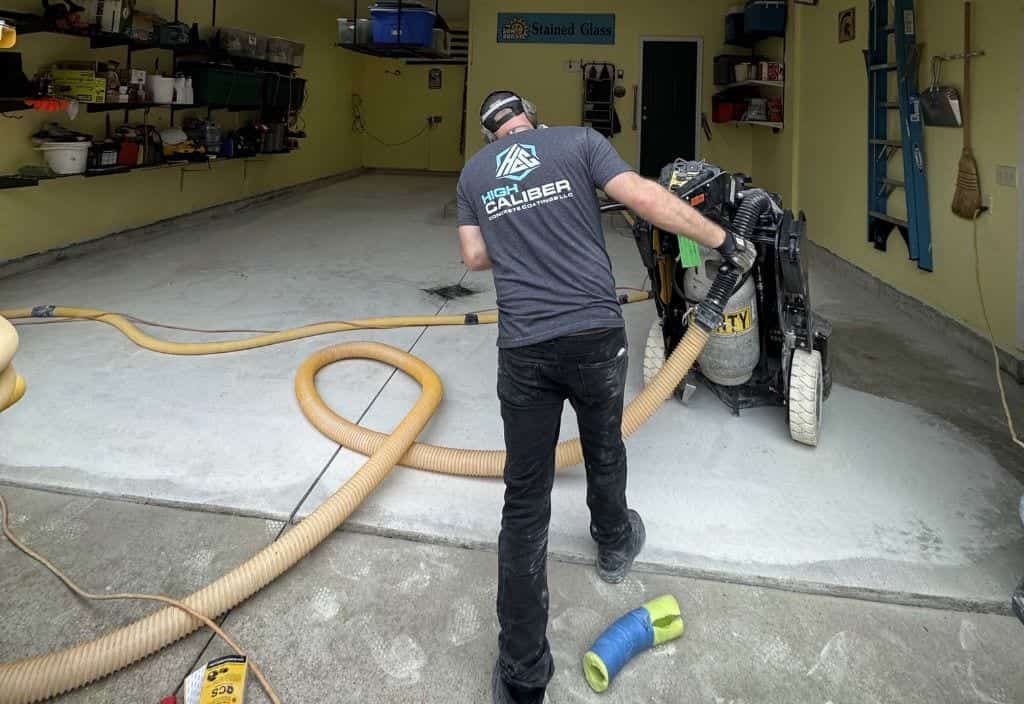
Concrete floors in Hudsonville may carry salt residue, old adhesive, worn coatings, or a rough surface from years of use. We use diamond grinding to remove material that interferes with the next decision, then leave a profile suited to coating, sealing, polishing, or continued use. Request an estimate and tell us what the slab needs to do.
Service Overview
Grinding is a controlled way to change the surface of concrete. Diamond tooling can remove weak material, residue, paint, adhesive, or a failed coating where the slab and the removal plan allow it. The work is not simply a race to expose as much aggregate as possible. The useful result depends on what the floor must support afterward.
For a Hudsonville garage, home, shop, or commercial floor, that next use may call for a coating profile, a mechanically refined surface, a suitable base for a penetrating sealer, or a different repair conversation. We assess the material on top, the concrete underneath, and the limits of the floor before recommending how far the grinding should go.
Benefits
The goal is not maximum removal. It is a surface that tells the truth about its condition and gives the next material a sensible place to begin.
Grinding can take away selected paint, adhesive, weak paste, or failed coating so the team can distinguish the remaining surface from the concrete that actually supports it.
The desired texture follows the next use. Coating preparation, sealing, polishing, and standalone concrete each call for different decisions about tooling, depth, and the stopping point.
As surface material comes away, cracks, patches, soft spots, and contamination become easier to discuss. That visibility helps separate preparation from repairs the slab may still require.
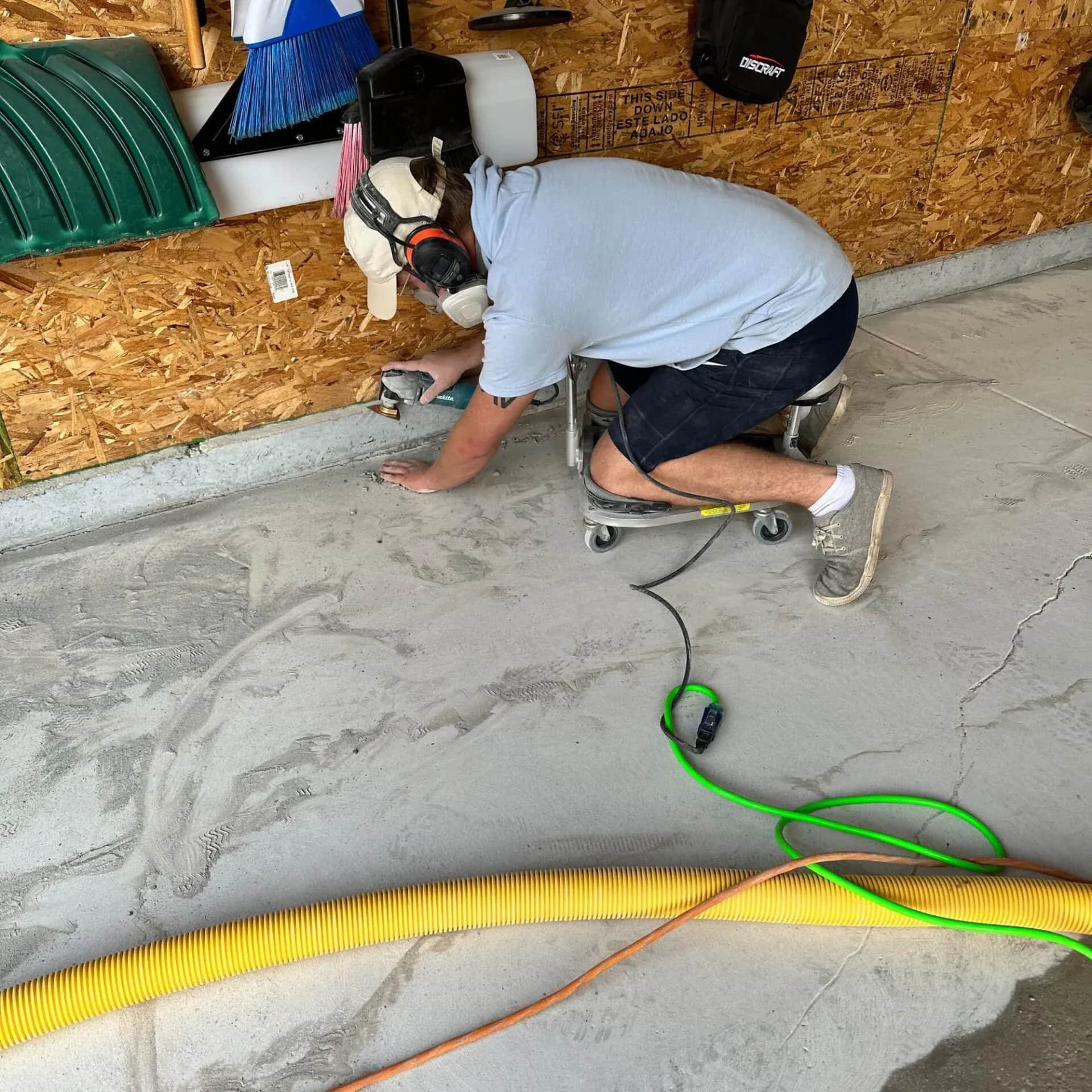
Walls, door openings, joints, and transitions can change the practical scope. Smaller tools and detail passes help keep those areas part of the floor decision rather than an afterthought.
Road salt and meltwater can leave garage surfaces dirty or worn. Mechanical preparation can remove suitable loose material while preserving sound concrete that still belongs in the floor.
Grinding can reduce selected high areas, but it cannot rebuild low sections, reverse structural movement, or make every slab perfectly flat. Recognizing that boundary keeps the scope useful.
Installation Process
The work becomes more useful when each decision follows evidence from the concrete. We connect the room's purpose, the material on the surface, and the finish that may follow before setting the preparation scope.
Step 1
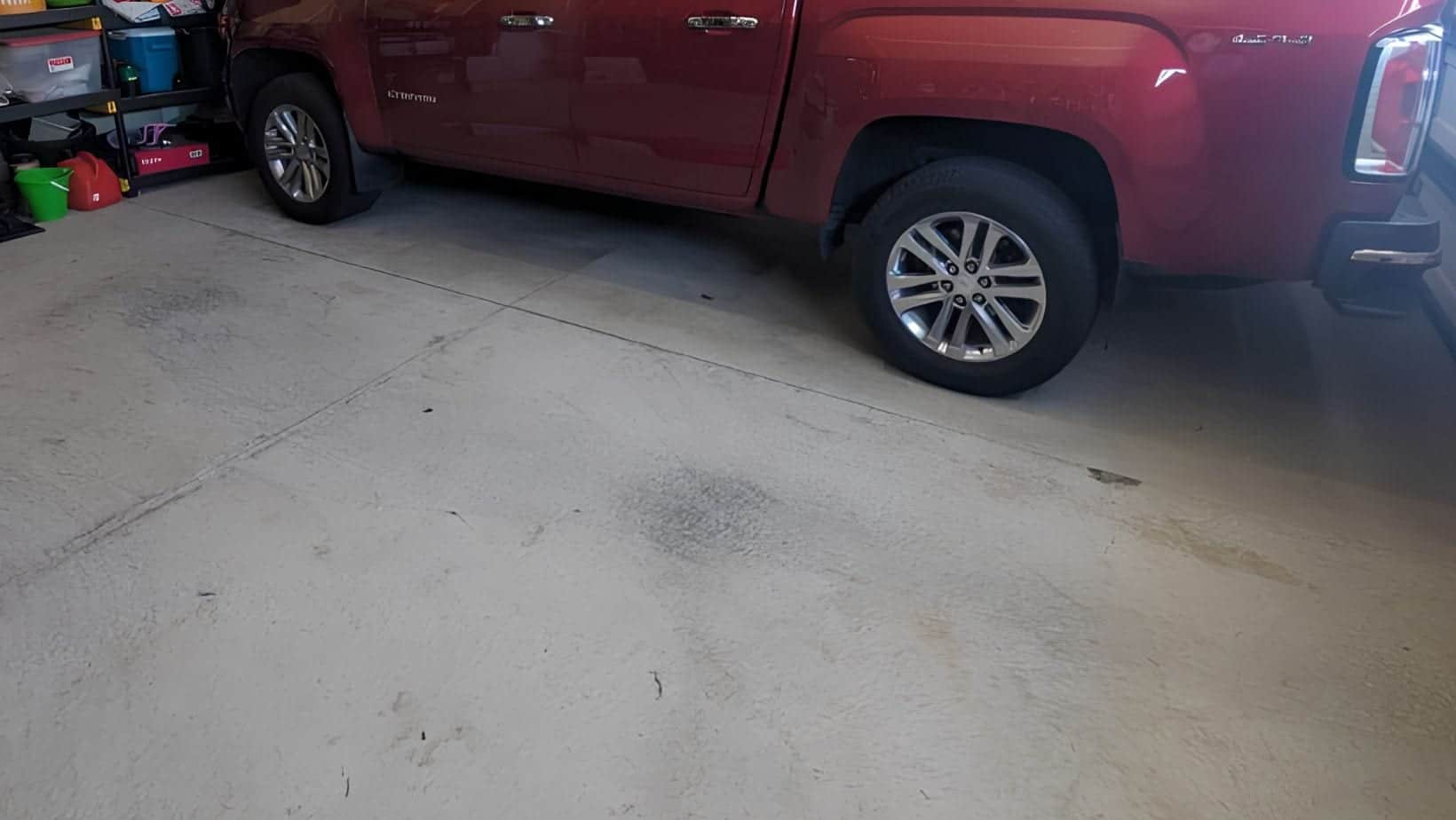
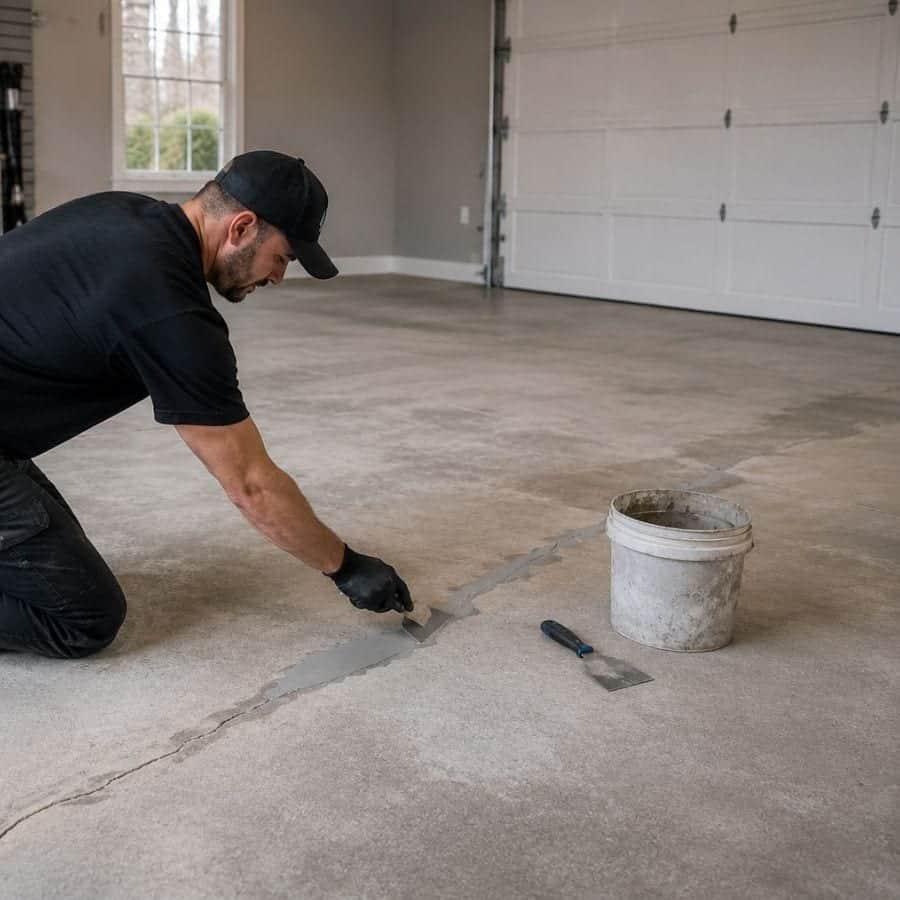
We begin by looking at the slab as it exists, including wear, residue, old coatings, cracks, joints, and areas that feel different underfoot. We also ask whether the space is a garage, shop, home, retail area, or another working floor. That context keeps the estimate tied to actual use.
Step 2
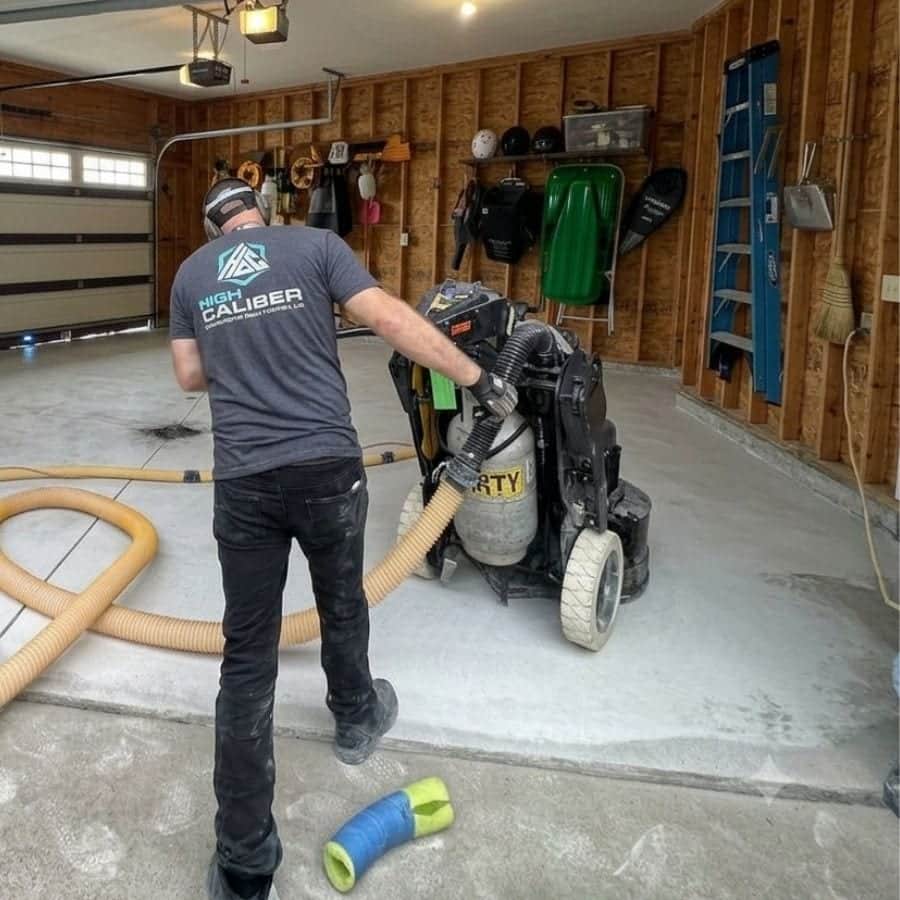
The material on top and the finish afterward determine tooling, passes, and stopping point. A hybrid coating needs a suitable mechanical profile; polishing continues refining concrete itself; a penetrating sealer calls for sound concrete that can receive it. We choose the approach around those requirements rather than treating every floor alike.
Step 3
Before grinding starts, we clear the working path and discuss stored items, doorways, fixed features, ventilation, and adjacent spaces. Dust collection and access shape the setup. This preparation helps the crew work the open floor while accounting for the edges and interruptions that equipment cannot simply pass through.
Step 4
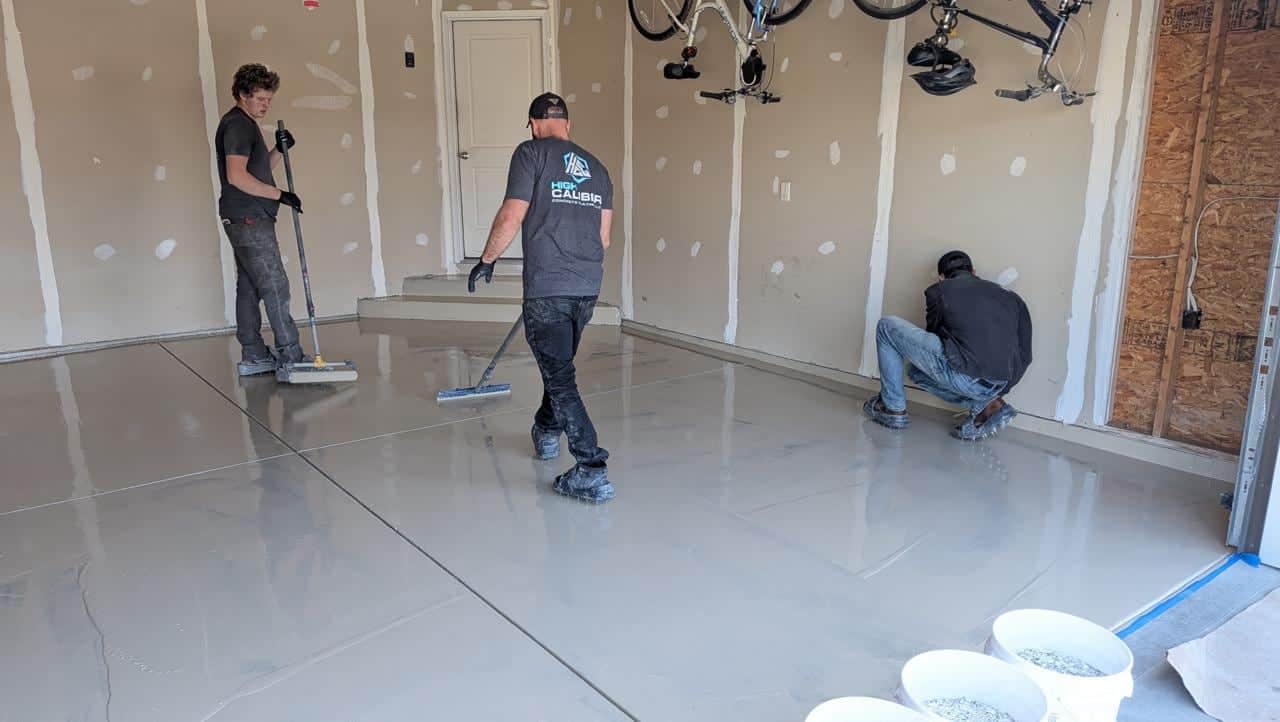
Diamond tooling removes selected surface material and creates the planned profile. We make controlled passes across accessible areas, using dust-control equipment and adjusting when the slab or coating responds differently than expected. Grinding can improve texture and remove suitable residue, but it is not a promise to correct structural slope.
Step 5
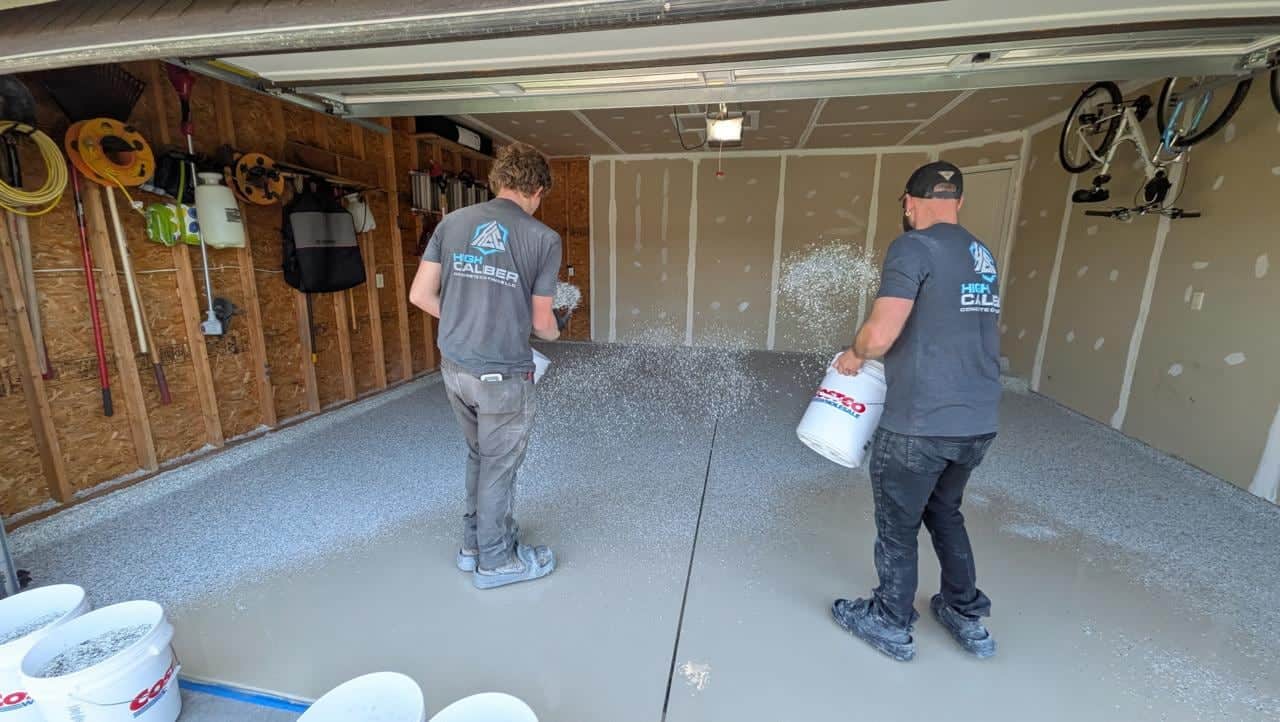
Perimeters, joints, thresholds, cracks, and tight corners need their own attention. Detail tooling can reach places a larger machine cannot, while repairs or deeper defects may require a separate decision. We keep these boundaries visible so the finished preparation does not look complete only in the center of the room.
Step 6
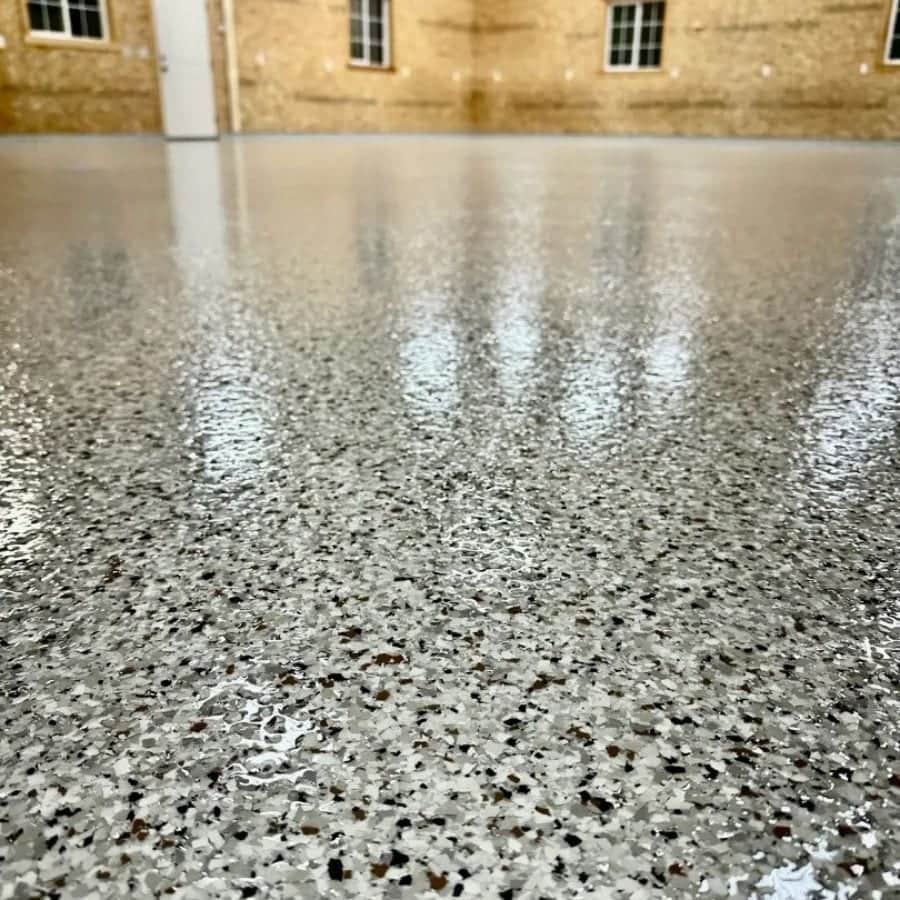
We review the exposed slab for remaining residue, profile consistency, cracks, soft areas, and other conditions that affect the planned finish. The handoff may lead to repair, a basecoat, decorative flake, a polyaspartic topcoat, sealing, polishing, or a revised scope when the concrete calls for it.
Why High Caliber
High Caliber is a local, family-owned West Michigan company based in the Holland and Zeeland area. We bring grinding into the larger floor conversation so the removal scope is not separated from the coating, sealer, polish, or other finish you are considering.
That means we can explain why a particular area should be opened, why another area should be left alone, and when a visible condition belongs to repair rather than grinding. You get a recommendation tied to the slab in front of you, not a promise that mechanical preparation can solve every concrete problem.
Customer Reviews
“Wow! Jeff and Mike were amazing to partner with for my garage floor renovation! They did an amazing job but more importantly, they communicated directly with me thru texts, reminders, and in person! Jeff and his team left my garage and exterior area cleaner than when they arrived and gave clear instructions on follow up care needed for my new floor! I would highly recommend High Caliber Concrete Coatings anytime!”
“High Caliber Concrete Coatings did a wonderful job refinishing my garage floor. Jeff was very thorough explaining the entire process and this company had the best assortment of colors to choose from. The team was very professional and delivered a flawless result. Thank you Jeff and your team.”
“I can not express how awesome my garage floor looks. Your crew did a phenomenal job, we'll probably be the envy of the neighborhood now. Very polite, cleaned up the area, fast amazing job! My only complaint was the floor was going to look great so my wife said we had to clean out and paint all the walls and shelving, but it was worth it. Thank you again.”
Hudsonville, Michigan
Hudsonville sits in Ottawa County west of Grand Rapids and near the lakeshore corridor. Concrete here has to live through snow, freeze-thaw cycles, road salt, humid summers, and spring moisture. Those conditions do not create one universal grinding answer, but they help explain why a garage slab may carry residue, worn surface material, or a finish that no longer suits the space.
A newer subdivision garage may need preparation before a coating, while an established home may have several old layers or a patchwork of repairs. Detached garages, rural shops, and agricultural or light industrial spaces bring their own questions about equipment access and floor use. Retail and commercial buildings may also need a plan that accounts for the working environment around the concrete.
We use those categories to start a useful discussion, not to guess at a property we have not inspected. Tell us whether your Hudsonville floor is in a garage, home, shop, store, or another working space. Then describe what you see on top and what you want the concrete to do next.
Winter traffic can bring salt and meltwater into garages, where residue and surface wear may need attention before a finish is selected.
Spring moisture and humid summer conditions make the slab condition part of a responsible preparation discussion.
A detached garage, rural shop, retail floor, or light commercial space may require a different access and profile plan.
Frequently Asked Questions
We consider what sits on the slab, how firmly it is attached, what the concrete underneath can support, and what finish or use comes next. The needed removal may vary from one area to another. The practical target is a suitable surface, not the greatest possible depth of grinding.
Salt tracked in with snow and meltwater can contribute to residue, staining, and surface wear on bare concrete. Grinding may address suitable loose or weak material, but it does not erase every mark or reverse deeper damage. The slab condition should be reviewed before choosing coating, sealing, or another finish.
That is part of the planning goal. We look for the boundary between removable surface material and concrete that should remain. Edges, joints, patches, and transitions may need different tooling or detail work, and a repair may be more appropriate than cutting farther into sound material.
Grinding before a coating prepares a profile for the coating system to bond to. Polishing mechanically refines the concrete itself so the slab remains the finished surface; it is not a film applied over the floor. The intended appearance and use determine which path makes sense.
No. Grinding can expose conditions that need further attention, but it does not rebuild a broken area, correct structural movement, or resolve every moisture concern. Cracks, spalls, soft areas, and moisture clues should be discussed as part of the complete preparation and finishing plan.
Grinding mechanically cuts concrete and cannot be promised as dust-free. Shrouds and vacuum collection capture much of the debris at the tool, while edges and surrounding areas receive detail cleanup. Access, nearby items, ventilation, and the room layout help determine how containment is managed.
It can be considered for shops, retail areas, and light commercial buildings as well as homes and garages. The plan depends on the surface material, slab condition, traffic, access, dust-control needs, and the finish that may follow. A site discussion helps define a workable scope.
Photograph the full room, close views of residue or worn areas, edges and doorways, cracks or patches, and anything covering the slab. Tell us what the space is used for and what result you want. Those details can begin the conversation, but the floor itself determines the final plan.
Related Services
Grinding is one decision within a larger flooring path. These services describe different ways the prepared concrete may be protected, refined, or finished.
Review protective and decorative coating systems when the prepared slab needs a new film-forming finish.
Learn moreLearn how a penetrating sealer differs from a film coating when suitable concrete is meant to remain visible.
Learn moreExplore mechanical refinement of the concrete itself when the slab, rather than a coating film, is the intended finish.
Learn moreConsider a removal approach for adhesive or mastic when flooring residue needs its own method before the next material.
Learn moreGallery And Visual Proof
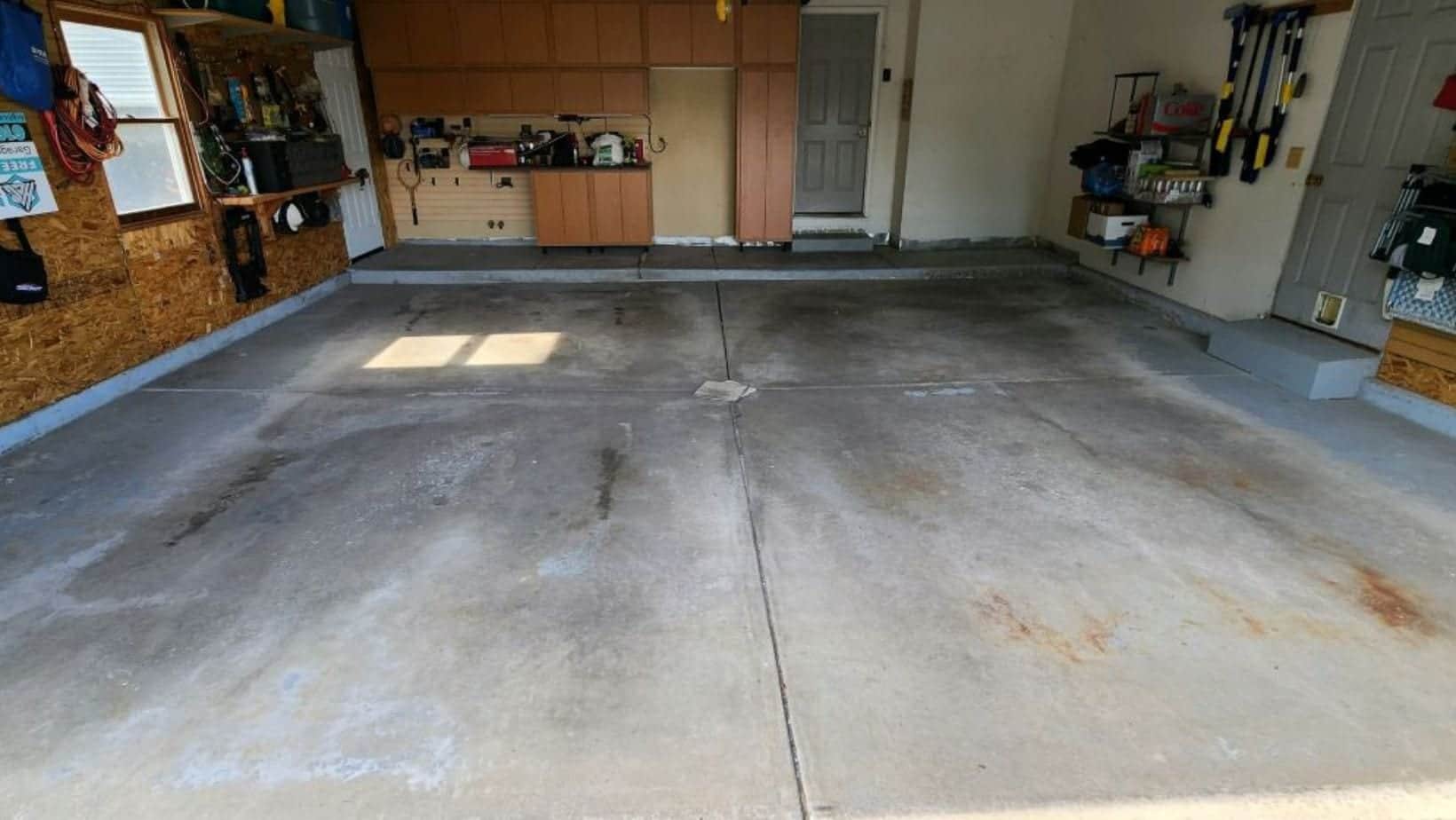
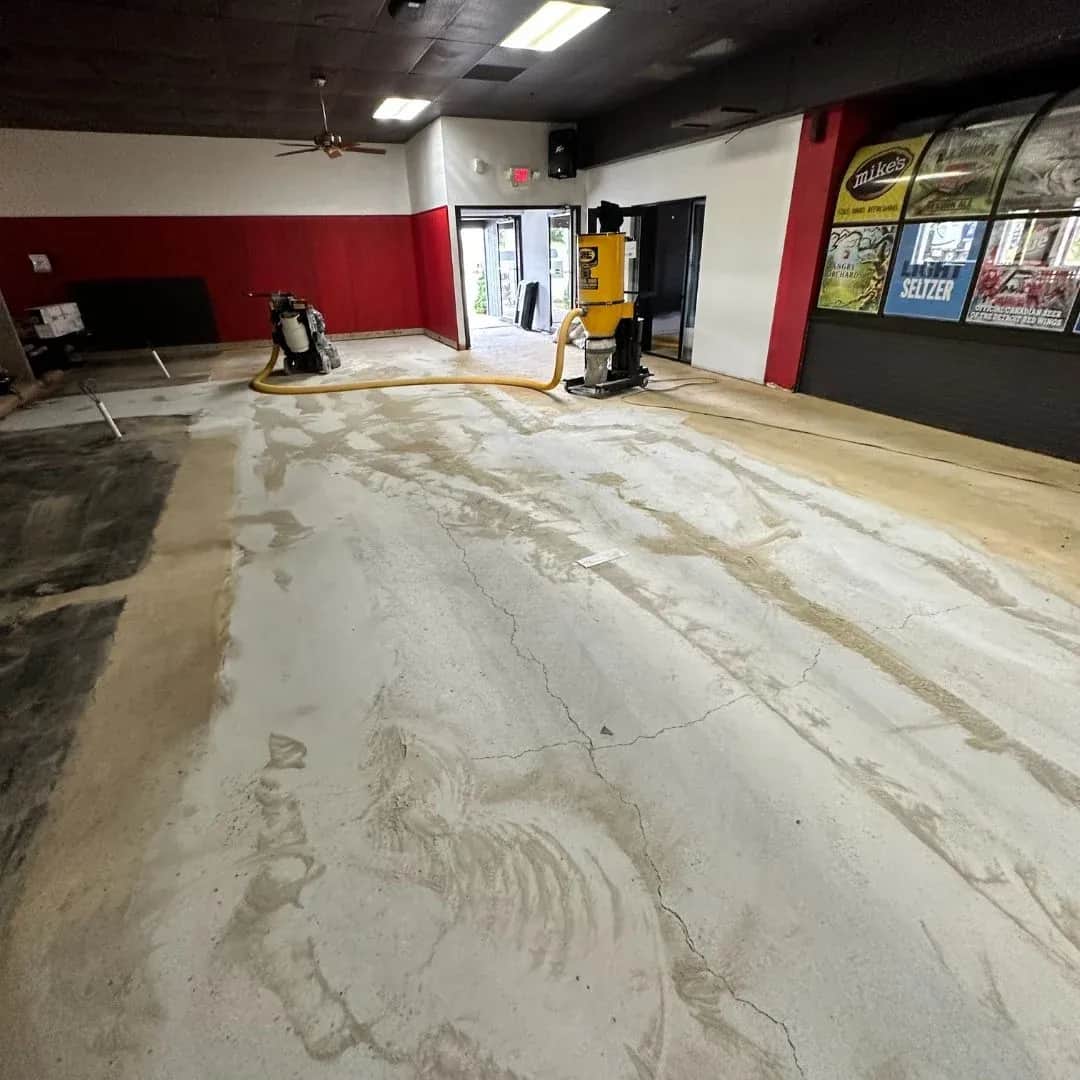
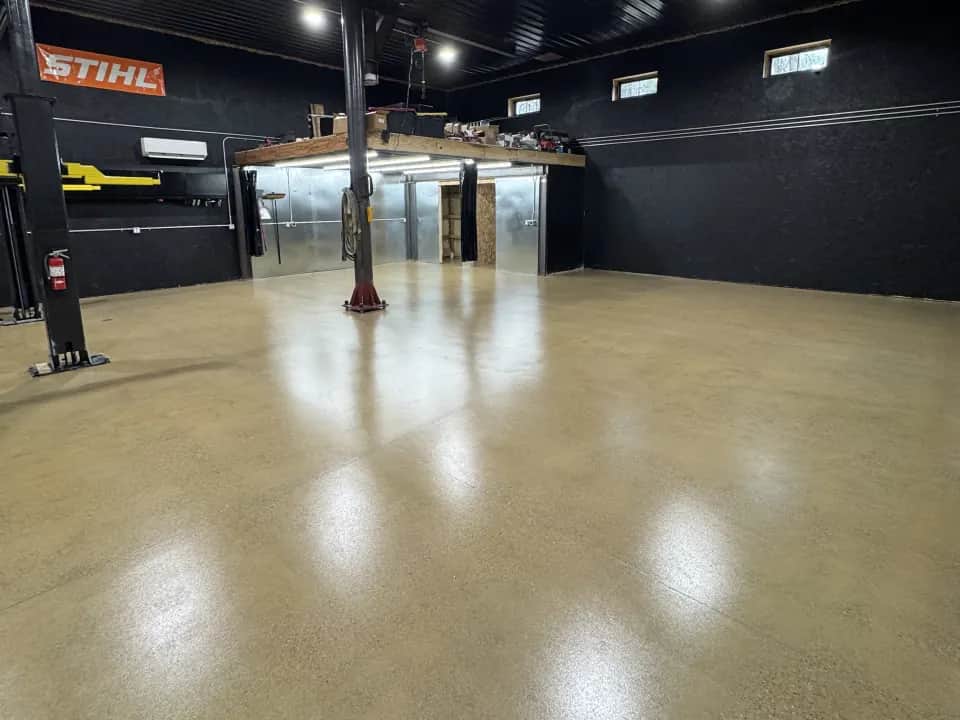
These images come from the High Caliber photo library and show equipment, preparation, and finished surfaces. They illustrate the work without identifying a pictured property as a Hudsonville project.
Free Project Quote
Tell us about the space and we will follow up with a clear recommendation and quote conversation.
Phone
Business Hours
Free Estimate
Tell us what covers the concrete, where the wear is showing, and what you want the space to do next. We can discuss the removal boundary, profile, edges, dust-control expectations, and any repair or moisture question that belongs in the plan. We will use those details to frame a practical preparation conversation for your home, garage, shop, or commercial space. Request an estimate online or call (616) 777-7348 to start the conversation.