
Remove Interference From The Surface
Diamond tooling can address suitable paint, adhesive, coating residue, and weak surface material so unwanted layers do not interfere with the planned finish or hide the concrete below.
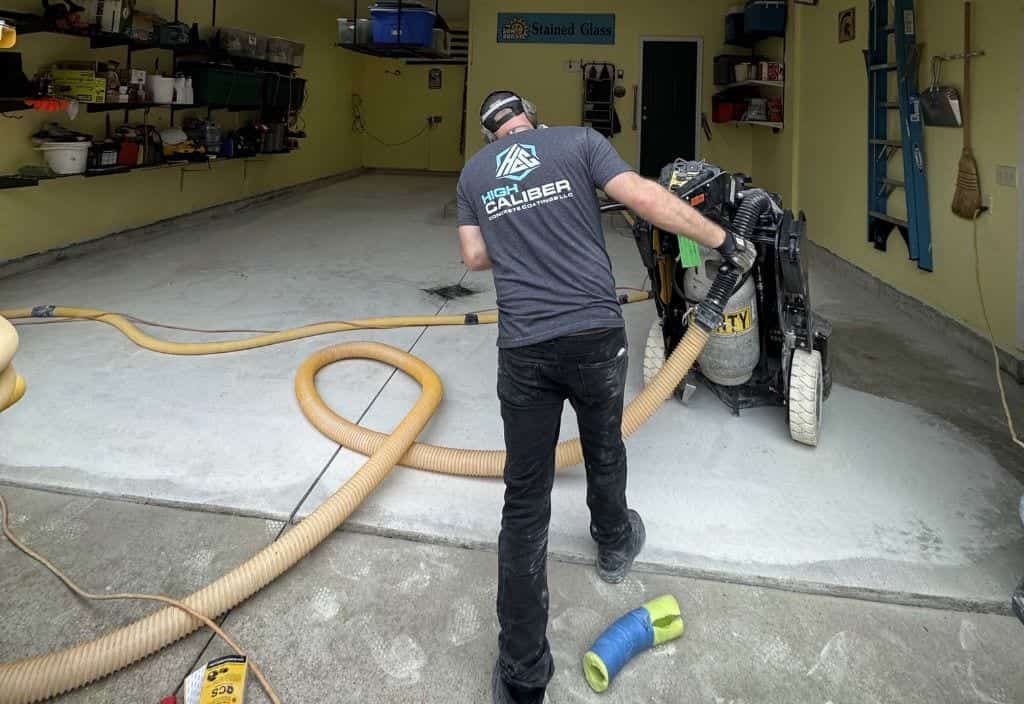
A concrete floor tells its story through how it is used. We match diamond grinding to the room, the material on the slab, and the finish you are considering. That may mean removing residue, opening the surface, or refining a worn area while keeping the limits of the concrete clear before work begins.
Service Overview
Grinding is mechanical preparation that makes the next decision clearer. Diamond tooling may remove weak concrete paste, old paint, adhesive residue, coating remnants, or selected buildup. It can also open a dense surface to create a profile suited to the material that follows.
We ask what you need the room to do afterward. A garage planned for a coating, a practical workshop, and a floor where the concrete itself will be refined have different targets. Grinding will not correct settlement, fill a low area, or repair structural movement. We explain those boundaries before setting the scope. See the concrete grinding service for the broader preparation path.
Benefits
Good preparation leaves the floor easier to evaluate and the next material easier to choose. The benefit comes from matching removal, texture, and room conditions rather than treating every slab the same way.
Diamond tooling can address suitable paint, adhesive, coating residue, and weak surface material so unwanted layers do not interfere with the planned finish or hide the concrete below.
A coating needs a compatible texture for adhesion and build. We select the preparation response around the chemistry that follows, including the right layer in a hybrid epoxy and polyurea system.
Some raised edges or localized high areas can be reduced when the surrounding slab is sound. That focused work is different from promising to level a settled or broadly sloped floor.
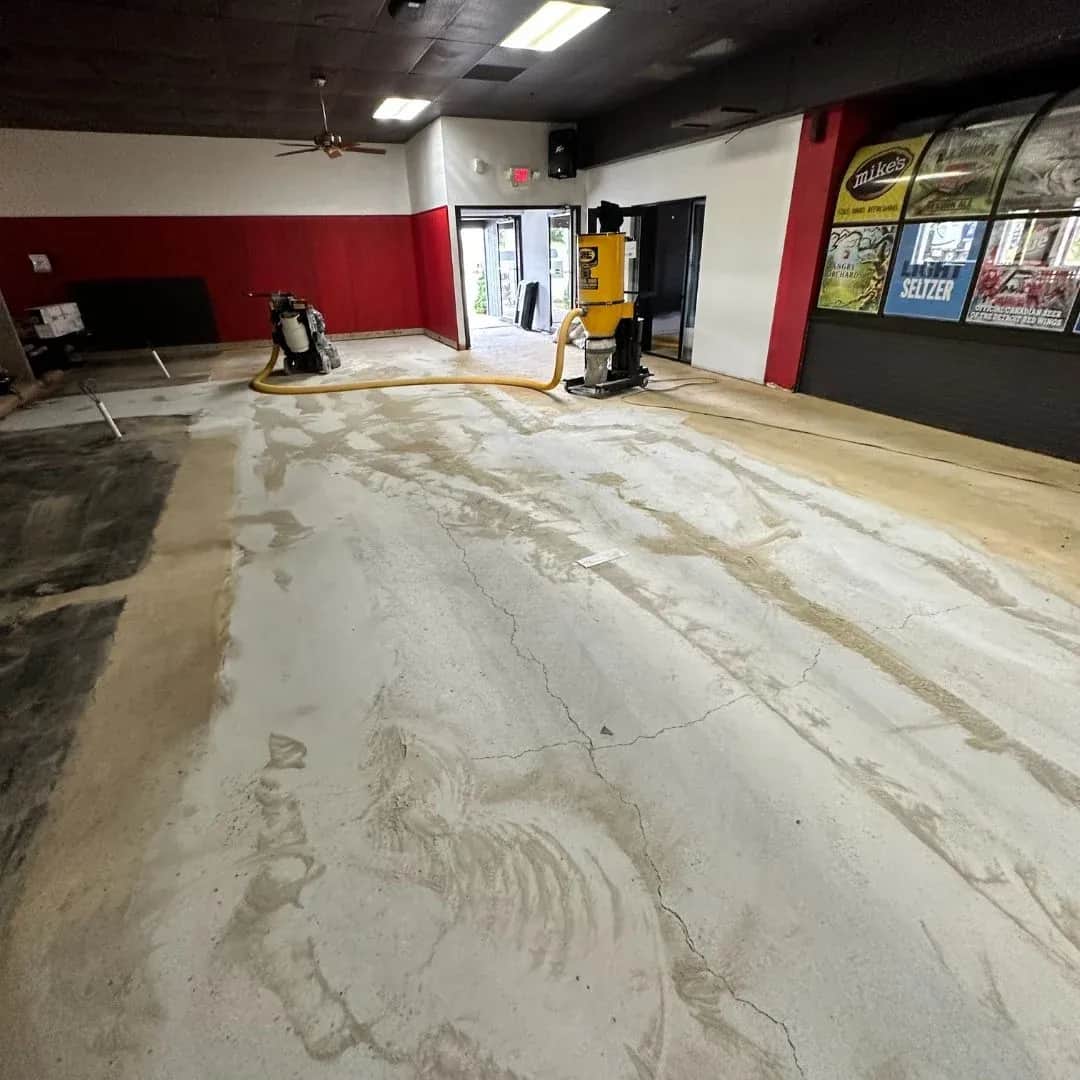
Once unwanted surface material is opened or removed, cracks, pits, spalls, old repairs, and moisture clues become easier to discuss before another finish covers the floor.
An in town garage, pole barn, workshop, storefront, or light industrial room may differ in access, edges, traffic, and cleanup. The work plan should respect those practical differences.
Installation Process
The room's use, the material on the concrete, and the finish that follows all shape the work. We move through six practical decisions so the preparation fits the slab instead of treating every Zeeland floor as the same project.
Step 1
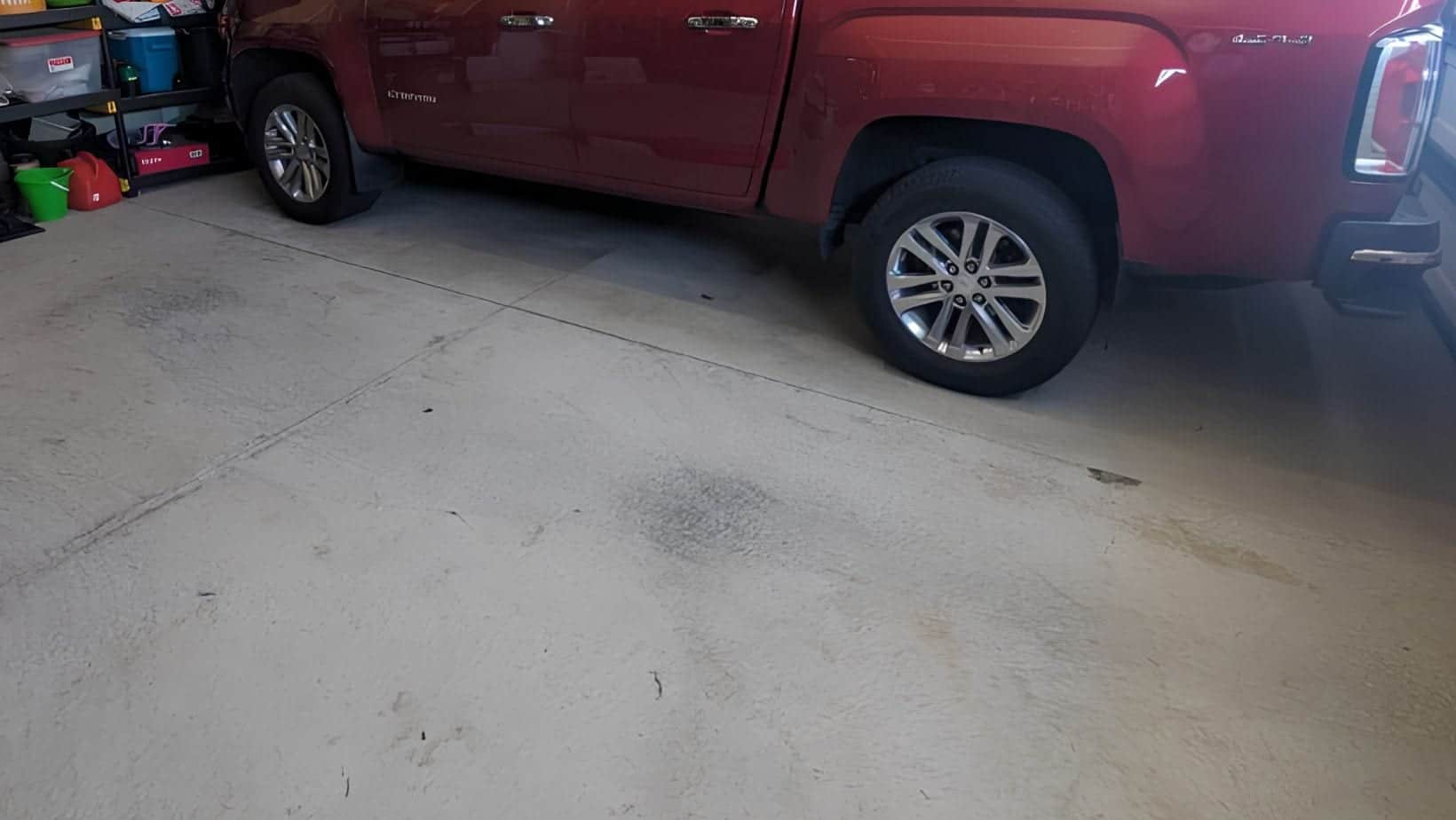
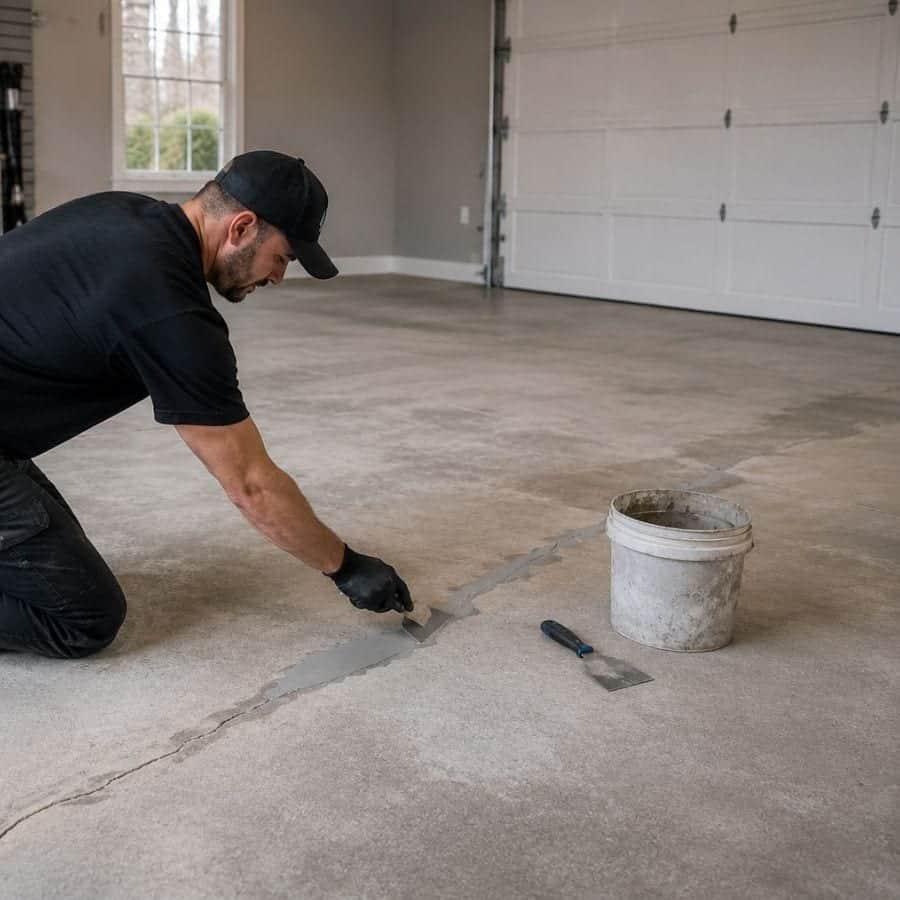
We start by asking what the floor must support in Zeeland: a vehicle garage, a work area, an agricultural outbuilding, a storefront, or another space. We look at the exposed condition and note coatings, adhesive, paint, laitance, wear, cracks, joints, and signs that moisture or earlier repairs may affect the plan.
Step 2
The material and intended finish determine the preparation target. We choose diamond tooling and a pass plan for the profile needed by a coating, penetrating sealer, or mechanically polished surface. If a layer needs another removal method, or a defect needs repair, we keep that work separate in the scope.
Step 3
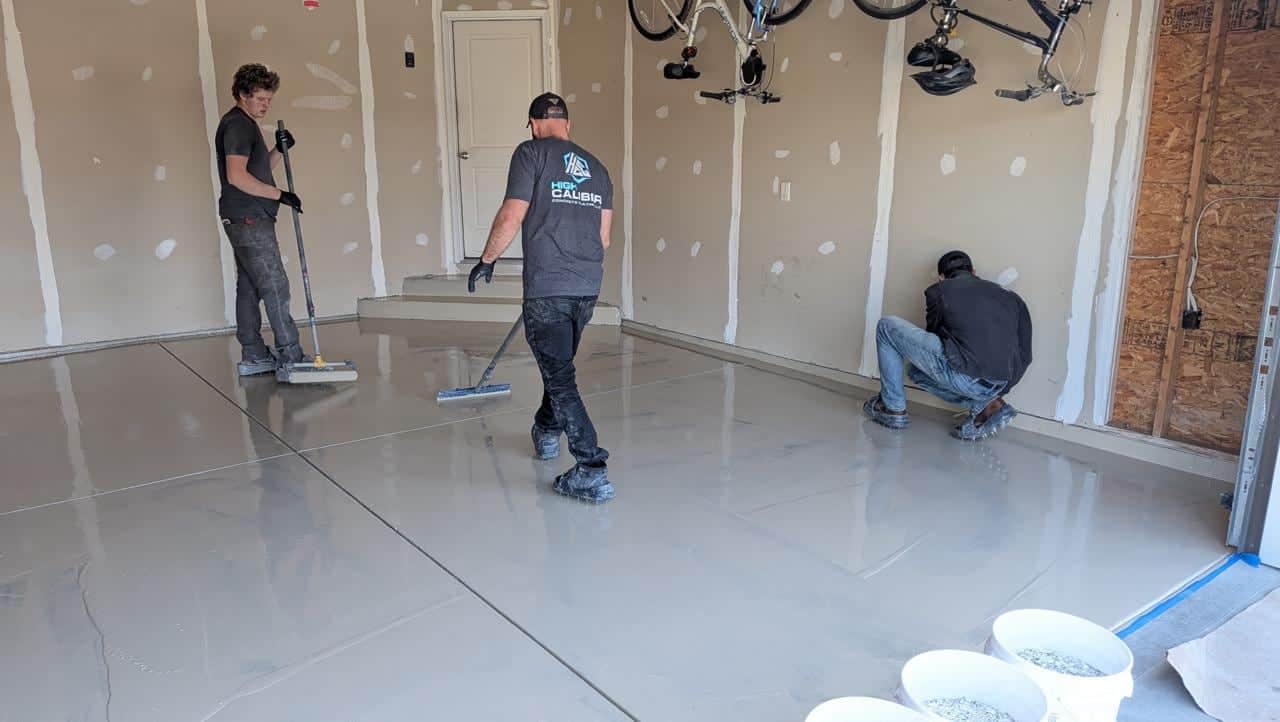
Before equipment arrives, we clear a workable path and discuss doors, stored items, fixed obstacles, ventilation, dust control, and nearby surfaces. A compact garage, pole barn, workshop, storefront, or light-industrial room may each need a different setup so the grinding work stays contained and access remains practical.
Step 4
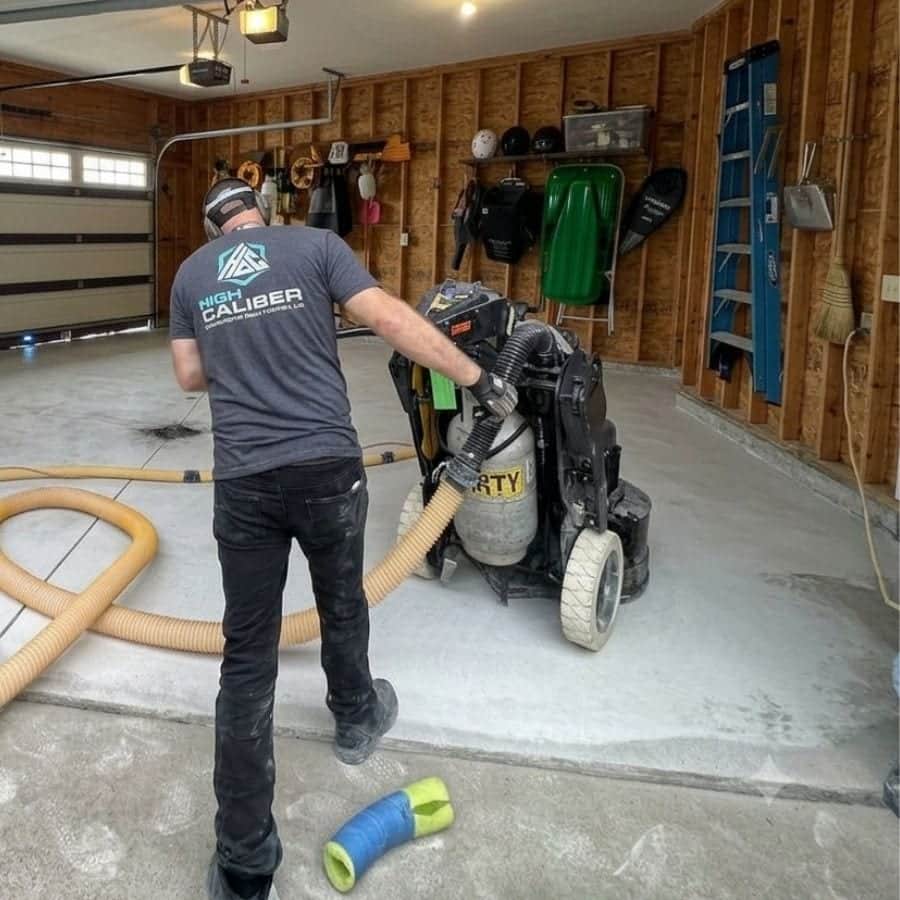
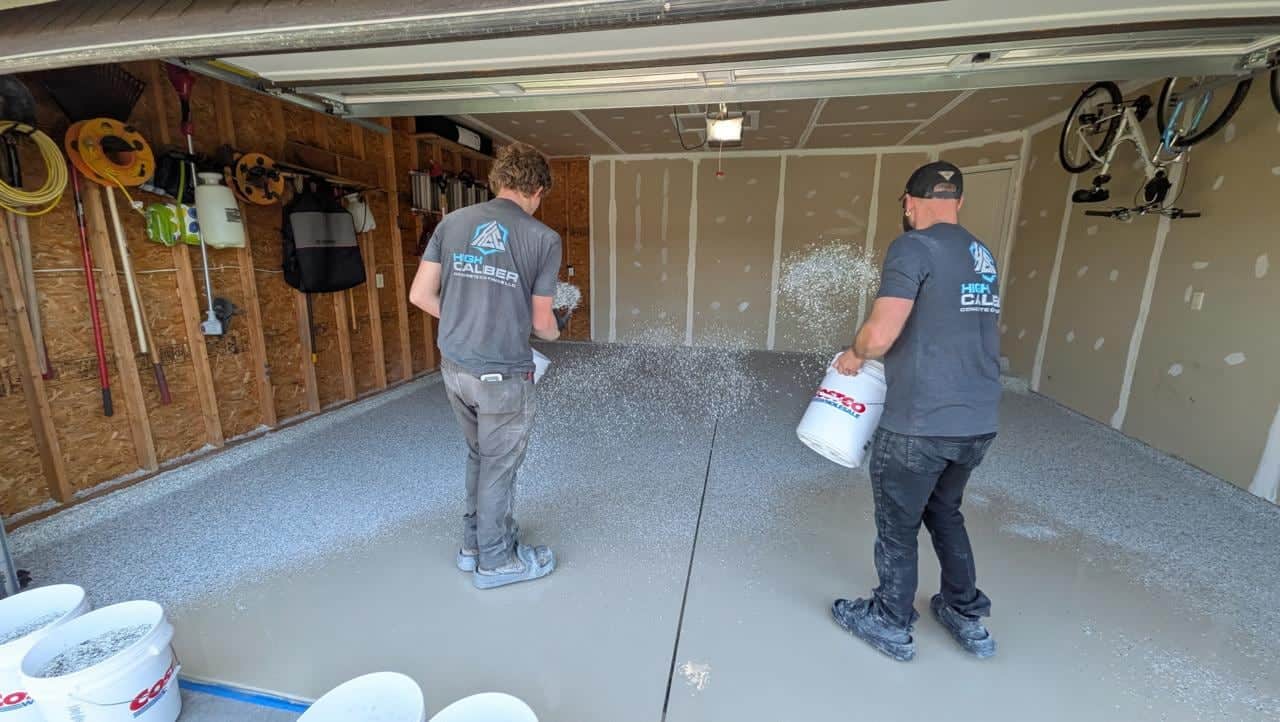
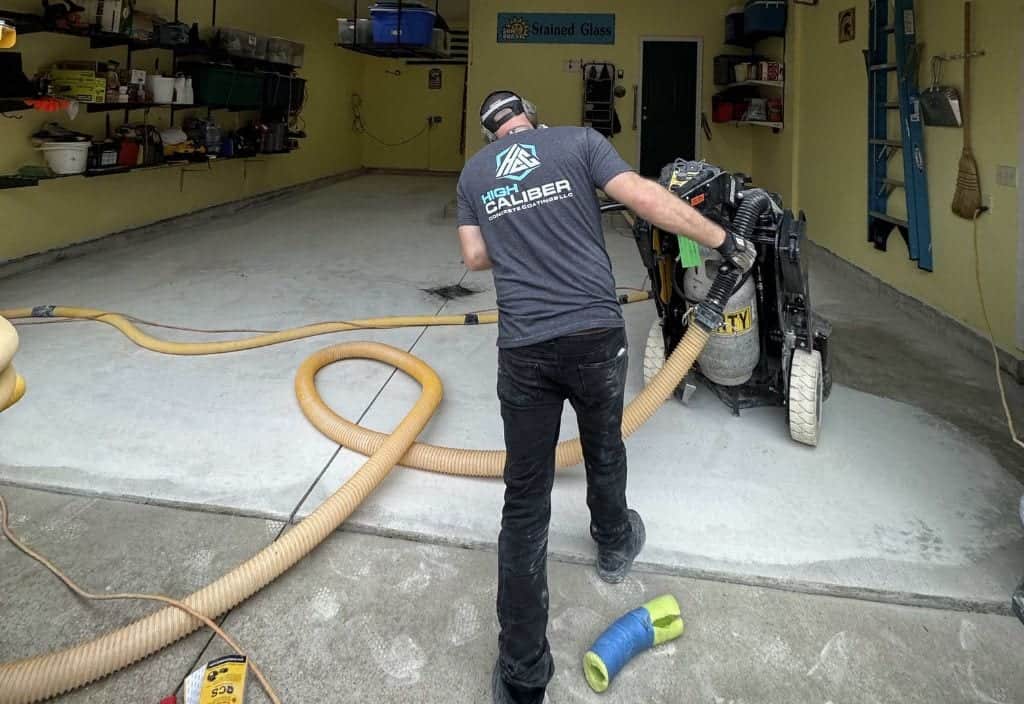
With the area ready, diamond equipment removes suitable weak material and selected buildup while opening the slab to the required profile. We use controlled passes and dust collection, watching how the concrete responds instead of forcing one depth across a floor with mixed wear or old materials.
Step 5
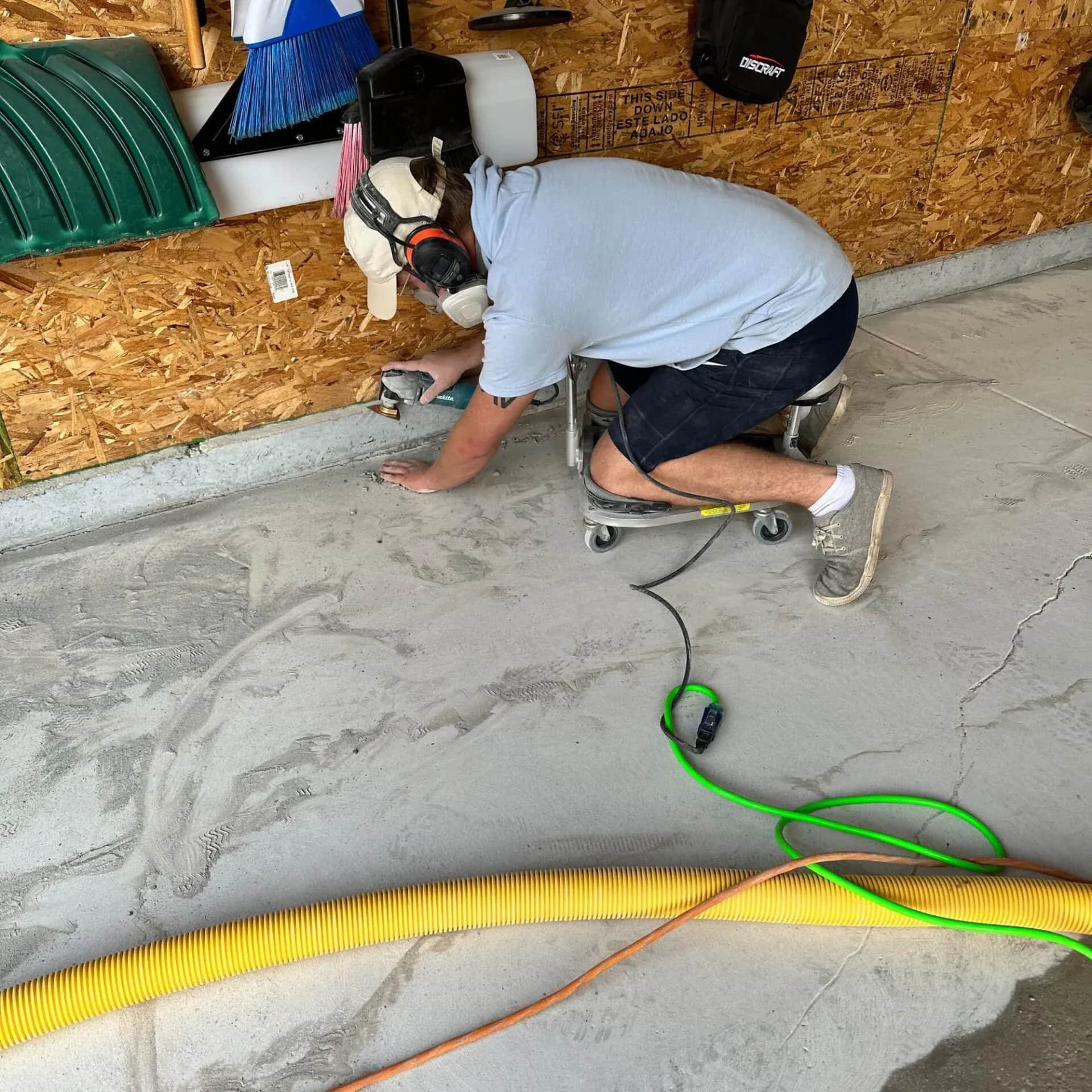
The broad machine does not reach every boundary equally. We work through perimeters, thresholds, posts, joints, and tight transitions with attention to how the finished floor will meet adjacent surfaces. Remaining adhesive, pits, cracks, or spalls are recorded for cleaning, repair, or added removal when needed.
Step 6
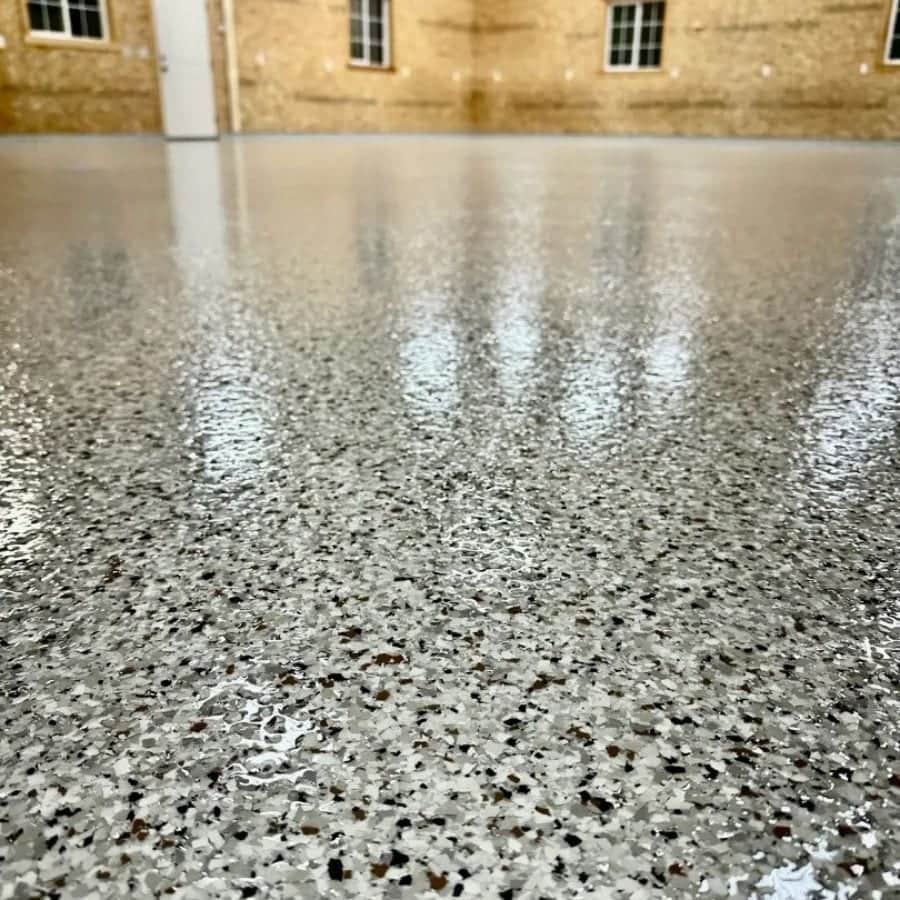
After grinding, we check the slab for profile, cleanliness, transitions, and newly visible conditions. That review determines whether the next step is repair, a hybrid coating, a penetrating sealer, mechanically polished concrete, or another suitable finish, with any changed scope explained before installation.
Why High Caliber
The room around the slab influences preparation as much as the concrete under the machine. We plan how equipment enters, how dust is contained, and how people and stored items stay clear while the surface is opened. Those practical details help define a workable scope before grinding begins.
The same approach works across an older garage, a newer home, a pole barn, a workshop, a storefront, or a working room. We account for edges, access, dust control, traffic, and the condition that appears as layers come away. If another treatment belongs in the plan, we identify it before the finish is installed.
Customer Reviews
“Wow! Jeff and Mike were amazing to partner with for my garage floor renovation! They did an amazing job but more importantly, they communicated directly with me thru texts, reminders, and in person! Jeff and his team left my garage and exterior area cleaner than when they arrived and gave clear instructions on follow up care needed for my new floor! I would highly recommend High Caliber Concrete Coatings anytime!”
“Jeff and his team did the most amazing job epoxy floor coating my 38 year old garage floor. Outstanding, professional, skilled, great communication. Highly recommended.”
“We recently had our garage floors resurfaced with the Epoxy Floor coating with flakes. High Caliber Concrete did such an awesome job we cannot say enough good about them! So timely, well organized and a beautiful job!! Owner, Jeff, responded to any call ASAP. Shawn and Ethan, fantastic employees for the company, did a tremendous job which was labor intensive…They left no questions unanswered! Such a professional, beautiful job. We would highly recommend them! Lillian & Joseph Bakara Jr.”
Zeeland, Michigan
Zeeland is an Ottawa County city just east of Holland in the West Michigan lakeshore belt. Freeze thaw cycles, lake effect snow, winter road salt, humid air, and spring melt can all leave clues on concrete. Those conditions provide context, but they do not prescribe the treatment. We use the condition of your floor to decide what deserves removal, what needs attention, and what can remain.
Older in town homes may have garages with accumulated paint, adhesive, worn patches, or a surface that has seen repeated seasonal exposure. Newer subdivisions can bring a different preparation question around the intended coating and the current profile. Rural and agricultural properties may include pole barns and workshops where broad access, equipment movement, and interruptions affect the grinding plan.
Storefronts and light industrial spaces add their own practical concerns. Traffic, work zones, doors, edges, and cleanup may matter as much as the material being removed. We can also discuss nearby work in Holland, Hudsonville, and Zeeland Charter Township. For your property, the recommendation starts with the slab, the room, and the result you want.
Salt, grit, meltwater, and humidity may help explain visible wear. The bonded material and condition beneath it still need to guide the tooling decision.
Pole barns, workshops, storefronts, and manufacturing spaces can require a closer look at travel paths, interruptions, adjacent use, and cleanup.
A coating, penetrating sealer, and polished concrete each ask for a different prepared surface. Your intended result helps define the grinding scope.
Frequently Asked Questions
We use diamond grinding to remove suitable surface material, address selected buildup, and prepare concrete for a coating, penetrating sealer, polished finish, or another planned use. The right scope depends on what is bonded to the floor, what condition lies below it, and what the room needs to do afterward.
Yes, grinding is commonly used to create a mechanical profile and clean starting surface for a coating system. We still inspect paint, adhesive, cracks, repairs, edges, and moisture clues first. High Caliber uses epoxy as the adhesion and build layer in its hybrid system, with polyurea as the topcoat, so preparation is planned around the complete system.
It may remove or open suitable coating, paint, adhesive residue, and weak surface material. Thickness, chemistry, bond, and the concrete below affect the response. Some adhesive can smear or load tooling and may require a dedicated removal approach. We identify that difference before promising that one grinding pass will clear the whole floor.
Grinding can sometimes reduce a localized high spot or raised edge when the surrounding slab is sound. It cannot fill a low area, reverse settlement, correct a broad structural slope, or guarantee a perfectly flat floor. If the condition needs repair or another leveling method, we keep that work separate from the grinding scope.
Road salt, grit, snow, meltwater, and humid air can become part of a garage or working floor's history. They may contribute to residue or visible wear, but they do not determine a treatment by themselves. We inspect the surface, discuss moisture clues and damage, then match removal and the next finish to the concrete we find.
A pole barn or workshop may be a good candidate when its condition, access, and requested result support the equipment. We discuss doors, posts, equipment paths, work zones, dust control, edges, and nearby use. A broad floor is not automatically a simple floor, so the building layout belongs in the estimate.
The next step may be a hybrid coating system, a penetrating sealer, mechanically polished concrete, repair work, or another treatment suited to the exposed slab. A penetrating sealer protects without creating a film coating. Polishing refines the concrete itself. We review the profile, cleanliness, repairs, and remaining conditions before the next material is applied.
Related Services
Grinding is one part of a floor decision. These related services can help you compare the finish or removal path that fits the condition and use of your concrete.
Explore a hybrid protective coating system built on a prepared concrete surface.
Learn moreLearn about penetrating protection when you want the slab to remain a concrete surface.
Learn moreSee how mechanical refinement can make the concrete itself the visible finish.
Learn moreReview a dedicated option when adhesive needs a response beyond ordinary grinding.
Learn moreGallery And Visual Proof
These real library images show equipment and preparation without assigning a Zeeland address or project history to any photograph.
Free Project Quote
Tell us about the space and we will follow up with a clear recommendation and quote conversation.
Phone
Business Hours
Free Estimate
Tell us what is on the floor, how the space is used, and what you want to happen next. We can talk through the removal boundary, profile, dust control, edges, repairs, and possible finish. Request a free estimate online or call (616) 777-7348 to discuss your Zeeland concrete with our team. We will separate preparation from repairs and explain what the slab can support before you choose the next material with confidence.