
An Arrival That Shows Its Work
A more continuous coated surface can make tracked water, grit, and ordinary spills easier to notice. That visibility supports a clearer cleaning routine near doors and work areas.
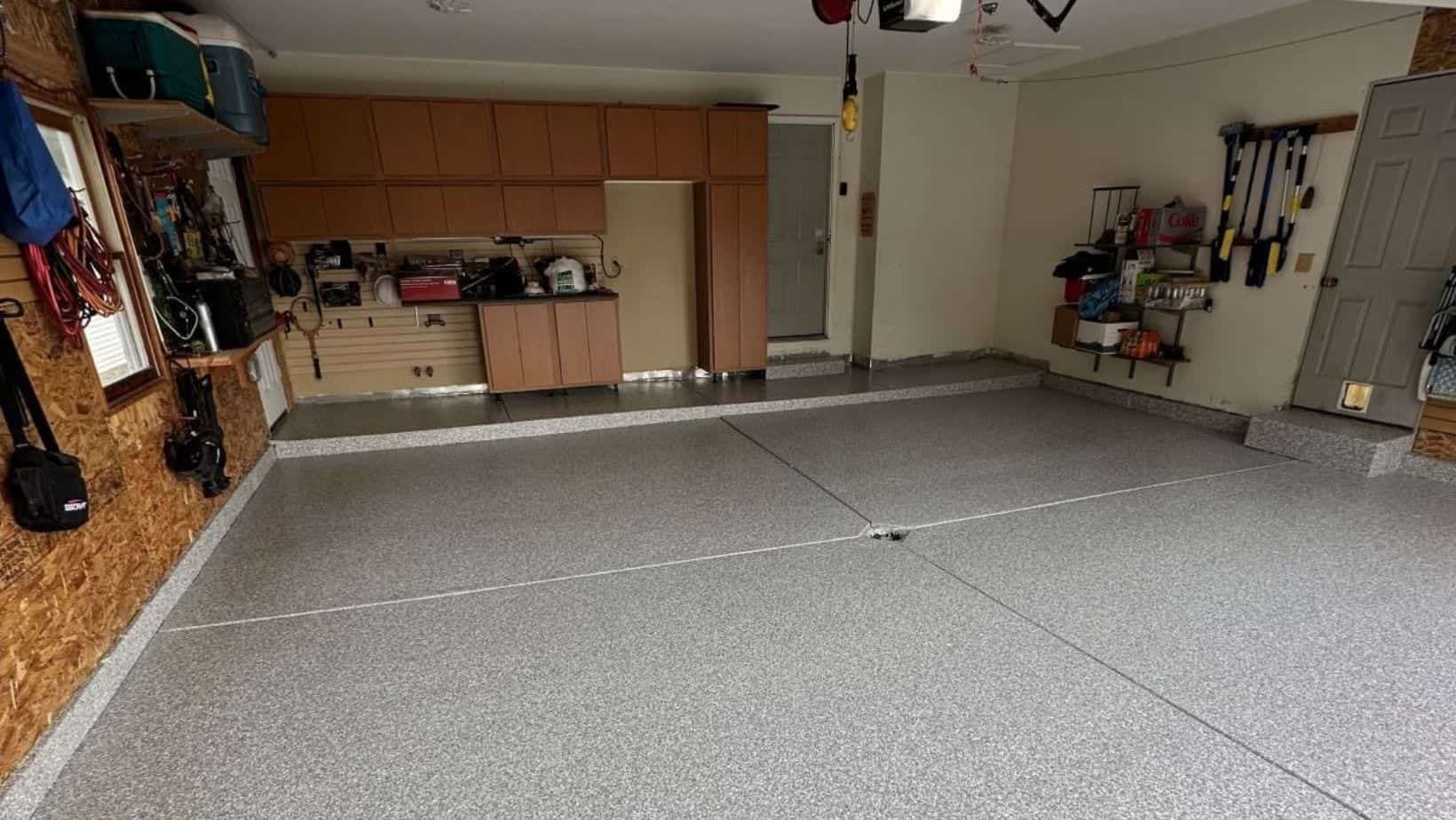
Fennville floors often sit between a rough arrival and a finished room. Wet boots, road residue, or workshop dust may meet concrete used for parking, storage, retail, or daily work. We study that transition, then select preparation and compatible layers so epoxy can contribute adhesion and build where the floor needs it.
Service Overview
An epoxy flooring decision starts with what the concrete must tolerate. A detached garage may need a presentable place for vehicles and storage, while a workshop or agricultural building may need a surface that suits dirtier work. Retail, restaurant, and other small commercial rooms bring customer movement and cleaning routines into the same conversation.
We do not select a finish from color alone. Mechanical preparation, repairs, moisture, exposure, access, and the intended routine shape the scope. Epoxy can serve as the first layer that bonds to prepared concrete and adds build. Other compatible materials may complete the hybrid system when their properties fit the floor and the room.
Benefits
A finished coating earns its place when it helps the room function better. These are practical outcomes we discuss without assuming every slab, exposure, or maintenance routine will behave the same way.
A more continuous coated surface can make tracked water, grit, and ordinary spills easier to notice. That visibility supports a clearer cleaning routine near doors and work areas.
A garage, workshop, or outbuilding can be planned around its actual tasks. The selected system and finish should respect equipment, storage, foot traffic, and the way the space is accessed.
Spring moisture, humidity, or a damp slab deserves attention before color and sheen are chosen. Early discussion helps identify whether preparation or a supporting moisture product belongs in the scope.
A properly installed coating can provide a more uniform surface than worn bare concrete. Routine care still matters, but dust and common residue have fewer rough pores in which to collect.
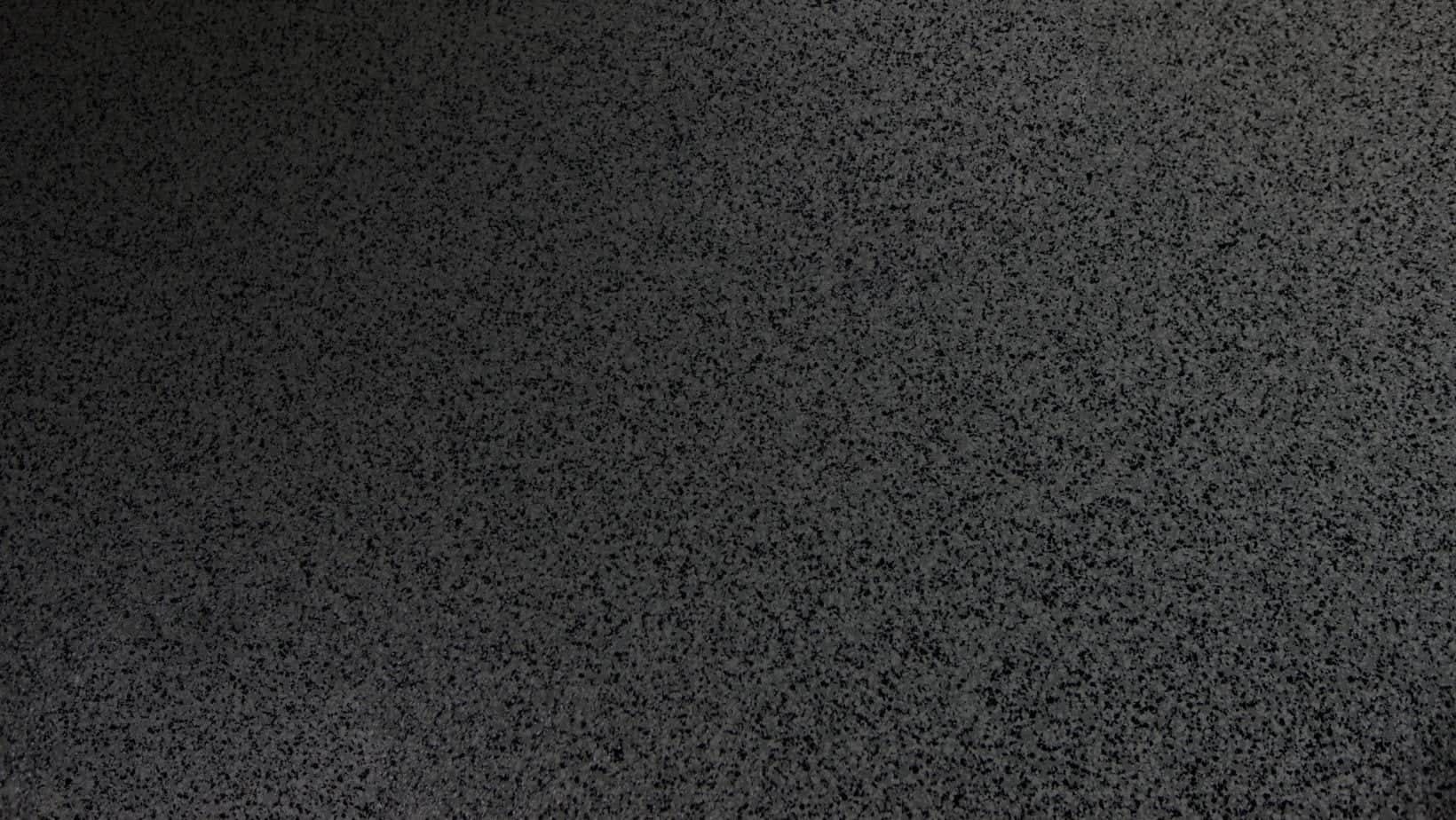
Color and decorative flake can give a garage, finished interior, or customer-facing room a defined appearance. The selection should work with lighting, use, cleaning expectations, and the concrete underneath.
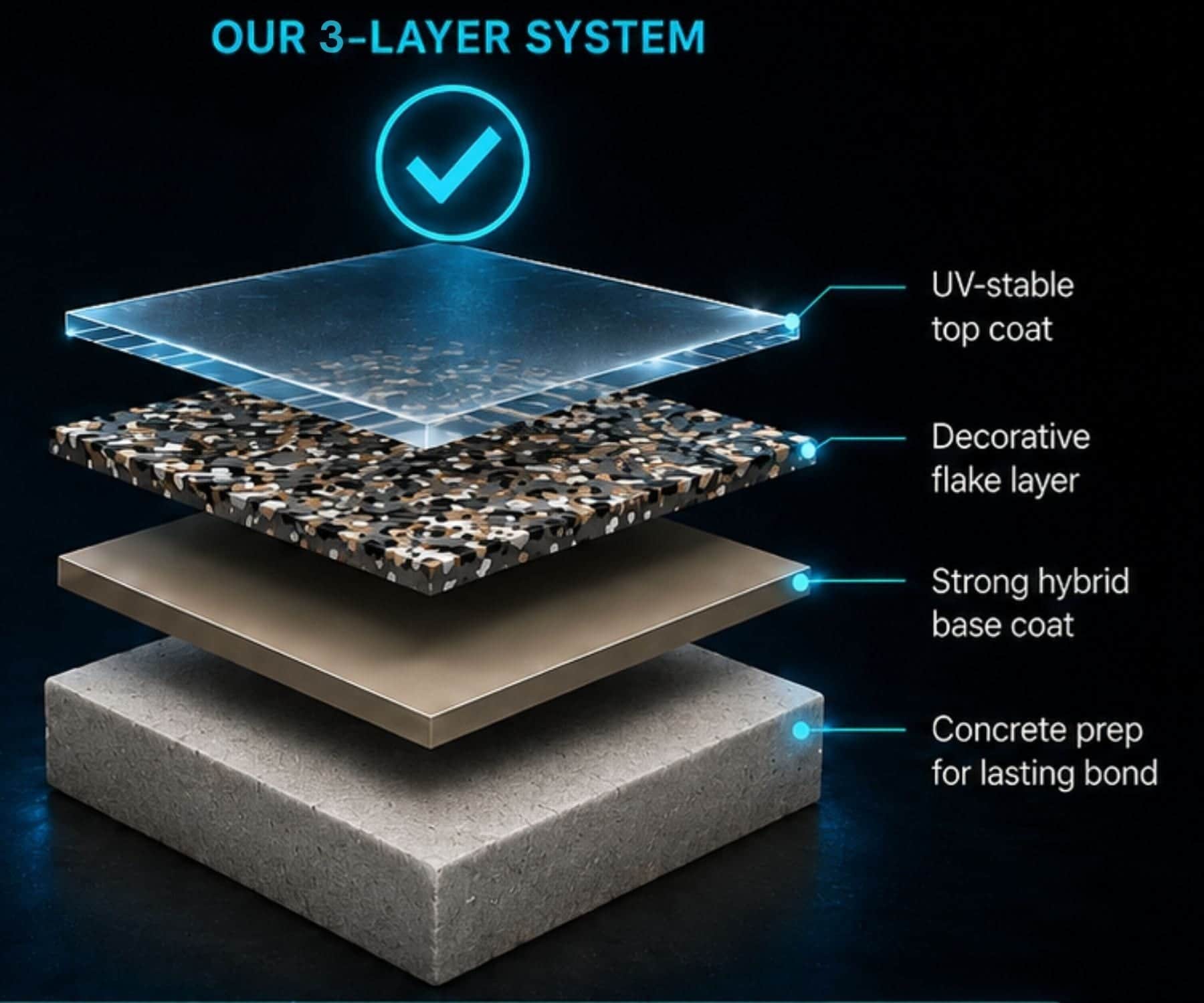
Epoxy can provide adhesion and build as part of the basecoat. A compatible polyurea or polyaspartic layer may serve another role, creating a system whose materials have clear jobs.
Installation Process
The installation sequence gives each condition a place in the conversation. We move from what the concrete reveals to the layers that the room can reasonably support.
Step 1
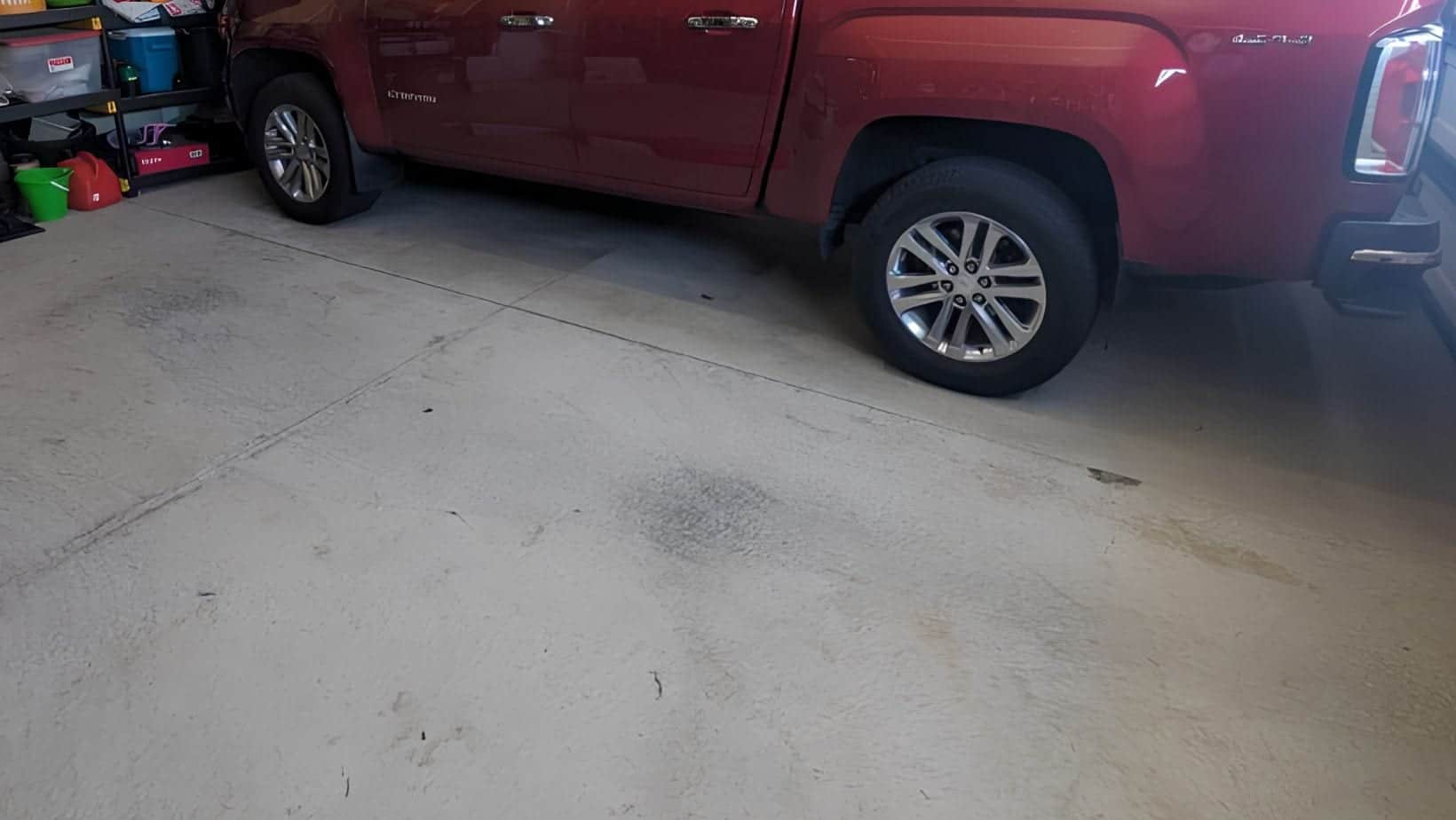
We begin by discussing the room, its access, and the work that happens there. The slab is checked for visible wear, prior coatings, cracks, pits, moisture clues, and other conditions that could affect preparation or the finished recommendation. This first look keeps a rural outbuilding, home garage, and customer-facing room from being treated as interchangeable.
Step 2
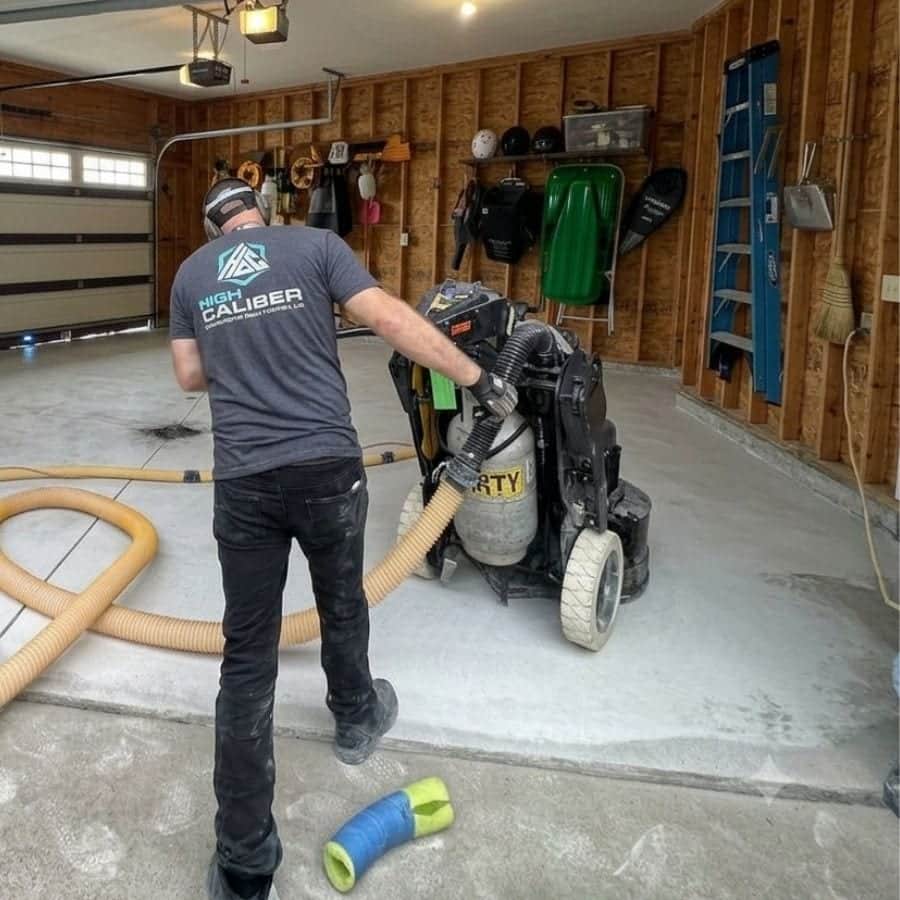
Diamond grinding removes weak surface material and opens the concrete to the profile a coating needs for adhesion. It also gives the crew a better view of the slab's actual condition. Edges, joints, old residue, and areas that need additional attention are considered as part of the preparation rather than hidden beneath a new finish.
Step 3
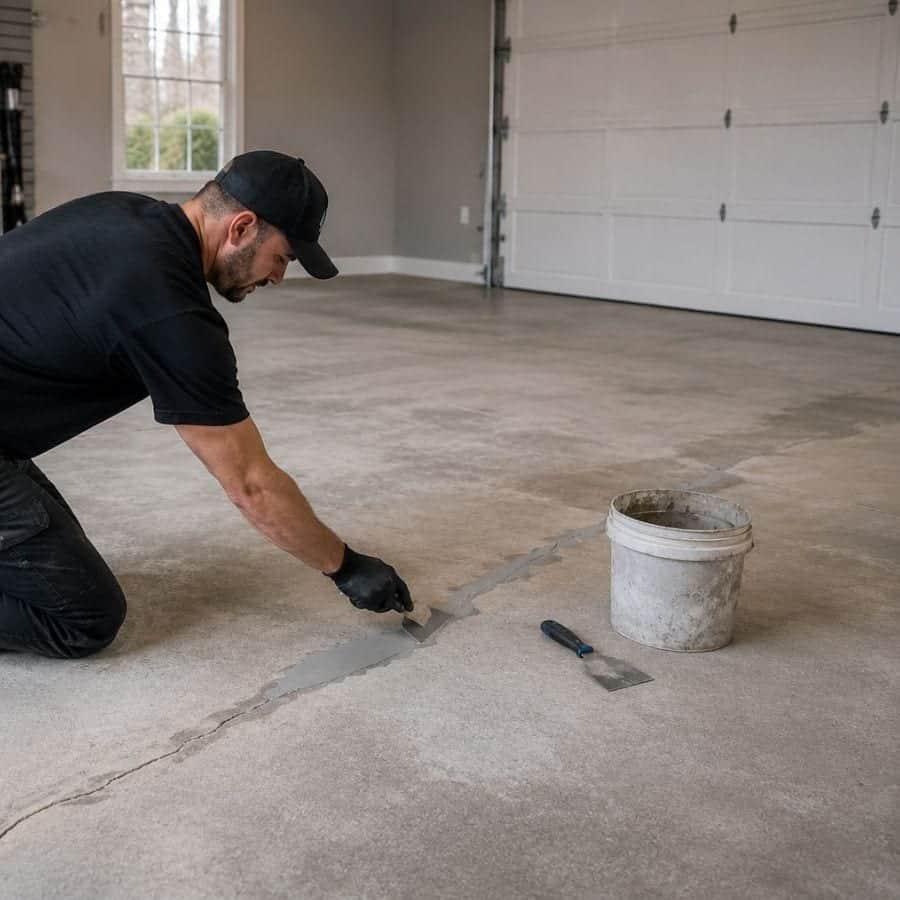
Once the surface is prepared, cracks, pits, spalls, and damaged sections can be discussed with better information. Repairs address the condition that is present, but they do not turn a moving slab into new concrete. We explain which areas can be prepared for coating and which limitations should remain part of the decision.
Step 4
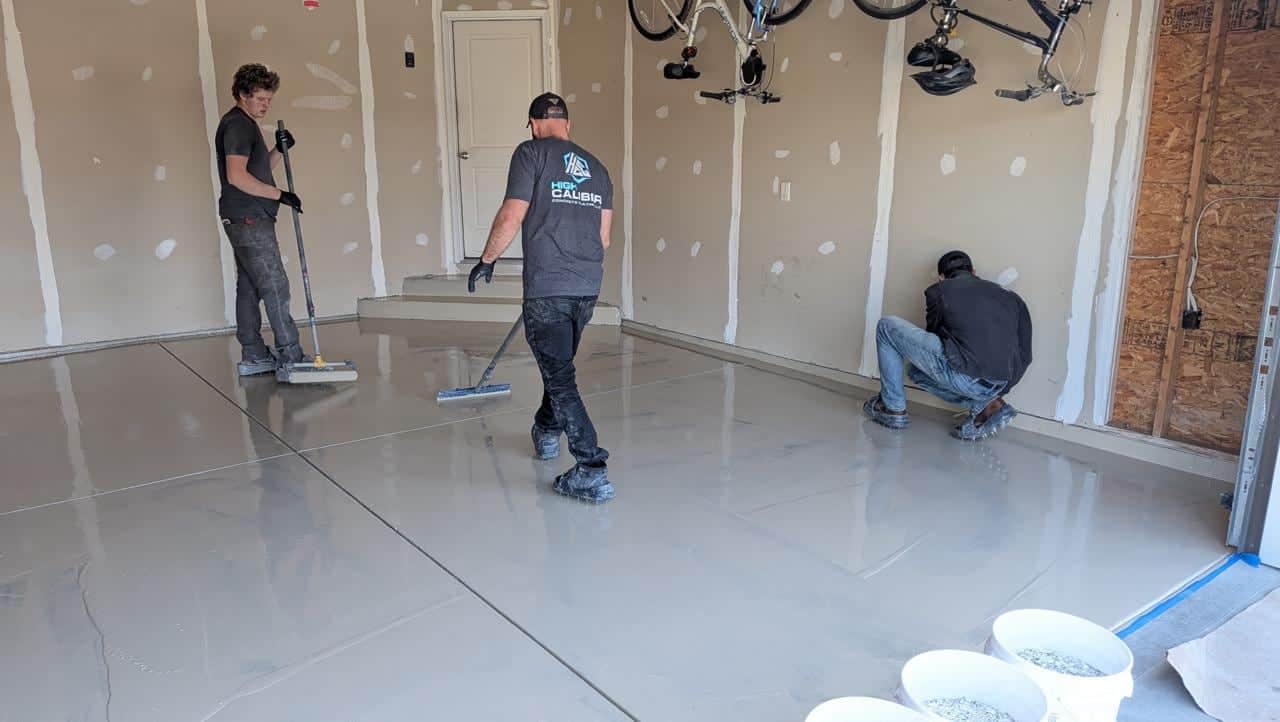
The selected epoxy basecoat is applied to the prepared concrete with its role clearly defined. Epoxy contributes adhesion and build in the hybrid approach. Coverage, surface profile, repairs, and the condition of the slab all matter to how that first layer becomes part of the complete floor rather than a shortcut over unresolved conditions.
Step 5
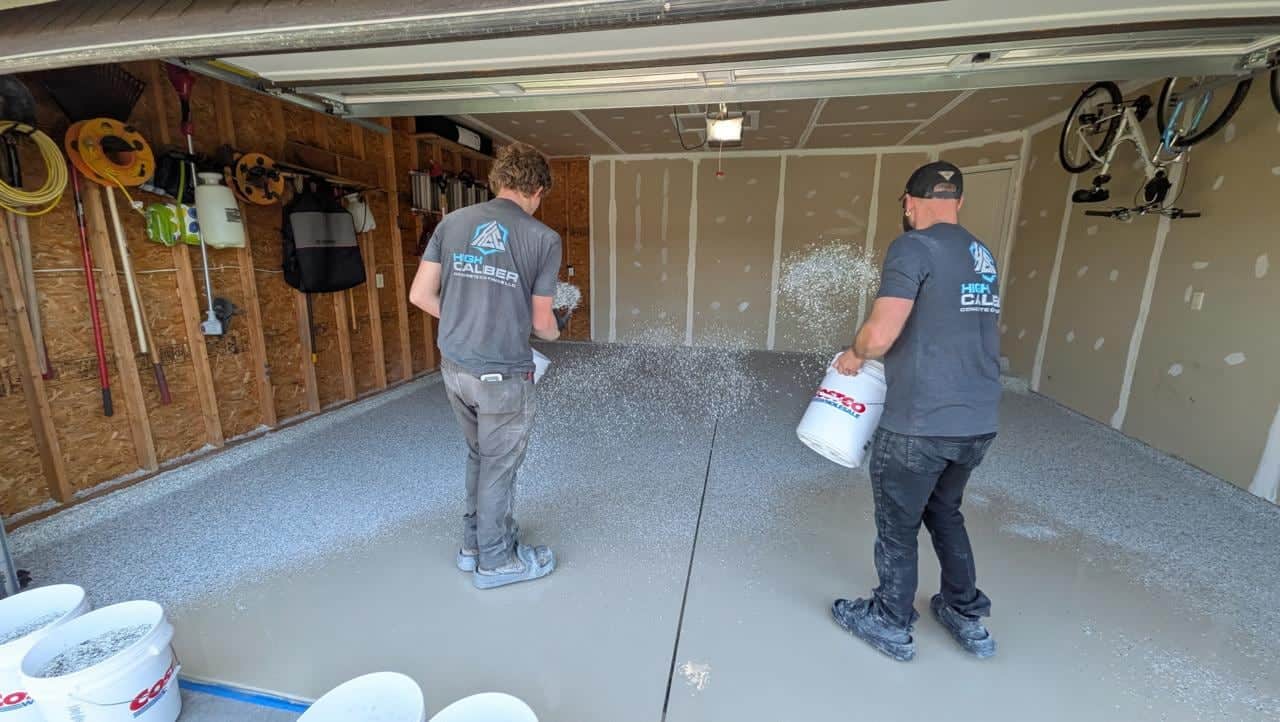
If the design calls for decorative flake, it is broadcast into the appropriate wet coating layer and then prepared for the finish above it. Compatible polyurea or polyaspartic materials may contribute properties suited to the application. The system is built from the room's needs, not from a promise that one chemistry fits every floor.
Step 6
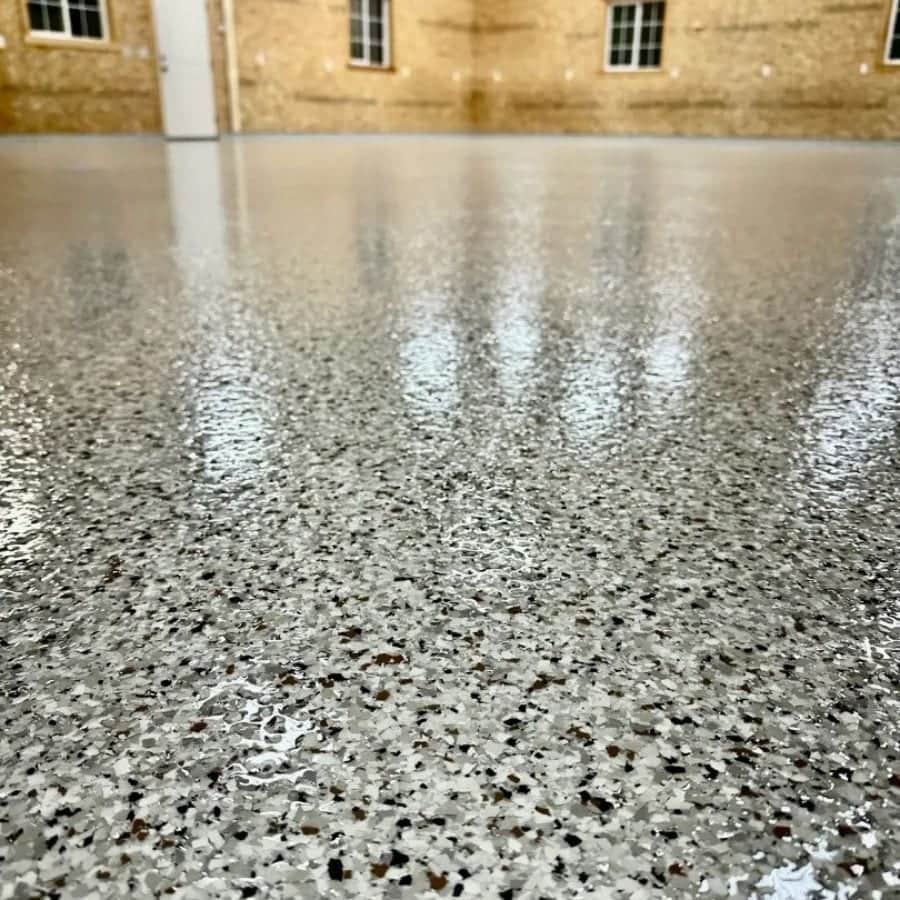
Before the floor is handed back, we review the finished surface and discuss access, care, and realistic use expectations. Cure conditions and the selected materials affect when the room can return to normal activity. A clear walkthrough helps you understand how to maintain the coating after installation.
Why High Caliber
Based in the Holland and Zeeland area, our family-owned West Michigan team brings residential and commercial concrete work into the same careful discussion. A Fennville garage, workshop, pole barn, retail room, or restaurant still has its own daily brief, and the useful answer is the one that makes the scope understandable before installation begins.
Our hybrid approach gives epoxy a purposeful job in the basecoat and considers polyurea or polyaspartic where those materials suit another layer. We explain preparation, repair limits, moisture questions, finish options, access, and care so the recommendation can be judged by the concrete and the room rather than by a product name alone.
Customer Reviews
“Jeff and his team did the most amazing job epoxy floor coating my 38 year old garage floor. Outstanding, professional, skilled, great communication. Highly recommended.”
“Would highly recommend. No pressure sales, quality product, great communication and quality installation. I met Jeff at the home show. I was drawn into his booth by his very enthusiast kids. I got the immediate impression this was a family oriented business and that was reinforced by the conversation with both Jeff and his young son. These values drew me to this business. I signed up for a quote. Shortly after the show Jeff came to my home to present options and provide a quote. No pressure to buy, Jeff understood I needed to get thru tax season before I could be sure about my budget. Over the course of next few months Jeff was responsive to any questions I had and we got the job scheduled. Jeff provided a trailer in the quote to store contents of garage while job was being done, which was very helpful. When talking with others about the quote I learned my price was equal to or less than what neighbors had paid up to six years ago, so I felt this was good pricing. I had thought there would be a ton of dust and a big mess when grinding surface, but the machines had a vacuum attached, clean and efficient work. I was impressed that they coated steps and side walls as well as floor. No mess on drywall or driveway. Crew doing installation were great guys. They took time to fill me in on the process of installation, what to expect, how long for surface to cure and when I could empty trailer. Post install Jeff stopped out to grab trailer, filled me in on what to use and how to clean the floor. VERY happy with the whole process from sales to install to follow up. LOVE my new garage.”
“We recently had our garage floors resurfaced with the Epoxy Floor coating with flakes. High Caliber Concrete did such an awesome job we cannot say enough good about them! So timely, well organized and a beautiful job!! Owner, Jeff, responded to any call ASAP. Shawn and Ethan, fantastic employees for the company, did a tremendous job which was labor intensive…They left no questions unanswered! Such a professional, beautiful job. We would highly recommend them! Lillian & Joseph Bakara Jr.”
Fennville, Michigan
Fennville is a rural Allegan County community where a finished interior may sit close to a messier working environment. Seasonal mud, road salt, spring moisture, humidity, and freeze-thaw cycles can all influence how concrete is used and maintained. Those conditions are a starting point for questions, not a substitute for looking at the slab in front of us. That distinction matters before any finish is chosen.
The property mix makes that distinction important. A detached garage may receive wet vehicles and winter residue. A workshop or agricultural building may see tools, equipment, and tracked grit. A pole barn can have a different exposure from a finished home interior, while a retail space, restaurant, or small commercial room may prioritize customer traffic and repeat cleaning. We shape the floor discussion around those differences.
Fennville also sits near communities such as Saugatuck, Douglas, South Haven, Hamilton, and Allegan, which share parts of the wider West Michigan weather pattern. That regional context helps us ask useful questions about moisture and seasonal residue while keeping the recommendation tied to your concrete, your access, and the routine the room must carry.
Snow, salt, mud, humidity, and freeze-thaw exposure can influence how an interior or working slab is maintained.
Garages, workshops, agricultural buildings, pole barns, retail rooms, restaurants, and small commercial spaces may need different finish conversations.
The local setting frames the questions, while preparation, moisture, repairs, and intended use determine the recommendation.
Frequently Asked Questions
It can be discussed that way, but the rooms should not be assumed to need identical preparation or finishes. A home garage, detached workshop, and agricultural building may differ in traffic, exposure, access, and cleaning. We can compare those conditions during the estimate and explain where one system may fit or where separate decisions make more sense.
The basecoat establishes an important part of the bond and build of the floor. In High Caliber's hybrid system, epoxy contributes that adhesion and build role. The visible topcoat has its own job, but it cannot replace sound preparation or make the underlying slab irrelevant. Layer choices are considered together so the finished surface has a coherent foundation.
Tell us where the material enters, what activities happen in the room, and how the floor is cleaned now. A garage beside a gravel drive, a workshop near an agricultural building, and a customer-facing room may all collect residue differently. Those details help us discuss surface condition, finish texture, access, and routine care without assuming that a label alone solves the problem.
Existing material and repaired areas need to be evaluated for bond, condition, compatibility, and removal needs. Diamond grinding can expose where the surface is sound and where more preparation is required. We discuss the actual scope after the concrete is understood. A new coating should not be presented as a way to hide weak material or unresolved movement.
Not automatically, but moisture has to be part of the decision before coating. We discuss the apparent source, the slab condition, and what evaluation or preparation is appropriate. A moisture barrier epoxy may be relevant in some situations, but it is not a reason to ignore ongoing water or promise that every damp basement can be coated.
Yes, the conversation can include both, while recognizing that customer movement, cleaning frequency, access, and downtime change the planning. A residential garage may prioritize vehicles, storage, and seasonal residue. A retail or restaurant room may need a finish that works with its operating routine. The concrete and the intended use determine whether the same system is appropriate.
Useful photographs show the full room, entrances, edges, cracks, stained or worn areas, existing coatings, and any places where moisture appears. Include a brief description of what the room is used for and what finish you are considering. Photos do not replace an evaluation, but they can make the first conversation more focused and help identify the questions that need attention.
Related Services
Epoxy flooring is one part of a broader concrete decision. These related services can clarify preparation, moisture planning, material roles, and finish selection for a Fennville property.
Understand the mechanical preparation that creates the surface profile a coating needs for adhesion.
Learn moreReview how moisture questions can affect an interior floor recommendation before coating begins.
Learn moreSee how polyurea may serve a compatible role alongside epoxy in a complete system.
Learn moreLearn where polyaspartic properties may fit the selected finish and application conditions.
Learn moreExplore decorative flake choices for a garage floor planned around use and maintenance.
Learn moreGallery And Visual Proof
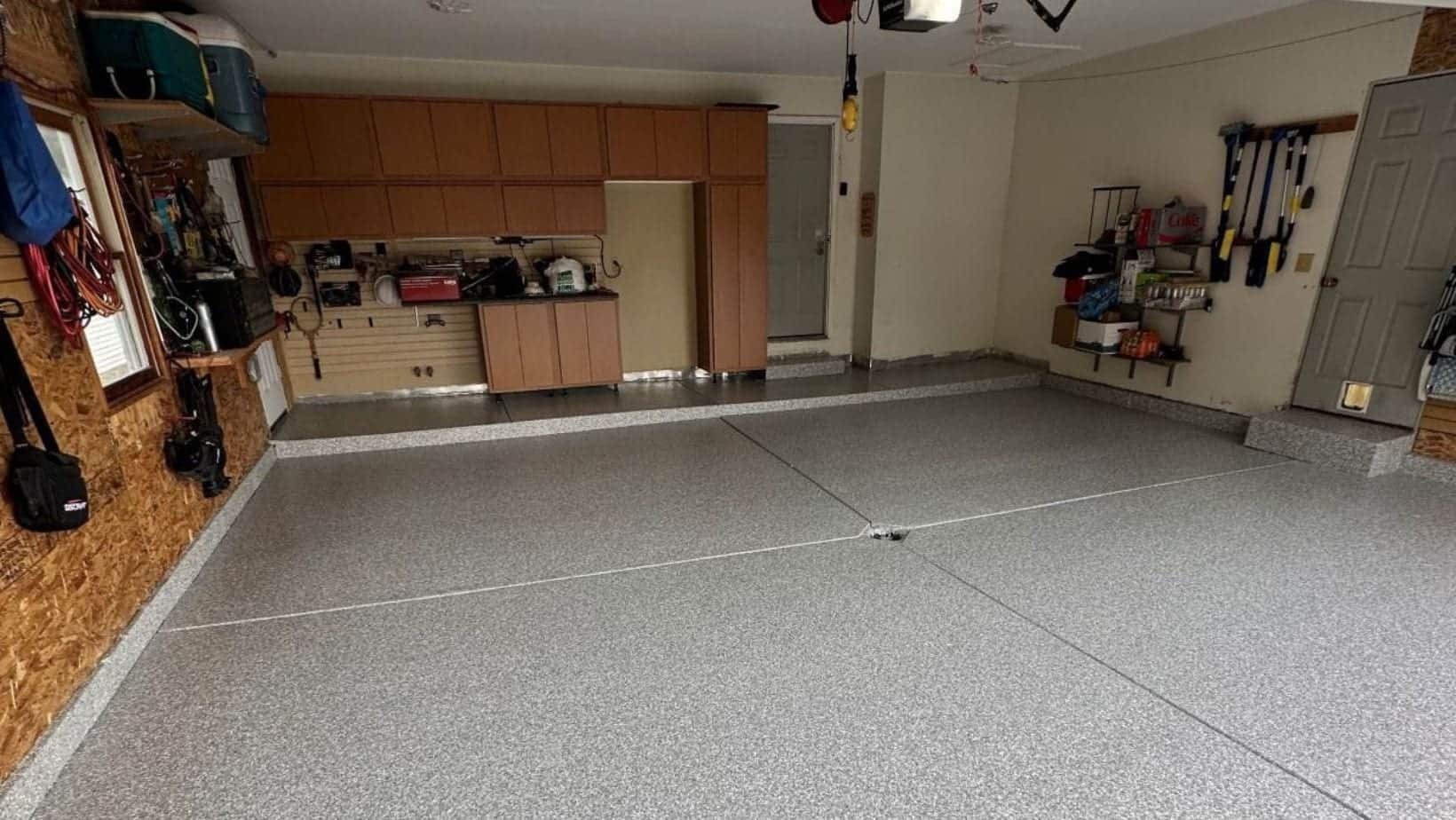
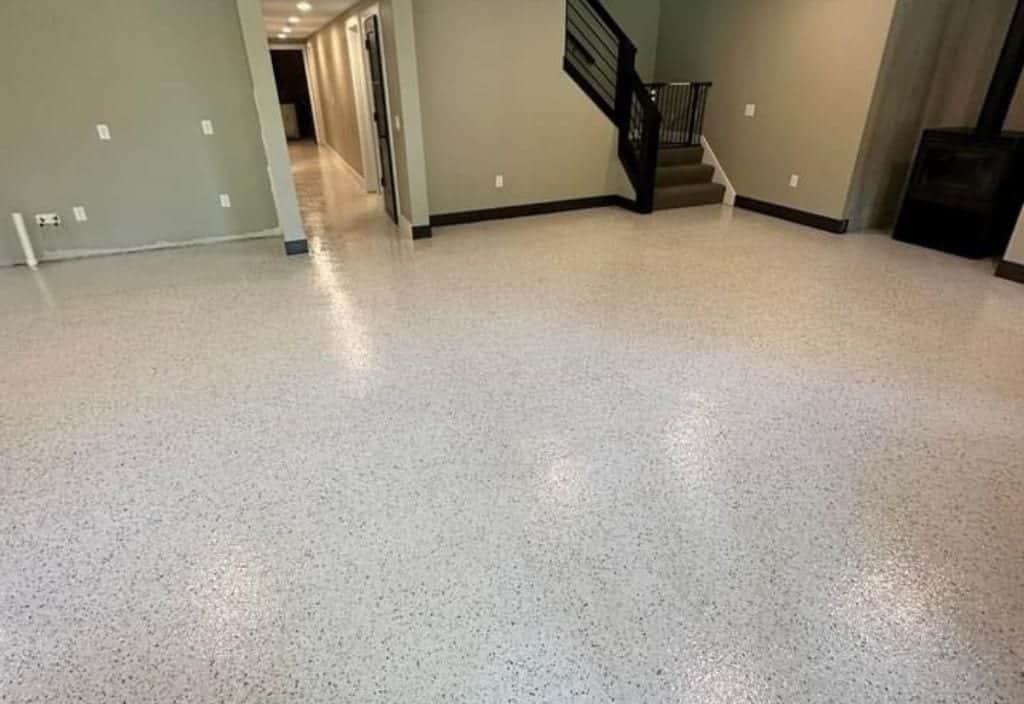
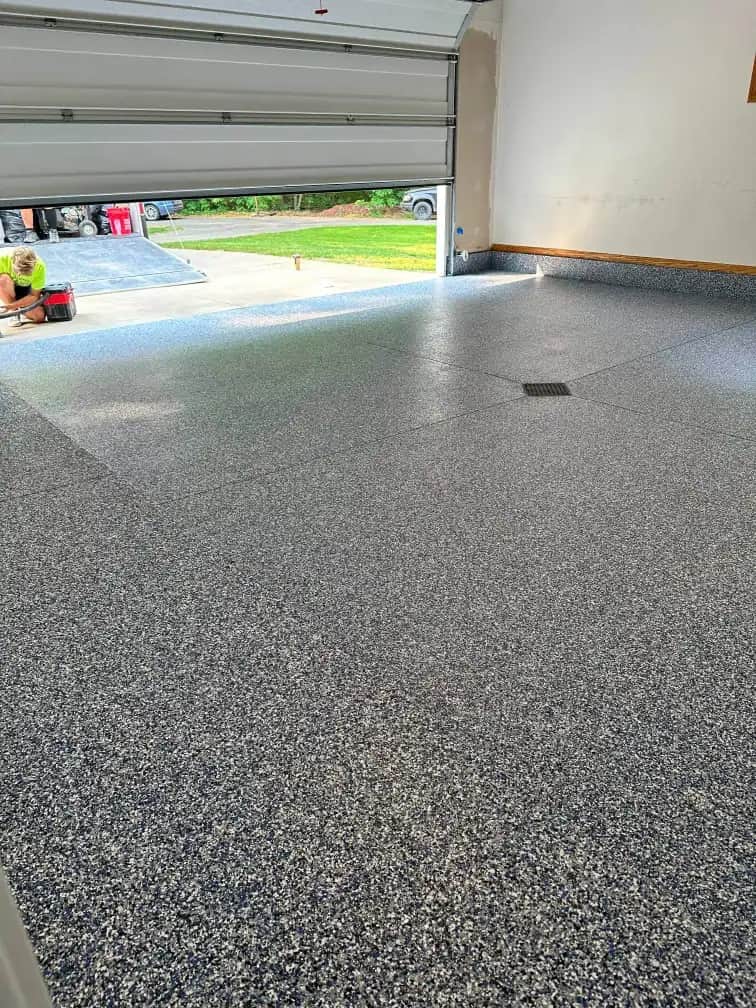
Review finish and system examples to discuss color, texture, and layer roles for your own concrete.
Free Project Quote
Tell us about the space and we will follow up with a clear recommendation and quote conversation.
Phone
Business Hours
Free Estimate
Tell us what the room needs to handle, what is already on the concrete, and the finish you have in mind. We can discuss preparation, moisture, epoxy's basecoat role, compatible layers, decorative options, and care. A few clear details give the estimate a useful starting point. Mention the room's access, current use, and any visible cracks or old coating so the first conversation has helpful context for your floor.