
Winter Debris Is Easier To See
Salt, slush, and grit still need removal, but a finished floor makes the seasonal mess easier to spot and address before it becomes part of the bare concrete's texture.
A Holland garage can change jobs through the week and the seasons. We begin with the concrete underfoot, then plan preparation, coating layers, and finish details around your vehicles, storage, projects, and daily entry routine. Get a clear estimate for the floor you actually have. We keep the discussion tied to your property.
Service Overview
A garage coating is a response to a particular slab and a particular routine. The inspection considers old paint or coating, stains, cracks, pits, moisture, access, and the work you expect the room to handle. That information matters before a color or flake blend enters the conversation.
Our hybrid system uses epoxy where adhesion and build are useful, then compatible polyurea or polyaspartic chemistry where those layers serve the floor. Mechanical preparation, repairs, basecoat, optional flake, and topcoat work together as one planned installation.
Benefits
The point of coating is not simply to make bare concrete look newer. It is to give the room a finished surface that relates to winter arrivals, household traffic, storage, and the work that happens there.
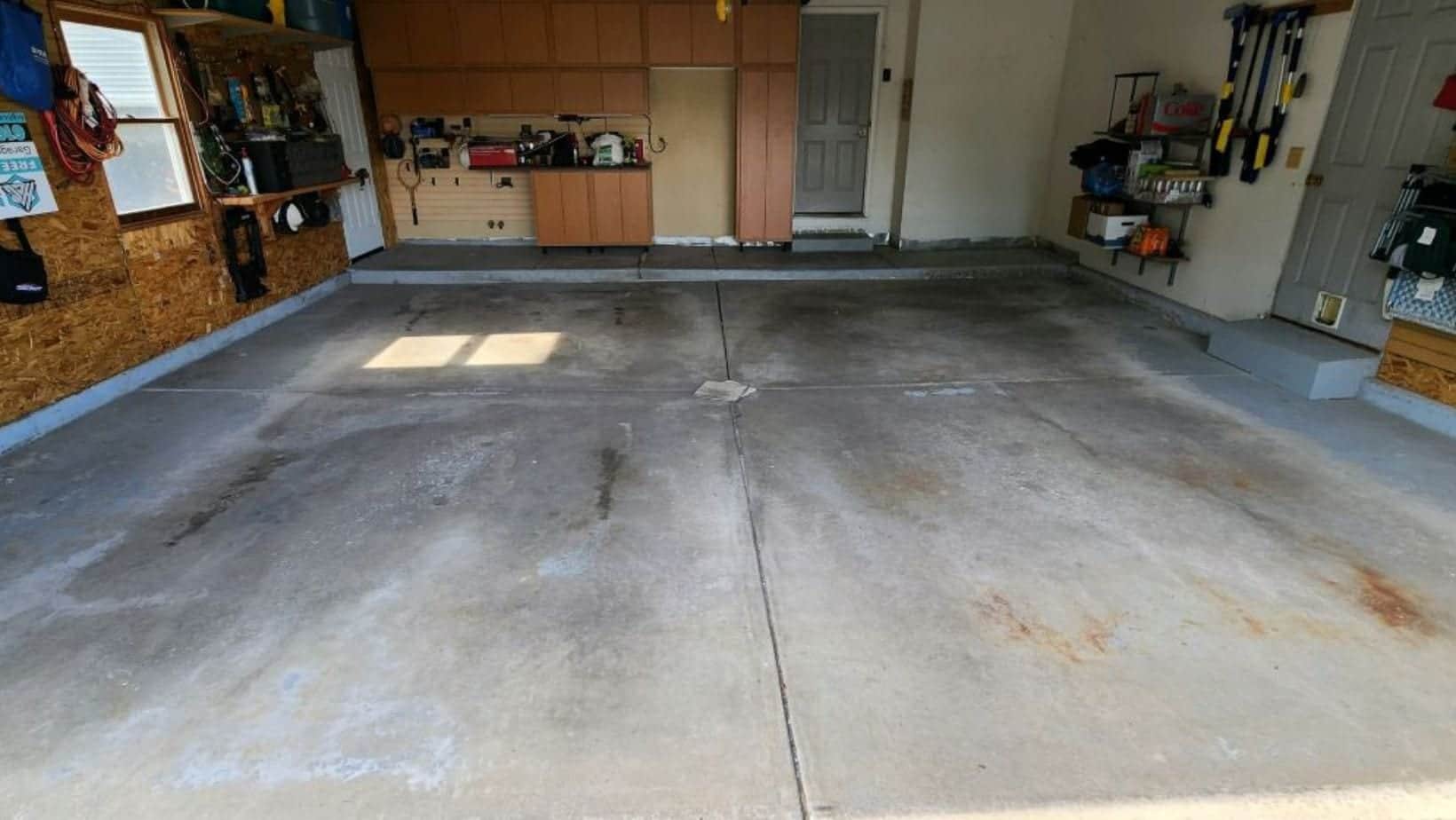
Salt, slush, and grit still need removal, but a finished floor makes the seasonal mess easier to spot and address before it becomes part of the bare concrete's texture.
Grinding and repair work expose the condition that will support the coating. That sequence helps the installation respond to the concrete instead of asking appearance to hide unresolved surface questions.
Humidity and spring melt can make dampness relevant in a Holland garage. Discussing moisture early gives the estimate room to consider the slab and any supporting system detail.
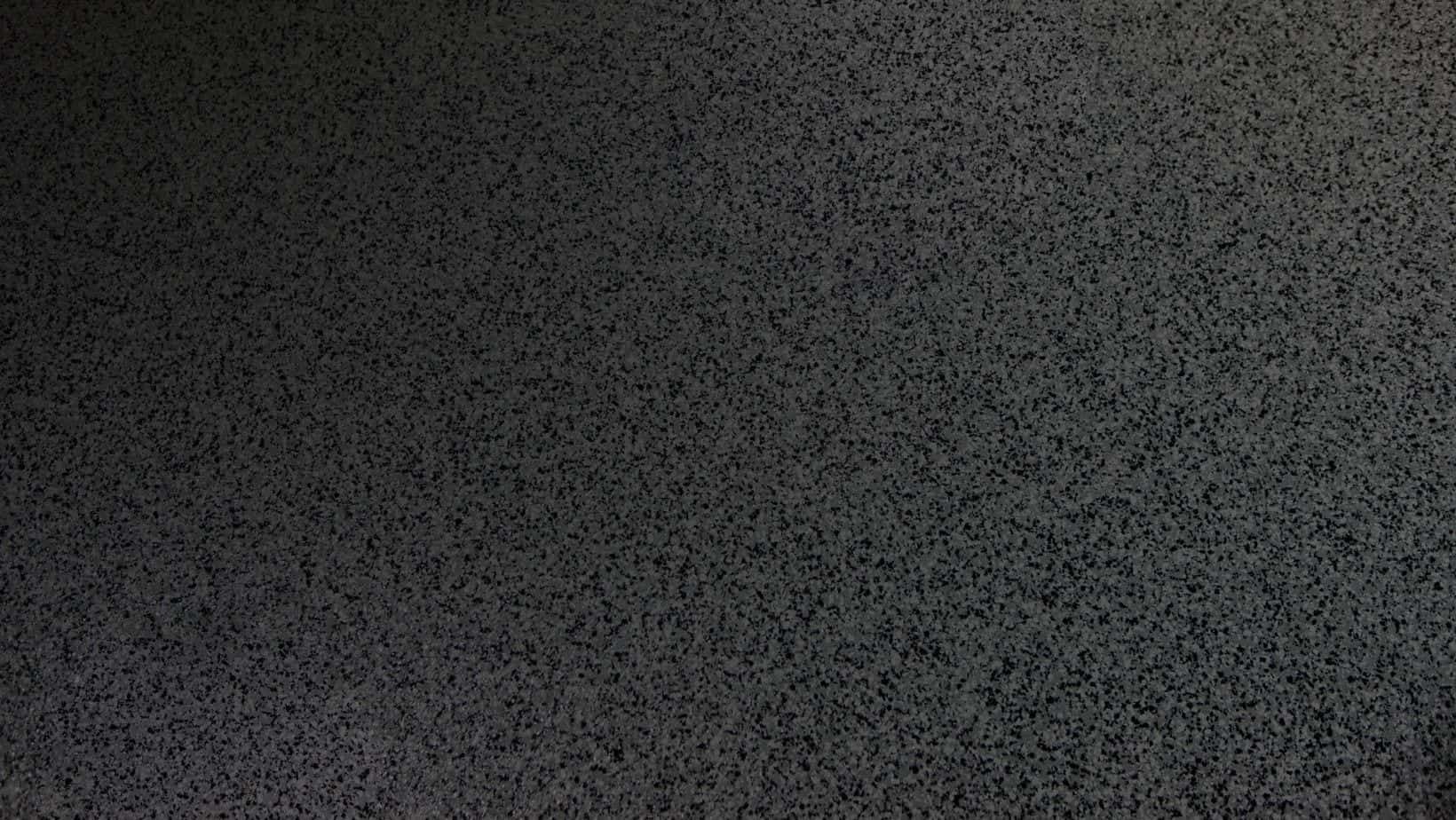
A decorative flake blend gives the garage a visual field rather than a collection of stains and patches. Selection can follow the room's light, storage, vehicles, and use.
Parking, tools, storage, exercise, and workshop tasks place different demands on a floor. We can discuss color, texture, and system choices alongside the activities they need to support.
Preparation can improve the surface and address known damage, yet concrete can continue to move. A useful plan names that boundary so the finished floor is not sold as a permanent structural fix.
Installation Process
A finished garage floor is built through a sequence of decisions, not one quick application. We inspect what is present, create a usable surface, address damage, and install the selected layers in order. The process below shows how the visible result is connected to the work beneath it.
Step 1
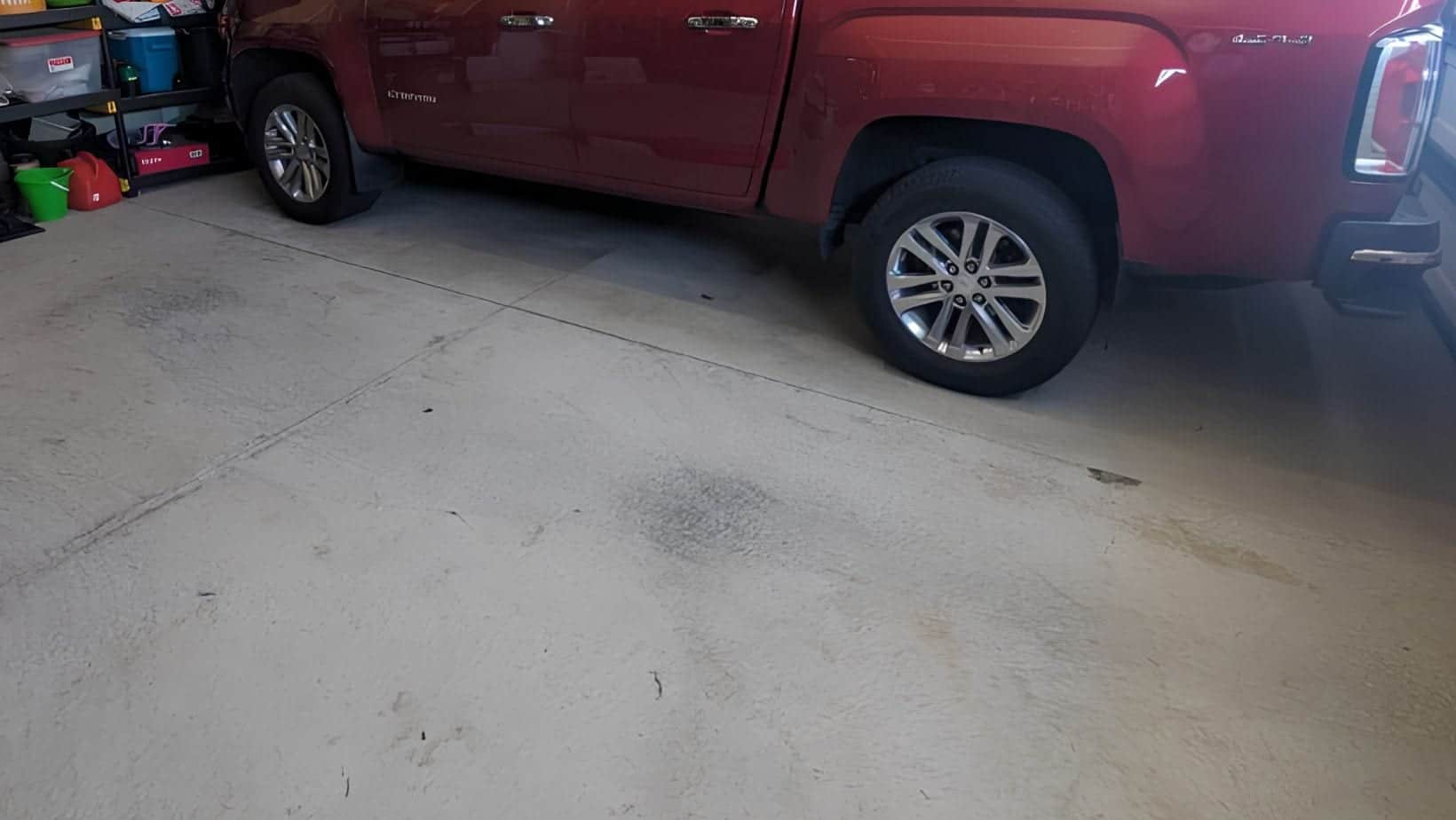
We start by looking at the concrete's current condition and the garage's intended work. Cracks, pits, old coatings, staining, moisture clues, access, vehicle traffic, storage, and finish preferences all help define the project before preparation begins.
Step 2
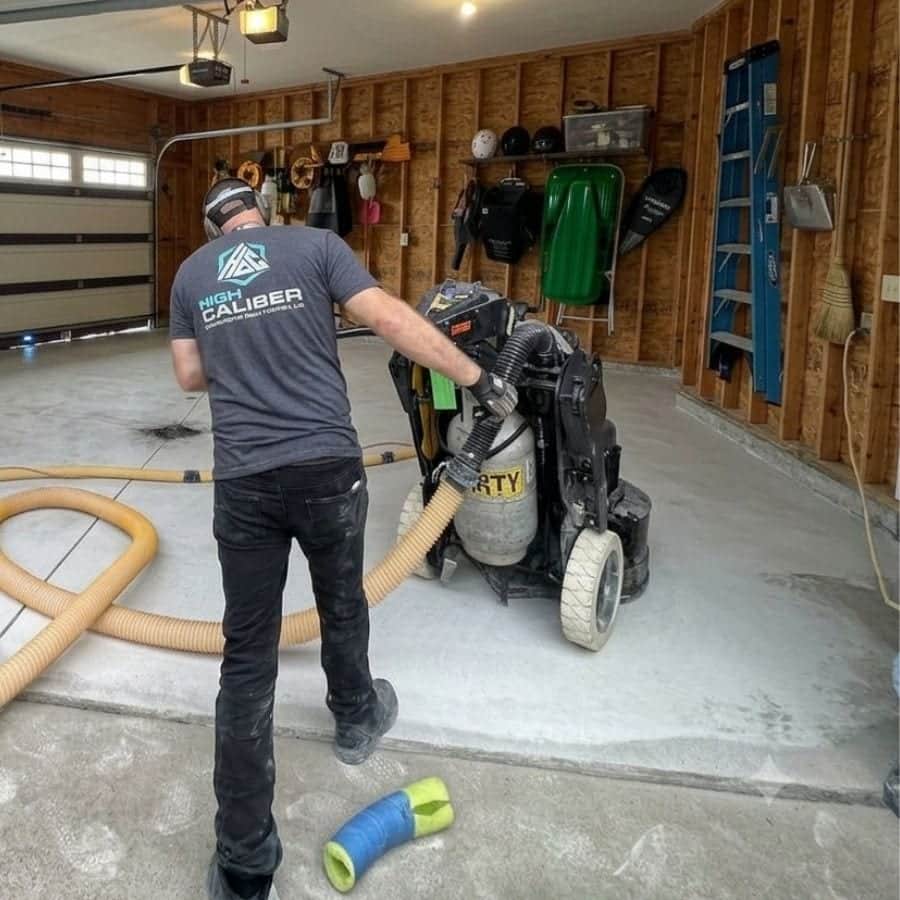
Mechanical diamond grinding removes weak surface material and opens the concrete for the coating system. It also gives the crew a better view of the slab, allowing the planned preparation to respond to what is actually underfoot. Grinding prepares the surface; it does not promise a level or structurally repaired slab.
Step 3
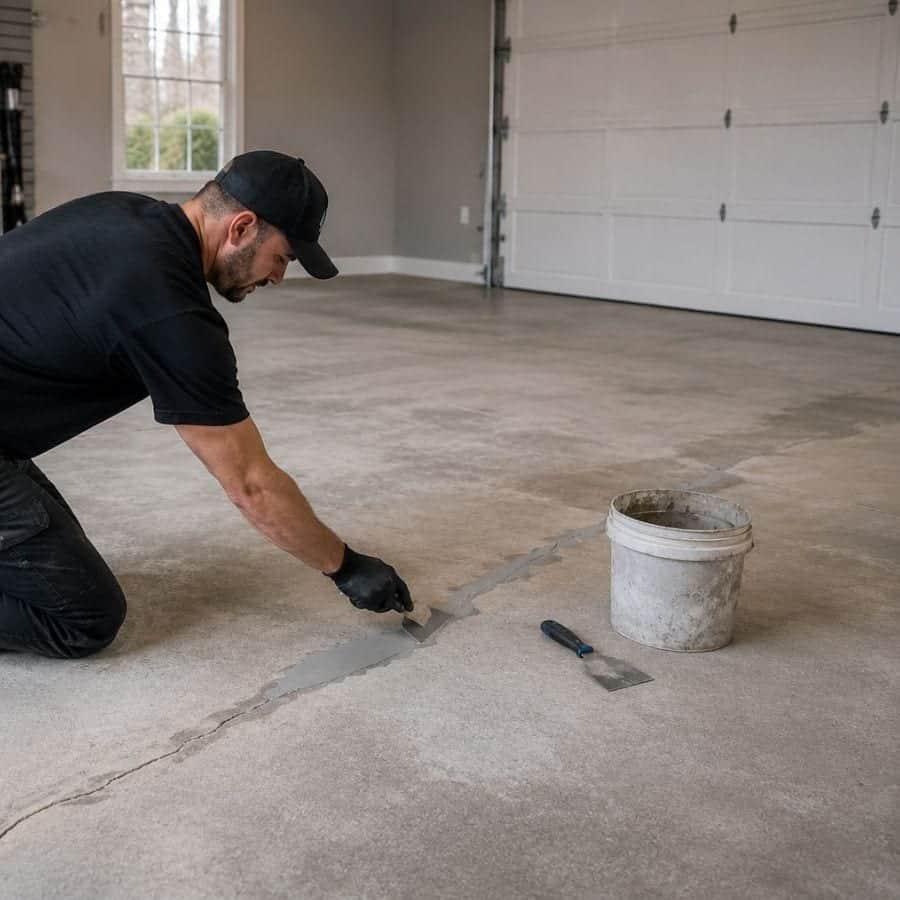
After the surface is opened and inspected, cracks, pits, and spalled areas can be addressed where the scope calls for repair. The aim is a more suitable surface for the next layer, with a clear understanding that repaired concrete may still move in the future.
Step 4
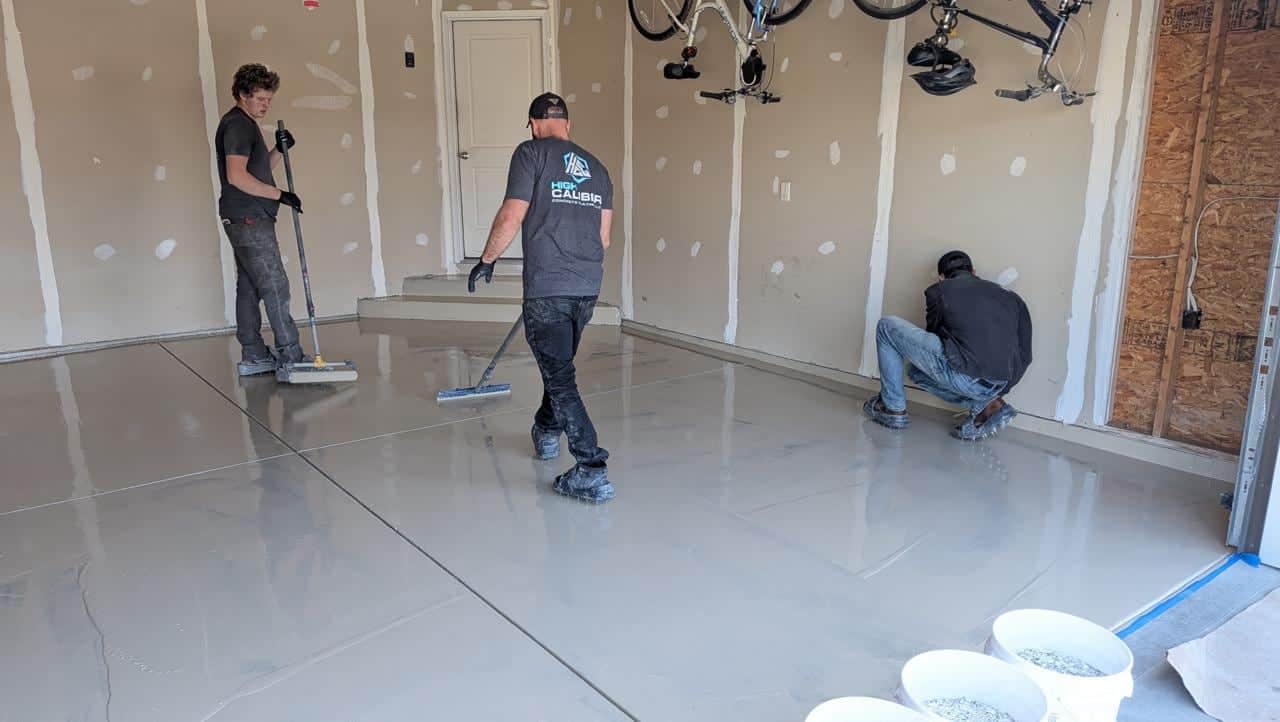
The prepared floor receives the selected basecoat. In our hybrid approach, epoxy contributes adhesion and build, while the complete system uses compatible chemistry in the layers where it fits the slab and the room. The recommendation is based on the floor, not a single material used everywhere.
Step 5
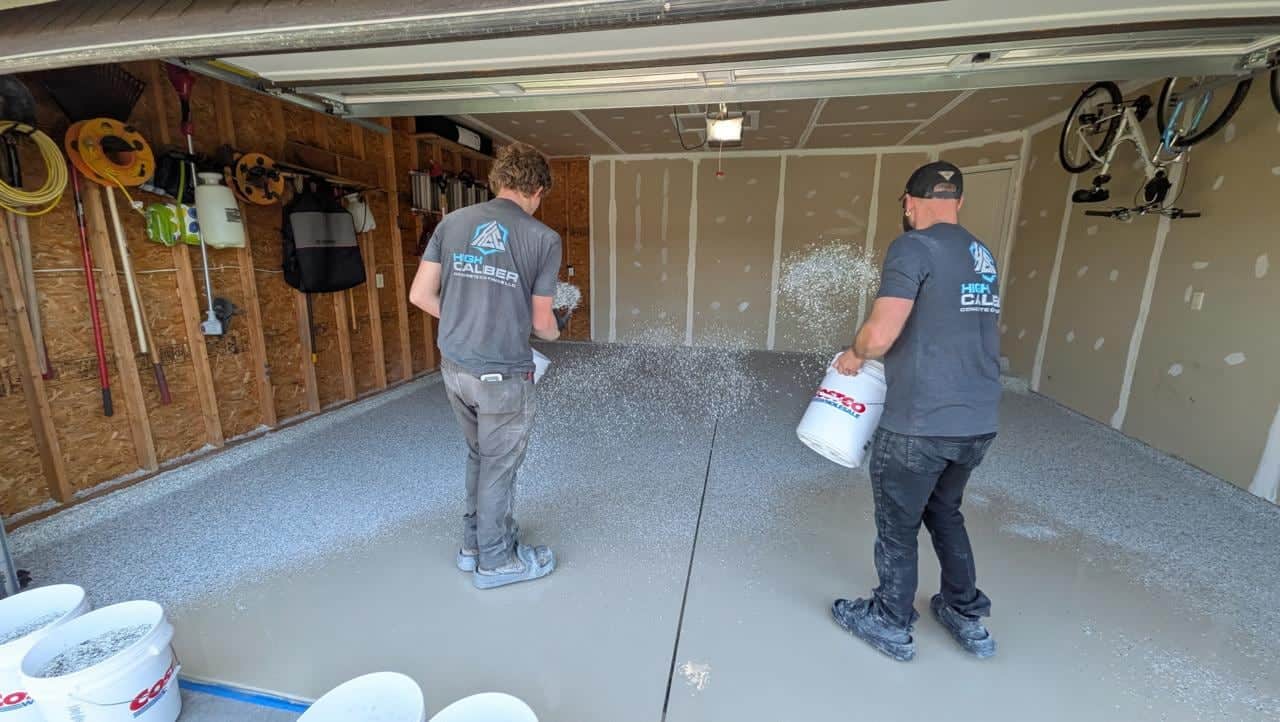
For a flake finish, decorative material is broadcast into the wet basecoat to create the chosen blend and surface character. Once the layer has set, loose material is removed and the floor is prepared for its final protective coat.
Step 6
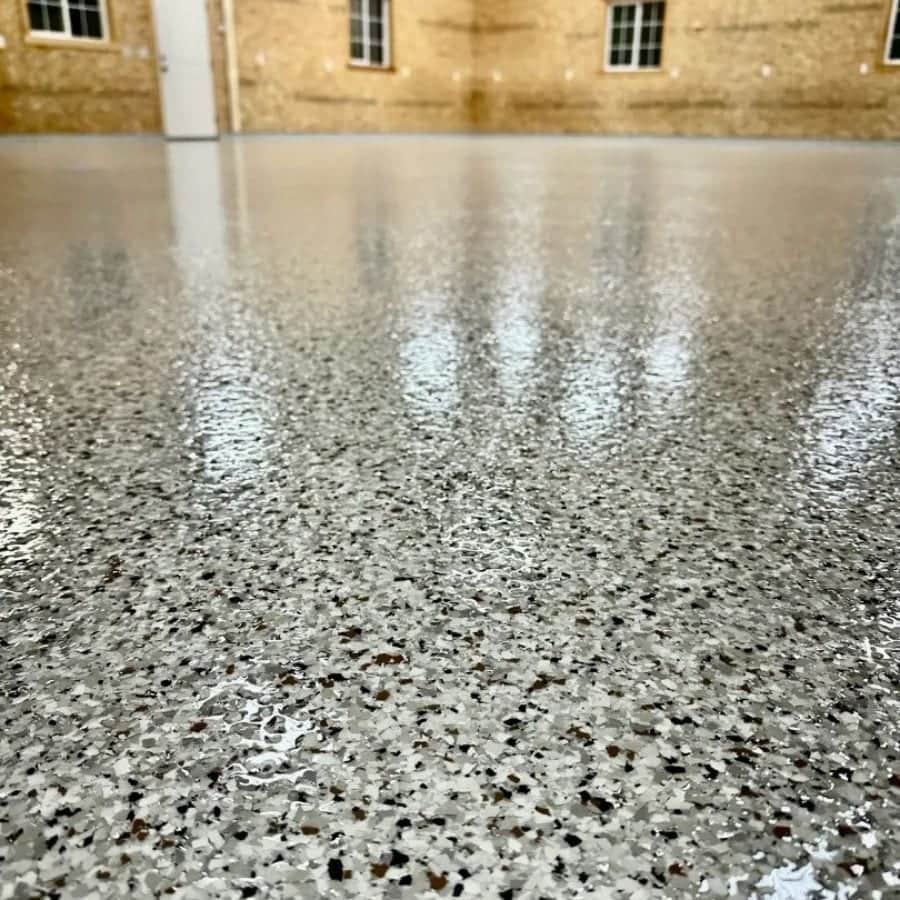
The final coat closes the broadcast layer and leaves the floor ready for the care discussion. We review the finished surface, explain access expectations, and make sure you understand the next step before the garage returns to its normal routine.
Why High Caliber
Our home base is in West Michigan, and Holland is part of the nearby area we serve. The estimate, preparation, installation, and final care discussion stay connected through the same local team.
That continuity matters when a garage has an older slab, a damp corner, a detached work area, or several competing uses. We can explain what the coating can improve, what preparation can address, and what remains a property of the concrete itself.
Customer Reviews
“We recently had our garage floors resurfaced with the Epoxy Floor coating with flakes. High Caliber Concrete did such an awesome job we cannot say enough good about them! So timely, well organized and a beautiful job!! Owner, Jeff, responded to any call ASAP. Shawn and Ethan, fantastic employees for the company, did a tremendous job which was labor intensive…They left no questions unanswered! Such a professional, beautiful job. We would highly recommend them! Lillian & Joseph Bakara Jr.”
“High Caliber Concrete Coatings did a wonderful job refinishing my garage floor. Jeff was very thorough explaining the entire process and this company had the best assortment of colors to choose from. The team was very professional and delivered a flawless result. Thank you Jeff and your team.”
“Wow! Jeff and Mike were amazing to partner with for my garage floor renovation! They did an amazing job but more importantly, they communicated directly with me thru texts, reminders, and in person! Jeff and his team left my garage and exterior area cleaner than when they arrived and gave clear instructions on follow up care needed for my new floor! I would highly recommend High Caliber Concrete Coatings anytime!”
Holland, Michigan
Holland's Ottawa County setting puts the garage in the path of changing conditions. Lake-effect snow, freeze-thaw cycles, road salt, humid summers, and spring melt moisture each show up differently at the door and on the slab. The useful question is not which condition sounds most dramatic. It is how your garage receives, stores, and gets cleaned after those conditions arrive.
An older in-town home may have a repaired or worn garage floor. A newer subdivision garage may be used as a daily entry, storage room, or vehicle bay. Attached and detached garages, rural pole barns, and outbuildings can carry still different routines. We ask about those differences because the finish should support the building's role rather than merely repeat a familiar look.
Commercial, hospitality, light manufacturing, agricultural, and small professional spaces also need a floor conversation tied to traffic and maintenance. Holland is close to Zeeland, Grand Rapids, and Hudsonville, but the estimate remains about your concrete, your access, and your intended use. That is where the floor review begins.
Tell us where wet tires, salt, grit, and spring dampness collect so the preparation conversation reflects the way the garage meets the outdoors.
Parking, storage, tools, exercise, and workshop tasks can change which finish details deserve attention during the estimate.
Our Holland area location makes a nearby estimate practical, while the floor itself remains the source of project-specific decisions.
Frequently Asked Questions
Tell us how the garage is used and what you see on the slab. Cracks, pits, stains, old coating, damp areas, storage, vehicle traffic, workshop tasks, and access all help shape the estimate. Photos or a clear description can begin the conversation, while the floor review determines the preparation and system details.
Epoxy has a purposeful role in the hybrid system. It can provide adhesion and build in the base layer, while compatible polyurea or polyaspartic chemistry serves other needs in the stack. We select the right chemistry for the right layer, then relate that choice to the prepared slab and the way the garage will be used.
No coating removes the need to clean tracked-in salt, snow, grit, or water. A finished surface gives those recurring materials a more uniform place to land and can make routine sweeping and cleaning easier to manage. Moisture still needs to be discussed before installation, especially when the slab shows dampness or a history of coating problems.
It may be possible, depending on the concrete's condition and the planned scope. Diamond grinding helps expose the surface, and cracks, pits, or spalled areas can be repaired where appropriate before coating. Those repairs improve preparation but do not turn the slab into a structure that can never move or develop new damage.
A decorative flake finish can be considered for a workshop, pole barn, detached garage, or other concrete space. We need to understand the traffic, equipment, moisture, storage, and cleaning routine first. That information helps determine whether the proposed system and finish are a sensible fit instead of treating a working building like a parking-only room.
We ask about damp spots, spring melt, staining, previous coating failures, and conditions around the slab. Those observations can lead to a closer moisture discussion and, where appropriate, consideration of a moisture barrier epoxy as a supporting option. The recommendation depends on the actual floor and should be made before the coating sequence is set.
The calendar depends on the floor condition, repairs, square footage, access, selected materials, and installation conditions. Your estimate and scheduling conversation should identify the expected sequence and the return-to-use guidance for your project. We explain care and access expectations before the garage is handed back so the finish has the right opportunity to cure.
Related Services
Your garage may need one focused coating project or a broader plan for preparation, moisture, and finished concrete. These related services offer useful next points of comparison.
Mechanical preparation that opens the surface and gives the coating system a suitable starting point.
Learn moreExplore decorative flake systems for a finished garage surface with a defined visual direction.
Learn moreReview a supporting option when moisture conditions need to be part of the floor plan.
Learn moreLearn about a UV-stable finish layer used in selected decorative and exposed systems.
Learn moreCompare a mechanically refined concrete finish when a coating is not the preferred direction.
Learn moreGallery And Visual Proof
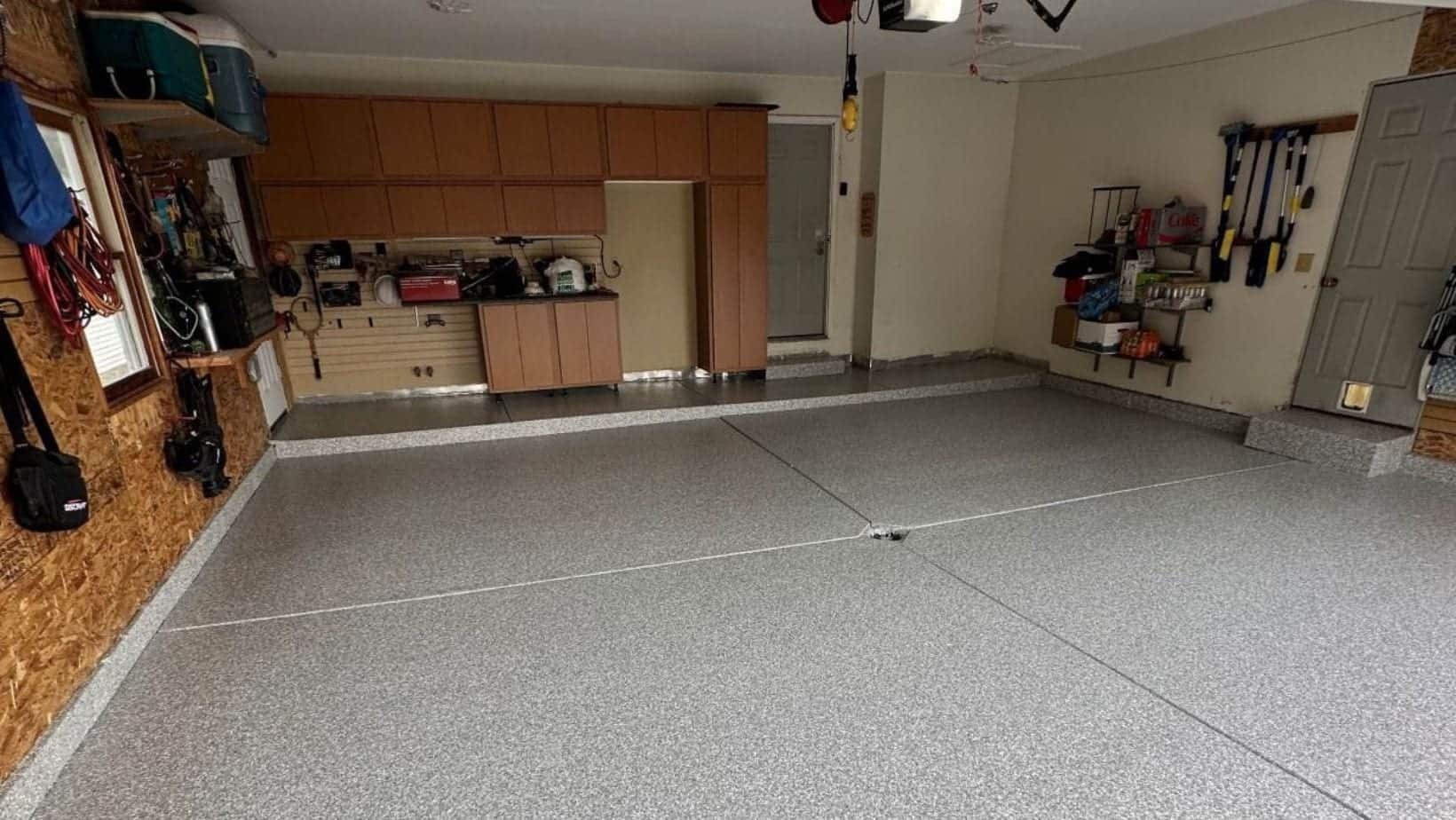
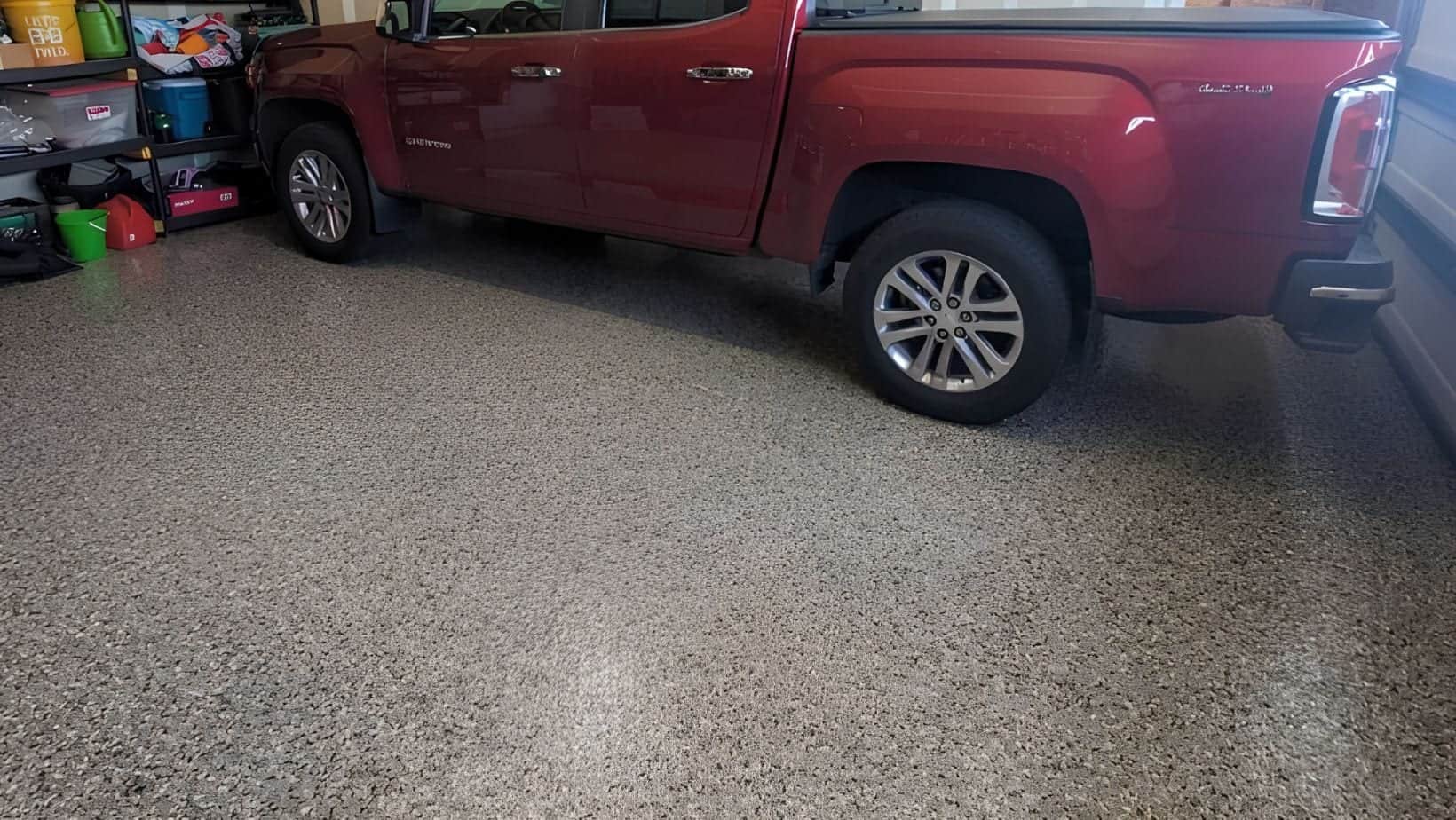
These library images show general High Caliber preparation, materials, and finished-floor examples. They are visual references, not claims about a particular Holland project.
Free Project Quote
Tell us about the space and we will follow up with a clear recommendation and quote conversation.
Phone
Business Hours
Free Estimate
Share what the slab is doing now, how the room is used, and what you want the finished floor to do better. We can talk through preparation, hybrid system choices, flake options, access, and the questions that matter before installation. We keep the recommendation tied to your actual concrete.
Request your free Holland estimate online or call High Caliber at (616) 777-7348 to begin the conversation.