
Winter Residue Has A Defined Surface
Road salt, slush, and grit still call for regular cleanup. A suitable coating gives routine winter mess a more uniform finished surface instead of leaving every spill against porous concrete.
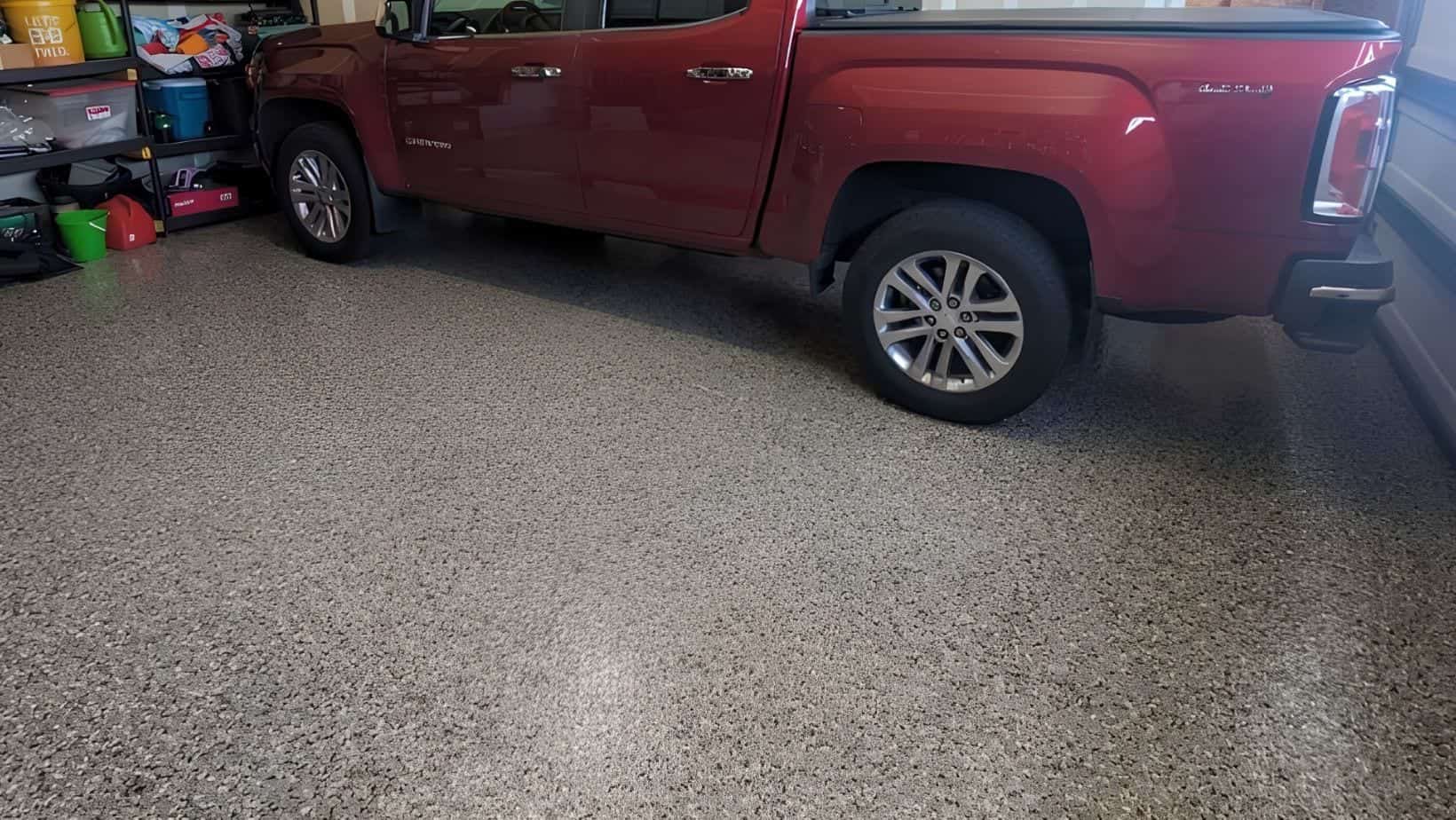
Your Zeeland garage connects the driveway to the house, but it may also serve as storage, a work area, or a place for equipment. We look at the concrete and the routine together, then outline preparation, hybrid coating layers, and finish options that make sense for the space you actually use.
Service Overview
A garage floor has to receive more than parked tires. Salt, meltwater, grit, wet shoes, tools, storage bins, and moving equipment all leave different marks. We begin by learning how your room works and examining the concrete before a finish becomes the center of the discussion.
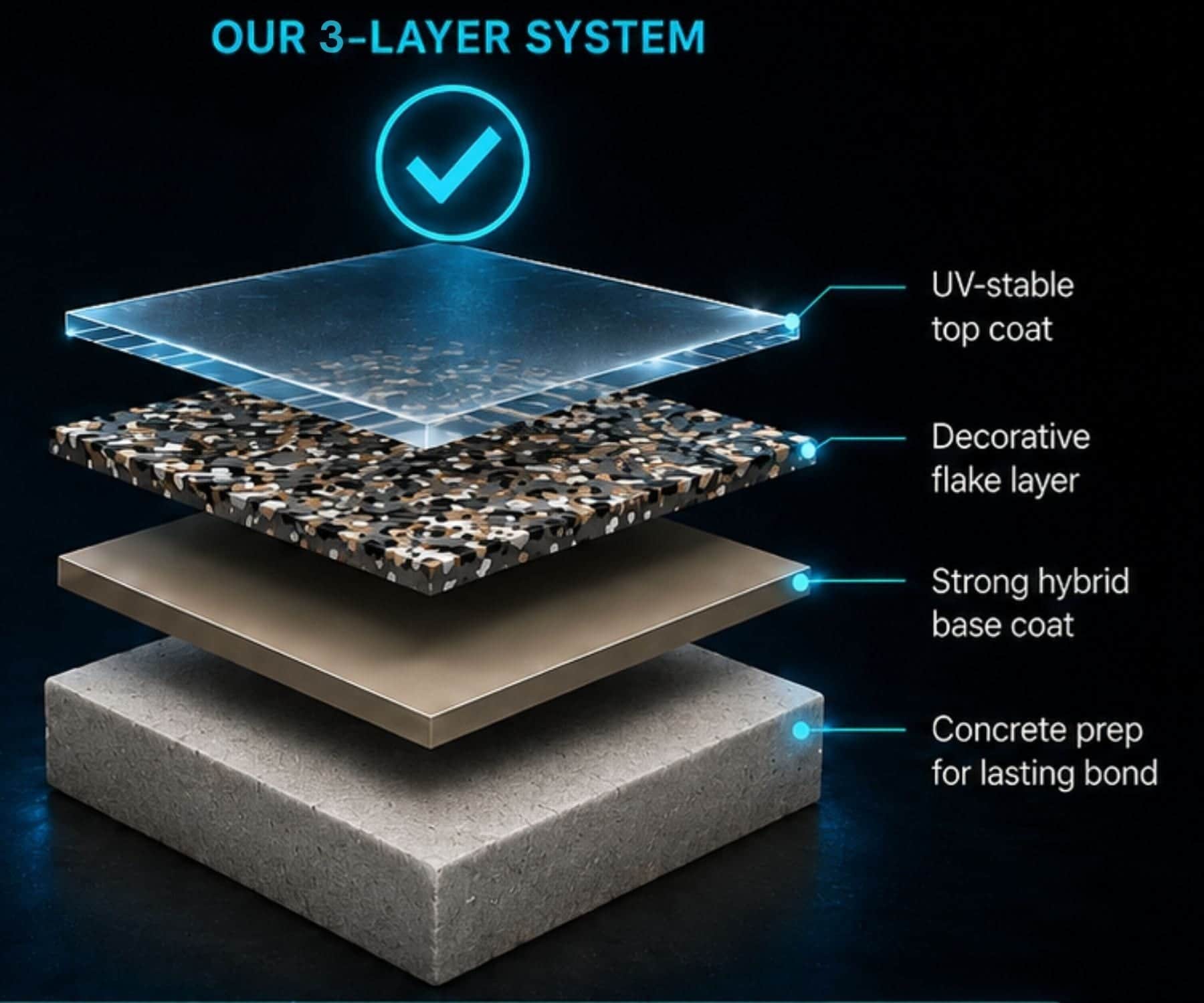
Our hybrid system assigns materials specific jobs. Epoxy provides adhesion and build in the basecoat. Polyurea can contribute flexibility, UV stability, and chemical resistance within the compatible assembly, while polyaspartic may complete a decorative flake floor. The recommendation follows the slab and its use.
Benefits
A coating is useful when it supports the ordinary work of the garage. The right preparation and system can make cleanup, storage, arrival, and appearance easier to manage without pretending the floor becomes maintenance free.
Road salt, slush, and grit still call for regular cleanup. A suitable coating gives routine winter mess a more uniform finished surface instead of leaving every spill against porous concrete.
If bicycles, lawn equipment, bins, or tools share the garage, that activity belongs in the estimate. We can discuss traffic, access, and wear around the way your household uses the room.
Spring melt and humid weather may keep dampness in the picture. Noting stains, wet areas, or earlier coating problems before installation helps us decide what the concrete needs.
Bare concrete can hold dust and absorb spills. A properly prepared coating creates a more consistent surface for sweeping and washing, while normal care remains part of keeping the garage ready.
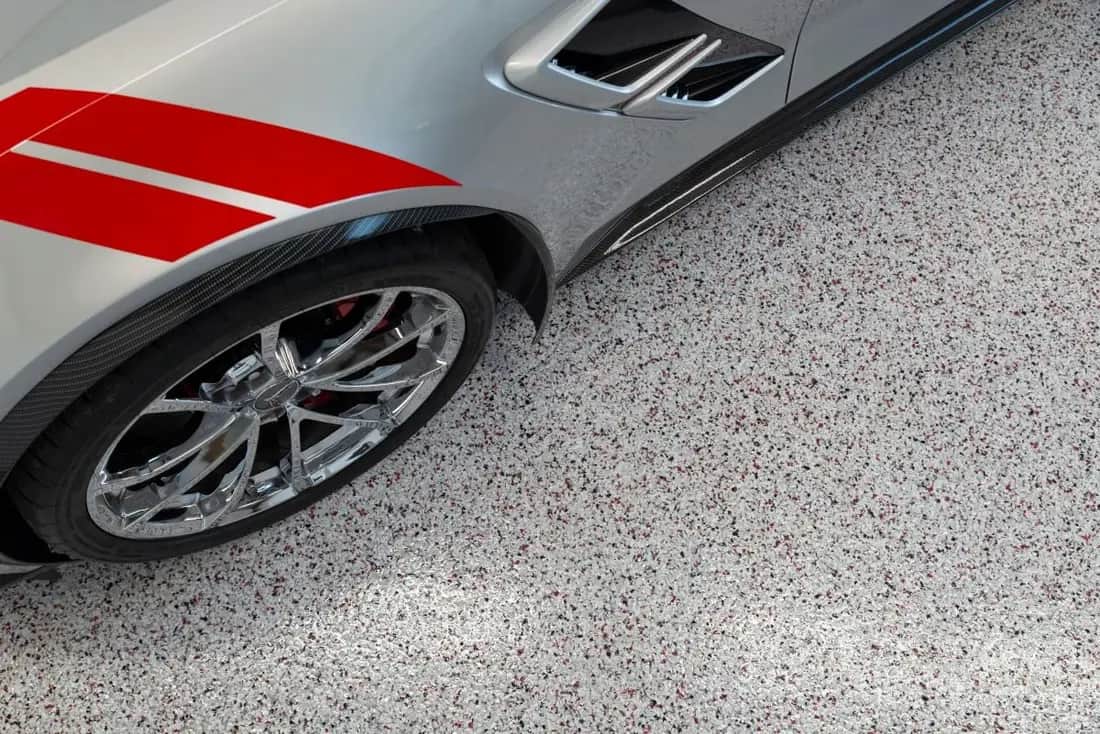
Decorative flake can give the garage visual texture and help connect the floor with cabinets, vehicles, lighting, or adjoining spaces. We use the room as the guide for color direction.
Adhesion, build, flexibility, chemical resistance, UV stability, and appearance do not all ask the same thing. A hybrid assembly lets compatible layers perform their intended roles.
Installation Process
The order of the work matters because each stage prepares the next one. We move from a close look at the garage to a profiled and repaired slab, then install the selected layers and explain care before the space returns to everyday use.
Step 1
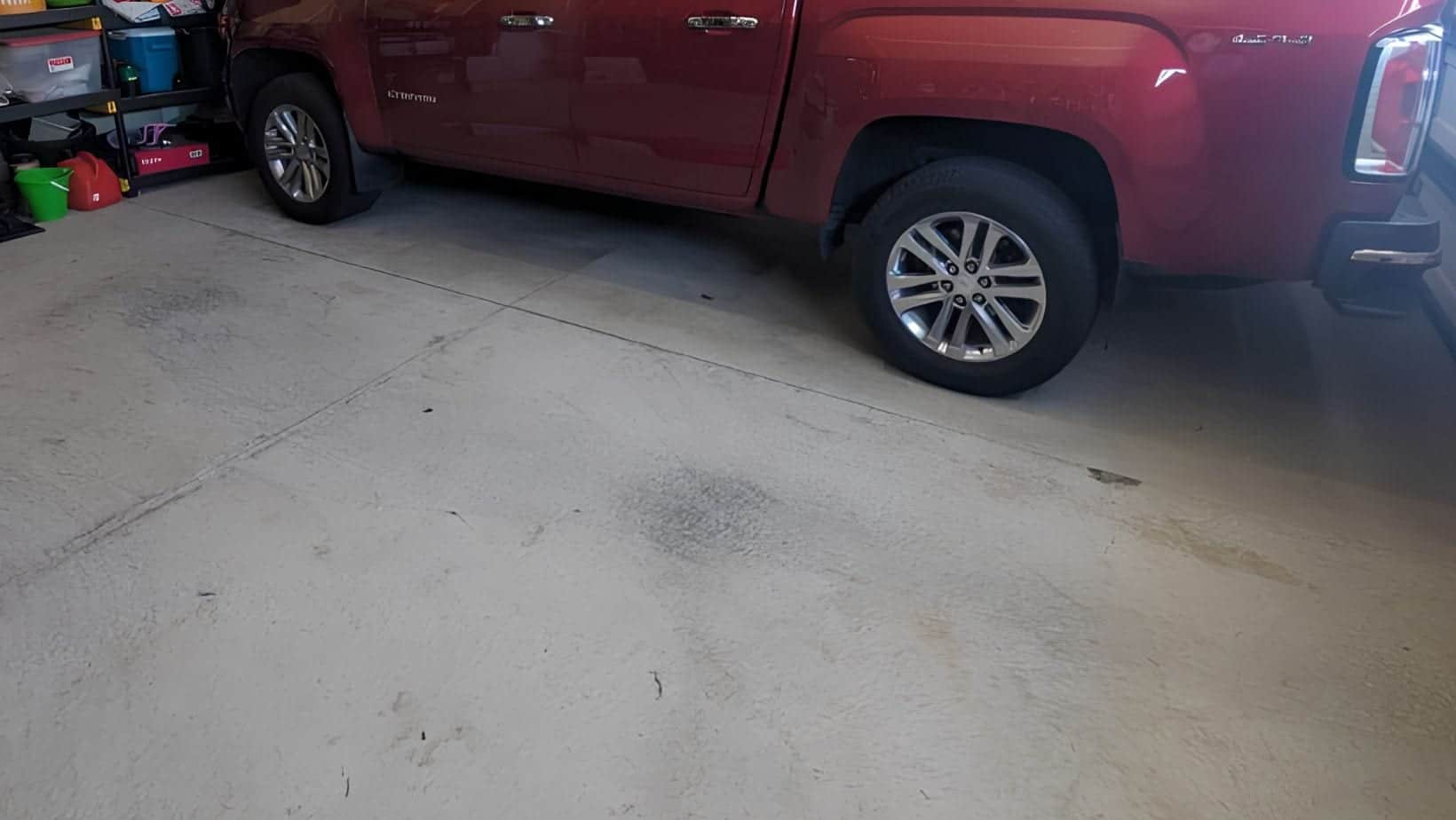
We start with the surface and the job the room needs to perform. The review considers concrete condition, prior coatings, visible moisture, traffic, storage, access, and the finish you want, so the estimate reflects your garage instead of a preset package.
Step 2
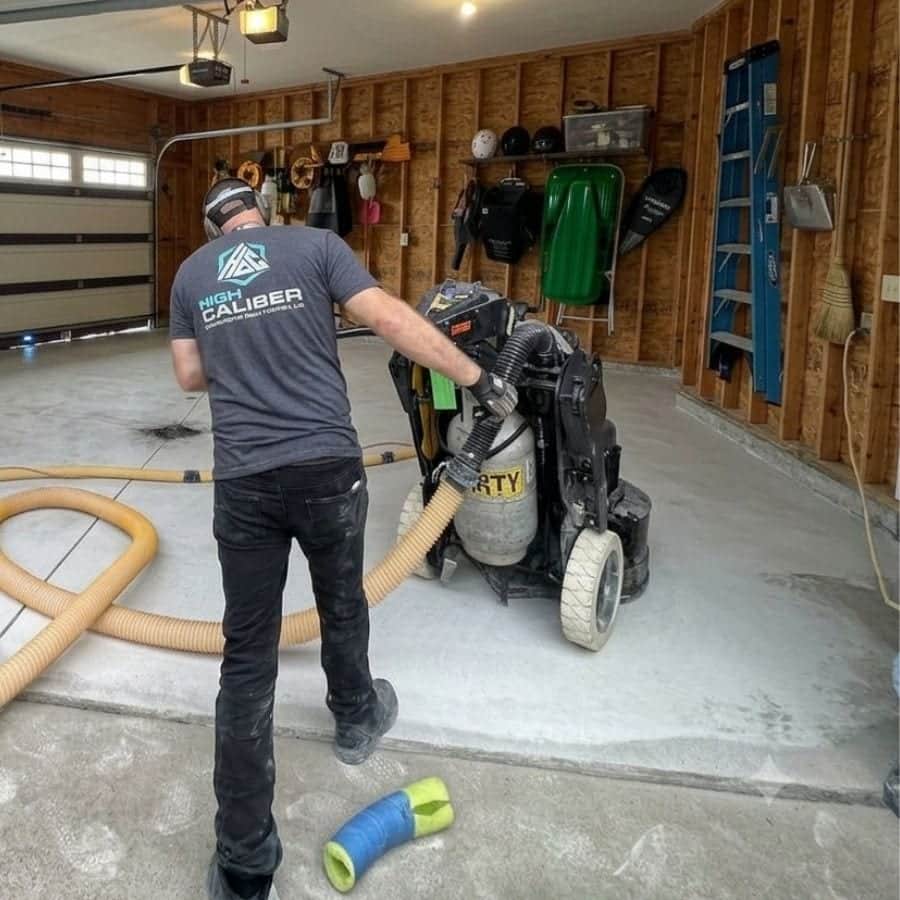
Mechanical diamond grinding removes weak surface material and gives the coating a profile to bond with. It also reveals what the slab is asking us to address. Grinding is preparation for the system, not a promise to level concrete or correct structural movement.
Step 3
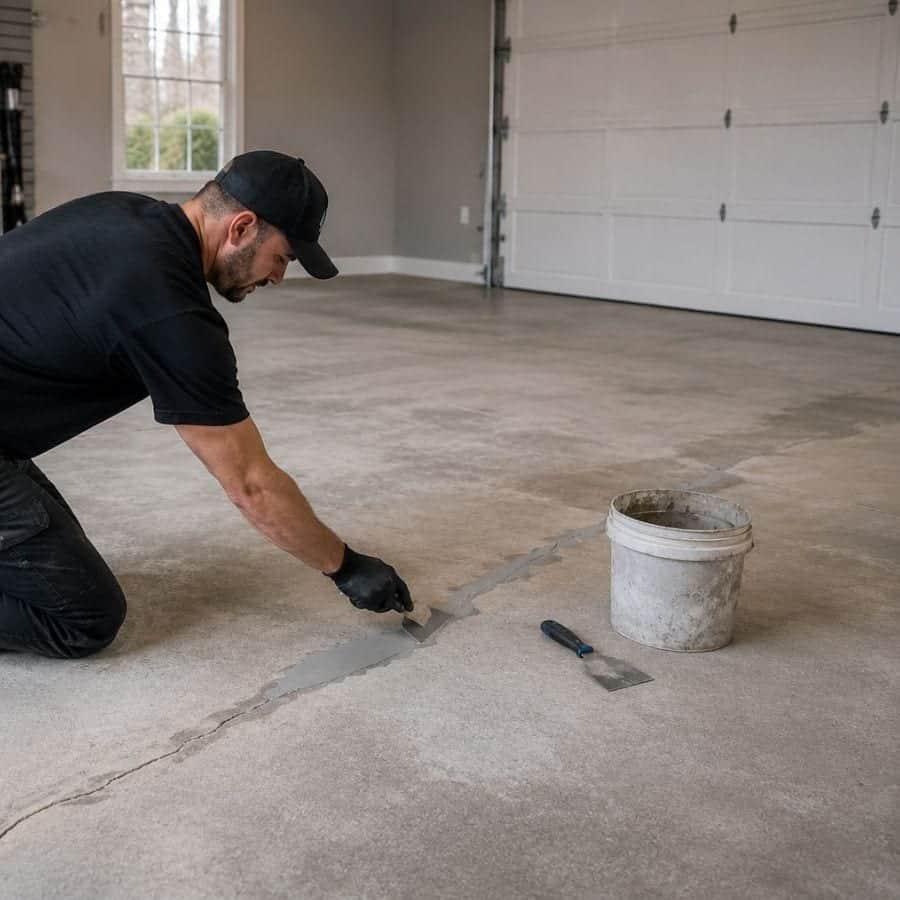
With the surface prepared, we can work through the agreed repairs for cracks, pits, spalls, and other damaged areas. Filling and patching improve the base for the coating, while the final recommendation still respects the possibility of future concrete movement.
Step 4
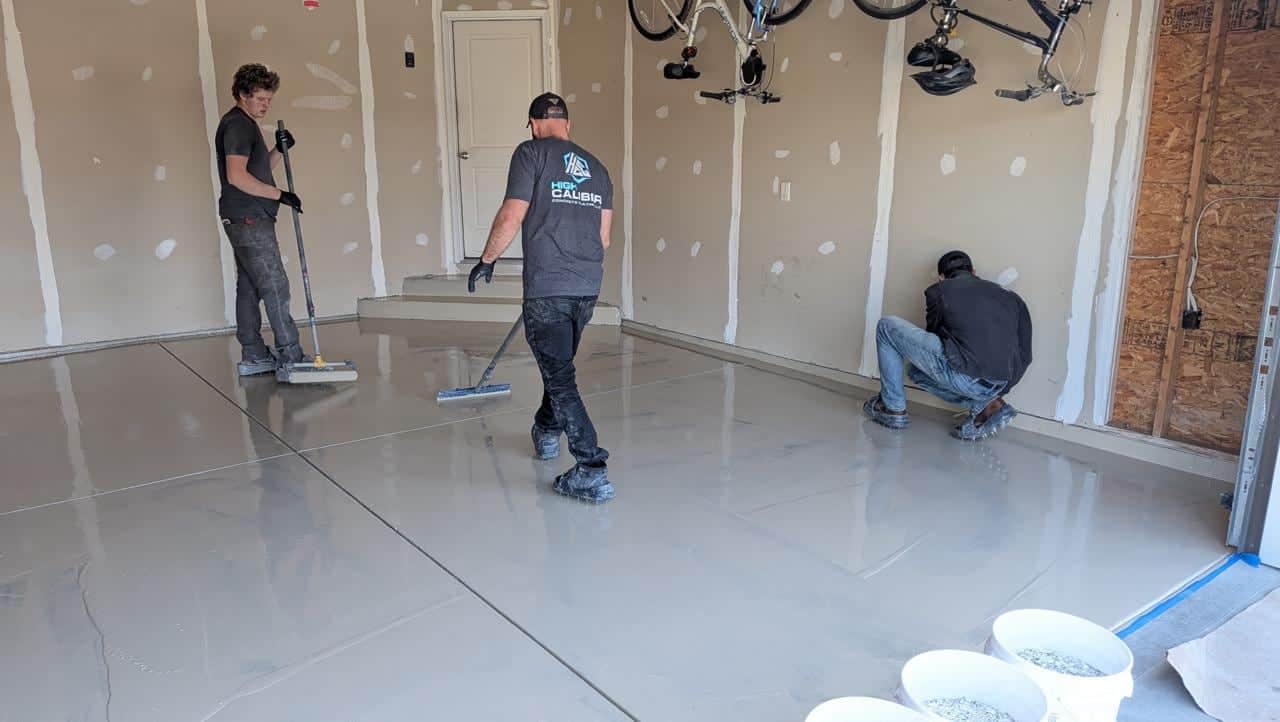
The repaired slab receives the selected hybrid basecoat. Epoxy contributes adhesion and build in its intended layer, while compatible polyurea chemistry contributes its own planned properties within the assembly. The application follows the prepared profile and the conditions discussed during the estimate.
Step 5
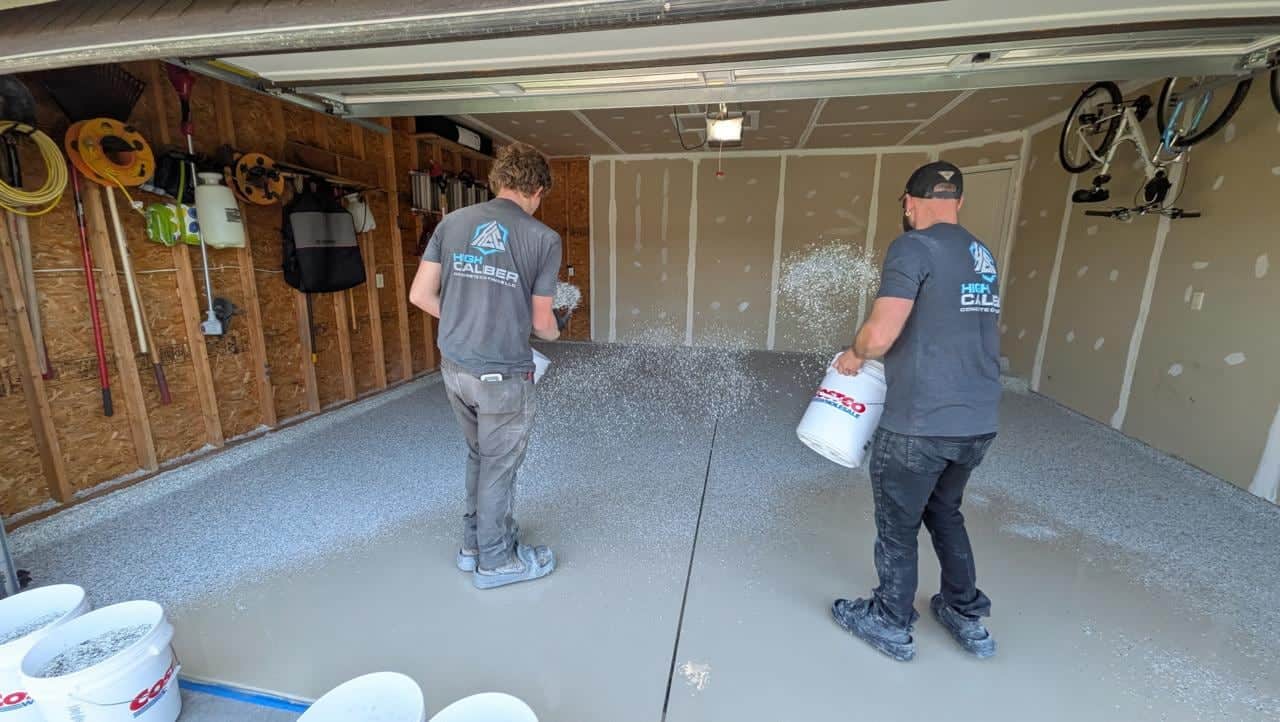
For a flake finish, decorative chips are broadcast across the wet basecoat to create the chosen visual texture. Coverage and color are part of the finish discussion. After the layer cures, loose material is removed and the surface is prepared for its protective topcoat.
Step 6
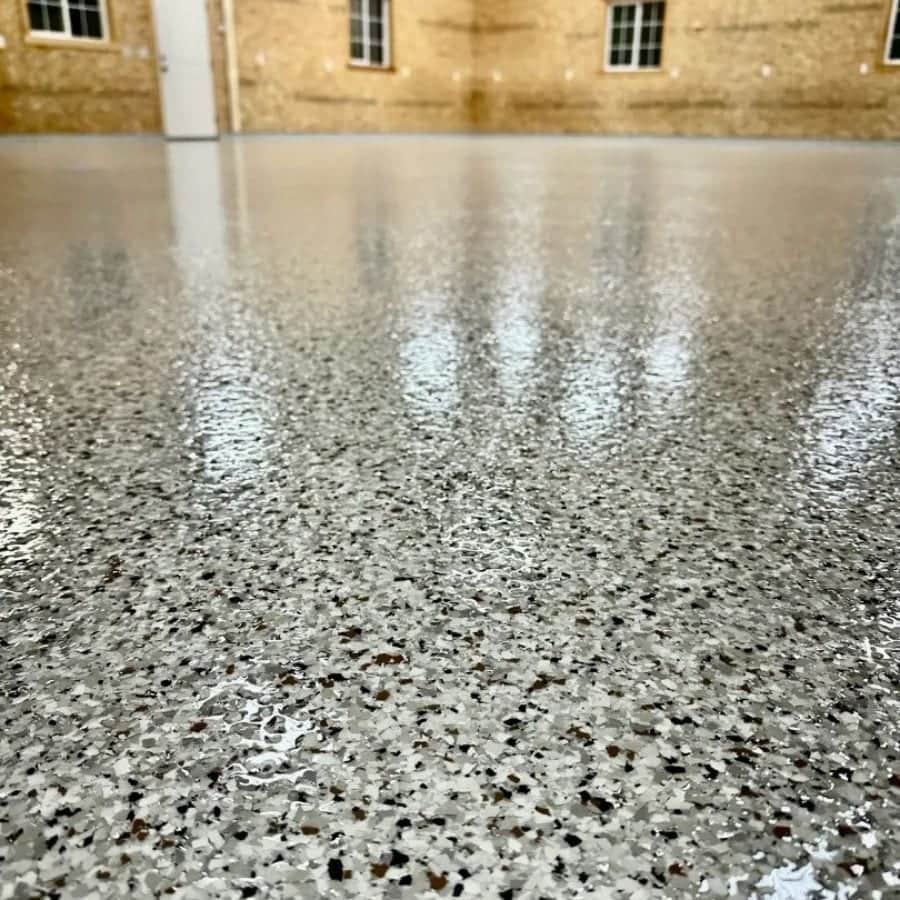
A polyaspartic topcoat completes a typical decorative flake system and seals the prepared surface under its final finish. We inspect the work, clean the area, and review cure, care, access, and return expectations so you know how to bring the garage back into service.
Why High Caliber
Our family-owned company works from the Holland and Zeeland area in West Michigan. That local base keeps the estimate, preparation, installation, and final walkthrough connected, giving you a direct place to ask what a particular slab may need.
We also explain the material stack without turning it into a slogan. Epoxy has a valuable adhesion and build role. Polyurea and polyaspartic have different roles. The useful question is how compatible layers fit your garage's exposure, traffic, and finish goals.
Customer Reviews
“Jeff and his team did the most amazing job epoxy floor coating my 38 year old garage floor. Outstanding, professional, skilled, great communication. Highly recommended.”
“High Caliber's quality and communication was excellent. From the person that visited onsite for an estimate to their crew that performed the service was above normal customer service standards, as they explained the process and timing. My garage floor looks great!”
“Would highly recommend. No pressure sales, quality product, great communication and quality installation. I met Jeff at the home show. I was drawn into his booth by his very enthusiast kids. I got the immediate impression this was a family oriented business and that was reinforced by the conversation with both Jeff and his young son. These values drew me to this business. I signed up for a quote. Shortly after the show Jeff came to my home to present options and provide a quote. No pressure to buy, Jeff understood I needed to get thru tax season before I could be sure about my budget. Over the course of next few months Jeff was responsive to any questions I had and we got the job scheduled. Jeff provided a trailer in the quote to store contents of garage while job was being done, which was very helpful. When talking with others about the quote I learned my price was equal to or less than what neighbors had paid up to six years ago, so I felt this was good pricing. I had thought there would be a ton of dust and a big mess when grinding surface, but the machines had a vacuum attached, clean and efficient work. I was impressed that they coated steps and side walls as well as floor. No mess on drywall or driveway. Crew doing installation were great guys. They took time to fill me in on the process of installation, what to expect, how long for surface to cure and when I could empty trailer. Post install Jeff stopped out to grab trailer, filled me in on what to use and how to clean the floor. VERY happy with the whole process from sales to install to follow up. LOVE my new garage.”
Zeeland, Michigan
Zeeland sits in Ottawa County within the West Michigan weather belt. Freeze-thaw cycles, lake-effect snow, road salt, spring melt moisture, and humid summers can all influence what reaches a garage slab. We use those conditions as practical context for the estimate, while still evaluating your concrete rather than assuming every property has the same problem.
Older in-town homes may have compact garages where years of tire traffic, storage, and repairs are visible at once. Newer subdivisions may make the garage a heavily used daily entrance. Around the city, rural and agricultural properties can add a pole barn or outbuilding with equipment, dirt, and project work that changes the demands on the floor.
That range is why the room's pattern matters. A parking-first garage may prioritize salt cleanup and a straightforward finish. A shared storage or workshop space may need more conversation about movement, access, equipment, and wear. Our nearby service-area references include Holland, Grand Rapids, and Hudsonville.
We do not use a city name as a substitute for looking at the floor. The same Ottawa County weather can meet very different concrete, layouts, and household routines, so the estimate keeps those distinctions visible.
The first section inside the garage can show how much meltwater, salt, grit, and wet traffic arrive from outside.
Tools, storage, bicycles, and equipment create a different use pattern from a garage reserved mainly for vehicles.
A pole barn or workshop can enter the conversation when its concrete, access, equipment, and intended use fit the scope.
Frequently Asked Questions
Tell us how the room is used from season to season. Vehicles, wet shoes, bicycles, tools, bins, pets, equipment, and household entry all provide useful context. Mention cleaning habits, access limits, damp areas, earlier coatings, visible damage, and anything that makes the existing floor difficult to live with.
We review the slab for weak material, old paint, cracks, pits, spalls, stains, repairs, and visible moisture concerns. The condition of the concrete influences preparation, repair scope, compatible layers, and finish expectations. The estimate should make those decisions understandable before installation starts.
Epoxy serves a purposeful adhesion and build role in the basecoat. Polyurea can contribute flexibility, UV stability, and chemical resistance in its intended layer, and polyaspartic may complete a decorative flake floor. We use compatible materials according to their jobs rather than treating epoxy as something to dismiss.
No. A coating does not remove winter maintenance. Salt, slush, grit, and muddy water still need to be managed, especially near the garage door. On suitable prepared concrete, a finished surface gives that routine residue a more consistent place to clean, while the room's drainage and use remain important.
Those conditions are evaluated as part of the slab review. Diamond grinding removes weak surface material, and the agreed preparation scope can address cracks, pits, spalls, or damaged sections before coating. Repairs improve the prepared base, but concrete may move again, so no responsible plan promises an unchanged slab forever.
It can be considered when the concrete and project scope are suitable. Workshops and pole barns may involve equipment movement, dirt, storage, spills, and different access than a residential garage. We discuss those demands with you before deciding whether the preparation, system, and finish expectations fit the space.
Share what you have noticed during spring melt, humid weather, or after earlier coating work, including damp spots, staining, or peeling. Those observations help determine what the slab needs before a system is selected. A moisture barrier epoxy may support some projects, but a penetrating sealer is different from a film coating, so the answer follows the actual condition.
Most residential garage flake installations are planned as a two-day sequence, subject to square footage, slab condition, repairs, access, materials, and conditions. Each layer has its own cure requirements. Your estimate will explain the expected sequence and when vehicles, stored items, and normal foot traffic can return.
Related Services
A garage coating sometimes raises a preparation or material question that deserves its own explanation. These related services help you compare the work performed on the concrete with the layers used to finish it.
See how mechanical preparation opens the concrete and creates a profile for coating adhesion.
Learn moreExplore decorative flake choices for garages, workshops, and other active concrete spaces.
Learn moreReview a supporting epoxy option for projects where a specific moisture concern needs attention.
Learn moreUnderstand the role polyurea can perform as one compatible layer in a concrete coating system.
Learn moreLearn about the UV stable finish material often used on decorative garage floors.
Learn moreGallery And Visual Proof
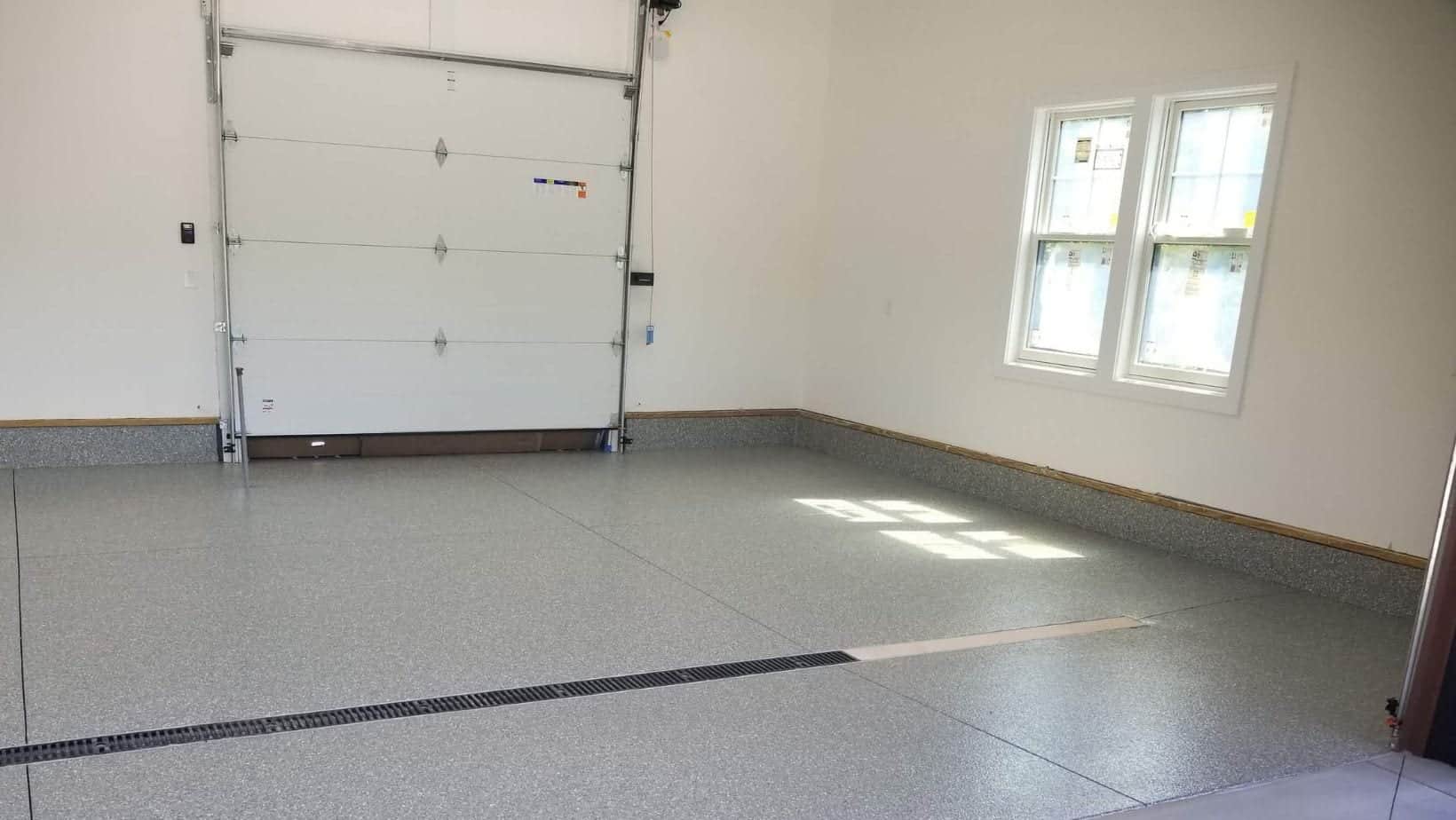
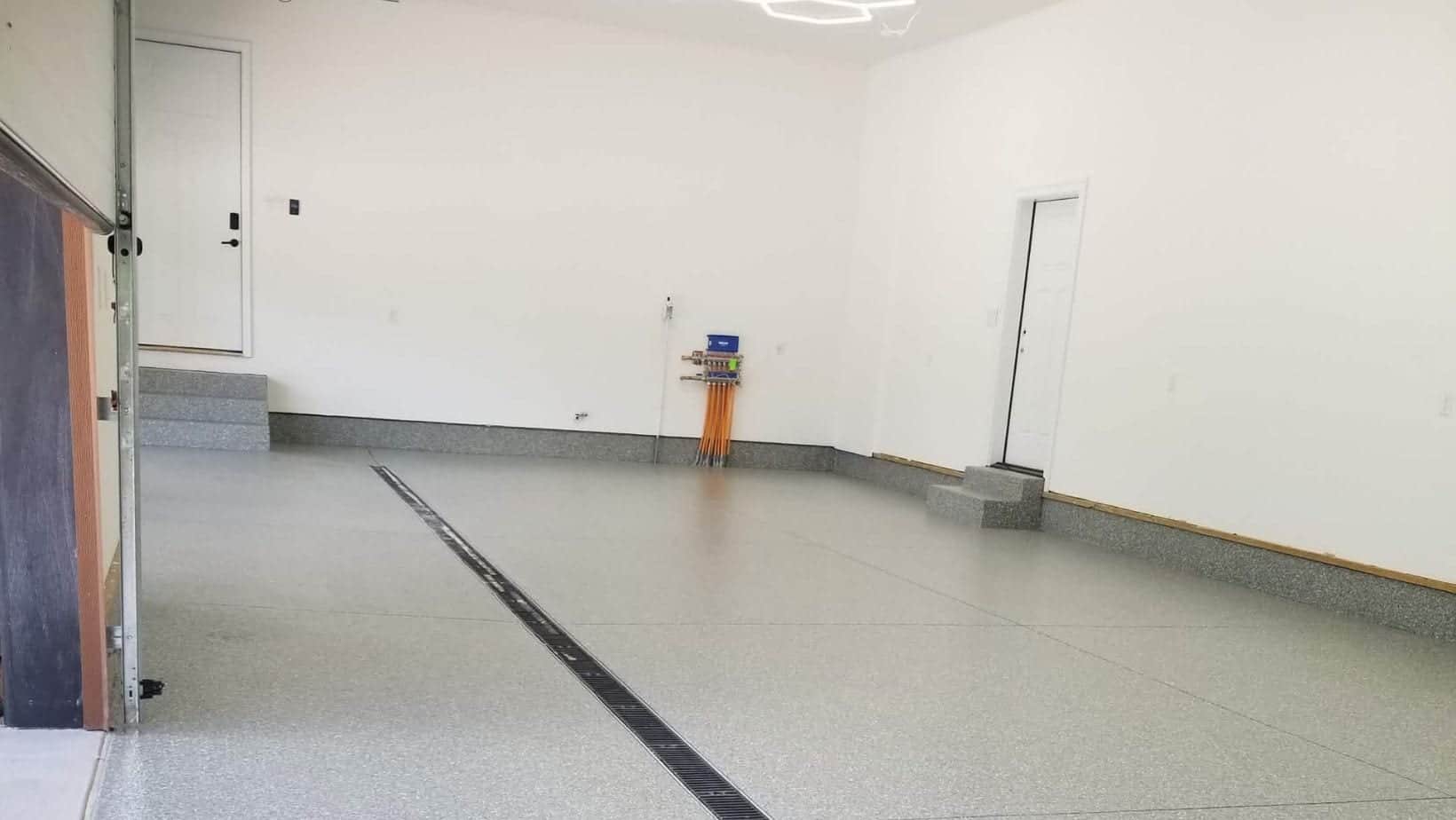
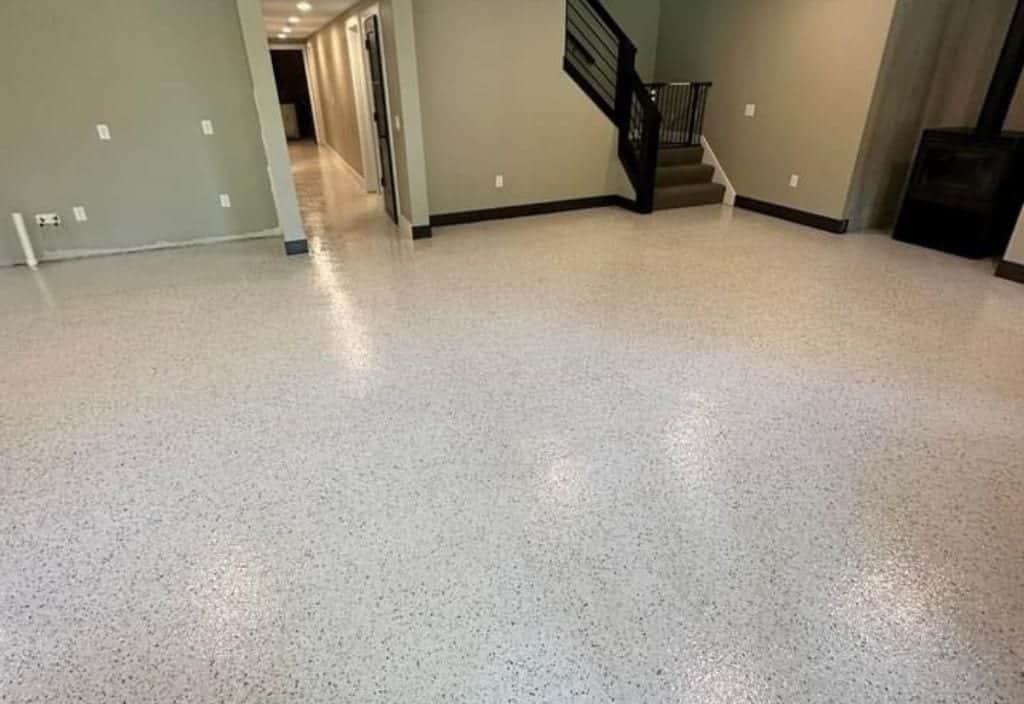
These library images show finish character and installation stages. Use them to notice flake scale, texture, and overall tone, then let your lighting, storage, slab, and routine guide the final selection.
Free Project Quote
Tell us about the space and we will follow up with a clear recommendation and quote conversation.
Phone
Business Hours
Free Estimate
Tell us what enters the room, what the concrete is showing, and what you need the space to do. We can discuss preparation, winter residue, moisture, repairs, hybrid layers, finish direction, access, and cure expectations in a free estimate conversation. Send the request online or call (616) 777-7348 to choose a practical next step for your garage. We will help you understand what happens first, what the crew needs from you, and when the finished floor can return to service.