
Make Wear Easier To Read
A consistent finished surface gives traffic areas a clearer visual boundary. We consider carts, forklifts, vehicles, and foot traffic together so wear expectations stay tied to actual movement.
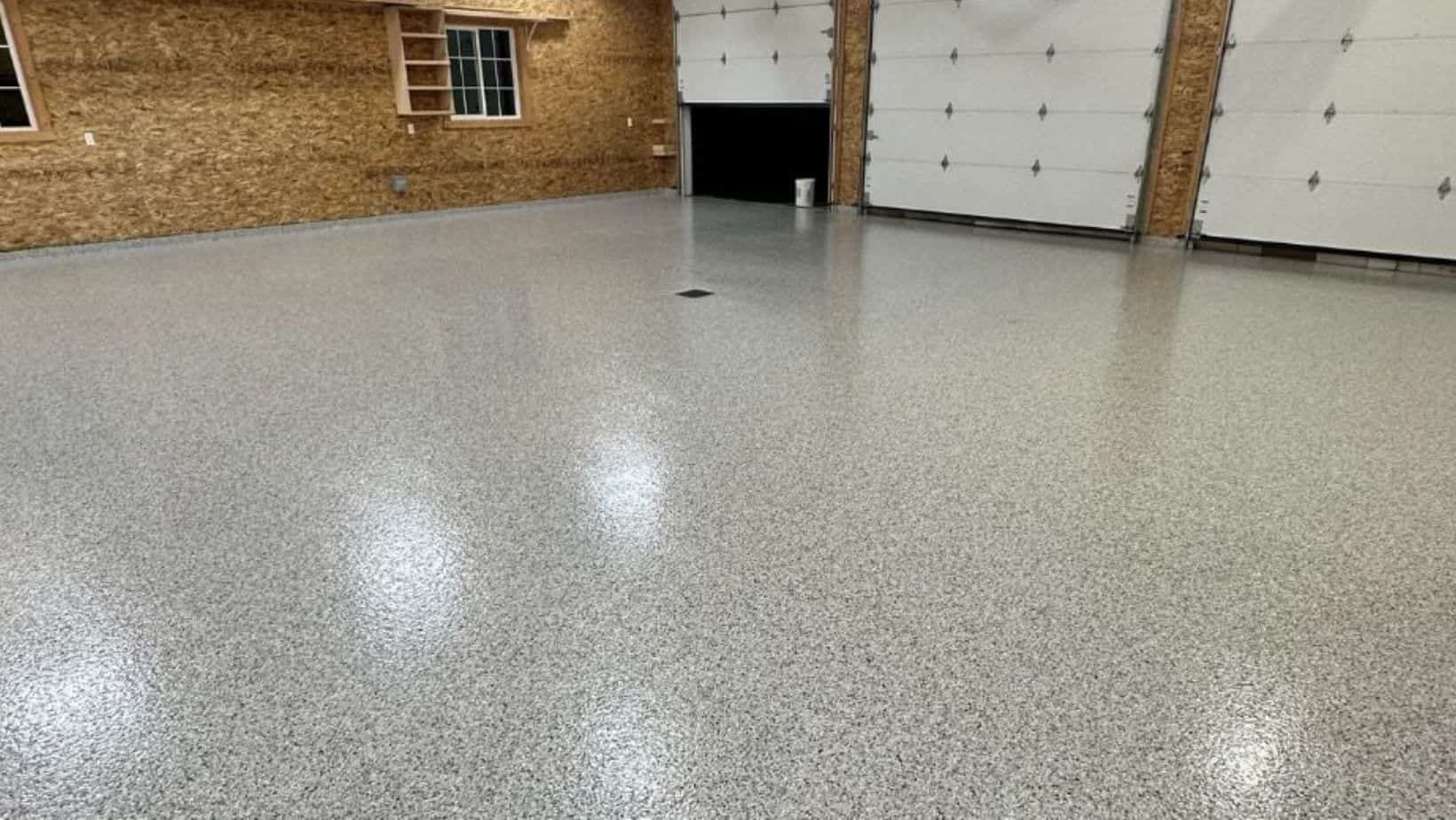
A Georgetown Township facility rarely asks concrete to do one job. A warehouse aisle, fleet room, workshop, or agricultural processing area may cycle from dry traffic to spills and wash-down. We begin by understanding that rhythm, then plan preparation, compatible layers, and access around the floor's actual demands.
Service Overview
Industrial concrete in Georgetown Township can collect tire wear, grit, fluid contact, pallet movement, and cleaning water. We ask where the pressure concentrates and what the slab has already endured. Cracks, spalls, joints, old coatings, contamination, and moisture each change the preparation conversation. A useful estimate names those conditions before a finish is chosen.
High Caliber uses a hybrid epoxy and polyurea system when it fits. Epoxy can provide adhesion and build in the basecoat. Polyurea can contribute flexibility, chemical resistance, and a faster cure role in compatible layers. The chemistry follows the facility, not a slogan.
Benefits
A coating has a useful role when the slab, system, and operating conditions agree. We connect the visible finish to cleaning, exposure, traffic, and the facility's responsibility for ongoing care.
A consistent finished surface gives traffic areas a clearer visual boundary. We consider carts, forklifts, vehicles, and foot traffic together so wear expectations stay tied to actual movement.
A planned coating can make fluid residue and tracked dirt easier to notice during cleanup. The material discussion still depends on what reaches the concrete and how often it is removed.
Chemicals, oils, moisture, impact, abrasion, and temperature changes deserve specific questions. Those answers help us assign compatible material roles instead of treating every industrial room alike.
If cleaning water is part of the workday, we discuss drainage, access, cure, and maintenance before choosing a finish. A coating supports care; it does not replace a care routine.
Preparation can expose cracks, spalls, weak edges, old residue, and joints that need separate attention. We keep those findings visible so the coating scope is not mistaken for structural repair.
Color, sheen, flake, and texture can support visibility in a service bay, workshop, or storage area. Appearance follows traffic, cleaning, exposure, and the job the space performs.
Installation Process
The work proceeds in a defined order because the floor reveals different information at each stage. We keep preparation, material selection, facility access, and handoff connected from the first review through return to service.
Step 1
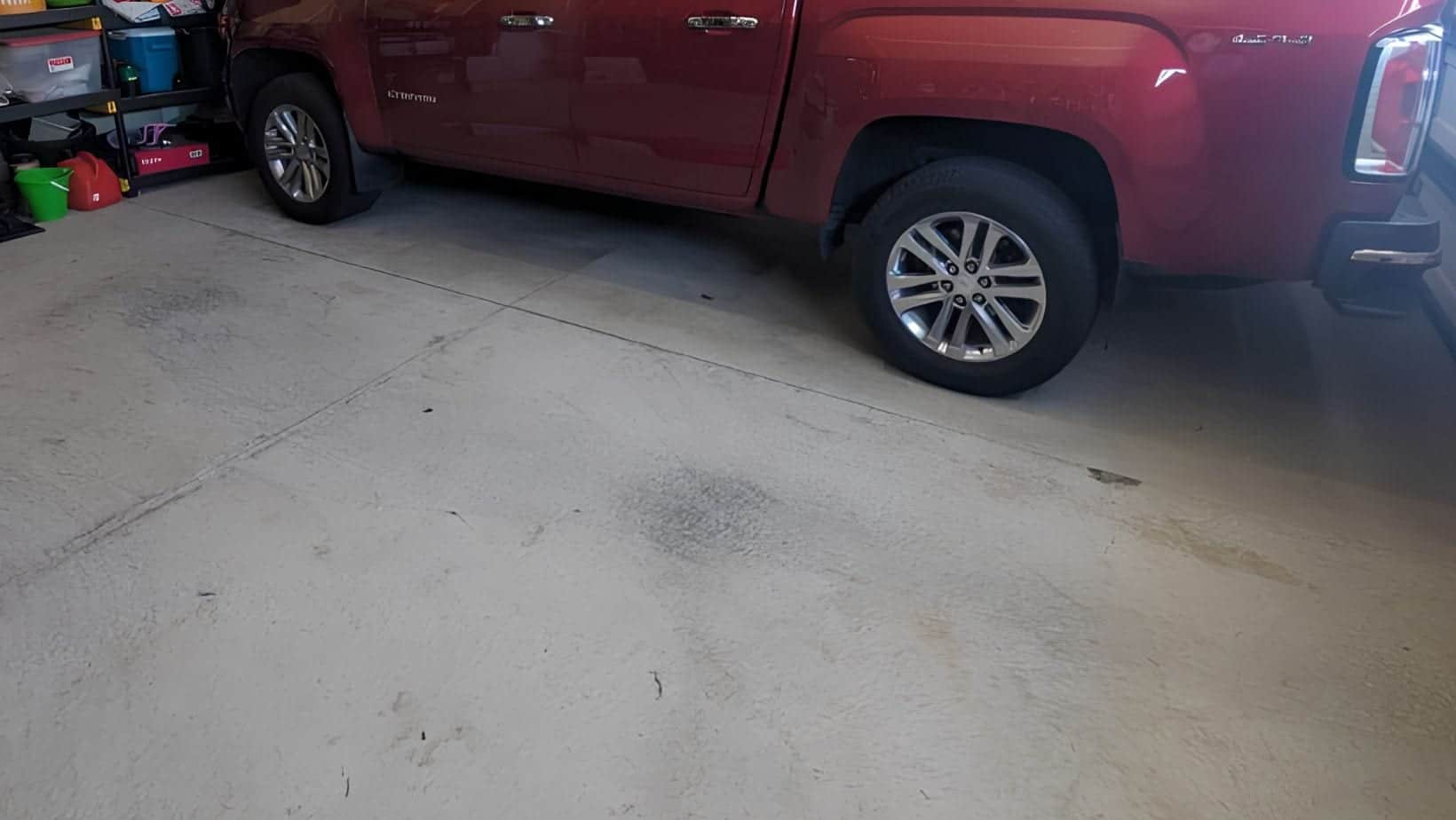
We start by learning how the Georgetown Township facility operates. Tell us where vehicles, carts, forklifts, pallets, equipment, people, spills, and cleaning water travel. We also discuss old coatings, cracks, joints, spalls, contamination, moisture, access points, and the areas that must remain available. This first review gives the estimate a working context before any finish is selected.
Step 2
Next, we turn operating details into a scope. Repeated traffic, abrasive grit, fluid contact, wash-down frequency, temperature changes, and equipment movement may affect the planned sequence. Winter salt at an entry, spring moisture, or a humid work area can also change the access conversation. We identify what the surface must support and which questions still need an answer.
Step 3
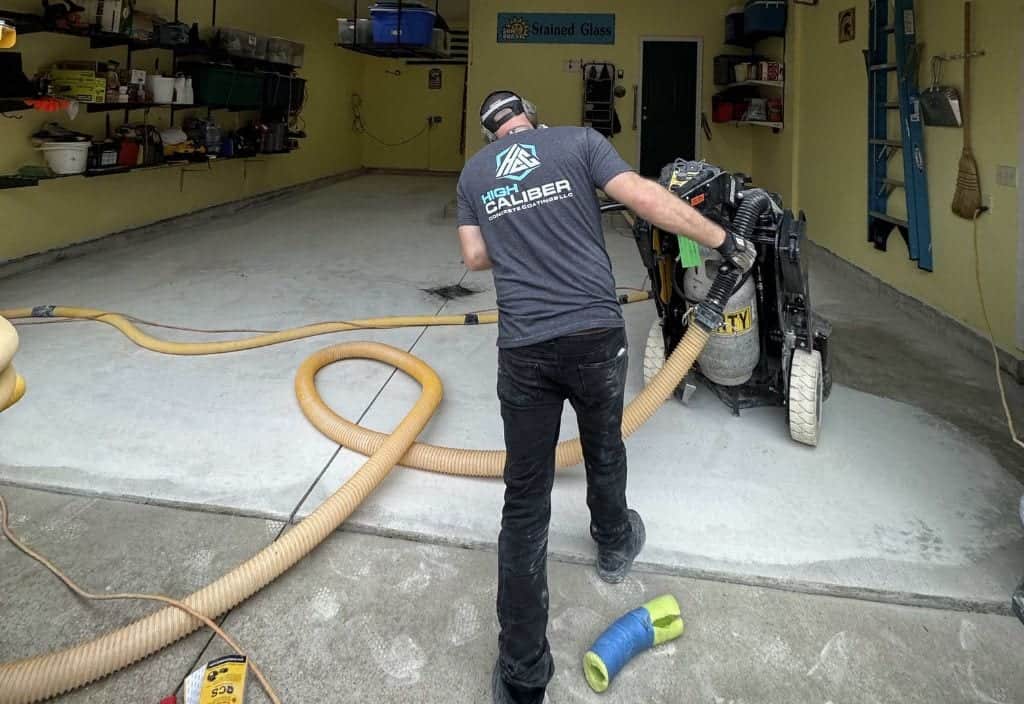
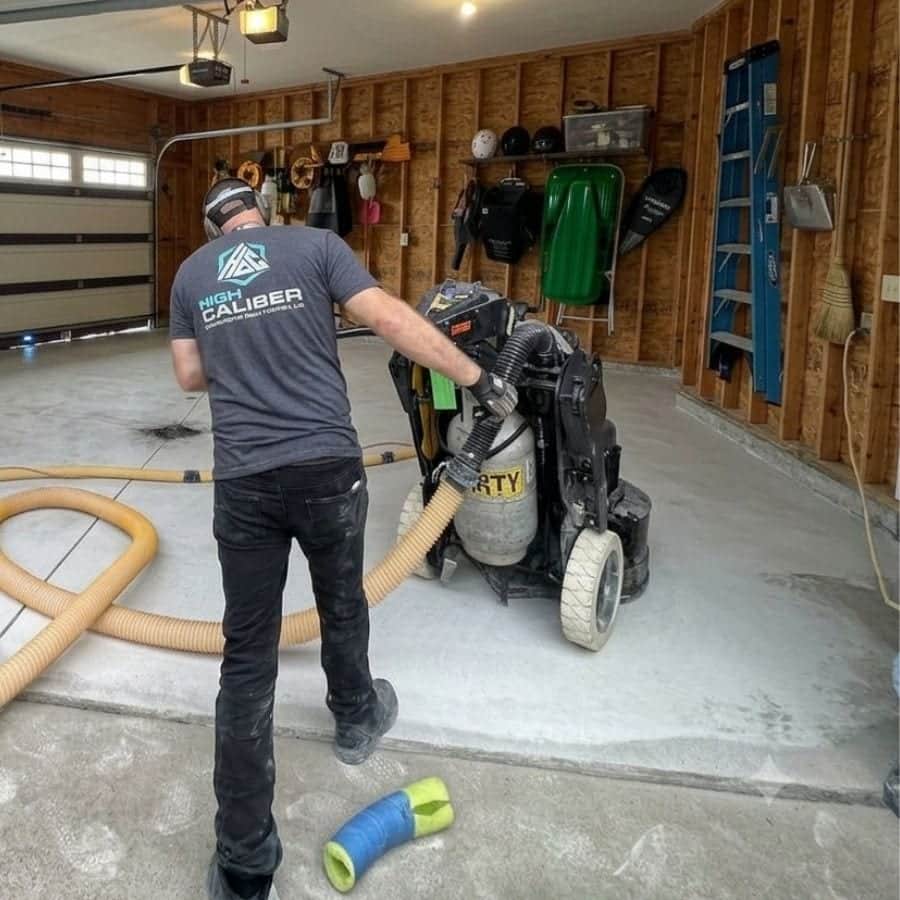
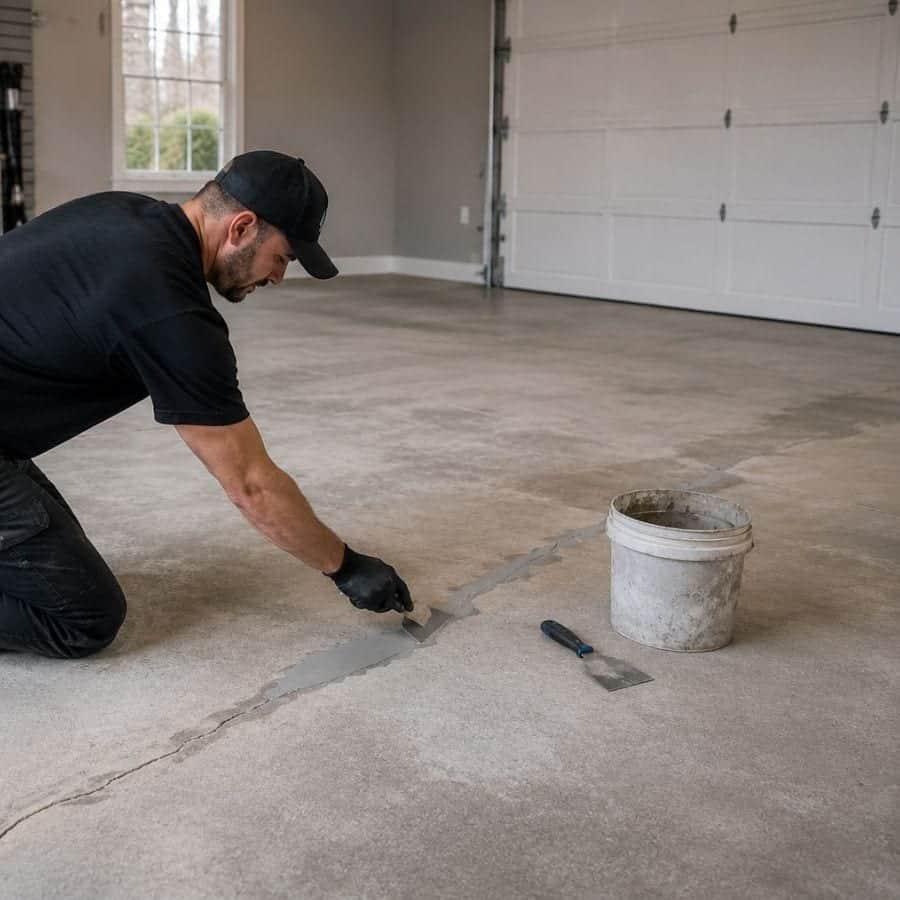
Diamond grinding removes unsuitable surface material and creates the profile required for a bonded coating. We work through open floor areas, edges, corners, joints, and equipment zones with the facility layout in mind. Preparation may reveal residue, prior coating, pits, or weak material that was not obvious from a quick walk-through. Grinding prepares the surface; it does not promise leveling or structural repair.
Step 4
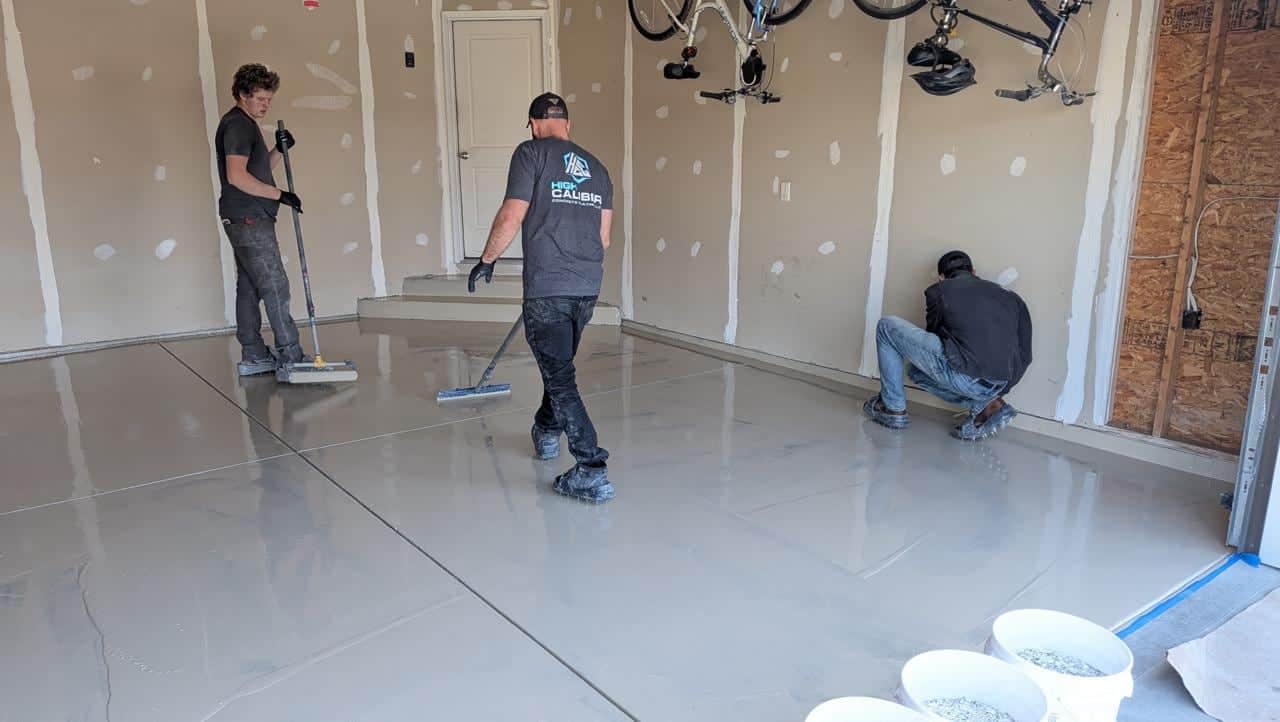
After the slab is opened, we can evaluate cracks, spalled concrete, damaged edges, joints, and other findings within the agreed preparation scope. Moisture is considered separately because a repair or coating cannot stand in for unresolved water movement. We explain what the planned work addresses and what remains a characteristic of the existing slab, keeping the final expectation honest.
Step 5
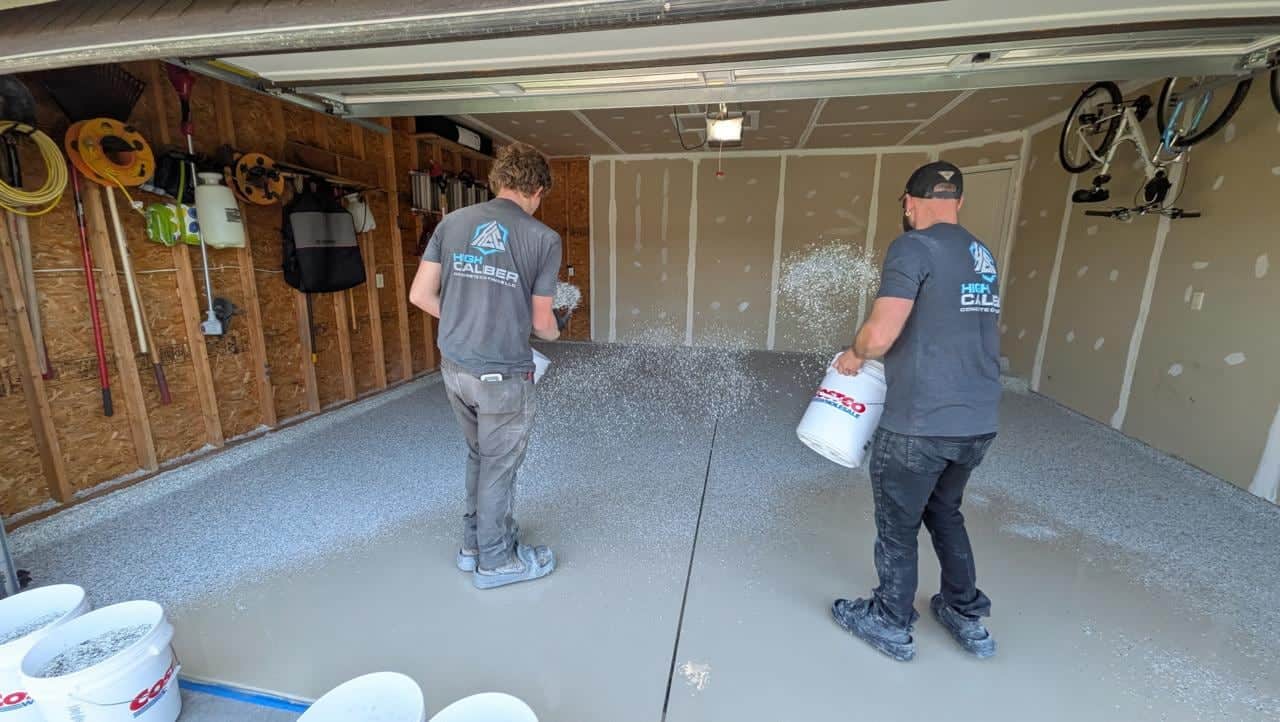
The selected basecoat, optional decorative broadcast, and compatible topcoat are installed in their planned sequence. Epoxy can provide adhesion and build at the base, while polyurea can serve a compatible role where flexibility, chemical exposure, or cure considerations matter. The right chemistry belongs in the right layer, and each layer must suit the facility's use and care expectations.
Step 6
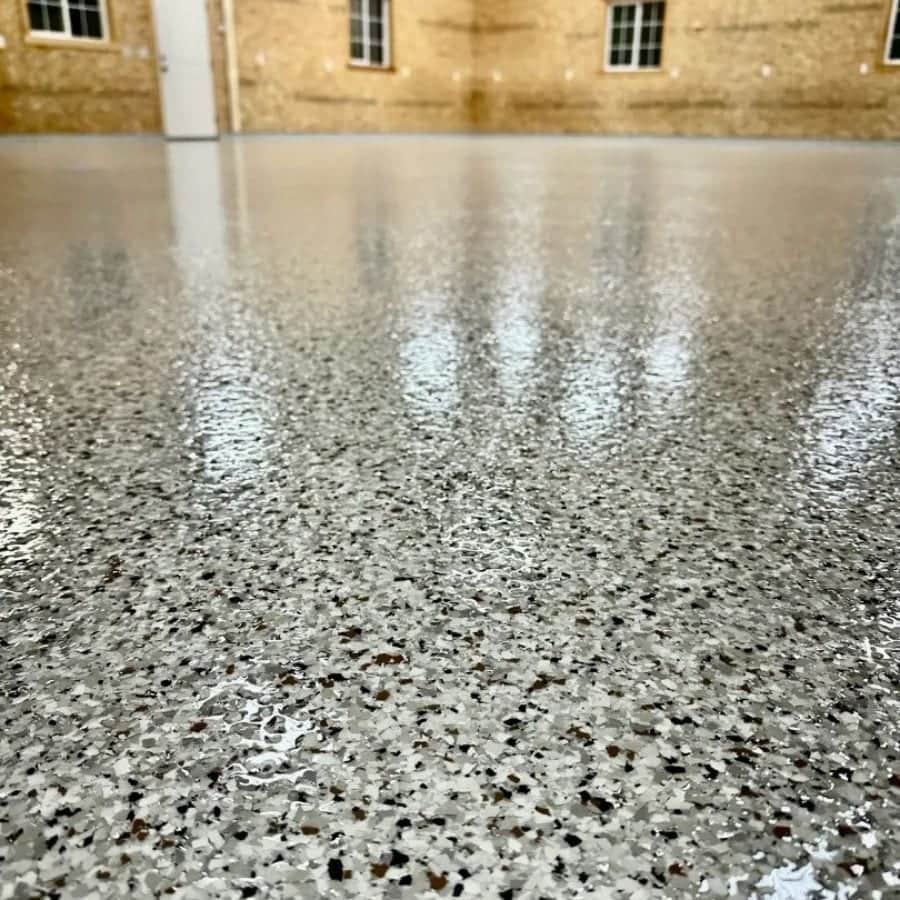
Before the floor goes back into use, we review the finished surface, transitions, access conditions, cure expectations, cleaning, and maintenance. The handoff also gives the facility a chance to ask about equipment movement and wash-down timing. A clear return plan helps protect the work while the new surface becomes part of the regular operating routine.
Why High Caliber
The people responsible for a facility usually know which doorway collects grit, which turn receives the most wear, and which work zone cannot close easily. We ask facility owners and managers to describe those realities, including fluid contact, cleaning water, equipment relocation, and concrete that needs more attention than color alone.
That conversation keeps the recommendation grounded. If a coating, polishing, grinding, or penetrating sealer deserves comparison, we can explain the distinction. A finished surface has value when its preparation and maintenance expectations are understood by the people responsible for the building.
Customer Reviews
“Would highly recommend. No pressure sales, quality product, great communication and quality installation. I met Jeff at the home show. I was drawn into his booth by his very enthusiast kids. I got the immediate impression this was a family oriented business and that was reinforced by the conversation with both Jeff and his young son. These values drew me to this business. I signed up for a quote. Shortly after the show Jeff came to my home to present options and provide a quote. No pressure to buy, Jeff understood I needed to get thru tax season before I could be sure about my budget. Over the course of next few months Jeff was responsive to any questions I had and we got the job scheduled. Jeff provided a trailer in the quote to store contents of garage while job was being done, which was very helpful. When talking with others about the quote I learned my price was equal to or less than what neighbors had paid up to six years ago, so I felt this was good pricing. I had thought there would be a ton of dust and a big mess when grinding surface, but the machines had a vacuum attached, clean and efficient work. I was impressed that they coated steps and side walls as well as floor. No mess on drywall or driveway. Crew doing installation were great guys. They took time to fill me in on the process of installation, what to expect, how long for surface to cure and when I could empty trailer. Post install Jeff stopped out to grab trailer, filled me in on what to use and how to clean the floor. VERY happy with the whole process from sales to install to follow up. LOVE my new garage.”
“High Caliber's quality and communication was excellent. From the person that visited onsite for an estimate to their crew that performed the service was above normal customer service standards, as they explained the process and timing. My garage floor looks great!”
“Jeff and his team did the most amazing job epoxy floor coating my 38 year old garage floor. Outstanding, professional, skilled, great communication. Highly recommended.”
Georgetown Township, Michigan
Georgetown Township's Ottawa County setting combines suburban commercial buildings with warehouses, service floors, and light manufacturing nearby. That mix can put a slab under forklifts, carts, fleet vehicles, stored materials, or repair work. Agricultural processing and workshops add their own grit, residue, and cleanup patterns. We do not assume a building type tells the whole story; the floor's actual day matters.
Winter snow and road salt can enter at doors and vehicle paths. Freeze-thaw movement outside, spring moisture, and humid summer air can make moisture part of the conversation before coating. We look at where water arrives, how the floor is cleaned, and what must stay accessible during work. Those local conditions guide questions, not unsupported promises.
Owners near Jenison, Hudsonville, and Grandville may be comparing industrial floor options across the area. High Caliber serves West Michigan from the Holland and Zeeland area, and we bring the same preparation-first attention to Georgetown Township. The estimate should distinguish a warehouse lane from a service bay, a fleet room from an agricultural work area, and a repair need from a finish preference.
Snow, salt, wet tires, tracked grit, and spring moisture can make the threshold an important part of the concrete discussion.
A warehouse, workshop, fleet room, and service bay may share one address while carrying different traffic, fluid, cleaning, and access demands.
Grinding and inspection help separate visible finish preferences from cracks, spalls, old material, contamination, and moisture questions below the surface.
Frequently Asked Questions
Start with the work performed above the slab. Note the areas used for storage, forklifts, vehicles, carts, equipment, repair work, or wash-down. It also helps to mention fluid contact, abrasive grit, winter salt, previous coatings, cracks, spalls, joints, moisture, access restrictions, and any equipment that cannot be moved easily. Those details give the estimate a useful starting point.
The two areas may experience different wheel traffic, turning, impact, fluid exposure, cleaning, and equipment movement. They may also have different access windows. We can discuss the building as a whole while keeping each zone's demands visible, so one finish preference does not hide a preparation or maintenance issue in another part of the facility.
Epoxy can serve as the adhesion and build layer in the basecoat. Polyurea can contribute a compatible role in later layers where flexibility, chemical exposure, and cure considerations fit the scope. We use the right chemistry in the right layer, with the actual traffic, exposure, preparation, and care expectations guiding the selection.
Mechanical preparation can expose old coating, residue, weak surface material, pits, damaged edges, and other conditions hidden by dust or prior finishes. It creates the profile needed for a bonded system, but it is not a promise to level the slab or repair its structure. Findings after grinding may change the preparation discussion.
We identify cracks, spalls, joints, weak areas, and damaged edges within the agreed preparation scope. The planned repair is explained separately from the coating layers, and moisture receives its own discussion. Existing concrete can continue to move or show characteristics after preparation, so we keep expectations tied to what the work can reasonably address.
Tell us what liquids reach the floor, how frequently the area is cleaned, what equipment is used, and how quickly the space needs to be available again. We consider exposure, drainage, access, cure, and maintenance together. A coated surface can support a cleaning plan, but it still needs appropriate care and realistic operating expectations.
They can change the questions we ask. Salt and wet grit may enter through vehicle doors, while spring moisture can make the slab's condition and water movement more important. We discuss where moisture comes from, how it is managed, and whether the concrete is ready. A coating should not be presented as a solution to unresolved moisture movement.
We ask about active work zones, equipment relocation, adjacent operations, cleaning, cure, and the point when the floor must return to service. Those details help shape a workable sequence and identify transitions between completed and active areas. The schedule belongs in the estimate because the building still has to function while the floor is being prepared and coated.
Related Services
Industrial coating is one possible finish. Preparation, material, moisture, and the desired appearance may make another service part of the comparison.
Review the mechanical preparation that can remove unsuitable surface material and create a coating profile.
Learn moreExplore a compatible polyurea role when exposure, flexibility, and cure considerations belong in the system discussion.
Learn moreCompare a polyaspartic finish conversation for areas where appearance and light exposure help shape the recommendation.
Learn moreBring moisture assessment and barrier considerations into the planning discussion before a coating scope is finalized.
Learn moreCompare mechanically refined concrete when keeping the slab as the finished surface may suit the facility.
Learn moreGallery And Visual Proof
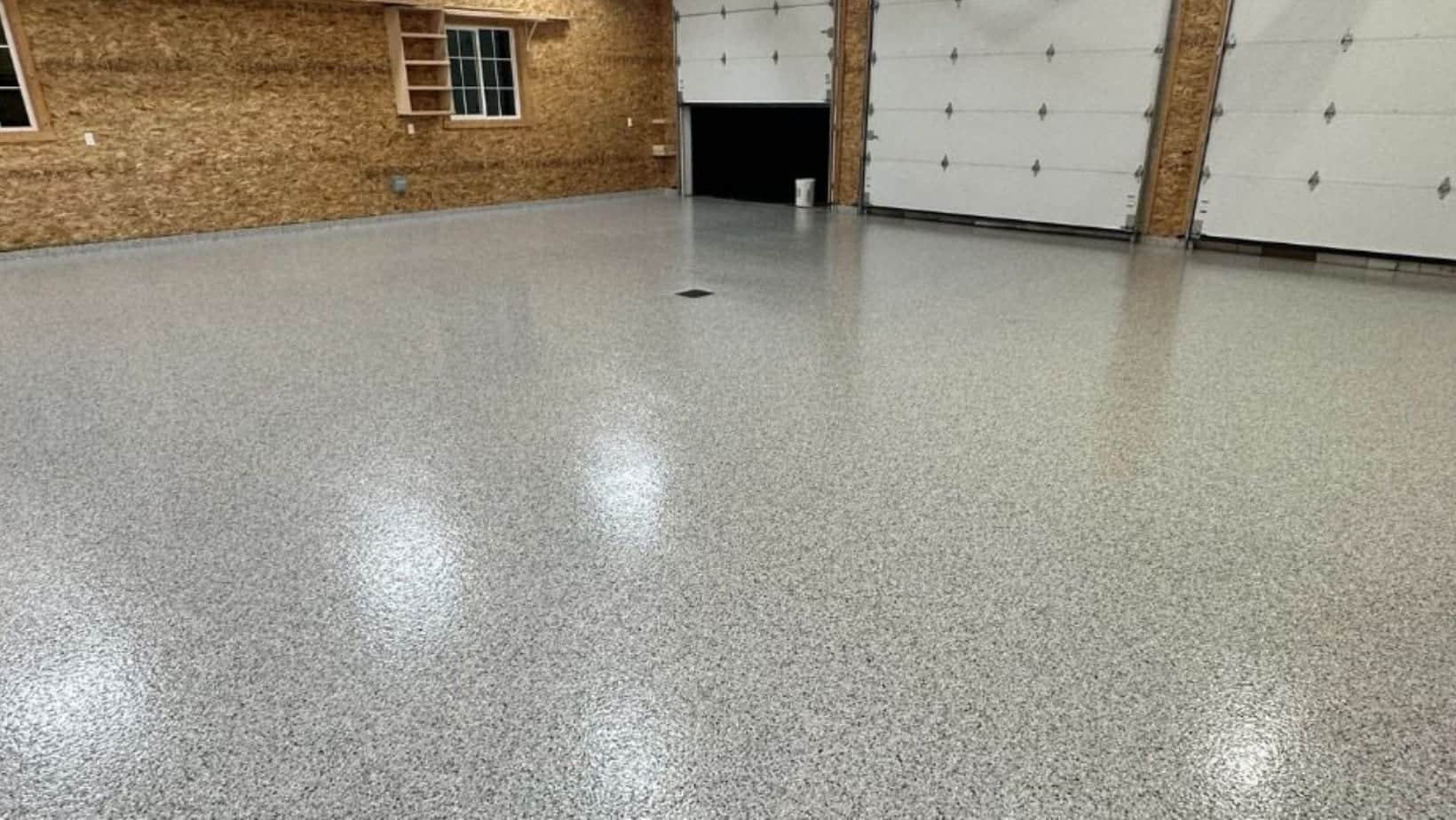
The image library shows preparation, coating layers, and finished surfaces without assigning any photograph to a Georgetown Township property.
Free Project Quote
Tell us about the space and we will follow up with a clear recommendation and quote conversation.
Phone
Business Hours
Free Estimate
Tell us what the concrete carries, what reaches it, how the facility is cleaned, and which areas must remain available. We will use those details to discuss preparation, repairs, compatible coating layers, and a finish that fits the workday.
A free estimate is also the right time to raise winter salt, spring moisture, wash-down, fluid exposure, equipment movement, and return-to-service questions. The clearer the facility picture, the more useful the next conversation can be.